Nowy standard. Twoje centrum tworzenia inteligentnego, szybkiego i zrównoważonego oprogramowania AI

Table of Contents
Enterprise MLOps (machine learning operations) is the set of practices and tools that takes ML models from experiments to reliable production systems and keeps them working there. Most companies need it more than they think.
Executive Summary
Enterprise MLOps is the engineering practice that keeps machine learning models accurate, compliant and cost-effective after they reach production. It combines ML, DevOps and data engineering into one lifecycle: data pipelines, automated training, deployment, monitoring and retraining. Most AI projects stall because companies have no such lifecycle, not because their models are bad. The same discipline matters even more in IoT, where models run on thousands of cameras and sensors and the physical world causes drift that no lab test predicts.
RAND notes that, by some estimates, more than 80% of AI projects fail, twice the failure rate of IT projects without AI (RAND Corporation, 2024). MIT's NANDA initiative found that only 5% of custom enterprise AI tools reach production (Fortune on MIT NANDA, 2025).
The reason lies in the nature of machine learning. Unlike traditional software, which follows fixed rules, ML models depend on data. Their accuracy erodes as customer behavior, markets or data sources shift. A model that looks perfect in the lab can fall apart in the wild if nobody monitors, retrains and governs it. For connected devices, the "wild" is literal: rain on a camera lens or a new sensor model is enough to change the data.
What Is MLOps?
MLOps is an engineering practice that combines machine learning, software engineering (especially DevOps) and data engineering. It covers the full lifecycle of ML systems, from creating and testing models to deployment, monitoring, governance and measuring business results.
Its main goal is to close the gap between development and operations. ML systems are more experimental than traditional software, depend heavily on data and need ongoing monitoring to catch performance issues and data drift.
What Are the Three Layers of an MLOps Architecture?
A typical MLOps setup has three layers:
Data estate (data layer): the organization's data infrastructure and all data sources for ML projects. Since ML models rely on data rather than just code, this foundation matters most.
Model development (inner loop): where data scientists and ML engineers experiment, build and test models. It needs tools for experiment tracking, versioning and collaboration that regular DevOps tooling doesn't cover.
Model deployment (outer loop): where models move into production. It covers serving, monitoring and continuous integration, and it's more complex than a regular software release because the model and its data both change.
Why Do Enterprises Need MLOps?
For enterprises, the hard part of machine learning is scaling models, not building them. A proof of concept performs well in a controlled environment, but a production system has to handle millions of transactions and demand spikes, protect sensitive data under strict regulations, and explain every model decision to an auditor.
Without the right processes, most ML initiatives collapse under these pressures. Models degrade, deployments stall in compliance reviews, and teams lose momentum in the gap between data science and IT operations. MLOps addresses this with automation, structure and governance:
Faster time to market: automating the lifecycle, from version control to deployment, moves models into production sooner.
Reliability at scale: continuous monitoring and retraining catch model drift before it hurts performance under real-time workloads.
Better collaboration: shared processes and tools give data scientists, engineers and IT smoother handoffs.
Lower costs: automation reduces manual work and downtime and makes better use of infrastructure.
Governance and compliance: audit trails for data, code and model versions, which regulated industries like finance, healthcare and energy require.
Less technical debt: standardization prevents the fragile, ad hoc systems that build up when ML projects are managed by hand.

What Are the Key Components of an Enterprise MLOps Framework?
An MLOps framework exists to manage the ML lifecycle, which is a loop rather than a straight line. Models don't stay static once deployed; they must be monitored, retrained and improved continuously as data and business conditions change. The loop typically includes:
Problem definition: framing the problem in business terms.
Data collection and preparation: gathering, cleaning, transforming and versioning data.
Model development and training: experimenting with algorithms, hyperparameters and features.
Evaluation and validation: testing models for accuracy, robustness and alignment with KPIs.
Deployment: moving models into production environments.
Monitoring and maintenance: tracking performance, detecting drift and ensuring reliability.
Retraining: updating models with fresh data and redeploying improved versions.
Without structure, models drift, pipelines break and compliance risks pile up. These are the components that keep the loop under control.
Data Management and Feature Pipelines
ML starts with data. Enterprises need pipelines that prepare, clean and transform data while tracking metadata, lineage and version history. Feature stores and dataset versioning tools (like DVC or LakeFS) keep data consistent and auditable.
ML Pipelines and Orchestration
Data ingestion, feature engineering, training, validation and deployment are automated with orchestration frameworks such as Apache Airflow or Kubeflow. A modular design lets teams update one step without breaking the rest.
Training Infrastructure and Experiment Tracking
Managed platforms (Azure ML, AWS SageMaker, Vertex AI, Databricks) support distributed training, hyperparameter tuning and reproducibility. Experiment tracking tools (MLflow, Weights & Biases) keep results comparable.
Monitoring, Alerting and Drift Detection
Models degrade as data changes. Monitoring tools (Prometheus, Evidently AI, MLflow) track performance, detect drift, and trigger retraining or rollbacks before problems reach business outcomes.
CI/CD for Machine Learning
Borrowing DevOps practices, MLOps applies continuous integration and delivery to both code and models: automated testing, deployment and rollback (Jenkins, GitHub Actions, MLflow).
Governance, Compliance and Security
Enterprises need strict control over who can access data and models, with full audit trails for decisions and changes. Role-based access, identity management and compliance workflows support regulations like GDPR or HIPAA.
None of this is a fixed recipe. Data sources, tools and infrastructure choices differ between companies, and small decisions can change costs and outcomes significantly.
What Are the Five Levels of MLOps Maturity?
The business value of MLOps grows with automation, but full automation needs organizational maturity as well as tools. Microsoft's MLOps maturity model describes five levels:
Level 0, no MLOps: everything is manual, with little feedback after deployment. Hard to manage, easy to break.
Level 1, DevOps but no MLOps: application builds and tests are automated, but ML releases still depend on the data team for every new model.
Level 2, automated training: training is automated and tracked centrally, so models can be reproduced.
Level 3, automated deployment: releases are automatic, with A/B testing and full traceability from deployment back to the data.
Level 4, full MLOps automation: production metrics trigger retraining and policy-based model promotion, and the system approaches zero downtime.
Level 4 isn't the right target for everyone. For a team running two or three models, Level 2 or 3 usually delivers most of the value at a fraction of the effort.
How Do Enterprises Use MLOps in Practice?
The strongest use cases share one trait: the cost of a stale model is high and easy to measure.
Financial Services: Fraud Detection
Banks need to catch fraudulent transactions instantly while payment volumes rise and fraud tactics change. When models aren't updated, accuracy drops: fraud gets through, customers get too many false alarms, and compliance reporting slows down.
With MLOps, every transaction is scored in real time by a deployed model, and pipelines retrain it on the latest transaction data and test the update before rollout. Audit logs, version control and explainability provide a record of every decision for regulators under FCA, PSD2 and GDPR rules.
Healthcare: Diagnostic Imaging
AI models that detect tumors in X-rays or MRIs must stay accurate and compliant with evolving medical standards. Imaging technology and diagnostic criteria change quickly, so models can become outdated and put patient safety at risk.
MLOps adds secure data pipelines, model versioning and lineage tracking (DVC, MLflow) for audits and clinical validation, and automated retraining on new scans. Drift caused by a new scanner or a different patient population is detected automatically, and explainability features such as Grad-CAM help clinicians and regulators understand decisions under HIPAA, GDPR and FDA requirements.
E-Commerce: Recommendations and Dynamic Pricing
Online retailers serve personalized recommendations and prices to millions of customers in real time. Models that aren't updated continuously lose relevance as shopping behavior and catalogs change, which lowers conversion.
Here MLOps means real-time pipelines that feed clicks, purchases and catalog updates into training, feedback loops that turn every customer action into a training signal, and CI/CD with A/B testing so new models can be rolled out safely at peak traffic.
Generative AI: From MLOps to LLMOps
Large language models (LLMs) now power customer service, knowledge assistants and domain-specific copilots. They add new challenges on top of traditional ML: they're larger, expensive to run, prone to hallucinations and harder to govern. That's why enterprises have adopted a related discipline, LLMOps.
Aspect | MLOps | LLMOps |
|---|---|---|
Model types | Predictive models (fraud detection, churn prediction, recommendations) | Generative models (chatbots, knowledge assistants, domain copilots) |
Core challenges | Data drift, model drift, reproducibility, compliance | Hallucinations, GPU and token costs, prompt quality, secure access to enterprise data |
Key processes | Data pipelines, experiment tracking, automated training, CI/CD, model monitoring | Retrieval-augmented generation (RAG), prompt versioning, human-in-the-loop feedback, model routing |
Governance | Model versioning, audit trails, explainability | Data privacy, content filtering, usage monitoring, output evaluation |
Cost management | Infrastructure and retraining frequency | Inference costs, smaller models, routing and caching |
In practice, LLMOps means linking models to live knowledge bases through RAG, versioning and testing prompts, keeping support teams in the loop to validate answers, and routing simple queries to cheaper models to keep costs sustainable.
How Does MLOps Work for IoT and Edge Devices?
MLOps for IoT applies the same lifecycle to models that run on cameras, gateways and sensors spread across many physical sites instead of in a data center. That changes four things:
Cloud MLOps | IoT and edge MLOps | |
|---|---|---|
Where models run | Central servers or managed cloud endpoints | On or near the device: cameras, gateways, embedded hardware |
Main drift sources | Changing user behavior and data sources | The physical world: light, weather, dirt, hardware changes, local differences |
Updating a model | One deployment to one endpoint | A staged rollout to a fleet of devices, site by site |
Latency and connectivity | Network round trip is acceptable | Decisions happen in milliseconds, and devices must keep working offline |
The trade-off is that the feedback loop gets slower. Collecting edge data for retraining takes bandwidth and storage, and every update has to be tested against the oldest hardware still in the field. Pushing a new model to every device at once is the edge version of deploying on a Friday afternoon.
What Does MLOps Look Like in a Smart Parking System?
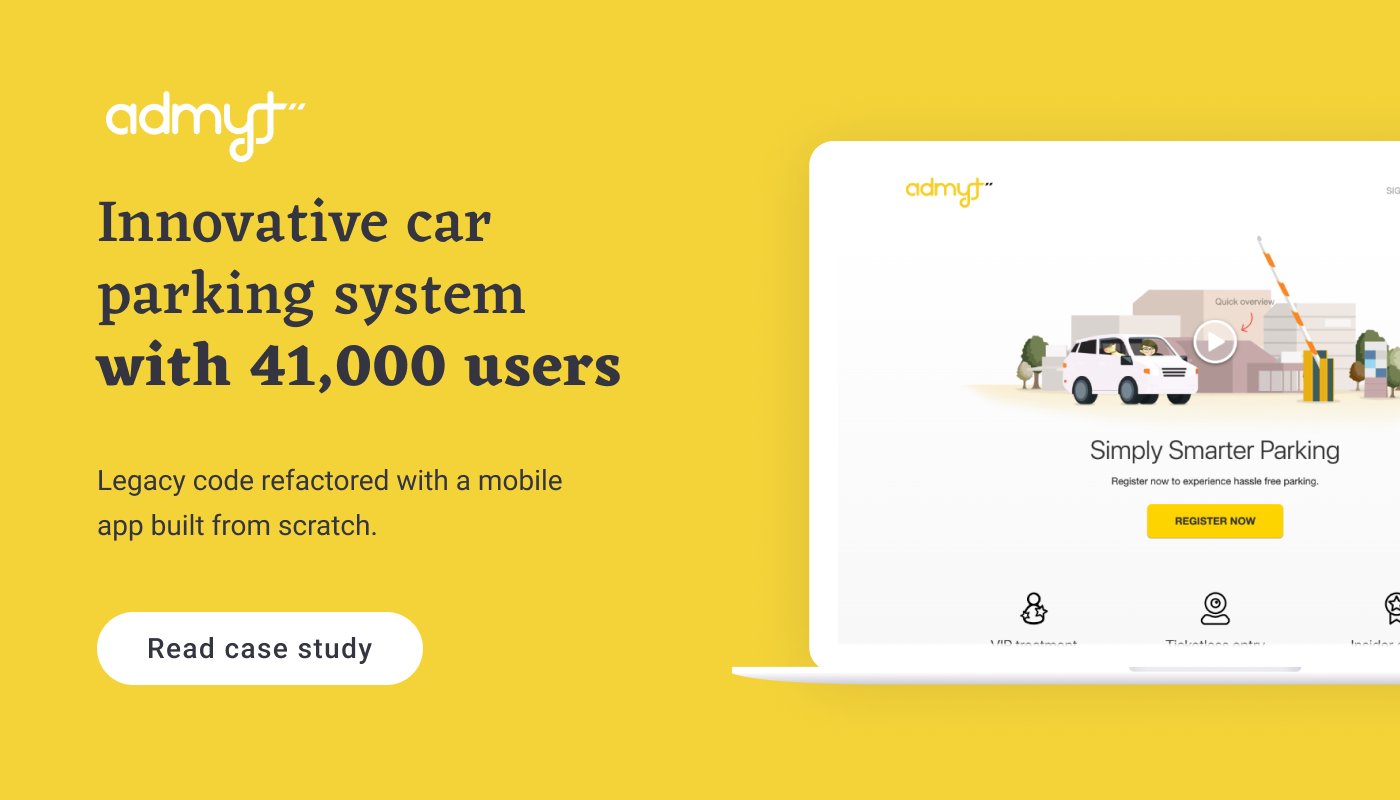
Admyt replaces paper tickets at parking barriers with license plate recognition. Drivers register their car in an app, a camera reads the plate at the entrance and exit, and the barrier opens without a ticket or a payment machine. Monterail rebuilt the platform's web app and built its React Native mobile app. According to the case study, the platform has more than 41,000 sign-ups and about 60,000 linked cars across 15 South African shopping malls, with deployments in Poland and Australia.
The whole product promise depends on the recognition working the first time. In a 2018 interview with Monterail, Admyt CTO Jaco van der Merwe described it as a "window up" approach: other systems force drivers to stop, open the window and reach out, "but with our solution you can just go through." When the camera misreads a plate, the driver is stuck at the barrier.
That's what makes a system like this an MLOps problem rather than a one-time model choice:
Drift is physical. Admyt looks for markets with hot and cold seasons or heavy traffic. That means night lighting, rain, glare and dirty plates, and different plate formats when the system moves to a new country.
Latency is part of the UX. During the rebuild, Monterail cut server synchronization from 20–30 seconds to 30 milliseconds. At a barrier, a delay that long means a queue.
The model can change. COO Devon Beynon said a cheaper, better technology could replace license plate recognition altogether, and "we will need to follow that." A versioned, modular pipeline makes swapping the recognition engine a release rather than a rebuild.
For many companies in this position, buying a proven recognition engine and investing in the operations around it (monitoring read rates per site, staged updates, fallbacks when a read fails) makes more sense than training their own model.
Which MLOps Best Practices Matter Most for Enterprises?
These practices separate ML programs that scale from ones that pile up technical debt:
Start With One High-Value Use Case
Launching ten AI projects at once usually spreads the team too thin. Start with one use case that's both strategic and achievable, like fraud detection or churn prediction. Prove the ROI, then expand.
Tie Every Model to a Business KPI
If a project isn't tied to a business metric (revenue, cost savings, risk reduction), it becomes a science project. Measure every model iteration by its impact on that metric, not only by accuracy.
Treat ML Models as Software
Models need version control, CI/CD pipelines, containerization and testing, for data and models as well as for code. The payoff is reproducibility, quick rollbacks and an answer when someone asks what went wrong.
Automate the Repetitive Steps First
Every manual step in data validation, deployment and retraining adds risk and slows the team down. Automate the steps you repeat most, and keep humans where judgment matters.
Keep Humans in the Loop for High-Stakes Decisions
Automation isn't infallible, especially in finance or healthcare. Human experts who review models and edge cases make sure AI supports decisions rather than making them unchecked.
Build Governance in From the Start
Access controls, audit logs, explainability and compliance with GDPR, HIPAA or SOX are far easier to build into pipelines early than to retrofit later.
Key Takeaways
Most AI projects fail in operations, not in modeling: MLOps is the missing lifecycle.
MLOps combines ML, DevOps and data engineering, and covers data, training, deployment, monitoring and retraining.
Level 4 maturity isn't a universal goal; small ML teams get most of the value at Levels 2–3.
In IoT, drift comes from the physical world, and model updates have to roll out across a device fleet.
Edge systems often do better buying a proven model and investing in the operations around it.
Why Is MLOps a Competitive Advantage?
MLOps is the difference between AI ambitions and AI results. Without it, a model stays a demo instead of a tool that powers real decisions, because it needs constant manual intervention to keep working. With it, models adapt, improve and keep delivering, whether they run in the cloud or on a camera at a parking barrier.
If you're planning to move ML models from pilot to production, or to run them on connected devices, Monterail's AI development team can help you decide what's worth building, what to buy, and how to operate it.
Enterprise MLOps FAQ


Kaja Grzybowska is a journalist-turned-content marketer specializing in creating content for software agencies. Drawing on her media background in research and her talent for simplifying complex technical concepts, she bridges the gap between tech and business audiences.