The New Default. Your hub for building smart, fast, and sustainable AI software
Table of Contents
Enterprise AI infrastructure architecture decides whether an engineering org can expand its AI usage while keeping token costs and intellectual property under control. When nobody designs it on purpose, it assembles itself: one team buys GitHub Copilot licenses, another buys ChatGPT Enterprise, and personal API keys fill the gaps. Nobody can say what the company spends on AI in a given month, or which prompts carried proprietary code to a third-party endpoint. Your most valuable code may already be sitting in a prompt log you've never seen.
Executive Summary
Scaling AI across engineering teams raises token costs, triggers rate limits, overloads context windows, and increases the chance of proprietary code reaching public model providers. Usage policies help, but cost and exposure are set by the path each request takes to a model, and that path is an architecture decision. Three patterns control it: a multi-tenant proxy gateway with DLP routing, private VPC deployment of open-weight models, and a hybrid semantic cache. Enterprise RAG over internal codebases works alongside them, keeping each prompt down to the code the task needs. With the trade-offs laid out, a platform lead can match each pattern to the budget and risk tolerance it suits.
The Hidden Costs of Ungoverned Enterprise AI Adoption
Every team that buys its own AI tools adds another overlapping subscription and another route for proprietary data to leave. Menlo Ventures reports that enterprise spending on model APIs reached $8.4 billion by mid-2025, up from $3.5 billion in November 2024. When budgets more than double in six months, a company with no central metering can't tell which of that spend is paying off. In practice, AI token cost management means closing that gap.
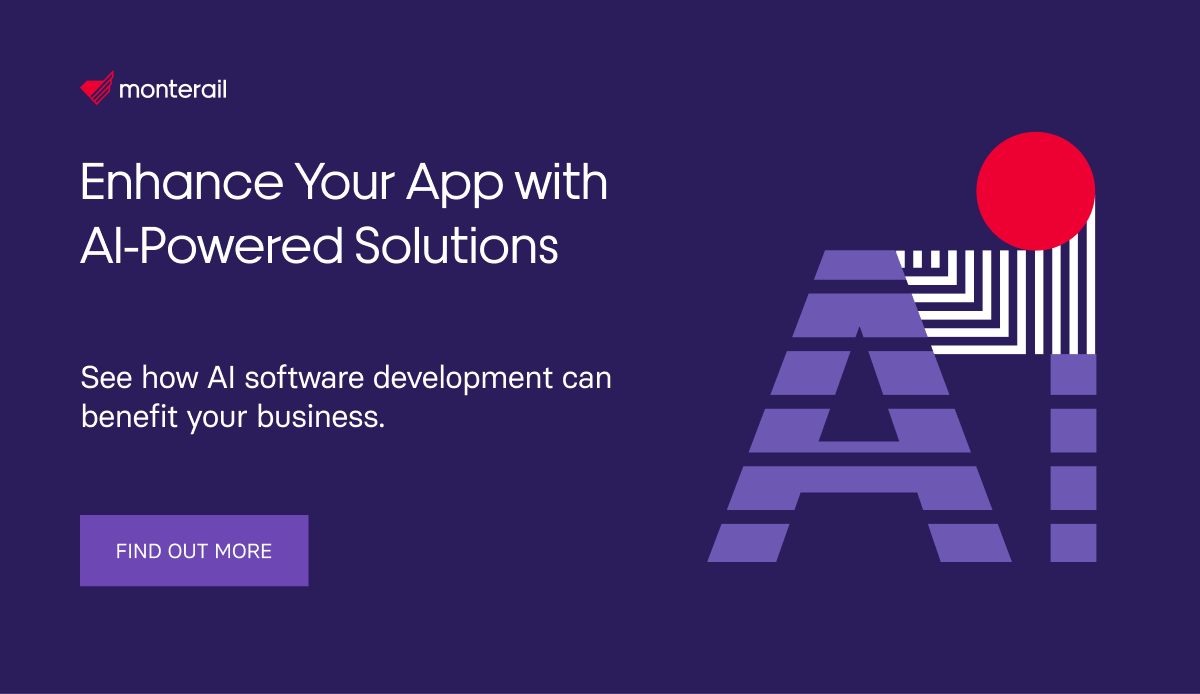
A common failure starts with an agentic refactoring job that loads entire files into every call. The context window fills with code the model never needed, the job hits the team's rate limit, and the run dies halfway through. Engineers rerun it. Token spend climbs again, and the invoice arrives weeks later with no line explaining why. Multiply that across a dozen teams and CI pipelines stall behind throttled requests, engineers sit waiting on retries, and the API bill lands well above forecast.
Three architectures address these costs directly, each with its own balance of cost, risk, speed, and control. A fourth technique, scoped RAG, reduces how much context each request carries and is covered further down.
Proxy Gateway With DLP | Private VPC Open-Weight Models | Hybrid Semantic Caching | |
|---|---|---|---|
What drives the bill | Tokens sent to providers, so busy weeks cost more than quiet ones | GPU hours, charged whether traffic is heavy or light | Embedding lookups and vector storage, offset by every repeat question that never reaches a provider |
What leaves your network | Prompts, with credentials and customer data masked, under the provider's retention terms | Nothing, since inference happens on your own instances | Only cache misses, which follow the rules of the model behind the cache |
What sets response time | The provider's capacity and the model you pick, plus a short extra hop through the gateway | How well your team sizes GPUs and tunes the serving stack | Hits return after a quick lookup; misses take as long as the underlying model |
What your team can tune | Budgets per team, which models each team may call, and log retention | The model itself, including weights, fine-tuning, and decoding settings | How close two prompts must be to count as a match, and when stored answers expire |
Who keeps it running | Platform engineers maintaining the proxy and its identity integration | An ML ops function sizing GPU capacity, patching drivers, and rolling out new model versions | Engineers maintaining the vector index and clearing outdated answers |
Reading across the rows exposes the core trade-off, since the pattern that keeps the most data in-house also carries the highest fixed cost.
How Centralized Proxy Layers and Quota Management Drive Control
A multi-tenant proxy gateway sits in the request path between every AI-enabled tool and every model endpoint. Code assistants in the editor, CI jobs, and in-house agents all send their traffic there first. The gateway checks who is calling, counts the tokens against that team's budget, and scrubs sensitive content before it leaves the network. Because every request passes through one place, spend and data exposure end up on one dashboard.
Data loss prevention (DLP) for LLMs is usually framed as a filter on what leaves. Teams running agents that read outside content need the same scrutiny on what comes in, so a well-built gateway filters both ways:
On the way out, pattern matching and entity detection mask secrets and personal data, such as emails and credentials, before anything reaches a provider.
On the way in, the gateway screens external content (web pages, tickets, documents) for instructions planted to hijack the model.
The inbound direction covers the risk OWASP ranks first in its 2025 list of LLM vulnerabilities. Indirect prompt injection hides instructions in files or web pages that a model later reads, and OWASP acknowledges there may be no foolproof prevention. Gateway filtering reduces exposure, and tight agent permissions limit the damage when something slips through. That pairing is also the main defense against autonomous AI agent attacks.
With quotas and logs at the gateway, finance and platform teams look at the same numbers in real time. The logs also surface duplicate calls, where several teams ask a model the same question, and those are the first candidates for a cache. Budget conversations move from reconciling invoices to adjusting quotas. And because the gateway is the sanctioned exit for any code headed to a model, every request leaves a trace.
Whether you build or buy the gateway, a few requirements belong on the shortlist from the start:
Rate limits you can set separately for each team and project
A log entry for every request, kept long enough to satisfy auditors
Hosting regions that match where regulators expect data to stay
Controls an assessor can map to SOC 2 or ISO 27001
A gateway missing any of these tends to stall in security review, which sends teams back to the unsanctioned tools it was meant to replace.
What Are the Enterprise AI Infrastructure Architecture Patterns for Private AI?
The patterns below split the spend and privacy problem between them, and their operating costs differ as much as their benefits.
Multi-Tenant Proxy Gateway With DLP Routing
A per-team spending cap turns unpredictable API bills into a number finance can forecast, and it is the base layer of AI token cost management. The gateway enforces that cap, along with DLP rules, on every outbound call to providers like OpenAI or Anthropic.
Developers barely notice the change, since their tools already point at the gateway described above. Which provider receives each request becomes a policy setting. The integration work sits elsewhere: the gateway needs your identity provider to tell callers apart and a central pipeline to store its logs.
Rate limits and redaction are the obvious features. Routing is where the gateway starts saving money:
Cost-aware routing sends simple requests, like docstring generation or log summaries, to a cheaper model and reserves frontier models for hard reasoning tasks.
Fallback routing redirects traffic to a secondary provider or a self-hosted model when the primary endpoint hits a rate limit or goes down, so agent runs keep going.
Private VPC-Hosted Open-Weight Models for Code Generation
Groups that own regulated or especially sensitive code are the natural users here. A private VPC LLM deployment gives them code completion from an open-weight model such as Llama or Mistral. The model runs inside your own cloud network, and developers reach it through an in-house editor extension or endpoint. Prompts never cross the network boundary, so the DLP layer has nothing to redact.
Serving frameworks keep that model responsive. vLLM, SGLang, and NVIDIA's TensorRT-LLM all support continuous batching, which slots new requests in as others finish. The research paper behind vLLM's PagedAttention reported 2 to 4 times higher throughput than earlier serving systems at comparable latency. Hugging Face's TGI now sits in maintenance mode, and Hugging Face points users to vLLM and SGLang instead.
Open-source models trade licensing costs for infrastructure and expertise costs. Dedicated GPU instances, such as AWS g5 or p5 nodes, bill around the clock, so light overnight traffic can push per-query costs above public API pricing. Someone also has to own model updates and fine-tuning. The strongest open-weight coding models now score close to proprietary leaders on benchmarks like SWE-bench, but they are also the largest, and self-hosting them means multi-GPU clusters.
Hybrid Semantic Caching Layer
A semantic cache recognizes when a new prompt means roughly the same thing as an earlier one and returns the stored answer without calling a model. It runs next to the gateway and serves every team from a shared pool, so a question answered for one team becomes a cache hit for the next. Frontier providers offer a second kind of caching at the model endpoint, and the two work at different layers.
Semantic Caching | Provider-Side Prompt Caching | |
|---|---|---|
Where it runs | Your gateway, backed by a vector database or Redis | The model provider's infrastructure |
What it matches | Prompts similar in meaning | Prompts sharing an identical prefix |
Cost effect | A hit skips the model call, leaving only the embedding lookup to pay for | Reused prefix tokens are charged at a steep discount |
Best for | Repeated questions across teams | Long, stable system prompts, codebase context, and documentation |
Anthropic's documentation prices cache reads at 10% of the standard input rate. OpenAI's caching guide describes cached-input discounts of up to 90%, with caching on by default for supported models. Run both, and most repeated context either never reaches a provider or reaches it at a discount.
Model hosting stays untouched, which makes this the least disruptive pattern to add. The price is staleness: a cached answer about a fast-moving repository can go out of date within days, so expiration rules and merge-based invalidation need tuning from day one.
Enterprise RAG Over Internal Codebases
Loading whole files into prompts bloats the context window and exposes proprietary code to public models. Scoped retrieval-augmented generation fixes both by turning repos and engineering docs into a searchable index. Each request then carries only the snippets relevant to the task, and token spend drops.
Teams usually build a code-aware chat assistant or a review bot on top of that index. The maintenance doesn't stop at launch. The index has to be refreshed as code changes, and vector store permissions must mirror repo permissions so nobody retrieves code they couldn't open directly.
Few organizations adopt all four patterns at once, and the order matters. The gateway usually comes first. Caching goes in beside it, VPC-hosted models become one of its routes, and prompts built with RAG pass through it like any other request. It's the same order that applies to AI integration into existing systems generally: settle the surrounding system first and pick the model last.
What Organizational and Technical Changes Are Required for Private AI Infrastructure?
Building a proxy and retrieval layer requires sustained engineering investment, far beyond flipping a setting in an admin console. Getting security and compliance teams on board can take longer than the build itself, even though the technology is well understood by now.
SSO, CI/CD, and Cloud Provider Integration
Identity comes first. Connecting the gateway to SSO and syncing group membership lets quota and access rules follow the org chart automatically. CI/CD pipelines need dedicated service identities so the gateway can meter automated jobs separately from people. The whole stack should run on your existing AWS, GCP, or Azure footprint, so AI traffic doesn't need a second cloud contract.
GDPR, SOC 2, Data Residency, and HIPAA
Data residency requirements, along with GDPR's limits on transfers outside the EU, determine which regions your gateway, caches, and model endpoints can run in. SOC 2 auditors will ask for evidence that access and logging controls work as designed. Sector rules add another layer: healthtech teams also need to account for HIPAA, whose proposed Security Rule update is still moving through federal rulemaking.
Burst Traffic From Agentic Workflows and GPU Capacity
Agentic workflows generate traffic in bursts, with a wave of parallel calls arriving the moment a pipeline kicks off. Horizontal scaling and sensible queuing let the proxy absorb those spikes without dropping requests. VPC-hosted models add their own capacity problem, because sizing GPUs for peak agent traffic works directly against the idle-cost issue described earlier.
Change Management and Shadow AI
Engineers keep using the tools they prefer unless the governed route is at least as convenient. A gateway that adds noticeable latency, or requires a ticket for every new model, pushes people back to personal API keys and unsanctioned tools. Adoption works best when the gateway offers something shadow tools can't match, such as access to more models, higher limits, or faster cached answers. When it does, usage moves to the platform with little need for a mandate, and shadow AI starts retiring itself.
Key Takeaways
Letting each team adopt AI tools independently multiplies subscriptions, hides total spend, and spreads proprietary code across endpoints nobody monitors.
A multi-tenant proxy gateway manages spend tracking and DLP for LLMs centrally, without altering developer workflows, but redacted prompts still reach external vendors.
Private VPC LLM deployment keeps proprietary code off public models by moving inference in-house, and enterprise RAG limits exposure by sending only the snippets a task requires.
For AI token cost management, semantic caching at the gateway and prompt caching at the provider work at separate layers, so running both compounds the savings.
Model benchmarks matter less in this decision than two questions: how much spend variability the budget can absorb, and how much data exposure compliance can accept.
Why Enterprise AI Infrastructure Architecture Requires Platform Thinking
AI access works best when it's run as an internal platform, like CI/CD or observability, with a dedicated owner, a roadmap, and defined service levels. That setup lets delivery speed and compliance pull in the same direction. Quotas and caches control spending on every request, so overruns no longer wait for a quarterly review to surface. Auditors get one system to inspect, with an attached change history. The sooner that platform exists, the fewer shadow tools there are to untangle later, and the scattering of subscriptions becomes infrastructure the company owns.
An embedded team from Monterail's AI development practice can design and build the gateway, the private VPC LLM deployment, and the enterprise RAG layer alongside your engineers. Deciding which pattern to start with? Book a consultation, and we'll map the options to your current stack.
Enterprise AI Infrastructure Architecture FAQ
)
Michał Nowakowski
Solution Architect and AI Expert at Monterail

Michał Nowakowski is a Solution Architect and AI Expert at Monterail. His strong data and automation foundation and background in operational business units give him a real-world understanding of company challenges. Michał leads feature discovery and business process design to surface hidden value and identify new verticals. He also advocates for AI-assisted development, skillfully integrating strict conditional logic with open-weight machine learning capabilities to build systems that reduce manual effort and unlock overlooked opportunities.