Nowy standard. Twoje centrum tworzenia inteligentnego, szybkiego i zrównoważonego oprogramowania AI

A progressive web app (PWA) is a website that installs and behaves like a mobile app: it can work offline, send push notifications and sit on the home screen, with no app store involved.
More than half of global web traffic now comes from mobile devices. Customers also expect a consistent experience across channels, and PWAs remain a cheaper way to deliver that experience than building separate iOS and Android apps.
Below are 13 companies that launched PWAs, the results they reported, and what those results mean if you're weighing a PWA against a native app.
Executive Summary
A progressive web app gives users most of what they want from a native app (fast loading, offline access, push notifications and a home-screen icon) through the browser, without an app store download. That makes it the cheapest way to test mobile demand: one web codebase instead of two native ones, and every visitor from search lands directly in the product.
The 13 examples below, including Pinterest, AliExpress, Starbucks and Uber, reported higher engagement, conversion and speed after launch. The trade-off is device access, especially on iOS, so a PWA fits best when web traffic and search visibility matter more than deep hardware integration.
What Are Progressive Web Apps?
Progressive web apps combine a responsive website with native app functionality. They're built with standard web technologies (HTML, CSS and JavaScript) and a service worker that caches content, so they stay fast and keep working on poor connections.
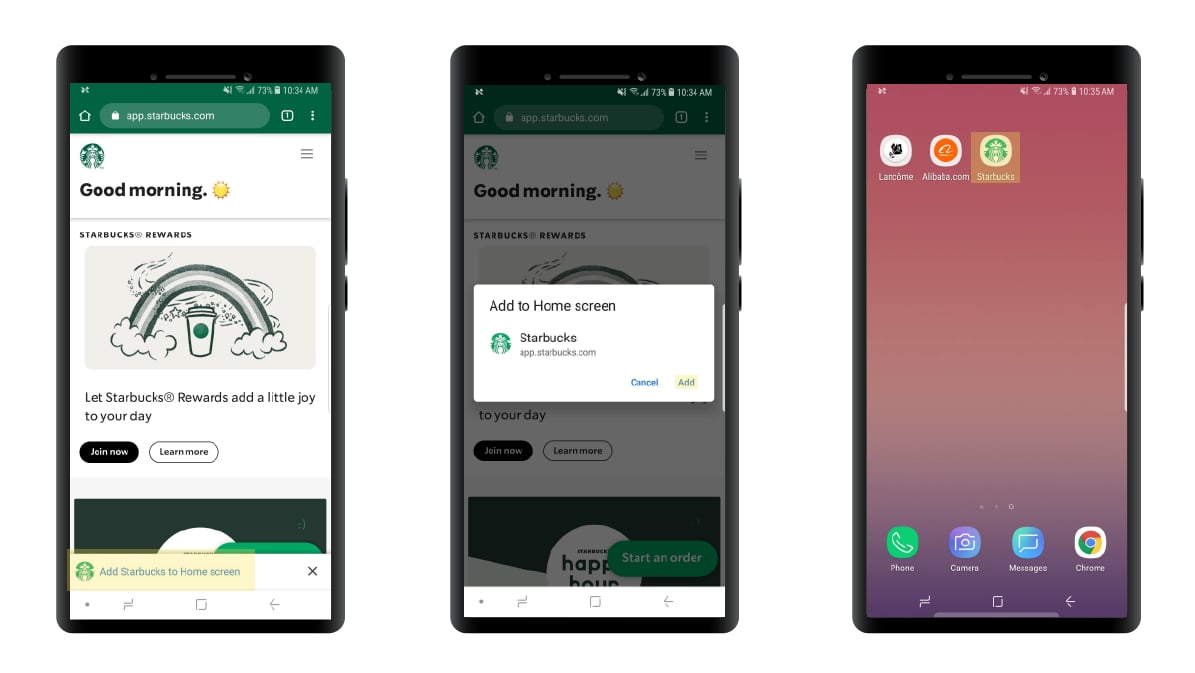
A two-click PWA app installation process encourages downloads. Source: Medium (Tigren)
On a laptop, a PWA looks like a website. On a phone, it's faster and lighter than a native app with similar functions, and users install it straight from the browser instead of an app store. Depending on the browser and operating system, PWAs can deliver:
Media capturing through the camera
Geolocation access
Push notifications
Bluetooth connectivity
Speech recognition
Background updates
Offline and low-connectivity modes
You can also see what PWAs offer in our article on their possibilities with more examples:
"Should I Consider PWA?" Possibilities of Progressive Web Apps with Examples
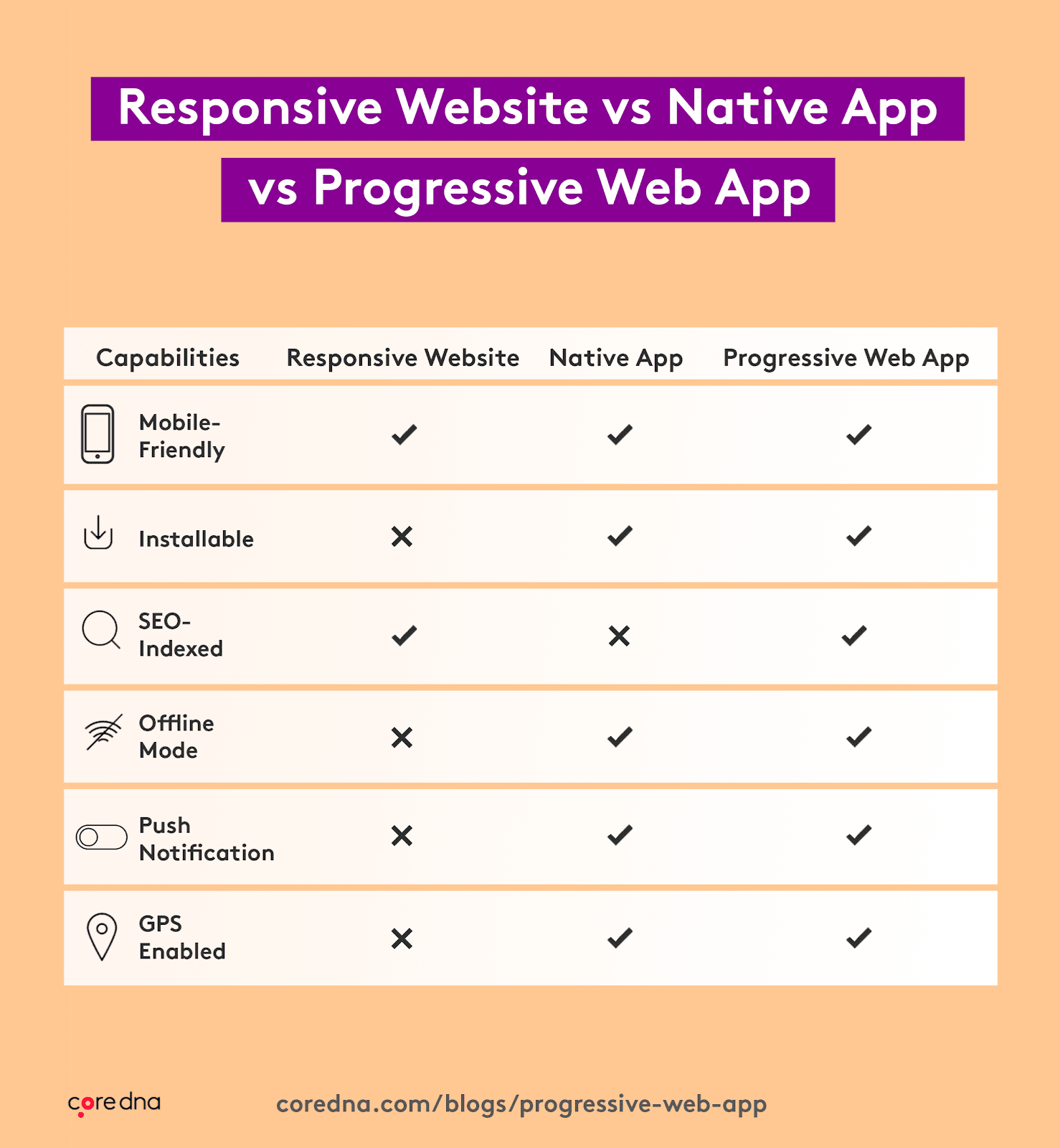
Source: coredna
People spend an average of 3 hours and 46 minutes a day on the mobile internet, and a responsive website can't offer offline access, push notifications or a home-screen presence during that time. Native apps can, but they cost more to build and maintain, they have to get through app store review, and many users won't bother to install them. A PWA covers most of the same ground with one codebase, and it can ship in weeks or months depending on its complexity.

Which PWA Examples Show Real Business Results?
Users don't want to spend time or storage on yet another app install, but they will keep using a mobile website that works well. That's why PWAs compete with native frameworks. The case studies below come from the companies themselves or from Google's web.dev and Think with Google case studies. Most date from 2016–2019, when the big PWA launches happened, so read them as evidence of what the approach can do, not as current benchmarks.
1. Spotify
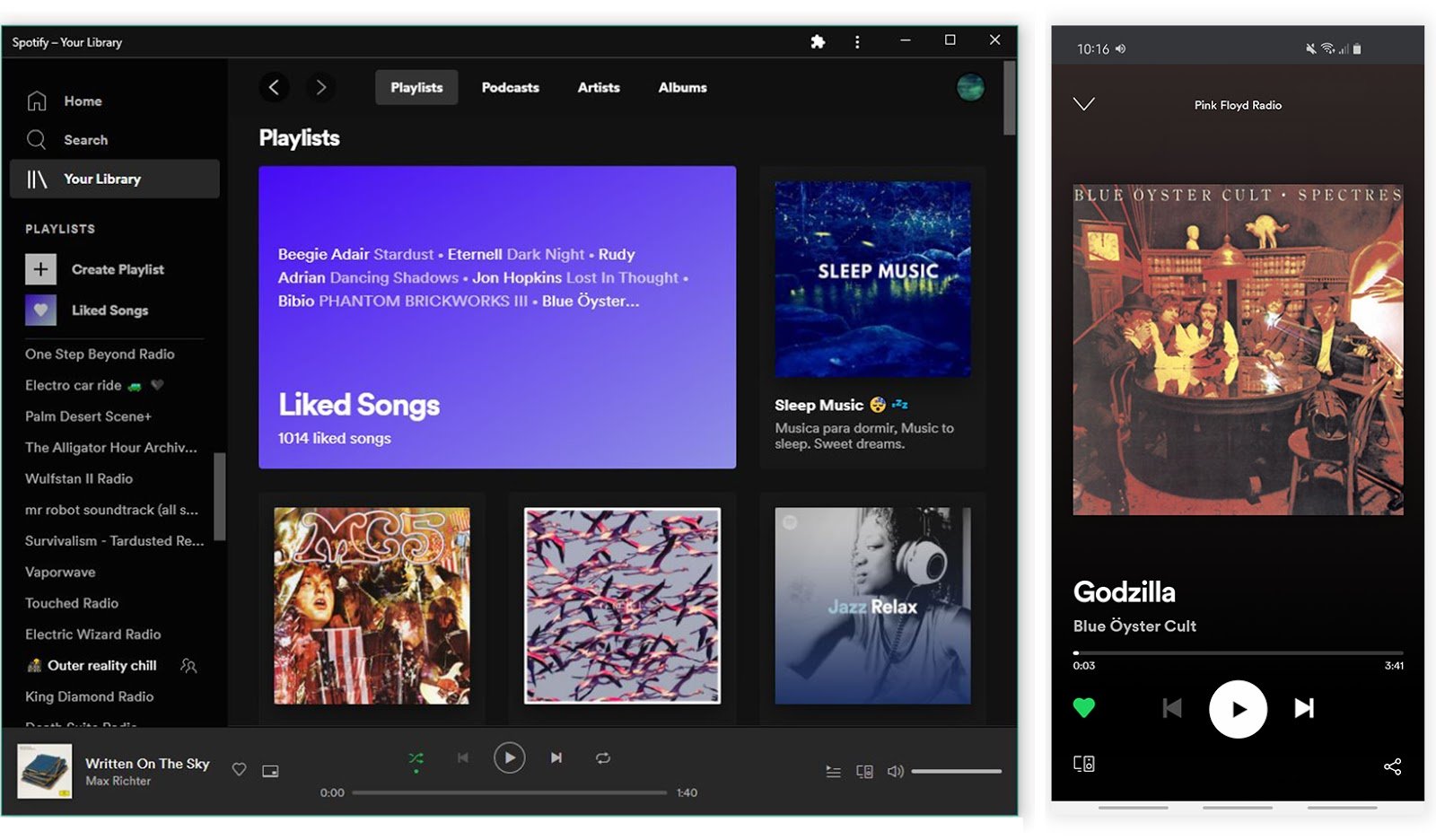
Spotify's desktop (left) and mobile (right) PWA. Source: Spotify
In 2019, Spotify rebuilt its web player and added PWA support, so the player can be installed from Chrome and run as a regular desktop app. Anyone with a link to a song or playlist can start listening in the browser, without downloading the desktop or mobile app first.
2. Twitter Lite (now X)
In April 2017, Twitter made Twitter Lite, a PWA, the default mobile web experience for all users worldwide. It needed about 600 KB of data to load, compared to 23.5 MB to download the native Android app, a big difference for users on slow networks and expensive data plans.
After the PWA launch:
Pages per session grew by 65%
Tweets sent increased by 75%
Bounce rate dropped by 20%
3. AliExpress
Source: SEMrush
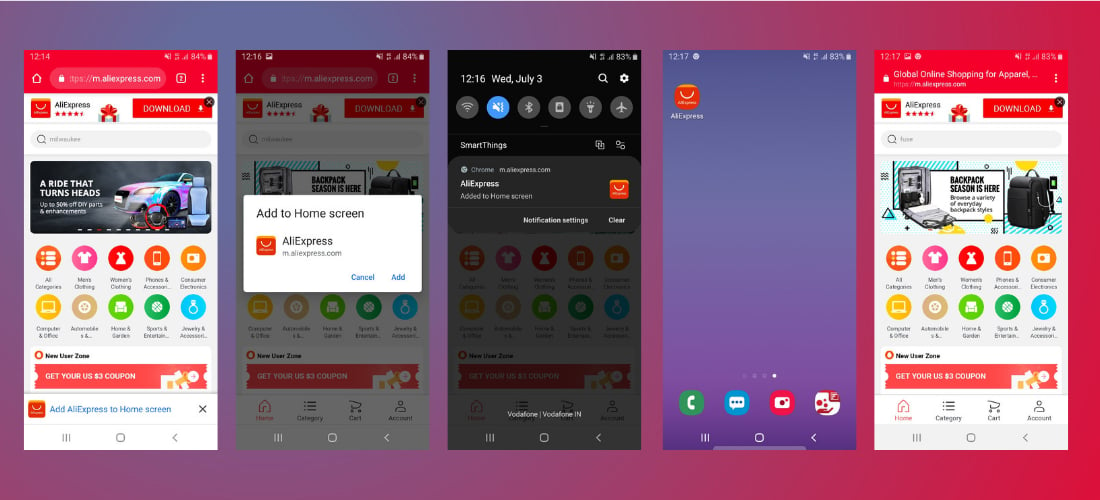
AliExpress struggled to get shoppers to download its native app, so it built a cross-browser PWA that gave mobile web visitors an app-like experience without an install.
After the PWA launch:
Conversion rate for new users grew by 104%
Time spent per session went up by 74% across all browsers
Users visited 2x more pages per session
4. The Washington Post
Source: The Washington Post
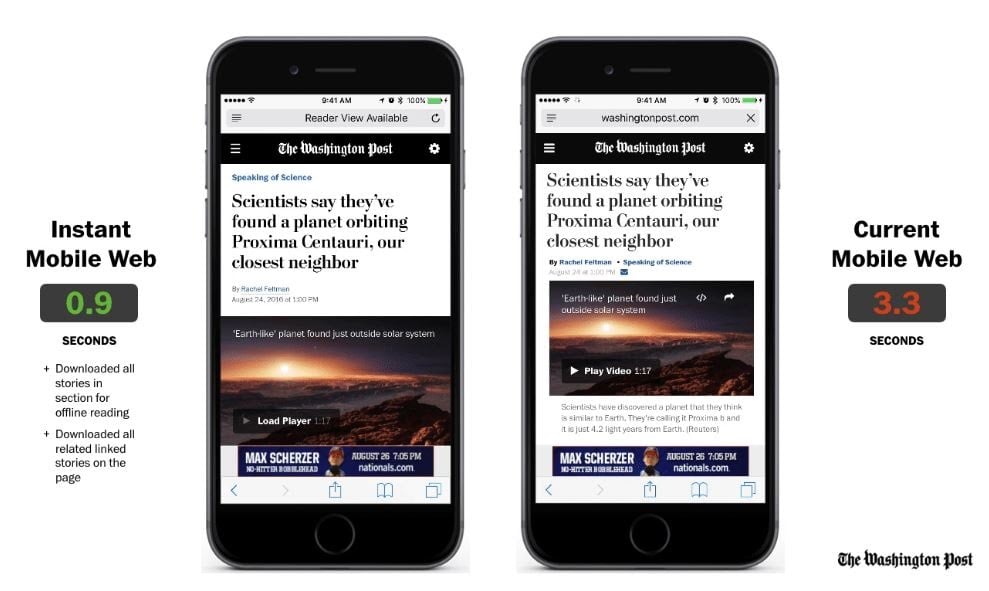
With more than half of its traffic coming from mobile devices, The Washington Post needed breaking news to load instantly on phones. In 2016, it combined AMP pages with a PWA beta: articles open from search almost immediately, and the PWA preloads related content in the background to encourage further reading.
After the launch:
AMP article load times averaged 400 milliseconds, an 88% improvement over the traditional mobile site
23% more mobile search users returned within 7 days
5. Stance
Source: Stance
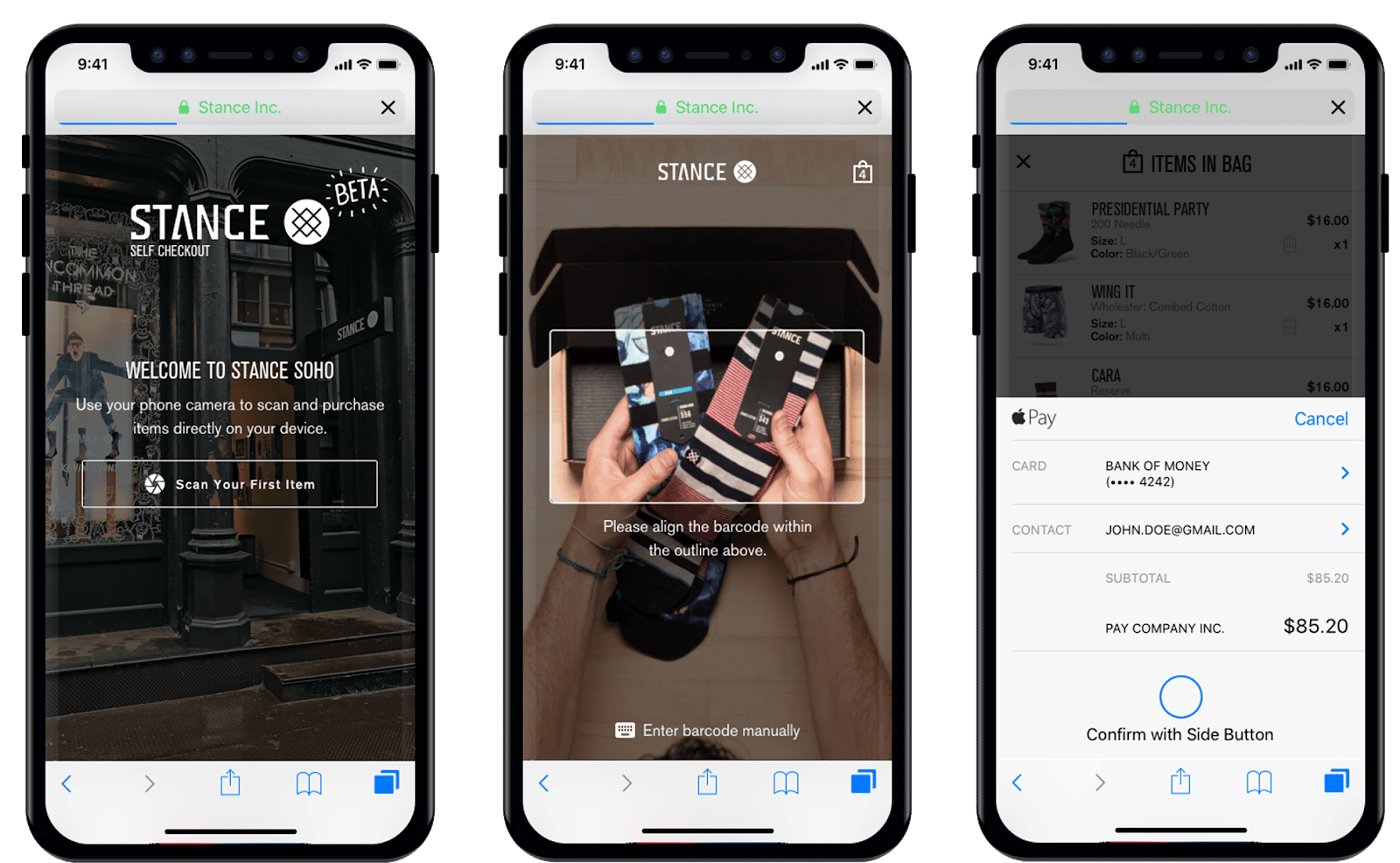
PWAs aren't only for online stores. Stance, a sock and apparel brand, wanted to cut checkout lines in its stores without buying new hardware. In 2018, it rolled out a browser-based PWA self-checkout, built on Moltin, across its 14 US stores.
Shoppers open a URL in the store, scan barcodes with their phone camera and pay on their phone. The pilot store went live in about seven weeks, and each of the remaining stores took about two weeks.
6. BMW
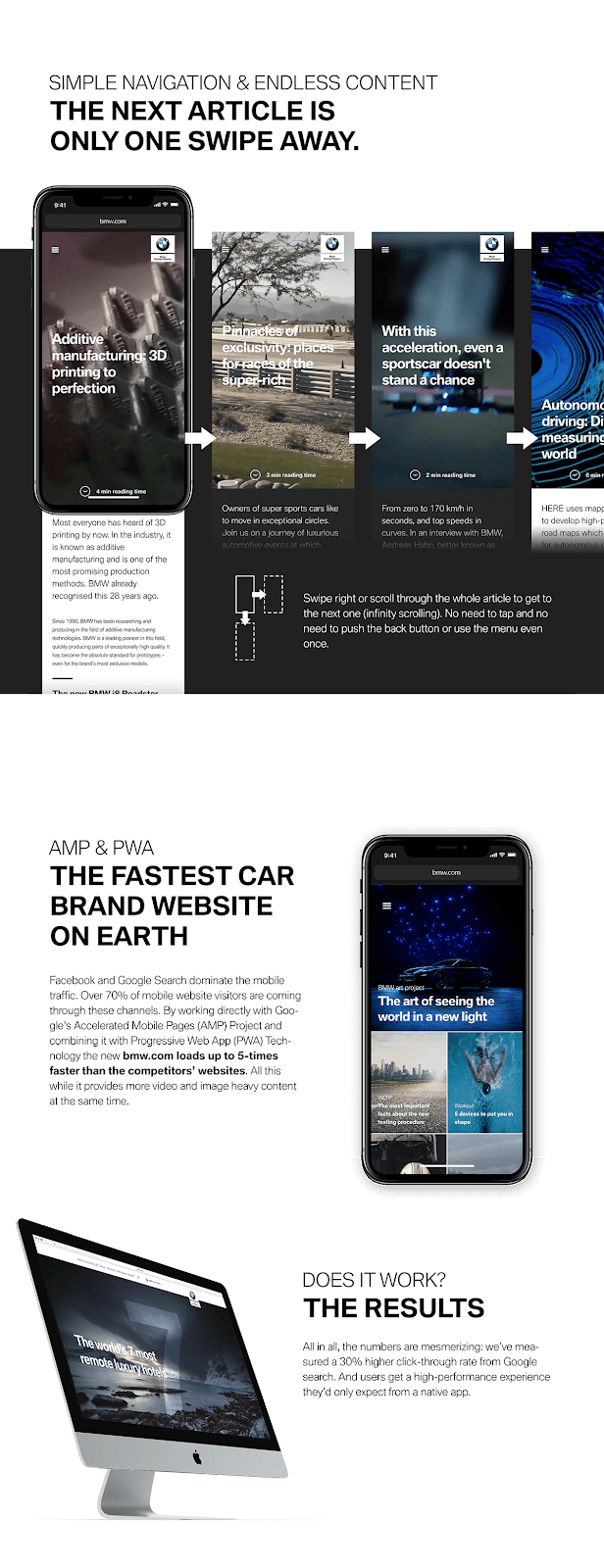
BMW relaunched BMW.com in 2017 as a PWA shell with AMP content, delivering articles, videos and stories in a fast, image-heavy mobile experience designed to get car shoppers browsing.
According to Think with Google, after the launch:
Pages loaded up to 4x faster
The share of visitors clicking through to BMW sales sites rose from 8% to 30%
Search engine optimization generated 49% more site visits than the old site
7. Adidas
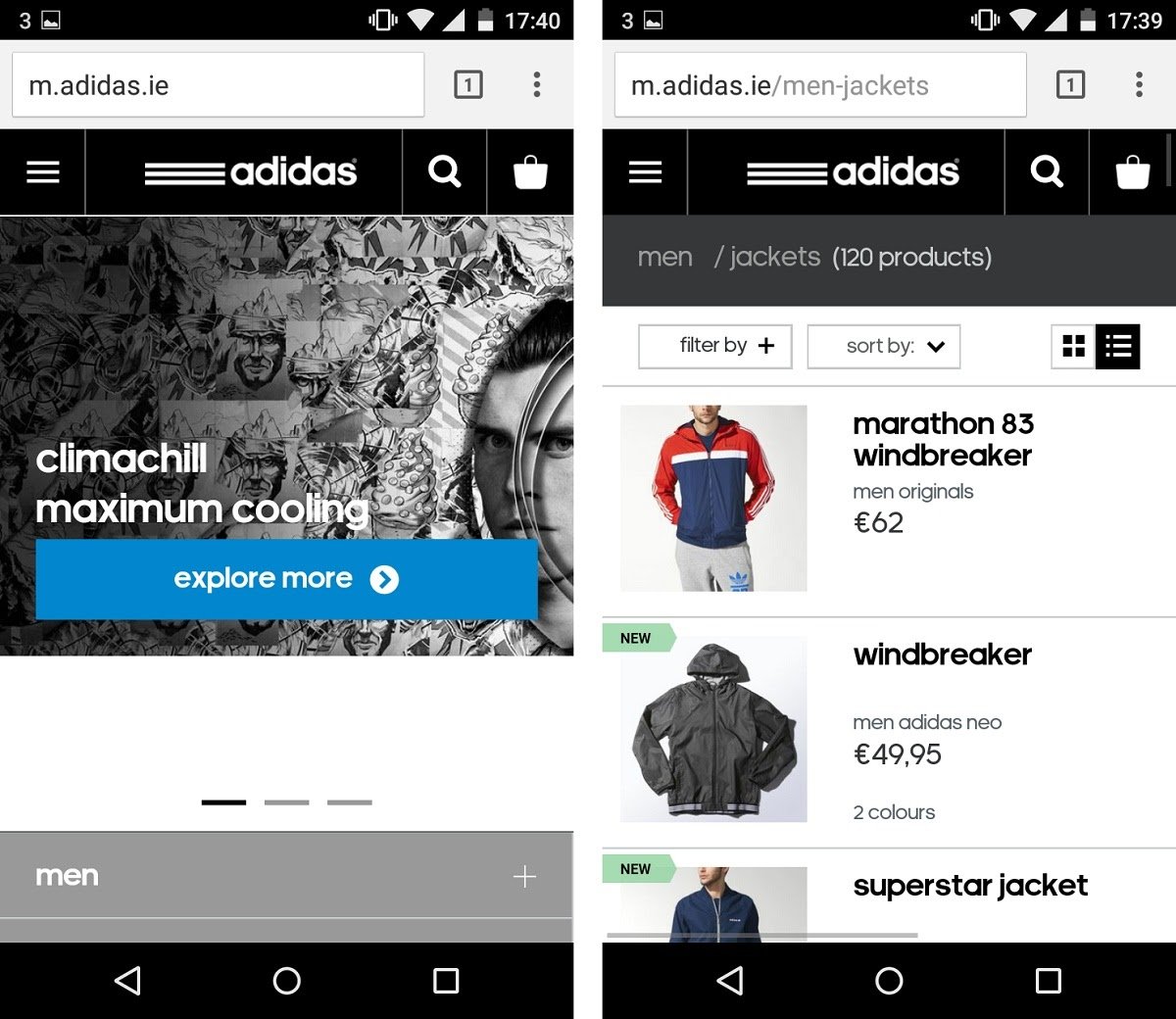
Source: DeviceAtlas
In 2018, Adidas introduced a PWA to reach mobile shoppers who didn't have its app installed. Its new digital strategy pushed faster user registration through prompts early in the purchasing process.
The same year, e-commerce was Adidas' fastest-growing channel, with sales up 36% (currency-neutral). That growth can't be credited to the PWA alone, but the PWA was part of the push behind it.
8. Trivago
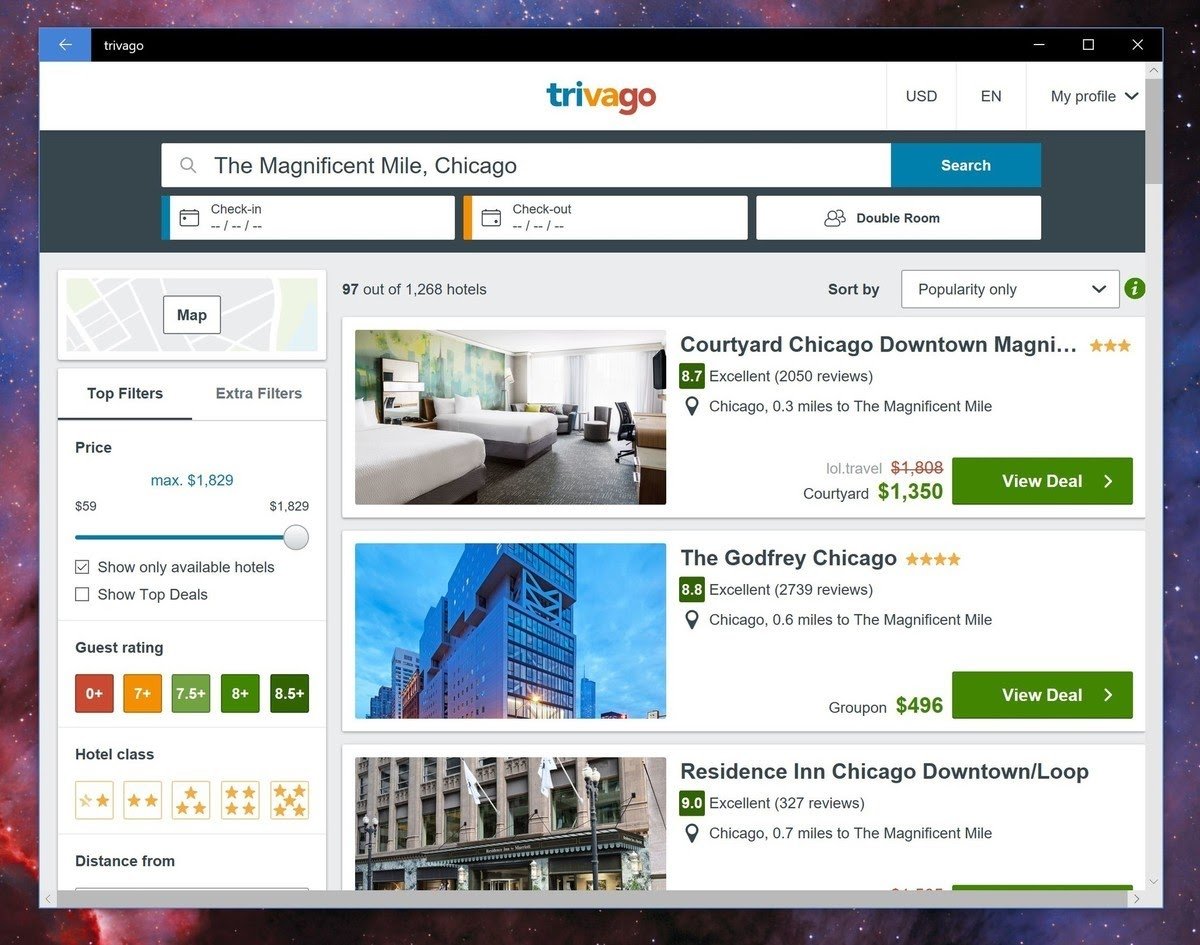
Trivago's app can also be installed through the Microsoft Store. Source: Windows Central
Booking platforms face a particular challenge: users mostly want to compare hotel prices quickly, and that behavior held back Trivago's mobile growth.
Trivago bet that a lightweight, low-data PWA would raise engagement. It rolled the PWA out step by step: offline functionality first, then push notifications and "add to home screen", and only after promising results did it deliver the complete PWA.
According to Think with Google, after the launch:
Clickouts to hotel offers increased by 97%
Users who added the PWA to their home screen revisited 150% more often
67% of users who lost their connection kept browsing once they were back online
9. Eleganza
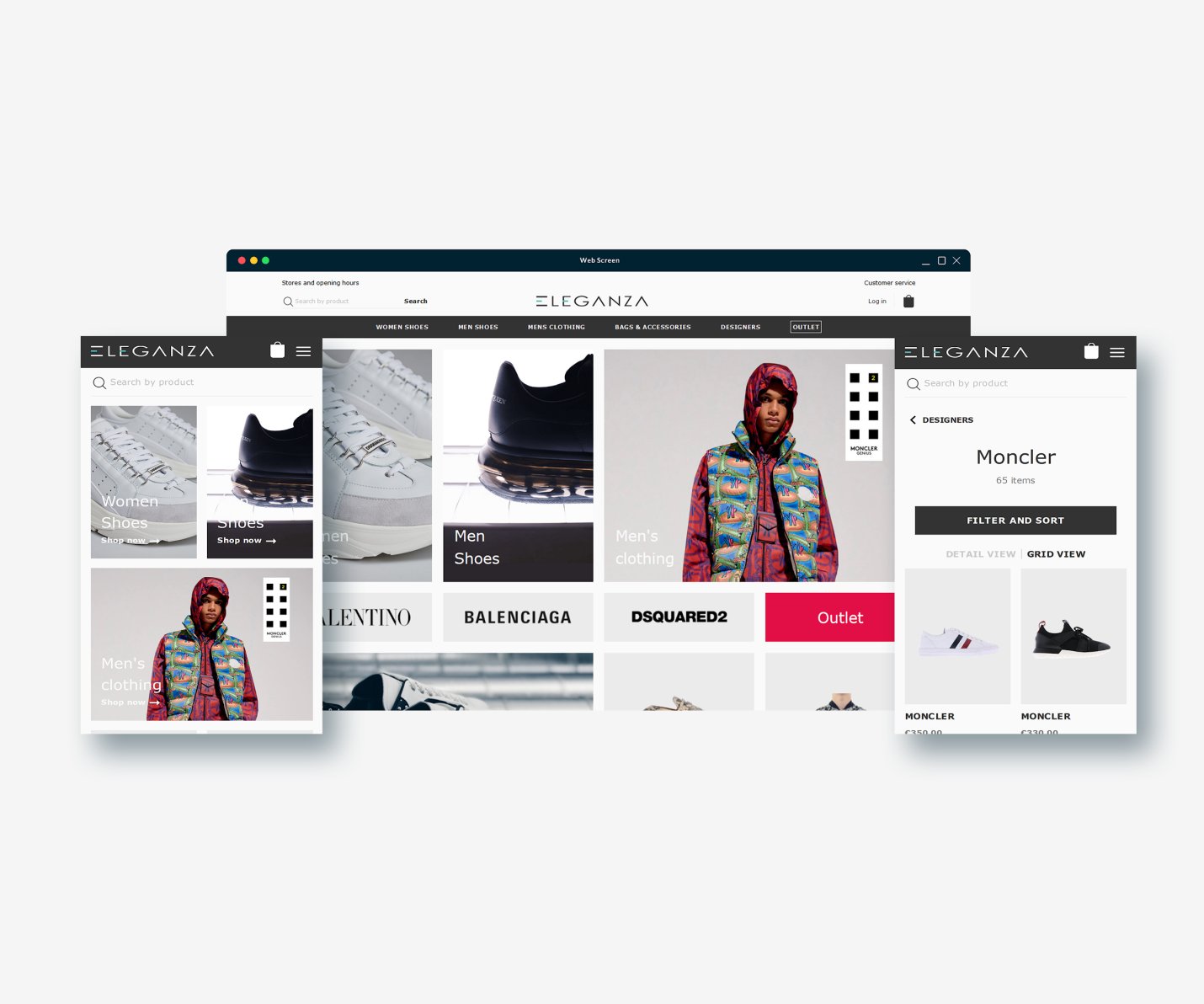
Source: Magenticians
The Eleganza clothing store needed to move to a newer version of its Magento e-commerce engine to cut loading times and reduce server crashes. It rebuilt the store as a Magento 2 PWA. Because most of the page's resources now load on the client side, the store became more stable and its server costs went down.
After the PWA launch:
Average server response was 372% faster
Pages loaded 23% faster on average
Pages per session grew by 76%
10. Pinterest
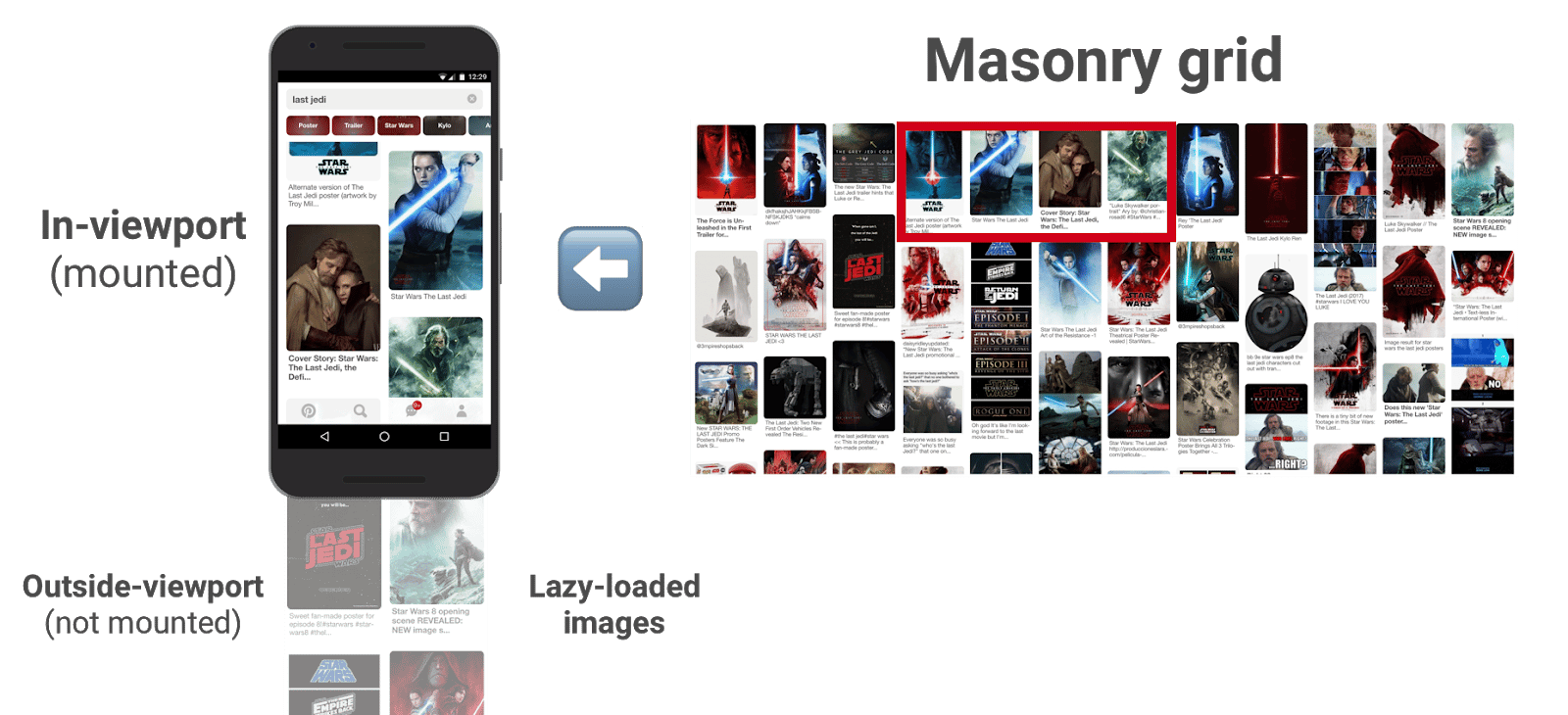
Source: Medium (Addy Osmani)
Pinterest's mobile web experience was so clunky that only 1% of mobile web users signed up, installed the app or logged in. In 2017, the engineering team rebuilt the mobile site as a PWA. Its core functions shipped in a JavaScript bundle of about 150 KB, and lazy-loaded images download just enough content to keep the user scrolling.
After the PWA launch:
New signups grew by 843% and logins by 370% year over year, according to Pinterest Engineering
User-generated ad revenue increased by 44%
Core engagements rose by 60%
11. Flipboard
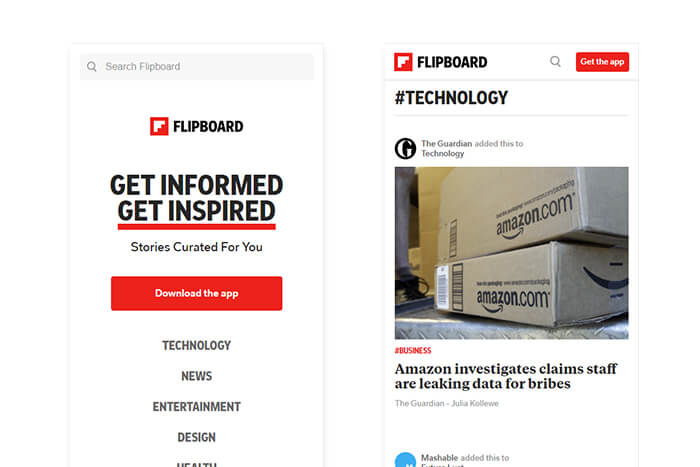
Source: Simicart
Flipboard is a social news platform where users create "magazines", collections of stories on a topic that others can read and follow. Until February 2015, Flipboard was available only as a mobile app, which limited who could join. Its web version, later built as a PWA, offers a consistent experience on any device while the native apps remain available for users who prefer them.
By March 2016, users had created 28 million magazines on Flipboard.
12. Uber
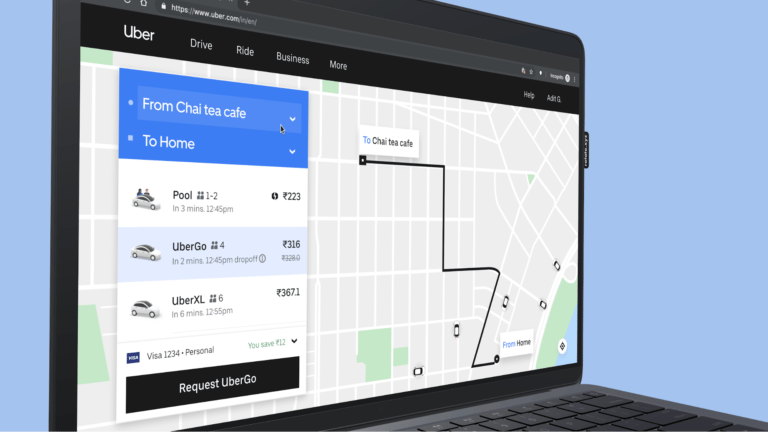
Source: Uber blog
Uber rebuilt its mobile web booking flow as a PWA, m.uber, in 2017, to reach riders in new markets with older phones and slow networks. The core app weighs about 50 KB (gzipped) and becomes interactive in about 3 seconds on a 2G connection.
Uber updated the web flow in 2019. Then-Senior Product Manager Madhur Chadha explained why the team kept investing in it:
While the updated web booking flow continues to serve riders on older and unsupported devices, we found that new users were particularly interested in using the web flow for their first-ever Uber trips.
13. Starbucks
Starbucks built a PWA for ordering and finding stores, so customers can browse the menu, customize drinks with instant price and nutrition feedback, and order from the browser. According to Nearform (formerly Formidable), the agency that built it, the PWA weighs 233 KB, 99.84% smaller than the 148 MB iOS app, which makes it practical on low-end phones and slow connections.
Key Takeaways
A PWA delivers app-like features (offline mode, push notifications, home-screen install) from one web codebase, with no app store required.
The strongest PWA results come from markets where installs are the bottleneck: AliExpress raised new-user conversion by 104%, and Pinterest grew signups by 843%.
Faster loading is the most consistent win across the examples, from Uber's 50 KB core app to BMW's up to 4x faster pages.
iOS is the main constraint: web push works only for installed web apps, and there's no install prompt.
Build a PWA first if search traffic drives your acquisition; go native when your product depends on deep hardware access.
Should You Invest in PWA Development?
A PWA makes the most sense as a first mobile touchpoint: it lets your team test conversion and user behavior before a native app project eats up a year's worth of resources. As the case studies above show, users want app-like functionality without the time-consuming installation. In our experience, clients who decide to invest in a PWA:
Want to use their established SEO position to acquire users
Don't need advanced native app functionality
Want to avoid app store commissions of up to 30%
Have limited mobile development budgets
The table below compares the three main options:
Criteria | Native (iOS and Android) | Cross-platform (Flutter, React Native) | Progressive web app |
|---|---|---|---|
Codebases to maintain | Two | One, with two build targets | One web codebase |
App store distribution | Required | Required | Optional (Google Play and Microsoft Store via wrappers) |
Discoverable through search | No (deep links only) | No (deep links only) | Yes |
Time to market | Slowest | Moderate | Fastest |
Hardware and OS access | Full | Nearly full | Limited, especially on iOS |
A PWA isn't always the right call. iOS is the main limitation: Safari supports web push only for web apps added to the home screen (since iOS 16.4), there's no automatic install prompt, and features like background sync aren't available. If your product depends on heavy background processing, deep hardware integration or high-end 3D graphics, or if most of your users are on iPhones and expect a native experience, a native or cross-platform app is the better investment.
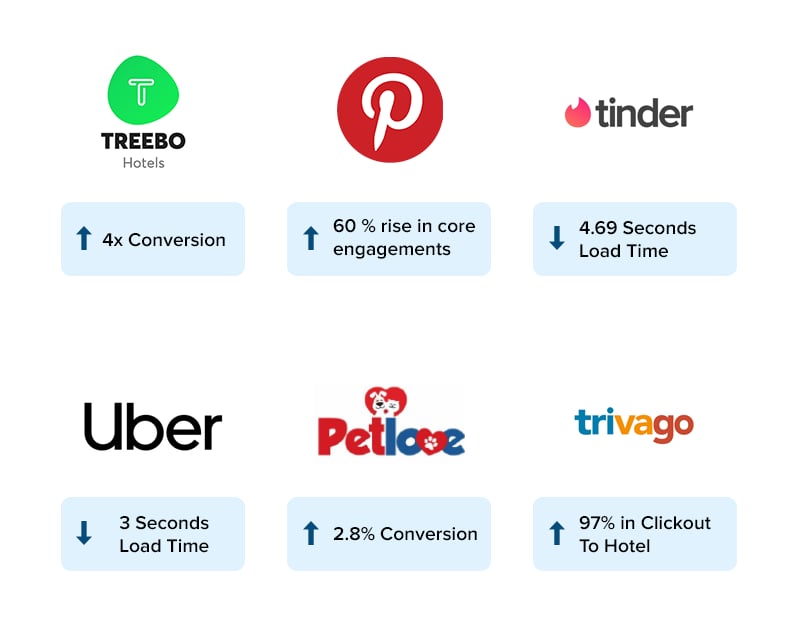
Progressive web apps deliver results in many industries. Source: Appinventiv
Adding a service worker is the easy part. The harder work is a caching strategy that never shows users stale data, performance that holds up on mid-range phones, and a clear decision about what iOS users will and won't get.
Over the past 16 years, we've delivered 900+ projects for clients ranging from startups to enterprises. If you're deciding between a PWA and a native app, tell us about your product, and we'll help you figure out which one is worth building.
PWA Examples FAQ

Grzegorz Hajdukiewicz
Chief Delivery Officer

With over a decade of experience in the IT industry, Grzegorz has a proven track record of delivering complex projects on time and on budget. At Monterail, he leads a team of dozens of developers, designers, project managers, and business analysts, ensuring the successful delivery of software solutions for clients worldwide. Passionate about agile methodologies and continuous improvement, he constantly seeks new ways to optimize the delivery process.