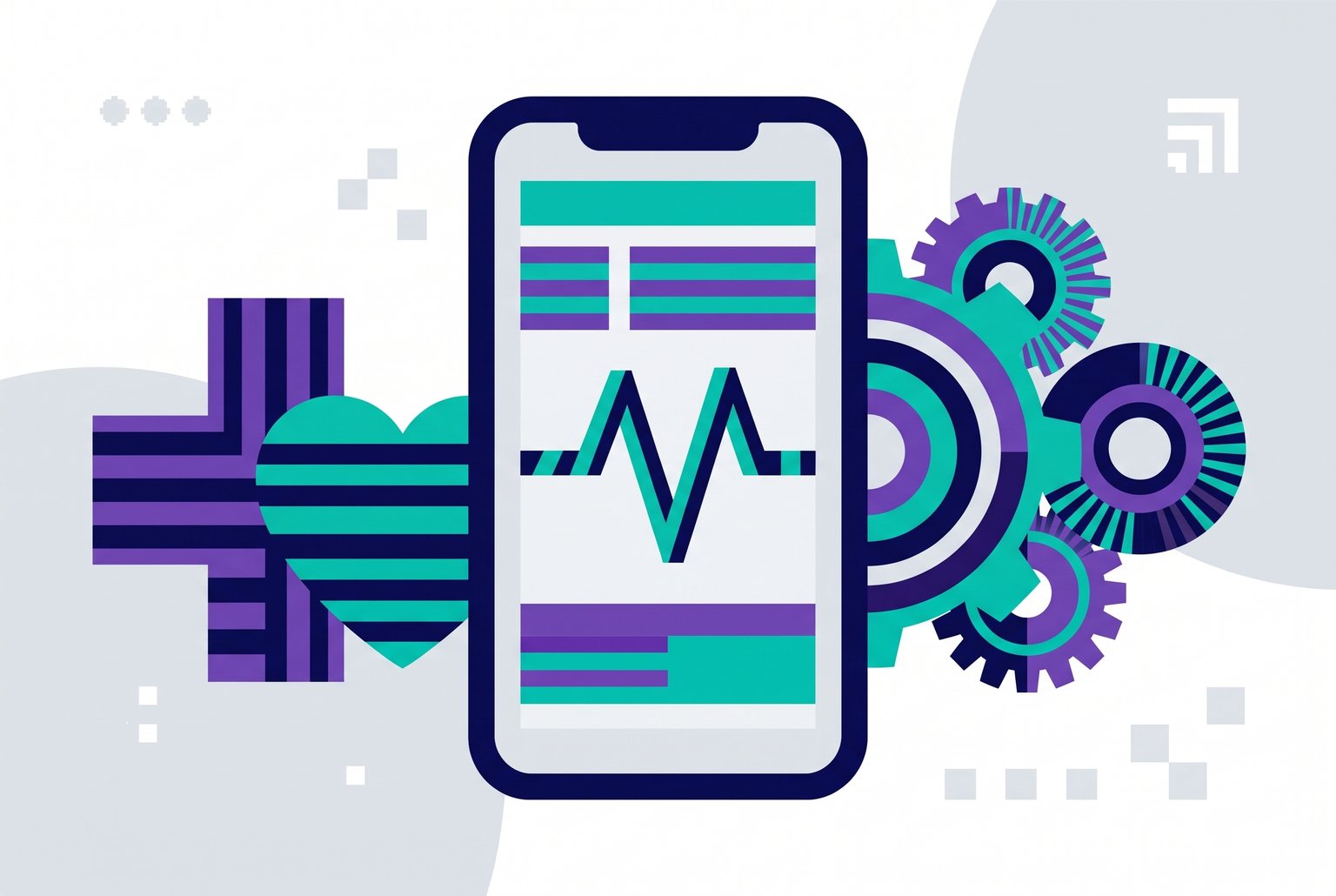
Healthcare app development is the process of designing, building and maintaining mobile or web software that helps people manage their physical or mental health, or helps clinicians deliver care.
The market is large and crowded: the IQVIA Institute counted 337,000 digital health apps in its 2024 report. What separates the products that last from the rest is rarely the feature list. It's the decisions made before the first line of code: what the app is legally, whose data it touches, and which clinical problem it solves.
This guide walks through those decisions, the features patients expect, including in mental health apps, and a step-by-step development process.
Executive Summary
The first decision in healthcare app development is classification: a general wellness app, a HIPAA-regulated tool that handles data for providers or insurers, or software that counts as a medical device.
That choice sets your regulatory burden, budget and timeline more than any technology choice does. Consumer health apps in the US mostly fall under the FTC's Health Breach Notification Rule and state health-data laws rather than HIPAA, while medical-device software answers to the FDA, the EU MDR and, for AI features, the EU AI Act.
Teams that settle classification during product discovery, design for vulnerable users, and validate with clinicians early avoid the most expensive rework.
What Is Healthcare App Development (and What Isn't It)?
Healthcare app development covers any software meant to improve health or support care: symptom and habit trackers, telehealth platforms, mental health apps, patient portals, and tools clinicians use to monitor patients. It overlaps with general mobile app development. Three things set it apart: health data is among the most sensitive data a product can hold, the users are often unwell or stressed, and the regulations depend on what the app claims to do.
What it isn't is one category with one rulebook. A meditation app and an app that adjusts insulin doses are both "healthcare apps," but only the second is likely to count as a medical device and need regulatory clearance before it can be sold.
What Is the Difference Between a Healthcare App and a Medical App?
A healthcare (or wellness) app supports general well-being, while a medical app is software whose intended use is to diagnose, treat, prevent or monitor a disease. The difference is the intended use, not the audience: a patient-facing app can be a medical device, and a tool for doctors might not be.
Wellness apps encourage healthy habits (sleep, fitness, stress, nutrition) without making medical claims. In the US, the FDA's General Wellness policy, updated in January 2026, keeps low-risk wellness products, including many wearables that estimate physiological parameters, outside device regulation as long as they make no disease claims. They still have to meet privacy law and the app stores' health rules (Apple, Google Play).
Medical apps, or Software as a Medical Device (SaMD), are regulated as devices. In the US that means the FDA's device software functions policy; in the EU, the Medical Device Regulation (MDR 2017/745), which replaced the older Medical Device Directive in May 2021. Clearance means a quality management system, clinical evidence and documentation that a wellness app never needs.
The line moves with your marketing copy. "Track your mood" is wellness; "detect depressive episodes" is a diagnostic claim. Decide which side you're on early, because crossing it later means re-architecting documentation, testing and sometimes the product itself.
How Big Is the Healthcare App Market in 2026?
The market keeps growing, but so does the competition. Grand View Research valued the global mHealth apps market at USD 37.5 billion in 2024 and projects it to reach about USD 86.4 billion by 2030, a 14.8% annual growth rate. Medical apps, not fitness or lifestyle ones, made up most of that revenue.
Mental health is one of the clearest sources of demand. According to SAMHSA's 2023 National Survey on Drug Use and Health, 22.8% of US adults, about 58.7 million people, had a mental illness in the past year, and only about half of them received treatment. That gap is what therapy platforms, self-guided CBT apps and employer mental health programs are trying to fill.
Growth doesn't mean easy entry. With hundreds of thousands of apps competing, the IQVIA report notes that apps backed by stronger clinical evidence see higher use and faster uptake. Evidence, not novelty, is what earns a place on a patient's phone or in a clinician's workflow.
What Types of Healthcare Apps Can You Build?
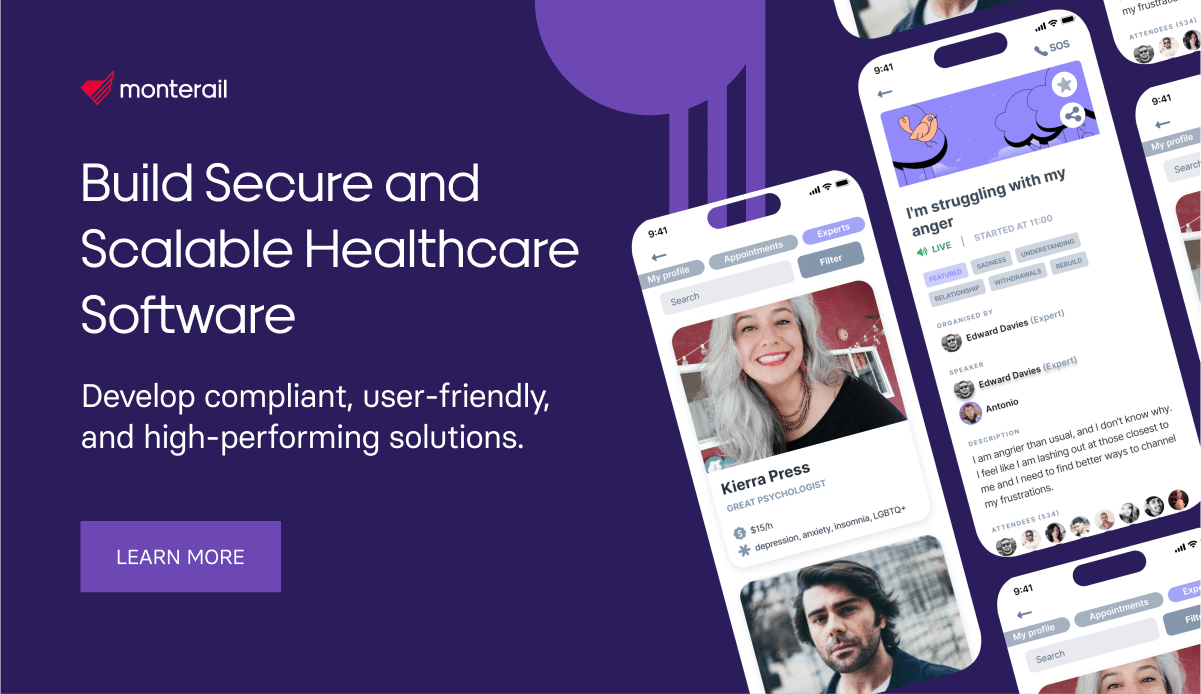
Healthcare apps fall into three broad groups: apps for patients, apps for clinicians and healthcare organizations, and mental health apps, which span both.
Apps for patients
Telemedicine and virtual-visit apps
Appointment booking and patient portals
Chronic condition management (diabetes, hypertension, asthma)
Medication reminders and prescription delivery
Women's and reproductive health tracking
Fitness, nutrition and preventive health apps
Apps for clinicians and healthcare organizations
Electronic Health Record (EHR) systems and EHR integrations
Clinical decision support and diagnostic software
e-Prescribing tools
Hospital management, billing and healthcare CRM
Clinical trial management
Medical education and professional community platforms
Mental health apps
Mental health apps range from low-risk wellness tools to regulated therapy, and where yours sits determines both the features and the compliance work:
Mindfulness and meditation apps such as Headspace and Calm offer guided meditation, breathing exercises and sleep content.
Online therapy platforms such as BetterHelp and Talkspace connect users with licensed therapists over chat, voice or video.
Self-guided therapy apps such as Youper deliver CBT exercises and mood tracking without a live therapist.
Psychoeducation apps such as the VA's PTSD Coach explain conditions and coping strategies.
Workplace mental health apps add well-being support to employee benefits and engagement programs.
An app that informs or supports well-being usually stays on the wellness side. One that screens for, diagnoses or treats a specific disorder is far more likely to be regulated as a medical device.
Which Features Should a Healthcare App Include?
The right features depend on the problem you're solving, but most successful healthcare apps, and mental health apps in particular, share a core set.
Simple, low-friction UI flows
People open health apps when they're unwell, anxious or tired. Mental health conditions can shorten attention spans and lower tolerance for friction, so short onboarding, simple login (biometrics, magic links), clear language and an obvious next step matter more here than in most consumer apps. Accessibility in healthtech design is part of this, not an extra.
Self-monitoring and daily check-ins
Tracking mood, symptoms, sleep, medication or triggers helps users see patterns and gives clinicians context between appointments. Daily check-ins, short questionnaires or a journal (text, voice or video) work well in mental health apps; a trigger log can help users connect stressful situations to their reactions. Keep inputs short: a check-in that takes five minutes won't survive a bad week.
Wearable and device integration
Syncing with Apple Health, Google Health Connect, smartwatches and connected devices (glucose monitors, blood pressure cuffs, sleep trackers) replaces manual entry with continuous data. Plan for messy data from day one: gaps, duplicate readings and devices that report the same metric differently.
Secure communication with clinicians
Video visits, secure chat and asynchronous messaging are now baseline expectations for telehealth and therapy apps. For platforms that match patients with providers, good search filters (specialty, language, availability, insurance) matter as much as the call itself. Video also needs to hold up on poor connections, as we learned building group therapy sessions for October Health.
Safe community features
Peer support groups and forums can help, especially in mental health, but only with moderation built in: anonymous profiles, keyword filtering, blocking and reporting, and a clear escalation path when a post suggests someone is in crisis.
Crisis and safety pathways
Any app that touches mental health needs to show users where to get urgent help (in the US, the 988 Suicide & Crisis Lifeline) and needs a defined process for what happens when the app detects risk. This is a design and legal decision, not just a link in the footer.
Which Healthcare App Trends Matter in 2026?
Two trends are changing what healthcare apps can do, and both raise the regulatory stakes.
AI moving from add-on to core workflow
AI in healthcare apps has moved past chatbots into triage, documentation, personalized care plans and predictive risk scoring built from longitudinal patient data. The opportunity is real, but so is the scrutiny. In the US, the FDA updated its clinical decision support guidance in January 2026; in the EU, AI in medical devices counts as high-risk under the AI Act, with obligations for device-embedded AI now deferred to August 2028 by the Digital Omnibus. If AI influences a clinical decision, budget for validation, monitoring for drift and human oversight from the start.
Wearables and patient-generated health data
Consumer wearables now estimate heart rate variability, blood oxygen and sleep stages, and the FDA's 2026 wellness update made more of them easier to bring to market. For app builders, the value is less in collecting this data than in turning it into something a patient or clinician can act on, and in deciding how much of it belongs in a clinical record.
How to Develop a Healthcare App: Step by Step
Building a healthcare app follows the same arc as any digital product, with compliance, clinical input and safety woven into every step rather than bolted on at the end.
Step 1: Pick a narrow problem and a niche
Step counters, calorie trackers and meditation apps have been around for years, so a generic idea will struggle. Define the problem (tracking, treatment support, communication, education), the category (chronic disease, mental health, women's health, fitness) and the primary user (patient, caregiver, clinician). Klue is a good example of going narrow: it started by detecting eating and drinking gestures from a smartwatch, then expanded into mealtime insulin reminders for people with Type 1 diabetes.
Step 2: Run product discovery with your real users
Product discovery translates your users' problems into specific features, and in healthcare the context shapes everything: income, culture, language, devices and connectivity. When we rebuilt Merck DORA, a diabetes risk assessment tool for African countries, research showed that 90% of visitors used mobile devices and 60% used Opera Mini. That finding drove the whole build: an app reduced to 0.7 MB, a dedicated Opera Mini version, and support for Swahili, Amharic and other languages across nine countries.
Step 3: Settle classification and compliance
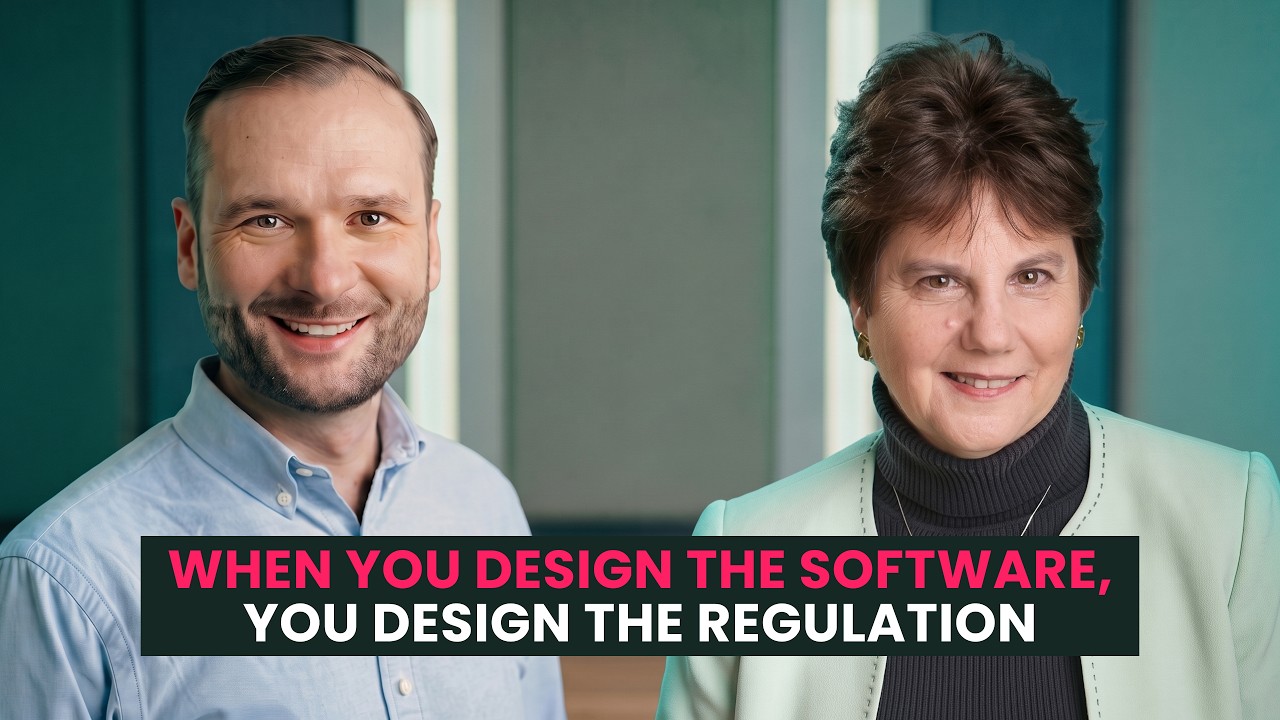
Decide whether you're building a wellness app, a HIPAA-covered tool or a medical device (see the regulations section below), and design data flows, hosting and vendor choices around that answer. For a practical view of how compliance shapes the build itself, watch Piotr Zając, our HealthTech Director, and Janet Kwiatkowski of MAE Group in "When You Design the Software, You Design the Regulation."
Step 4: Assemble a team with health-domain experience
Platform and stack decide much of the team's makeup, alongside design, QA and project management. What healthcare adds is people who have shipped regulated health products before: engineers who know HIPAA and GDPR in practice, designers used to vulnerable users, and access to clinical advisors who can sanity-check workflows and content.
Step 5: Build and test an MVP
A Minimum Viable Product lets you test whether the core idea works before you invest in everything around it. In healthcare, "minimum" still includes security, privacy and safety: test functionality and usability, but also performance on real devices and networks, accessibility and security, including penetration testing before real patient data goes in. UK prescription delivery startup Scription went from discovery to an MVP of its web and mobile apps in seven months this way.
Step 6: Collect feedback from patients and clinicians
In-app analytics show which features people use; interviews with patients and clinicians explain why. Use both to cut features nobody needs and to fix the ones that matter. Clinician feedback is especially valuable when the app's output ends up in front of a doctor.
Step 7: Launch and distribute
Consumer apps launch through the App Store and Google Play, so have privacy policies and health disclosures ready before submission. Apps for clinicians usually reach users through hospitals, health systems or public tenders instead. Those sales cycles are long and expect proof of compliance, security reviews and integration with existing systems, so plan for them in your runway.
Which Regulations Apply to Healthcare Apps in the US, EU, UK and Canada?
Which rules apply depends on where your users are, whose data you process and what your app claims to do. Most apps fall under several at once. If your app might count as a medical device, start with our free SaMD readiness self-assessment, Building It Right the First Time, which shows which regulatory gaps to close before you build.
United States
HIPAA and HITECH apply to covered entities (providers, health plans, clearinghouses) and their business associates. A consumer app isn't covered by default, but if you build or host software that handles patient data on behalf of a provider or insurer, you're a business associate and must sign a BAA and meet the HIPAA Security Rule.
The FTC Health Breach Notification Rule covers most health apps that HIPAA doesn't. The FTC's 2024 amendments made clear that sharing health data without authorization, for example with ad platforms, counts as a breach that users must be notified about.
State health-data laws such as Washington's My Health My Data Act require explicit consent for collecting consumer health data, and California's CCPA/CPRA treats health information as sensitive personal data.
FDA rules apply if your software is a medical device, as described above.
ADA accessibility expectations apply to many digital health services; WCAG 2.1 AA is the usual benchmark.
European Union
GDPR treats health data as a special category that needs an explicit legal basis, data minimization and, in most cases, a data protection impact assessment.
MDR applies if your app is a medical device.
The EU AI Act adds high-risk obligations for AI in medical devices, now due by August 2028.
The European Accessibility Act has applied since June 2025 to many consumer-facing digital services (European Commission).
The European Health Data Space regulation, in force since 2025, will phase in interoperability and patient data access requirements for EHR systems over the coming years (European Commission).
United Kingdom and Canada
UK: UK GDPR and the Data Protection Act 2018 govern health data; the MHRA regulates software as a medical device.
Canada: PIPEDA and provincial health privacy laws apply, and Health Canada regulates medical device software.
How Do You Build User Trust in a Healthcare App?
Trust is the hardest feature to build in healthcare, and it decides whether people keep using the app. Four practices matter most.
Treat privacy as part of the product
Collect only the data you need, keep health data away from third-party ad and analytics SDKs, and explain in plain language what you store and why. The FTC's enforcement actions against health apps that shared data with advertisers show what's at stake.
Be transparent about cost and limits
Say clearly what's free, what's paid and what the app can't do. Mental health apps in particular should be honest about the difference between self-guided support and therapy with a licensed professional.
Offer value before asking for payment
Free tiers or trials let people test the app before handing over money or data. Headspace, for example, makes part of its content free so users can try it before they subscribe.
Personalize with consent
Reminders timed to a user's routine, content matched to their goals and plans adjusted to their data improve retention, but only if users understand and agree to how their data is used. Back it all up with human support: tutorials and FAQs handle the basics, while responsive human help handles the moments that decide whether someone stays.
One of the most important aspects for one of our clients is the speed at which prescriptions need to be filled and delivered to a patient. This also meant that we had to design UX and backend architecture that would allow for instant feedback and an extremely fast information flow. It seems like after the Covid-19 pandemic everyone wants a personalized and more human experience rather than an online questionnaire or a chatbot.
Anna Rakowiecka, Senior Project Manager at Monterail
What Healthcare Apps Has Monterail Built?
We've built healthcare and well-being products for global pharma companies and startups alike:
Merck DORA: a lightweight diabetes risk assessment web app for low-bandwidth connections, now available in nine African countries.
Merck Unite: a web and mobile community platform where doctors in Africa who treat diabetes share knowledge and educational content.
Scription: a UK prescription delivery service for patients and pharmacists, taken from discovery to MVP in seven months.
October Health (formerly Panda): a mental health app with group therapy sessions over audio and video streaming designed to work on poor connections.
Cooleaf: an employee engagement and recognition platform that grew from an MVP to 110,000 active users across 103 organizations.
Key Takeaways
Classification (wellness, HIPAA-covered or medical device) shapes cost and timelines more than your tech stack.
Most US consumer health apps fall under FTC and state health-data rules, not HIPAA.
Medical claims in your marketing copy can turn a wellness app into a regulated device.
Mental health apps need crisis pathways and moderation, not just good UX.
Clinical evidence, not feature count, drives adoption in a market of 300,000+ apps.
What Does It Take to Build a Successful Healthcare App?
A successful healthcare app solves one well-defined problem for a specific user, is classified correctly from day one, and earns trust through how it handles data and safety. Features matter, but most failures trace back to earlier decisions: a vague niche, a wellness app that drifted into medical claims, or compliance treated as a launch-week checklist. If you're planning a healthcare or mental health app and want a partner who has worked through these decisions before, learn how Monterail approaches healthcare software development and get in touch.