Nowy standard. Twoje centrum tworzenia inteligentnego, szybkiego i zrównoważonego oprogramowania AI

Table of Contents
AngularJS long-term support ended at the close of 2021, so a team running AngularJS today has two viable alternatives: pay a vendor for extended support, or migrate to Angular, Vue.js, or React. The two combine well, because extended support can keep the old code patched for as long as an incremental migration takes.
Monterail, an official Vue and Nuxt Partner, has moved production apps off AngularJS to both Vue and React. Our Vue.js development team rewrote Easyship's website from AngularJS to Vue. We also migrated Cooleaf's frontend away from AngularJS while maintaining its legacy codebase and implementing new features.
Executive Summary
AngularJS no longer has long-term support from Google: official LTS ended on December 31, 2021, and the NVD records for two flaws disclosed in 2024 and 2025 state that no fix will come. In Stack Overflow's 2026 Developer Survey, 6% of respondents still reported extensive work with it over the past year.
Teams in that position can buy extended support from HeroDevs or OpenLogic, migrate to Angular, Vue.js, or React, or combine the two. An incremental hybrid migration lets them move without freezing feature work.
What Does AngularJS End of Life Mean for Your App in 2026?
The Angular team's LTS announcement limited fixes to security flaws in the 1.7.x branch and to browser or jQuery releases that would break production apps, and a COVID-19 extension pushed that window six months further.
Those are exactly the fixes that stopped. CVE-2024-21490, a regular-expression flaw in the ng-srcset directive scored 7.5 (High) by Snyk as CVE Numbering Authority, affects every release from 1.3.0, and its NVD record states: "This package is EOL and will not receive any updates to address this issue."
CVE-2025-0716, published in April 2025, affects all versions and carries a similar note. Each new finding leaves the team to write its own fix, buy one from an extended-support vendor, or accept the risk until AngularJS is gone.
Option | Support status (Nov 2026) | 2026 survey usage | Migration path | Best fit |
|---|---|---|---|---|
Stay on AngularJS | Upstream support ended December 31, 2021 | 6.0% | None | Apps already scheduled for retirement |
Paid extended support | HeroDevs NES (no stated end date); OpenLogic's AngularJS LTS (through 2030) | n/a | Vendor-patched builds, no rewrite | Bridging a planned migration |
Angular | 16.0% | ngUpgrade hybrid, component by component | Component-style code, teams wanting an opinionated framework | |
Vue.js | Vue 3.5.x is the latest stable line; Vue 2 reached EOL in December 2023 | 17.2% | Vue mounted inside AngularJS views, component by component | Template-heavy AngularJS apps |
React | 41.5% | JSX rewrite; how incremental depends on the app | Teams reusing code on native mobile |

How Does an Incremental AngularJS Migration Work?
A big-bang rewrite is rarely possible, technically or commercially, and freezing development for months to finish one makes little sense for a product with paying users. The workable approach is a hybrid app, where the new framework and AngularJS run side by side while code moves across in slices and features keep shipping.
Victor Savkin's article on two approaches to upgrading Angular apps describes the slicing options, and the same split can be applied to Vue and React targets. Vertical slicing moves the app "route by route, screen by screen, or feature by feature"; shared components may end up duplicated along the way, and he calls that duplication "one of this approach's downside". We recommend vertical slicing for large applications because the code stays easier to test and debug.
Horizontal slicing starts with reusable components such as inputs and date pickers, and in Savkin's words, "We can upgrade a component and ship it to production in a day." We recommend it for smaller apps with small teams. The trade-off is that both frameworks end up mixed inside the same modules, which makes the code much harder to manage.
The hybrid state needs an exit date set up front. To avoid adding new technical debt, the target is zero AngularJS lines, and the hybrid phase should end as fast as possible because the AngularJS bundle, along with any unpatched CVEs, stays in production until the last slice ships. Along the way, progress is easy to track as the share of routes or components already migrated.
Is Paid Extended Support a Viable AngularJS Alternative?
Extended support keeps AngularJS patched without rewriting your code, which makes it a workable bridge and a poor destination. In its guidance on paths forward for AngularJS, the Angular team named one vendor: "The independent team at HeroDevs offers extended long term support for AngularJS."
According to HeroDevs' Never-Ending Support for AngularJS, NES ships drop-in builds for the AngularJS lines it covers, with a new release each time the company validates and fixes a security issue.
OpenLogic's AngularJS LTS covers the 1.5, 1.6 and 1.8 lines, patching CVEs rated medium and above and fixing breakage caused by browser or jQuery updates. The vendor promises applications will "remain secure and fully functional through 2030". OpenLogic itself positions the service as a way to extend a migration timeline.
The friction sits in cost and in what stays unsolved. Neither vendor publishes prices, and HeroDevs bases its quote on the number of users committing code to the project repository. If developers writing the new frontend commit to the same repository during a hybrid migration, they count too.
Patched builds also keep the app on a framework whose official npm packages are marked deprecated. Extended support earns its cost when it covers a migration with a fixed end date.
Should You Upgrade from AngularJS to Angular?
Angular is the path Google itself recommends: the Angular team's end-of-support post encourages teams "to upgrade their applications to the AngularJS successor". The official upgrade guide states that "Applications built with component directives are much easier to migrate to Angular", and says of lifecycle hooks such as $onInit that "They all have nearly exact equivalents in Angular". Where an app predates those patterns, introducing them in AngularJS first gives the team a stepping stone.
Angular is a separate framework, so the upgrade is a migration in practice. The guide's approach is "running the two frameworks side by side in the same application", with the UpgradeModule API used "to bootstrap the hybrid upgrade application" and the Angular CLI scaffolding the new side. The guide adds that teams who plan to adopt TypeScript should bring the compiler in before the upgrade itself begins, and in our experience typing surfaces suboptimal solutions and bugs nobody knew existed.
For a wider view of the Angular route, watch Victor Savkin's talk on upgrading enterprise Angular applications, and read Etienne Talbot's advice from Poka's AngularJS-to-Angular upgrade.
Choose Angular if your app already uses components and lifecycle hooks and your team prefers an opinionated framework. Angular v22, released in June 2026, has long-term support until June 2028, so the target comes with a published support horizon.
Why Do Template-Heavy AngularJS Apps Move to Vue.js?
Vue's own documentation calls it "flexible and incrementally adoptable", so a Vue instance can take over one AngularJS view at a time while the roadmap continues. Holistics worked this way, wrapping existing AngularJS controllers in Vue and completing its migration from AngularJS to Vue in "a 4-month non-intrusive effort". The team picked Vue because "we saw a clear, incremental migration path to VueJS without disrupting our development roadmap." Unbabel took a similar step-by-step route in its progressive AngularJS-to-Vue migration.
Template-heavy apps gain the most. Vue extends standard HTML with its own template syntax, close enough to AngularJS that Holistics found most changes came down to swapping ng- prefixes for v-, and its engineers praised Vue's documentation. Vue props follow a one-way, parent-to-child binding, a practice worth adopting during the move.
In our write-up of the AngularJS-to-Vue rewrite, Easyship's old AngularJS website "was way too slow which made users bounce too often." The Easyship case study records a Nuxt-based Vue rewrite delivered in under three months, with performance improved by 37% and conversion rates up 36%.
Vue suits teams that know AngularJS templates well and cannot pause feature delivery.
When Does React Make Sense After AngularJS?
React has the widest adoption of the three targets in Stack Overflow's 2026 survey. That size cuts both ways: a larger pool of developers already knows it, and the wide choice of libraries adds flexibility while making it harder to settle on one per problem.
React replaces HTML templates with JSX, "a syntax extension for JavaScript that lets you write HTML-like markup inside a JavaScript file". For a team used to AngularJS templates, that can be a bigger adjustment than Angular or Vue templates, and Holistics ruled React out both because it found no gradual migration path that kept features shipping and because JSX clashed with its HTML templates.
The strongest case for React is code reuse beyond the browser, as React Native brings React to native mobile under the slogan "Learn once, write anywhere".
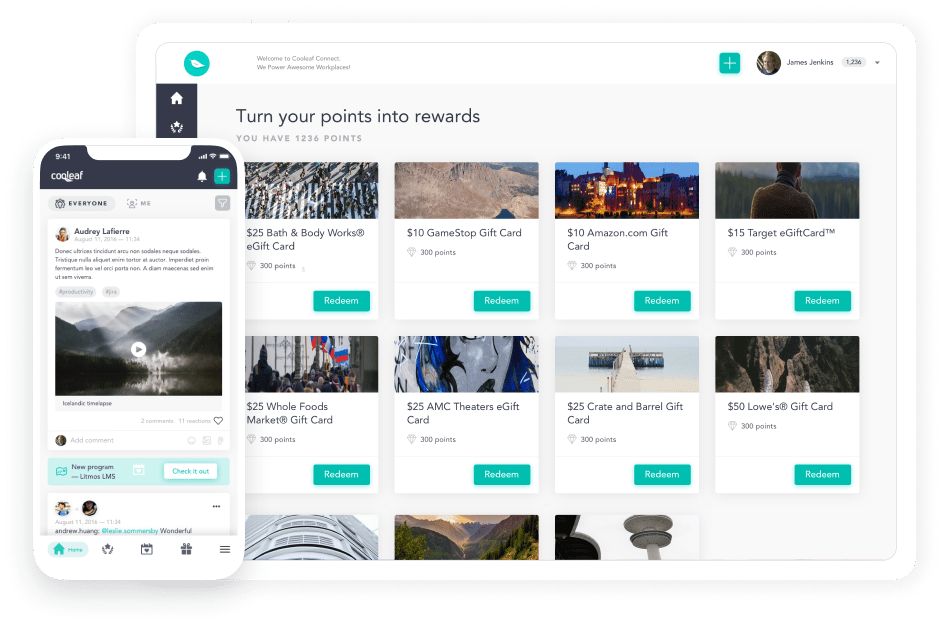
Cooleaf took this route: facing "a critical dual challenge: maintaining the legacy codebase while implementing new features", our team "migrated from AngularJS to React Native Web, enabling significant code sharing between platforms", with ReactJS on the web and React Native on iOS and Android, as the Cooleaf case study describes.
Mobile reuse alone does not force the choice. NativeScript works with Angular and Vue as well as React, so Angular and Vue teams also have a route to native apps.
Choose React when native mobile code reuse is on the roadmap, and your team is comfortable moving templates into JavaScript.
What Slows Down a Move Off AngularJS?
Security exposure lasts as long as the hybrid phase, because AngularJS code keeps shipping until the last slice lands. A long migration therefore needs a decision for that window: extended support, in-house fixes for each new disclosure, or accepting the risk.
Vertical slicing brings dual maintenance: any shared component duplicated while both frameworks are live needs every bug fix twice, which is why the end date of the hybrid phase deserves as much planning as its first slice.
Upstream help is gone. The AngularJS npm packages remain available but marked deprecated. With the angular/angular.js repository archived as read-only, a bug your team finds in the framework has no issue tracker to go to, so your team writes and maintains the fix itself.
The target framework will age too. Vue 2 reached end of life at the end of 2023, and Angular publishes an LTS end date for every supported major, so migrating onto the current major release, with a budget for regular upgrades afterward, keeps the team from repeating this exercise a few years later.
Key Takeaways
Google ended AngularJS support on December 31, 2021; NVD states that CVE-2024-21490, disclosed in 2024, will receive no fix.
6% of respondents in Stack Overflow's 2026 survey still reported extensive work with AngularJS.
HeroDevs and OpenLogic sell extended support that patches AngularJS while you migrate; treat it as a bridge with an end date.
A hybrid migration keeps features shipping; in Victor Savkin's experience, horizontal slicing lets a team upgrade a component and ship it in a day.
Pick Angular for component-style code, Vue for template-heavy apps (Easyship's rewrite improved performance 37%), and React for native mobile reuse.
Which AngularJS Alternative Fits Your Team in 2026?
No single replacement for AngularJS is best, and we don't have a favorite among the three, though anyone who has followed Monterail knows why we love, use, and support Vue.js. The deciding factors are the code you already have and the timeline you can commit to. Component-style AngularJS points toward Angular. An app built on AngularJS templates fits Vue, while a native mobile roadmap favors React.
Extended support buys time and leaves the destination open, so it pays off only when a hybrid migration with a fixed end date runs alongside it. At some point every working AngularJS app will have to move, and every month the first slice is delayed adds a month of extended-support fees, in-house patching, or unpatched risk at the end of the migration.
The framework recommendations build on insights from Szymon Korzeniowski, and the Vue and React advice draws on Monterail's own AngularJS migrations for Easyship and Cooleaf. If you are weighing these options for a production app, talk to our JavaScript team about where your codebase stands.
AngularJS Long-Term Support FAQ

Karolina Gawron
Former Content Marketing Manager

Karolina joined the Monterail team as the first dedicated marketer to jumpstart our marketing efforts. She excels at taking ownership for marketing automation efforts, chatbots, content creation plan, SEO, clients research, sales materials, website management & analytics, and CRO.