The New Default. Your hub for building smart, fast, and sustainable AI software
Table of Contents
Design is the work of deciding what something should be, and why, before anyone builds it. In software, that starts with understanding the people who'll use a product and the constraints it has to live with.
Then you have to make a series of impactful decisions: what the product does, how it behaves, and how it looks.
Most people only meet design at the end of that chain, as screens, colors, and logos, and mistake the visible output for the whole thing.
But that's not all that design is, it can get quite complicated in a real-world product team, and there are times when it doesn't pay off.
Executive Summary
Design is the process of defining what a product should be, based on a deliberate effort to understand its users, its business context, and its constraints. Styling (color, typography, layout) is one of its outputs.
For a software business, design reduces risk. One McKinsey study of 300 public companies found that the top quartile on its design index posted revenue growth 32 percentage points higher than industry peers.
The top performers treated design as a leadership-level decision process with its own metrics, rather than a finishing step after the decisions were made.
What Is Design, and How Is It Different From Styling?
Design is a discipline focused on how people interact with the things made for them. The International Council of Design describes it as practice that takes into account "aesthetic, functional, contextual, cultural and societal considerations." Aesthetics is one item on that list of five.
Styling is the part of design you can see. The palette, the type, the spacing, or the illustration style. Styling answers "how should this look?", while design has to settle earlier and harder questions first. Who is this for? What problem are they actually trying to solve? What should the product deliberately not do? Which constraint (budget, regulation, technology, time) is the real bottleneck?
The output of design doesn't have to be visual at all. It might be a user flow, a prioritized backlog, a decision to drop a feature, or a set of rules a design system enforces across a hundred screens.
Styling | Design | |
|---|---|---|
Core question | How should this look? | What should this be, and why? |
When it happens | After decisions are made | Before and during them |
Typical output | Visual assets, UI polish | Research insights, flows, prototypes, design systems, UI |
What it reduces | Perceived roughness | Risk of building the wrong thing |
Who's involved | Mostly designers | Designers, product, engineering, business stakeholders |
Why Does Design Matter to a Software Business?
Design matters because the most expensive mistake in software is building something nobody needs. Both mistakes start with decisions made before anyone understood the users and the context well enough.
A team might skip discovery to save time and go straight to development. Untested assumptions turn into features, code, and commitments. Integrations, data models, and documentation all depend on those assumptions. When real users finally arrive and things start falling apart, it can usually be traced back to one of those assumptions. Budgets slip and release dates move, and in a SaaS business activation and retention suffer.
The data supports the business case, with a caveat. In The Business Value of Design (2018), McKinsey tracked the design practices of 300 publicly listed companies over five years. Companies in the top quartile of its McKinsey Design Index posted 32 percentage points higher revenue growth and 56 percentage points higher total returns to shareholders than their industry counterparts. The same research found that over 40 percent of the companies surveyed weren't talking to their end users during development, and just over half had no objective way to assess or set targets for their design teams' output.
This is a correlation, and it can't prove that design alone caused the growth. Companies that invest in design well tend to be well run in general. Still, the data shows that top performers treated design as a measured, leadership-level capability and gave it targets, the way they would any revenue-relevant function.
What Does Design Actually Involve in Product Development?
In a software product team, design moves a project from open questions to specific decisions. Teams name the stages differently, but the order of the work rarely changes.
It starts with discovery: user interviews, stakeholder workshops, analytics reviews, and competitor audits that establish which problem is worth solving. What comes out of it is a shared picture of the users, their jobs to be done, and the constraints the product has to respect.
The team then turns that research into decisions. Scope, user flows, information architecture, and the line between "first release" and "later" all get drawn here. This is where design does most of its risk reduction, because changing a flow diagram costs minutes and changing shipped code costs sprints.
Next, clickable prototypes let real users try the product before it exists. You don't need a large panel. Jakob Nielsen's often-cited analysis shows that small rounds of about five users per test uncover most usability problems, as long as you run several rounds. With AI-assisted tools, a testable prototype can now be ready in days rather than weeks.
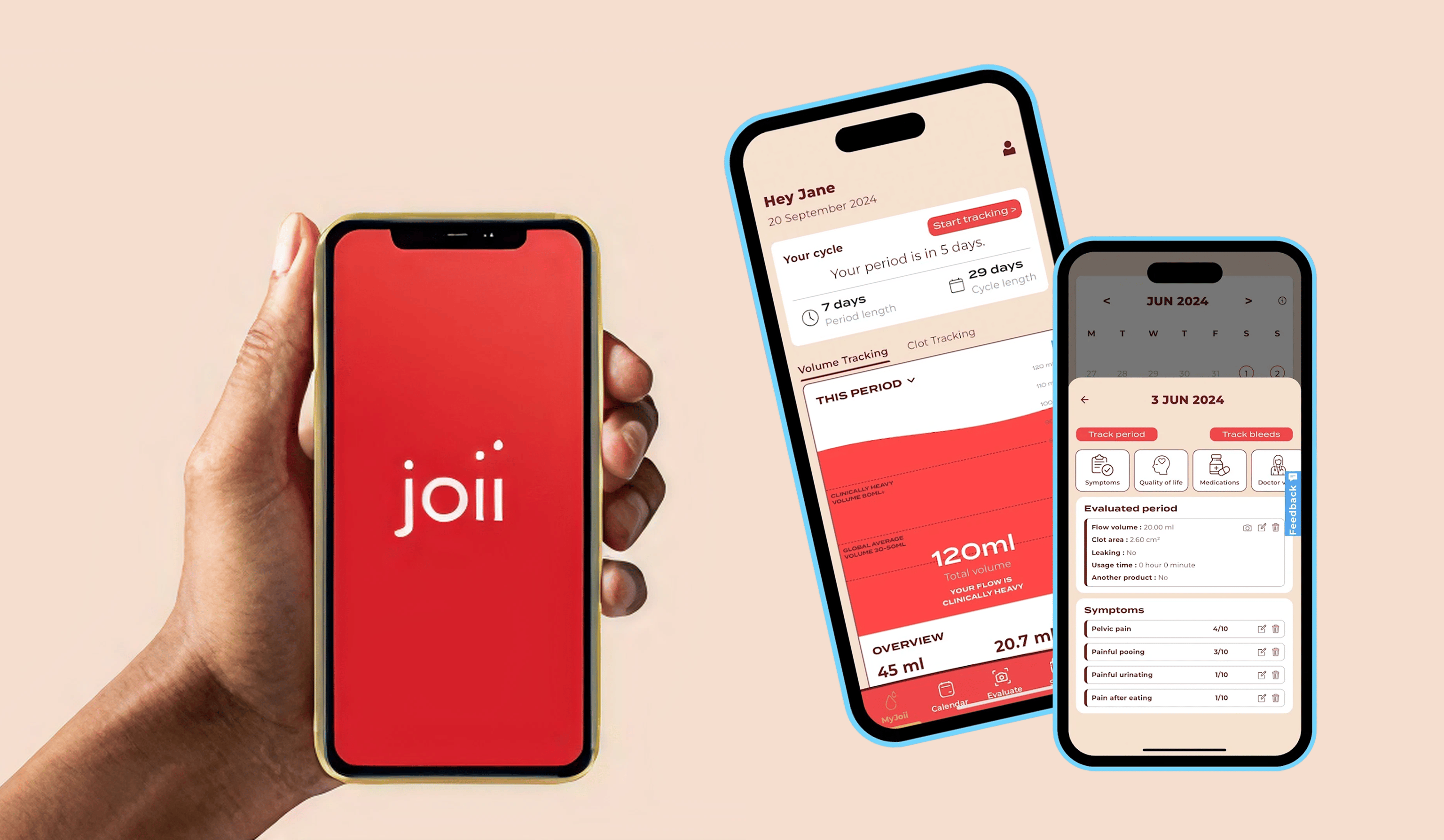
Only after that does visual design take center stage. Layouts, components, interaction states, accessibility, and the design system that keeps everything consistent as the product grows. A good design system is an engineering asset too, because developers reuse components instead of rebuilding them.
Finally, designers stay involved during implementation, resolving edge cases with developers and using post-launch data to decide what to change next. When the designer leaves after handoff, the edge cases get decided by whoever happens to be writing the code that day.
What Does a Product Designer Do Day to Day?
A product designer spends less time drawing screens than most people expect. How the rest of the week splits between research, problem framing, and hands-on craft depends on where the product is in its life cycle.
Early in a project, the designer might spend whole days in discovery: running interviews, mapping the current workflow, and helping stakeholders agree on which problem the product solves first. For a founder building a first product, this is often where the biggest savings happen, because a designer who asks "what happens if we don't build this?" can cut months from a roadmap.
Once a product has users, the work shifts toward iteration. The designer reviews analytics and support tickets, finds the step where users drop off, and prototypes and tests alternatives. Success at this stage shows up in conversion, task completion, and support volume.
Mature products need a different kind of attention, much of it systemic. Designers maintain the design system, review work from other teams, and make sure new features don't fragment the experience. For enterprise products with dozens of contributors, this governance work is what keeps the product usable as it scales.
At every stage, the product designer translates between business goals, user needs, and engineering constraints. The good ones are comfortable telling a room full of stakeholders "the data says we're wrong," and that's the reason to have them there before decisions are locked.
How Is AI Changing What Design Means in 2026?
AI is shrinking the cost of producing design artifacts, and that raises the price of a bad decision behind them. When a working prototype takes an afternoon instead of two weeks, the bottleneck moves from "can we make it?" to "should we make it, and for whom?"
Designers and developers already see the gap. In Figma's 2025 AI report, a survey of 2,500 designers and developers, 78% said AI makes their workflows more efficient, but only 58% said it improves the quality of their work, as reported by TechRadar. AI has made the work faster far more reliably than it has made it better.
In day-to-day design work, the biggest change is that prototyping is faster, so teams can put more ideas in front of real users before committing engineering time. Research synthesis has sped up too: AI can cluster a stack of interview notes and support tickets in minutes, though a person still has to decide which patterns matter. Design and code are also converging: AI-generated components can go from a design system straight into production code, which raises the stakes on getting the system right.
The danger is that fast generation tempts teams to skip the understanding part entirely. An AI tool will happily produce a polished interface for the wrong problem. In regulated domains like healthcare or finance, a convincing prototype that ignores consent flows, audit trails, or accessibility requirements can be worse than no prototype, because it sets expectations the real product can't legally meet.
When Is Investing in Design Not Worth It?
Some projects don't justify a large, dedicated design investment, and a partner who tells you otherwise is selling hours. Three situations usually call for a lighter touch.
If you're still testing whether anyone wants a product at all, a landing page, a waitlist, or a manual "concierge" version may teach you more than a carefully designed app. Spend on design once you know the demand is real. Likewise, an admin panel used by five people for six months doesn't need a custom design system. An off-the-shelf component library and a few sensible conventions will do. And if you're building infrastructure, an API, or a back-office integration, design effort is better spent on developer experience and documentation than on visual polish.
In each of these cases you can scale back the production side of design. The thinking side (understanding users and constraints) still pays for itself.
There are also real costs to doing design properly. Research takes calendar time, which is hard to accept under a launch deadline. Design decisions only stick if product owners and engineers are involved early, which means more meetings up front. And in regulated sectors, design has to work within compliance requirements such as HIPAA in US healthcare or the European Accessibility Act, which narrows the solution space and lengthens review cycles. Budget for these costs at the start. Teams that discover them mid-project tend to cut research first, which is usually the most expensive thing to cut.
Key Takeaways
Design is defining what a product should be; styling is just one of its outputs.
Design's biggest business value is cutting the risk of building the wrong thing.
McKinsey's top-quartile design performers posted 32-point higher revenue growth over five years.
AI makes design artifacts cheap, which makes the judgment behind them more valuable.
Demand tests and short-lived internal tools need design thinking, but little design production.
What Should You Look For in a Design Partner?
Because design is a way of making decisions, a good partner will show you how they make them before they show you a portfolio. When you evaluate a design team, internal or external, check whether research is part of the default process or sold as an add-on. Good designers sit with engineers during the build, and they'll tell you when a feature isn't worth building. Ask how they measured whether their last design worked after launch. If the answer is "the client was happy," keep looking.
Over the long run, design pays off when it's wired into how a product team decides things: research before scope, prototypes before code, metrics after launch. Wireframes and color palettes are the visible end of that process.
At Monterail, product design and engineering work as one team, so design decisions are made with a clear view of what's feasible to build and maintain. If you're planning a new product or rethinking an existing one, get in touch and we'll help you work out what's worth building first.
What Is Design: FAQ

Krzysztof Kaiser
Head of Design & Business Analysis

Always enthusiastic and creative, Krzysztof is an award-winning design expert with a vast skillset in crafting UX and UI that support business goals. Eager to share his knowledge, he helps the next generation of designers develop their skills as an Academic Tutor. As Monterail’s Head of Design & Business Analysis, Krzysztof is responsible for making sure that your digital products are beautiful, valuable, and beloved by users.