Healthcare data modernization means moving patient, clinical and operational data out of disconnected legacy systems and into an interoperable, governed platform that analytics and AI can use. Many hospitals already run predictive models on aging infrastructure. An HHS report cited by Deloitte found that 96% of hospitals were running end-of-life systems, while 71% of US hospitals already use predictive AI integrated with their EHR.
This guide is for CTOs, heads of data and digital health product leaders deciding what to modernize first and where predictive analytics pays off. It also covers the regulatory deadlines that can change that plan.
Executive Summary
Predictive analytics in healthcare fails on fragmented data, so data modernization has to come first. The sequence that works starts with connecting systems through FHIR APIs, an integration layer and a unified patient record. Governance comes next, with quality checks, bias testing and access control, and only then prediction, starting with one use case that has a clinical owner. Most organizations can begin by wrapping their working legacy systems with APIs and keep them running. US and EU deadlines, including the CMS FHIR API requirements in January 2027 and the EU AI Act's high-risk dates in 2027 and 2028, now make that sequence a compliance requirement as much as an engineering choice.
What Is Healthcare Data Modernization?
Healthcare data management is the day-to-day work of collecting and storing health data, keeping it secure and sharing it with the people who need it. Healthcare data modernization rebuilds the architecture underneath, so data flows between systems and feeds analytics and predictive models directly.
A modernization program at a hospital, health insurer, or digital health company usually covers five building blocks:
EHR or EMR integration, so clinical data leaves the record system in a standard format
An API layer based on HL7 FHIR, the standard that most US and EU interoperability rules now point to
A cloud data platform or lakehouse that brings clinical and claims data together with device and operational data in one place
Identity resolution through a master patient index, so one patient is one record across sources
Consent and access rules, backed by data quality checks and audit logs
Teams that talk about "healthcare data intelligence" or a "modern healthcare data platform" are describing the result of these blocks: one governed data layer that every dashboard, alert and model reads from. Our explainer on legacy system modernization compares the main approaches, from rehosting to a full rebuild.
Why Does Patient Care Suffer When Health Data Is Split Across Legacy Systems?
Patients repeat tests and wait longer at intake when their records are spread across legacy systems. This happens because clinicians and predictive models each see only part of their history. Staff fill the gaps by manually re-entering and reconciling records, costing hours and leaking revenue through denied or duplicated claims.
The problem is widespread. In a 2025 SOTI survey of 1,750 healthcare IT decision makers in 11 countries, 97% said their organization still runs legacy technology. Data exchange is improving, but unevenly: in 2023, 70% of US hospitals took part in all four interoperability activities (sending, receiving, finding, and integrating data) at least sometimes, yet only 43% did so routinely. Security adds to the bill. IBM's 2026 Cost of a Data Breach study puts the average healthcare breach at $6.64 million, the highest of any industry.
Three issues show up repeatedly:
Records split across departments and vendors, each with its own format and patient ID
Point-to-point interfaces that break when one system upgrades, so nobody wants to touch them
Unsupported operating systems and databases, the type of technical debt in HealthTech that turns old software into a security liability
Which Healthcare Data Modernization Path Fits Your Organization?
There are three paths, and most organizations can start predictive work with one of the two lighter ones.
Path | What it means | Time to first value | Disruption for clinicians | Analytics readiness | Best when |
|---|---|---|---|---|---|
Wrap: API and middleware layer | Keep core systems and expose their data through FHIR APIs and an integration engine | Fastest | Low | Good for near-real-time use cases on a few sources | Core systems work and vendors support interfaces |
Replatform: unified data platform | Copy data from all sources into one governed cloud platform while source systems keep running | Medium | Low to medium | High: one longitudinal record for analytics and models | Data is spread across many systems and several analytics use cases are planned |
Rebuild or replace core systems | New EHR or practice software, or a custom rebuild | Slowest | High | Highest in the long run, little in the meantime | Systems are unsupported, insecure or blocking compliance |
Our default advice is to wrap first. An API layer over a working EHR gives a predictive pilot the data it needs, and the pilot then shows which parts of the stack are worth replatforming.
How Does Healthcare Data Integration Work? FHIR, APIs, Middleware and a Unified Data Layer
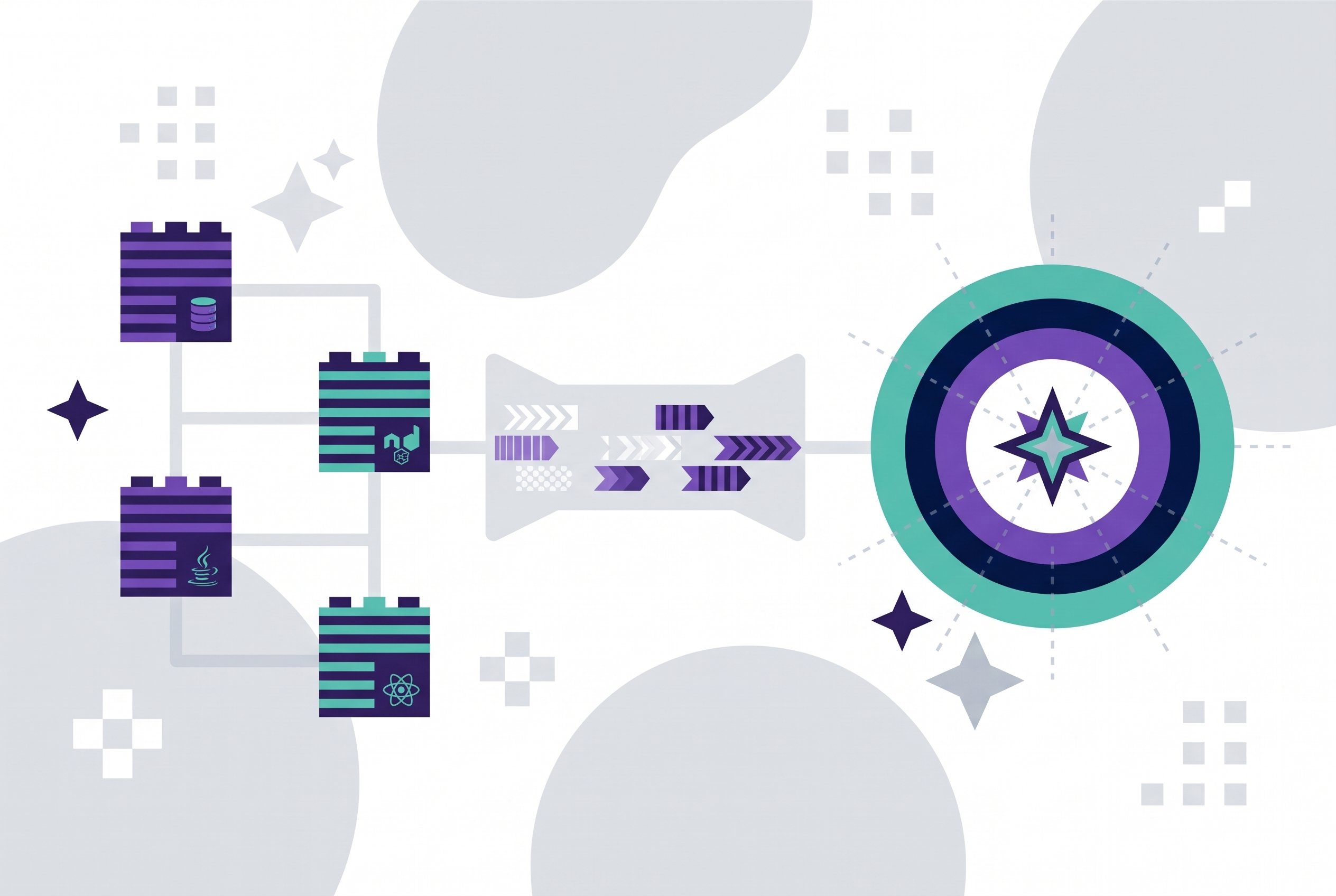
Healthcare data integration connects separate clinical and administrative systems, along with medical devices, so they can exchange and combine data in a common format. It has four layers, and each one fixes a specific failure from the previous section:
A shared data format, HL7 FHIR, defines standard resources such as Patient, Observation and MedicationRequest, so a blood pressure reading means the same thing across systems.
APIs built on FHIR let other systems and apps request those resources on demand, with authentication and audit logs, instead of waiting for nightly file exports.
Middleware, usually an integration engine, translates everything from HL7 v2 messages and CSV exports to proprietary databases into FHIR, so legacy systems can join the network as-is.
A unified data layer matches patient identities across systems, normalizes codes (SNOMED CT, LOINC, ICD-10) and keeps the longitudinal record that analytics and models read.
A FHIR API layer gives clinicians and models one longitudinal record. That cuts duplicate tests and lets risk flags fire earlier, lowering the cost per episode of care and leaving audit-ready data behind.
Regulation is pushing the same way. In the US, the CMS Interoperability and Prior Authorization Final Rule requires affected health insurers to open FHIR APIs to patients, providers and other insurers by January 1, 2027, and the national TEFCA network has already exchanged more than 1 billion health records. In the EU, the European Health Data Space regulation applies its main data-sharing obligations from 2029.
Each vendor implements a shared standard in its own way, so every connection still needs custom integration work. Dr. David Thiwa, physician and technical co-founder of Sikia.ai, learned this while connecting an AI medical scribe to German practice management systems. His clients see each patient for about four minutes, so the scribe has to work in real time. On HealthTech Pulse, he described GDT, the data exchange standard those systems use:
"GDT is supposed to be a standard, but in practice, it's so heterogeneous that you have to be really flexible to use it."
– Dr. David Thiwa, physician and technical co-founder, Sikia.ai
That flexibility is what integration engineering pays for. Our EHR integration guide compares SMART on FHIR, direct vendor APIs and middleware, including how long each route takes with Epic and Oracle Health.
What Is Predictive Analytics in Healthcare, and How Does It Work?
Predictive analytics in healthcare uses models trained on past and live patient data to predict what happens next, such as whether a patient will be readmitted within 30 days. For definitions, model types and validation methods, see our glossary entry on predictive analytics in healthcare. This section covers what it needs from your data.
A working predictive system goes through five steps:
Unified data gives the model the integrated record described above, with enough patient history to learn from.
Feature engineering turns raw records into model inputs, such as trends in vital signs or the number of admissions in the past year.
Training and validation check the model against your own patient population, as well as the population the vendor tested it on.
Workflow embedding puts the prediction where clinicians already work, such as an EHR alert or a care manager's queue.
Monitoring tracks accuracy, bias and drift after go-live, and triggers retraining when the patient mix or clinical practice changes.
Most US hospitals already use predictive models. In 2024, 71% ran predictive AI inside their EHR, according to ASTP data. Adoption follows resources: 81% of hospitals in multi-hospital systems used it, compared with 37% of independent hospitals, which often lack data teams and integrated platforms. Generative AI is spreading even faster, and by mid-2025, 62.6% of hospitals on Epic were using ambient AI documentation tools.
A clinician with a few minutes per patient needs a model that turns all that data into a few signals worth acting on. Dr. Manuel Puntschuh, Chief Medical Officer at Aeon, made the same point on HealthTech Pulse:
"A family doctor just doesn't have the time and the capability to look at all these data points. What is really needed is the ability to make sense of the data in a way that is AI-supported."
– Dr. Manuel Puntschuh, Chief Medical Officer, Aeon
For a closer look at how forecasting models turn raw data into decisions, see how AI-powered data analysis and forecasting work.
What Are the Best Examples of Predictive Analytics in Healthcare? 5 Use Cases
Predictive analytics pays off where a prediction changes what someone does next. These five use cases have the clearest fit with existing workflows.
1. How Does Predictive Analytics Spot Chronic Disease Risk Early?
Risk models flag people likely to develop or worsen a chronic condition, such as diabetes, heart failure, or COPD, so care teams can step in early with screening or patient education. They fit into primary care visits, population health outreach, and patient-facing apps.
Monterail's work on Merck's DORA (Diabetes Online Risk Assessment) shows the patient-facing version: a lightweight web app that lets people check their own diabetes risk on the phones they already use. After the rebuild, DORA expanded from Kenya to eight more African countries.

A risk score is a screening result, so the product has to route people with a high score to a care provider.
2. How Do Early Warning Models Detect Deterioration and Sepsis?
Early warning models monitor an inpatient's vital signs, lab results, and nursing notes for signs that their condition is worsening. The goal is to alert the care team early, before the patient needs an emergency rapid response. How well that works depends on the model.
An observational study followed the TREWS sepsis alert across five hospitals. When a provider confirmed an alert within three hours, patients were 3.3 percentage points less likely to die, after adjusting for differences between patients. The widely used Epic Sepsis Model did much worse when independent researchers tested it: it missed 67% of sepsis cases while flagging 18% of all hospitalized patients, and its accuracy score (an AUC of 0.63) was well below what the vendor reported.
Test any model on your own patients before go-live, and plan for alert fatigue, which sets in when staff get so many alerts that they start ignoring them.
3. How Can Hospitals Predict 30-Day Readmissions?
Readmission models score patients at discharge for the likelihood of returning within 30 days, so care managers can decide who gets a follow-up call, a medication review, or a home visit first. They fit into discharge planning and transitional care. In the US, the business case is direct, because Medicare's Hospital Readmissions Reduction Program cuts payments to hospitals with excess readmissions.
Pharmacy fills and visits outside your network carry part of that risk, so connecting to exchange networks such as TEFCA makes these models more accurate.
4. How Does Forecasting Help Hospitals Plan Capacity and Staffing?
Operational forecasting predicts demand, from admissions and emergency department arrivals to bed occupancy and no-shows, so managers can plan staffing and operating room schedules days or weeks ahead. Seasonal surges, such as winter respiratory illness, are the classic case. These models run mostly on scheduling, admission, and staffing data, which makes them a good first project for organizations whose clinical data is still fragmented.
Each forecast works best with a named owner for the decision it informs, such as the person who sets next week's nurse roster.
5. How Does Prediction Improve Medication Delivery?
Prediction also shapes how medication reaches patients, from refill reminders and pharmacy demand forecasting to routing a prescription between prescriber, pharmacy and courier. Here the data flow matters as much as the model.
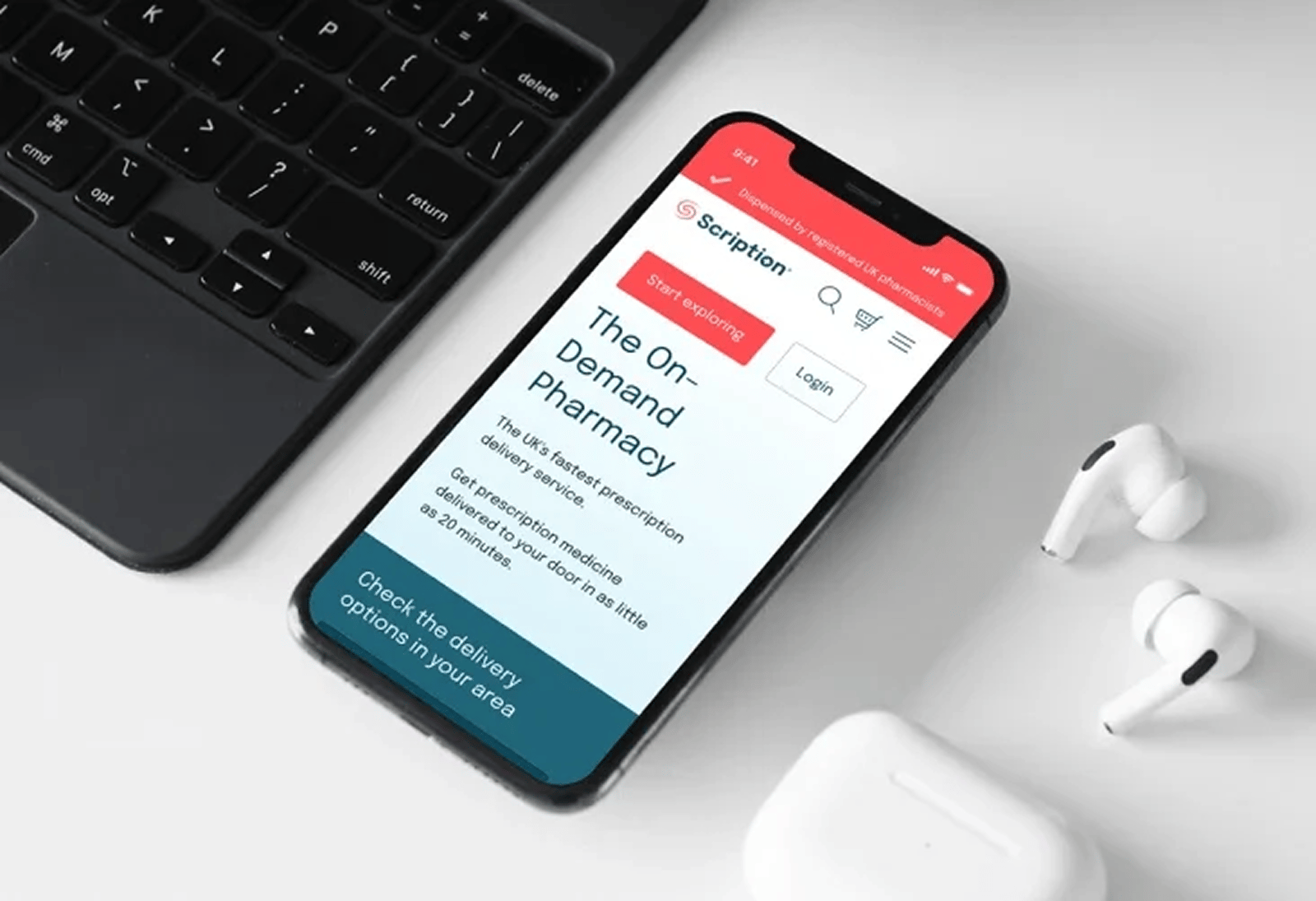
Scription, a UK prescription delivery service built by Monterail, connects prescribers, pharmacies, and couriers in real time. Predictive features such as refill reminders or demand forecasts can run on that live data. For patients, that means medication delivered in under 90 minutes. The product went from plan to MVP in seven months. When UK prescription rules changed mid-project, the team redesigned the user flow and started building it in just over three weeks.
What Are the Benefits of Modernizing Healthcare Data Management?
The main benefit is that data from separate systems reaches clinicians and models in a standard format, at the moment a decision is made. The table shows what that changes in practice and where to measure it.
Benefit | What changes in practice | Where to measure it |
|---|---|---|
Better patient outcomes | Risk flags reach clinicians earlier, and the full history is visible at the point of care | Time to intervention, avoidable admissions, readmission rate |
Lower operational cost | Less manual re-entry and reconciliation, fewer duplicate tests | Staff hours per intake, duplicate test rate, claim denials |
Predictive readiness | Models train and run on one longitudinal record | Time from idea to validated pilot |
Care coordination | Departments and partners see the same record | Referral turnaround, requests for missing information |
Security posture | Unsupported systems are retired or isolated behind APIs | Number of end-of-life systems, patch latency, audit findings |
Regulatory readiness | FHIR APIs and audit trails already exist when deadlines arrive | Open items against CMS, ONC and EU AI Act requirements |
Patient-facing products benefit too: healthcare apps are only as useful as the data they can read and write.
What Are the Risks of Predictive Analytics in Healthcare? Bias, Privacy and Regulation
The main risks are models that are wrong for your patients, data that leaks, and rules that change while you build. Each is manageable if you plan for it from the start.
Why Do Predictive Models Become Less Accurate Over Time?
Models trained on incomplete or skewed data underperform for the patients who were underrepresented in training. Hospitals are starting to check: in 2024, 82% of US hospitals evaluated their predictive AI for accuracy, 74% for bias, and 79% monitored it after go-live, though fewer did so for all or most of their models. The Epic Sepsis Model missed two-thirds of sepsis cases in independent testing despite strong vendor figures, showing why you need to check vendor accuracy numbers on your own patients.
How Do You Protect Patient Data in a Predictive Analytics Project?
Health data is still the most expensive data to lose. US breaches reported to HHS affected more than 289 million people in 2024 and about 138.5 million in 2025. A modernization project concentrates data in one platform, so encryption and role-based access should be in the first sprint, along with consent management and audit logging. The proposed overhaul of the HIPAA Security Rule, published in January 2025, is still not final, with final action projected for July 2027. Its direction (mandatory encryption, asset inventories, regular testing) is a sensible baseline today. Our guide to data privacy in healthcare shows how to implement these safeguards and stay HIPAA compliant.
Which US Rules Apply to Predictive Models in Healthcare?
The Office of the National Coordinator for Health IT (ONC) sets the rules for certified health IT. From January 2025, its HTI-1 rule required developers to disclose 31 source attributes for each predictive decision support tool, similar to a model card that explains how a model was built and tested. In October 2026, the HTI-5 final rule removed that requirement as part of a wider deregulatory package. Transparency now depends more on your contracts and your own governance.
The FDA comes in when software informs diagnosis or treatment, because that software can count as a medical device. The agency has authorized more than 1,600 AI-enabled medical devices, while its January 2025 guidance on AI-enabled device software functions is still a draft. Check early whether your product counts as a medical device. Then confirm which HIPAA and FDA rules apply to it.
Which EU Rules Apply to Predictive Models in Healthcare?
In the EU, a predictive model that supports diagnosis or treatment can count as software as a medical device under the EU Medical Device Regulation (MDR). That classification also makes it high-risk AI under the AI Act. The Digital Omnibus on AI, published in July 2026, gave teams more time: standalone high-risk systems must comply from December 2, 2027, and AI built into regulated products such as medical devices from August 2, 2028.
Data sharing rules follow. From 2029, the European Health Data Space sets out how health data is shared and reused for research and policy, known as secondary use. Our healthcare compliance and security page shows how we build for GDPR, HIPAA, and medical device standards such as ISO 13485.
How to Modernize Healthcare Data Management: A 6-Step Roadmap
A healthcare data strategy for predictive analytics has six steps, from mapping your current systems to monitoring and expanding the first model.
Map your data and workflows. List every source system with its format, owner, and interfaces, and follow how clinicians actually move information between them. The workarounds you find are your backlog.
Pick one prediction with a clear owner. Choose a use case where a score changes a specific decision, such as discharge follow-up or staffing, and name the person who will act on it.
Build the integration layer for that use case. Add FHIR APIs, middleware, and identity matching for the systems this use case needs, and leave the rest for later.
Set governance before the model. Define data quality checks and bias tests, set access roles with audit logging, and document them for HIPAA, MDR, or AI Act reviews.
Pilot inside the workflow. Show the prediction where the user already works. Then measure whether it changes decisions and outcomes, and watch alert volume.
Monitor, retrain, and expand. Track drift and performance by patient group and retrain on a schedule. The same integration layer can then serve the next use case.
Buying the model is often an option, too. If a vendor model has been validated on a population like yours and fits your EHR, buying it is often faster and cheaper. Custom models make sense when your data, patient population, or workflow is unusual, or when the prediction is part of your own product. If you build, our healthcare AI services page covers predictive care and clinical decision support.
Key Takeaways
Predictive models inherit every flaw in the data they read, so integration has to come before AI.
Wrapping working legacy systems with FHIR APIs and middleware is usually the fastest route to analytics-ready data.
Vendor accuracy claims need local validation, as an external study showed with the Epic Sepsis Model's AUC of 0.63.
CMS FHIR API deadlines in January 2027 and EU AI Act high-risk dates in 2027 and 2028 make data modernization a compliance task as well as a technical one.
Bias testing, drift monitoring, and audit trails belong in the first build, because they are much harder to add after go-live.
Why Data, Governance and Workflow Should Be Built as One System
Predictive analytics in healthcare succeeds or fails on decisions made long before a model is trained: how systems exchange data, who owns data quality, and where a prediction shows up in a clinician's day. Organizations that plan these together build models clinicians trust, and auditors can follow. A model bought off the shelf and connected to fragmented records tends to repeat the Epic Sepsis Model's story: strong vendor numbers and weak results on real patients. If you want care teams to catch problems early, start with the data layer.
Monterail works with HealthTech companies and providers to design and build healthcare data integrations and compliant platforms, plus the AI features that run on them. If you are planning a modernization or a first predictive use case, talk to our healthcare software development team.