Nowy standard. Twoje centrum tworzenia inteligentnego, szybkiego i zrównoważonego oprogramowania AI

Spis treści
The future of project management in software development means less administration and more judgment. AI tools already draft meeting notes, update tickets and summarize sprint progress, and Big Tech companies have run engineering projects without dedicated project managers for years.
What's left, and growing, is the work neither software nor engineers handle well: deciding priorities with the client, leading a newly formed team, and telling the client the truth when the plan slips.
Here's how we see the role changing at Monterail, and what it means if you're hiring a team to build your product.
Executive Summary
Project managers in software development aren't becoming redundant, but their job is changing fast.
AI is absorbing the administrative layer of the role (tracking, reporting, note-taking), which is why Gartner predicted back in 2019 that 80% of project management tasks would be eliminated by 2030.
The PM's value now sits in product ownership, leadership of new teams, and honest, structured communication with the client.
If you're outsourcing development, judge a PM by the decisions and clarity they bring.
Why Is the Project Manager Role in Software Development Changing?
Two forces are pulling the role apart: automation of administrative work, and a delivery model where engineers lead projects themselves.
The first is AI. In 2019, Gartner predicted that 80% of the project management tasks of that time would be eliminated by 2030, as AI takes over data collection, tracking and reporting. Much of that is already happening, with AI tools drafting meeting summaries, ticket updates and progress reports. Note the wording, though. Gartner was talking about tasks, not the role.
The second is the Big Tech model. When Gergely Orosz surveyed more than 100 tech companies for The Pragmatic Engineer, he found that in Big Tech, engineers or tech leads run team-level projects. There are no dedicated project managers at that level. Technical program managers coordinate large efforts that span many teams, and product managers decide what gets built.
Put those two together and many clients reach the same conclusion: the PM on a vendor team is overhead, the person who forwards emails between the client and the developers. We disagree, but the perception has a cost. If you cut the PM without deciding who takes over what they did, scope and priority decisions land on engineers or back on your desk, and you pay for it in rework and features nobody needed.

What Does a Project Manager Actually Do on a Software Project?
A project manager on a software project protects the team's focus and keeps everyone, client included, working on the right things. Textbook definitions describe a project with a defined scope, start and finish. In software, that rarely holds: requirements shift, priorities pivot, and the scope you signed off in month one looks different by month three.
When our PMs listed everything they did daily, weekly and monthly in 2021, they came up with more than 45 recurring tasks. They fall into three areas.
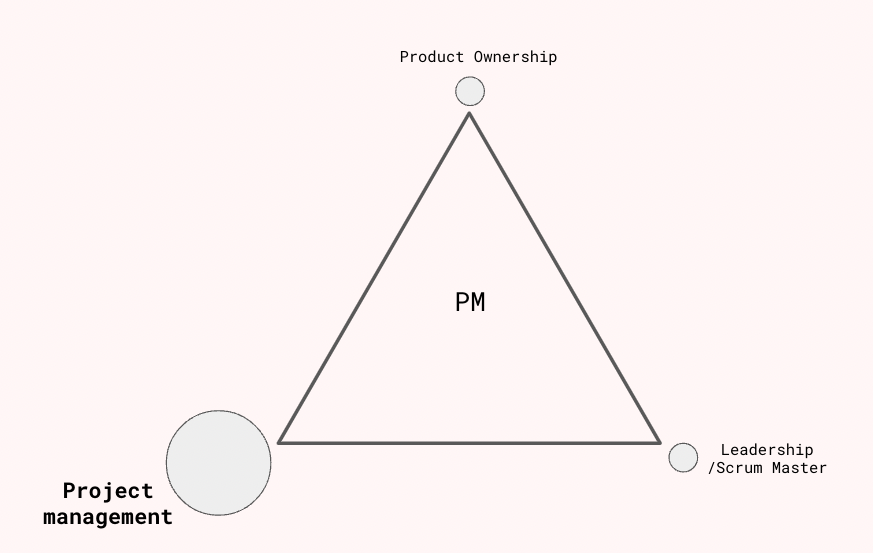
Classic project management is the part everyone expects: budget, timeline, planning sessions and progress reports. Product ownership is the part clients often don't see: keeping the backlog in order, helping the client rank priorities, and working with the business analyst on what comes next. Leadership, or the scrum master side, covers everything that helps people perform as a team: retrospectives, onboarding, and keeping an eye on how people are doing.
Any of these tasks can come up at any point in the project, often several at once, so the job is mostly context switching. That's the hidden output of a good PM. By absorbing the interruptions, they give developers long stretches of uninterrupted time, and that's where the actual product gets built.
When Does a Software Project Still Need a Dedicated Project Manager?
A software project needs a dedicated project manager when work arrives unpredictably or when the team is new. Big Tech can skip the role because its teams are stable and its own product managers sit next to them. A software agency, or any company building with an external team, usually has neither.
The first case is what we call a "kitchen sink" team. Work lands in the sink without warning: a requirement changes, a new feature appears, a bug blocks a release. A team like that needs strong product ownership, someone who can say "not now, this brings no business value" and tell a real user need from an idea that came up in a meeting.
The second case is a team in the "forming" and "storming" stages, to borrow Bruce Tuckman's model of team development. At Monterail, we don't keep permanent teams that move from project to project together, so each new project starts with a new team. Someone has to organize the planning, assign action points, and decide what goes into the next sprint or what happens in a crisis.
The role isn't always worth paying for, though. If you have a stable, long-running team, a strong in-house product manager and a tech lead who's happy to coordinate delivery, a full-time PM can be more overhead than help. In that setup, a lighter arrangement, such as a part-time delivery lead, often works better.
How Should a Project Manager Keep Clients in the Loop?
A project manager keeps clients in the loop by agreeing on how communication will work at the start, and then reporting honestly, especially when things go wrong. This is the part of the job AI helps with least. A tool can draft the weekly summary, but it can't judge what the client needs to hear first.
It starts with an introduction call at kickoff. There's no one-size-fits-all setup: it depends on whether the client is technical, how critical the product is to their business, and how many decision makers are involved. The call settles expectations and responsibilities on both sides, which meetings will happen and how often, who makes decisions, and which channels and tools the project will use.
Next, the PM walks the client through the tools. Even clients who've used Jira before need to know how this particular board works. We mention clients in tickets, involve them in building the backlog, and make them the ones who move a task from "acceptance testing" to "done."
The moment that builds or breaks trust is bad news. There will always be deviations from the plan, and a PM's job is to report them plainly: what happened, what we expect next, what we'll do about it, and what it means for the timeline. Blaming circumstances or spinning a problem into a non-problem always backfires eventually.
A few smaller habits hold it together:
When a client talks directly to a developer, the developer brings the context back to the shared project channel, because technical decisions affect the whole team.
The tech lead owns technical decisions, and the PM translates them into business consequences and checks that the client understood them.
Agile rules get adapted to the project. On one fixed-budget project, we kept sprints, standups and acceptance tests, but after every sprint we compared spending against the original assumptions. Not textbook Agile, but it was the right call for that client.
How Will the Project Manager Role Evolve as a Software Team Matures?
As a software team matures, the project manager's work shifts toward product ownership and leadership, and classic project management becomes a smaller part of the job.
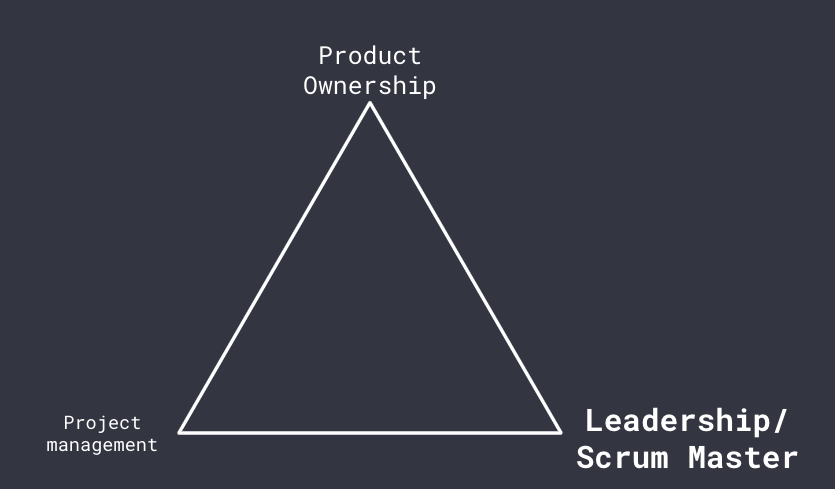
Over the life of a project, we expect the PM and a project lead or tech lead to work side by side at first. As the team settles in, the PM gradually steps back and lets the team self-organize and take responsibility for the outcome.

In practice, the PM's main question changes from "Is this on schedule?" to "How can I help you?", asked at the start of the project and regularly after that. AI speeds this shift up, because the reporting work that used to fill much of a PM's week now takes far less time.
Key Takeaways
AI is eliminating project management tasks, not the project manager role.
Big Tech runs projects without dedicated PMs because it has stable teams and in-house product managers.
Agency and outsourced projects with new teams or unpredictable work still need a PM.
A PM's value now lies in product ownership, team leadership and honest client communication.
Agree on how you'll communicate at kickoff, and expect bad news early.
What Should You Expect From a Project Manager When You Outsource Software Development?
Expect a project manager who helps you decide what's worth building, protects the team's focus, and tells you early when something goes off plan. Status reports matter less every year; clear priorities and honest communication matter more. That's how our project managers work at Monterail. If you're planning a product and want a team that keeps you informed through the good weeks and the bad ones, get in touch with us.
Future of Project Management FAQ

Grzegorz Hajdukiewicz
Chief Delivery Officer

With over a decade of experience in the IT industry, Grzegorz has a proven track record of delivering complex projects on time and on budget. At Monterail, he leads a team of dozens of developers, designers, project managers, and business analysts, ensuring the successful delivery of software solutions for clients worldwide. Passionate about agile methodologies and continuous improvement, he constantly seeks new ways to optimize the delivery process.