The New Default. Your hub for building smart, fast, and sustainable AI software
Table of Contents
Why Traditional Building Models No Longer Hold
AI has collapsed the distance between intent and execution, turning code from the final artifact into just one expression of a broader system of judgment, context, and control.
For decades, building software meant translating human intent into rigid instructions, optimizing for determinism, and scaling through larger teams and better abstractions. That model is breaking down. When machines can generate code, designs, tests, and reviews in seconds, the limiting factor is no longer syntax. It's decision-making.
The shift exposes the cracks in traditional building models. Speed without control produces fragile systems. Automation without context leads to unreliable outcomes. Treating AI as just another tool, rather than a fundamentally different collaborator, results in products that scale quickly but fail unpredictably.
As explored in The New Default, building today is less about commanding machines and more about designing the conditions under which they behave reliably, predictably, and usefully. The core idea is consistent: modern systems must be designed around human intent, probabilistic outputs, and continuous feedback, rather than static requirements and one-time implementation decisions.
TL;DR:
Building according to The New Default means rethinking software development for a world where AI collapses the gap between intent and execution. Code is no longer the center of gravity. Judgment, context, and control take its place. Modern systems must be designed for probabilistic behavior, continuous feedback, and human-in-the-loop oversight, with AI embedded as a core part of system logic rather than a bolt-on tool. The teams that succeed aren't the fastest coders, but the best system designers: those who use AI to amplify efficiency, structure context intentionally, and validate outputs relentlessly. Building in the AI era is adaptive, ongoing, and fundamentally about designing how humans and machines collaborate under uncertainty.
What "Building" Stands for in The New Default?
In The New Default, building no longer refers to the linear act of writing code, compiling it, and shipping a finished system. Instead, it describes an AI-augmented construction process where intent, context, and judgment are as critical as the code itself.
Traditional coding assumed that humans translated requirements into deterministic instructions and machines executed them faithfully. Today, that assumption no longer holds. Models now generate, interpret, and modify large portions of the system, often probabilistically, forcing teams to rethink what it actually means to build software.
At its core, building in The New Default shifts focus from authoring logic to designing behavior. Rather than specifying every step, teams define goals, constraints, and feedback loops that guide AI systems toward acceptable outcomes. Context becomes the new control surface: prompts evolve into structured context, guardrails replace rigid rules, and reliability is achieved through layered checks rather than perfect foresight. This is why The New Default emphasizes concepts such as context engineering and the design of determinism around AI: predictability now emerges from system design, not from individual lines of code. This shift is explored in more depth by Krzysztof Zabłocki in Context Engineering for Better AI, which breaks down why context, not prompts, is now the primary lever for shaping reliable AI behavior.

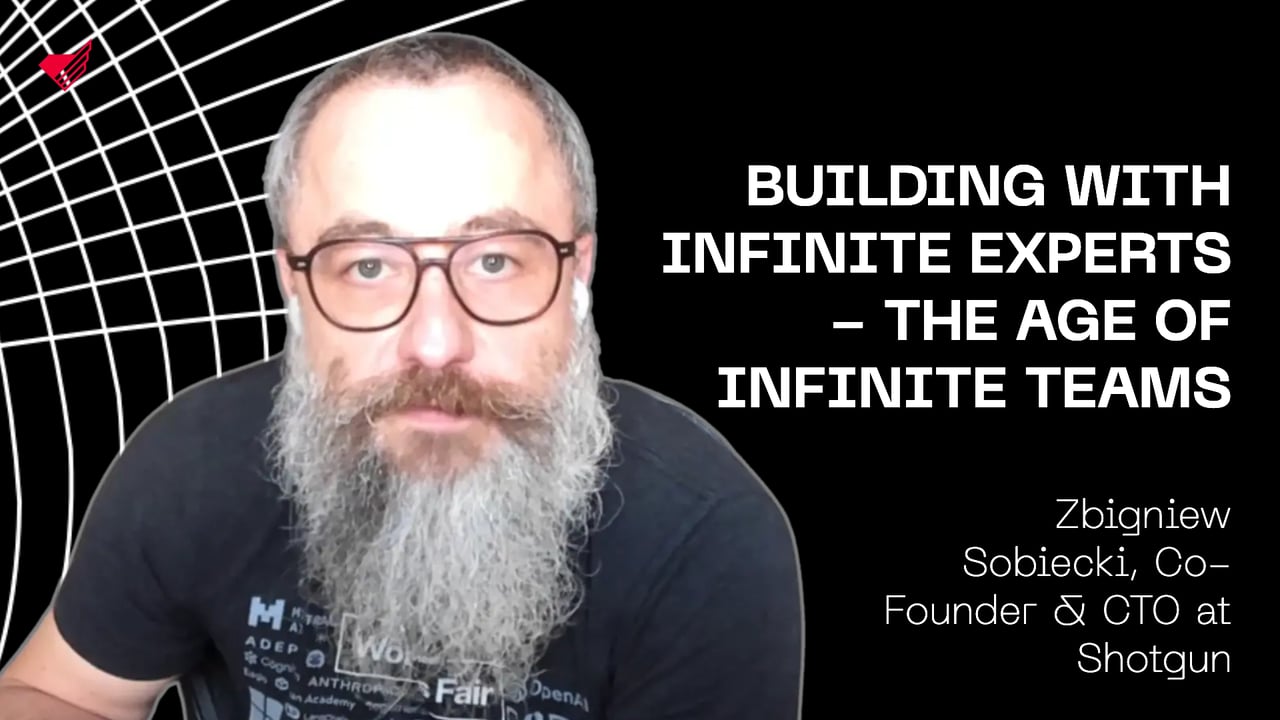
Building also encapsulates a fundamental team evolution. AI introduces what The New Default describes as "infinite experts", models that can contribute across domains instantly. This changes the team structure from role-based silos to judgment-based collaboration. Engineers, designers, and product leaders increasingly act as editors, reviewers, and system designers, shaping and validating AI output rather than producing everything manually. Human-in-the-loop workflows aren't a fallback; they're the core mechanism that keeps systems trustworthy as speed increases. This evolution is visualized in the Building with Infinite Experts, a talk with Zbigniew Sobiecki that shows how AI reshapes team roles and workflows in practice.
A clear example of this philosophy is the shift toward rebuilding systems around models and probabilistic behavior rather than deterministic pipelines. AI-native systems accept uncertainty as a design constraint. Builders design controls, evaluation layers, and feedback mechanisms that make probabilistic outputs usable in production. This is why speed alone is dangerous: without intentional structure, fast AI-driven teams can easily create fragile systems that fail in subtle, compounding ways.
In The New Default, building is not about writing less code—it's about designing systems where humans and machines collaborate effectively under uncertainty. The code remains present, but it is no longer the center of gravity. Judgment, context, and control are.
What Are the AI-Native Development Principles?
There are three paradigms: treating AI as core system logic; designing models as controllable and evaluable building blocks; and shifting abstraction toward human intent so that reliable behavior emerges from context, feedback, and oversight rather than fixed instructions. Let's explore them one by one.
AI-native development marks a clean break from treating artificial intelligence as an add-on feature or productivity boost. In The New Default, AI is not something you integrate after the fact; it becomes a core component of system logic. This means models don't merely assist developers; they actively participate in decision-making, interpretation, generation, and validation throughout the product lifecycle. Systems are no longer purely deterministic pipelines but adaptive environments where outcomes emerge from probabilistic reasoning shaped by design constraints.
This shift requires rearchitecting platforms so that models function as programmable building blocks rather than opaque services. Instead of hard-coding every rule, teams design interfaces that guide, constrain, evaluate, and correct models. Control moves upstream: builders define context, inputs, evaluation criteria, and fallback paths that shape how models behave in real time. Determinism is no longer guaranteed by rigid logic but designed through layers of checks, structured context, and human oversight, and predictability becomes an architectural outcome, not a default assumption.
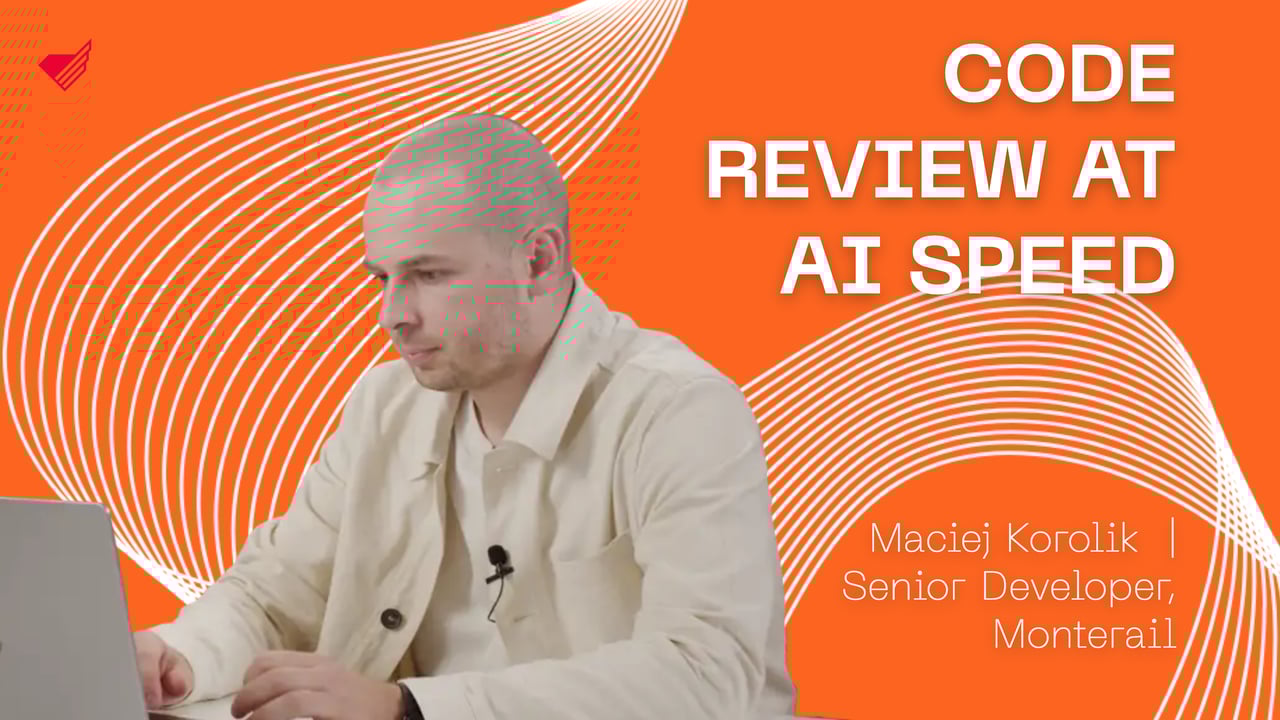
AI-native platforms also rethink abstraction. Where legacy systems abstracted away hardware or networking details, modern systems abstract toward human intent. Models serve as a translation layer between human intent and machine execution, collapsing previously complex workflows into higher-level interactions. This is evident in patterns such as "design to code in minutes," AI-accelerated code review, and tools that treat models as collaborators embedded throughout the lifecycle.
In contrast, legacy development practices assume stable requirements, predictable execution, and clear separation between design, implementation, and validation. AI breaks those assumptions. Requirements evolve continuously. Outputs vary. Validation must occur continually, not only at review time. Bolt-on AI, such as chatbots, copilots, or isolated automation, fails because it inherits the rigidity of old architectures while introducing uncertainty it was not designed to handle.
AI-native development accepts this reality head-on. Platforms are rebuilt from the edge to the core with AI in mind, enabling faster iteration without sacrificing reliability. The result isn't less engineering, it's different engineering: one focused on system behavior, feedback loops, and human judgment as first-class architectural concerns.
How to Integrate AI into Engineering Workflows
In The New Default, AI is woven directly into engineering workflows as an always-on collaborator. The goal isn't to replace engineers but to reduce friction in high-leverage activities such as review, validation, and sense-making, where speed has traditionally come at the cost of quality.
One of the clearest examples is AI-powered code review and changelog generation. Instead of relying solely on human reviewers to catch issues after the fact, AI can continuously scan changes, flag risks, and summarize intent at machine speed. This shifts review from a bottleneck into a real-time feedback loop, allowing teams to move faster while maintaining shared understanding of what changed and why.
AI also plays a growing role in data understanding and extraction, where quality matters more than volume. Rather than hoarding raw data, AI-native workflows focus on extracting meaning: identifying relevant signals, enriching context, and filtering noise before it reaches downstream systems. This aligns with The New Default's emphasis on context engineering, as better inputs, not larger datasets, drive reliable AI behavior.
Finally, AI reshapes testing and quality checks by making them continuous and probabilistic rather than periodic and deterministic. Models can simulate edge cases, evaluate outputs against expectations, and surface anomalies early, long before failures reach production. Crucially, these systems are designed with human-in-the-loop oversight, ensuring that AI accelerates validation without obscuring accountability. Quality becomes an ongoing system property rather than a final gate.
How Should Human Collaborate with AI?
Human–machine collaboration sits at the center of building in The New Default. As AI accelerates every stage of development, quality control can no longer rely on slowing systems down; it must be designed directly into how humans and models work together. This is where human-in-the-loop development becomes essential. Rather than trusting AI outputs by default, teams explicitly define when human judgment is required, using people as editors, reviewers, and final decision-makers in high-impact moments.
Balancing rapid AI output with engineer oversight requires intentional structure. Best practices in The New Default emphasize layered review, clear escalation paths, and continuous evaluation rather than one-time approval. AI handles generation and exploration at scale, while humans validate intent, catch edge cases, and decide what "good" actually means in context. This approach preserves speed without sacrificing reliability, avoiding the trap of fragile systems built too quickly to be understood.
There are also clear limits to automation, places where human insight remains indispensable. Understanding product intent, evaluating tradeoffs, navigating ambiguity, and setting ethical or strategic boundaries are all fundamentally human responsibilities. AI can propose solutions, but it cannot own accountability. The New Default frames this not as a weakness of AI, but as a design constraint: systems work best when machines amplify execution and humans retain judgment.
Practical Takeaways for Builders
Building according to The New Default isn’t about chasing tools—it’s about adopting a set of durable principles that help teams scale speed without losing control. For builders, engineering leaders, and CTOs, these takeaways translate the theory of AI-native systems into day-to-day practice.
Build with Context-Aware Systems
Context is the new foundation. AI systems are only as reliable as the information and constraints surrounding them. Instead of relying on larger prompts or more data, teams should invest in structured context: clear intent, relevant inputs, and well-defined boundaries. This approach makes AI behavior more predictable and reduces downstream failure, shifting reliability upstream into system design.
Integrate AI for Efficiency, Not Replacement
AI delivers its biggest gains when it accelerates execution—not when it replaces human judgment. The New Default consistently emphasizes that models should handle generation, exploration, and scale, while humans retain responsibility for decisions, tradeoffs, and accountability. Teams that frame AI as an efficiency multiplier build more resilient systems than those chasing full automation.
Scrutinize and Validate AI Outputs by Design
Fast output is meaningless without trust. Builders should design workflows where AI-generated code, designs, and decisions are continuously reviewed, evaluated, and corrected. This includes automated checks, AI-assisted review, and explicit human sign-off in critical paths. Validation is not a phase—it’s a permanent layer of the system that protects teams from fragile, high-speed failure.
Building for the AI Era
The New Default reframes building because the foundations of software have changed. When models can reason, generate, and adapt in real time, building is no longer about writing perfect instructions upfront. It's about designing systems that operate under uncertainty, systems where context, control, and human judgment shape probabilistic behavior into reliable outcomes.
The New Default makes one idea clear: AI doesn't simplify building; it changes where the complexity lives. The hard problems move from syntax to system design, from execution to intent. The next step isn't theoretical, it's practical. Apply these principles in small, contained workflows. Introduce context-aware systems, experiment with AI-assisted review, and design explicit human-in-the-loop checkpoints.
Explore The New Default to deepen your understanding of AI-native architectures, infinite teams, and reliable control patterns. Use them as lenses to evaluate your own stack and processes.
)
Barbara Kujawa
Content Manager and Tech Writer at Monterail

Barbara Kujawa is a seasoned tech content writer and content manager at Monterail, with a focus on software development for business and AI solutions. As a digital content strategist, she has authored numerous in-depth articles on emerging technologies. Barbara holds a degree in English and has built her expertise in B2B content marketing through years of collaboration with leading Polish software agencies.