The New Default. Your hub for building smart, fast, and sustainable AI software

Table of Contents
A retail software development company builds what sits behind the shelf and the checkout: e-commerce platforms, point-of-sale systems, order and inventory management, promotion and loyalty engines, store-associate apps, and the integrations holding all of it together. The right one for you is whichever firm has already shipped something structurally similar to what you need, at roughly your scale, and can put you on the phone with the client who paid for it. That is a much narrower question than "who is the best," and it is the question this article answers.
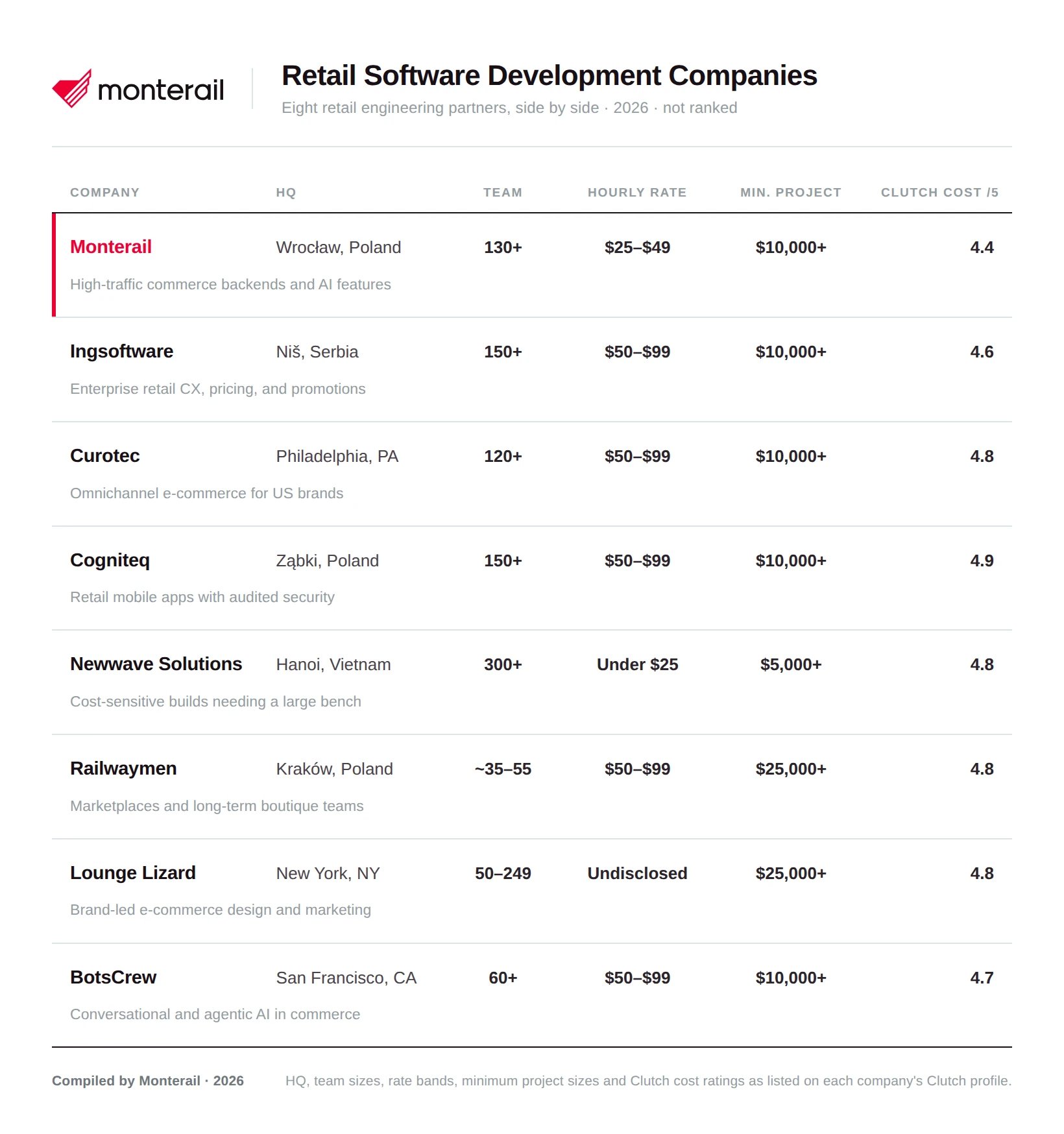
The eight companies below all have commerce work in their portfolios, and they are deliberately unalike: a 130-person Polish product studio, a Serbian team running the customer-experience backend for a European grocery group, a Philadelphia agency, a Vietnamese bench of 300+ engineers billing under $25 an hour, a 28-year-old New York brand shop, and an AI consultancy split between San Francisco and Lviv. After the list you get 2026 rate benchmarks by region, cost ranges by build type, a fit matrix, and the questions worth asking before you sign anything.
Executive Summary
Retail engineering budgets in 2026 are pulled in two directions at once. Integration work across POS, ERP, and inventory remains the largest single source of overruns on retail builds, while AI-referred shopping traffic grew 393% year over year in Adobe's Q1 2026 data and now converts better than conventional channels, putting fresh pressure on the same product data and checkout paths.
The practical consequence is that vendor selection turns less on hourly rate than on whether a team has survived a peak season, integrated a real POS, and shipped against PCI DSS v4.0.1. Published rates across this list run from under $25 to about $99 an hour, a four-fold spread that mostly reflects geography rather than capability.
The cheaper end stays cheaper only while the scope stays stable, so choose on demonstrated proximity to your problem first and negotiate price second.
Top Retail Software Development Companies in 2026
This list is not ranked. Monterail appears first because this is Monterail's blog; the other seven are ordered to show contrast, not merit. Between them they cover four countries, team sizes from roughly 35 to 300+, minimum project sizes from $5,000 to $25,000, and specialisms ranging from enterprise promotion engines to conversational AI. Every figure below comes from the companies' own Clutch profiles, websites, and published case studies, and each is linked where a source exists.
Monterail
Monterail is a 130+ person software development company founded in 2010 in Wrocław, Poland, with 900+ projects delivered and a current NPS of 71. Retail and e-commerce sit in its industry mix alongside healthtech, fintech, HRTech, and proptech, and its client list includes Bosch, EY, Merck, DocPlanner, and SharkNinja. The company is an official Vue.js and Nuxt partner and works in Ruby on Rails, Go, React Native, Flutter, and Node.js. It has grown by acquisition since 2024, absorbing Untitled Kingdom, EL Passion, and Lakeview Labs, and has been recognized by Deloitte as one of Central Europe's fastest-growing tech companies and listed in the Financial Times 1000.
Example Project by Monterail
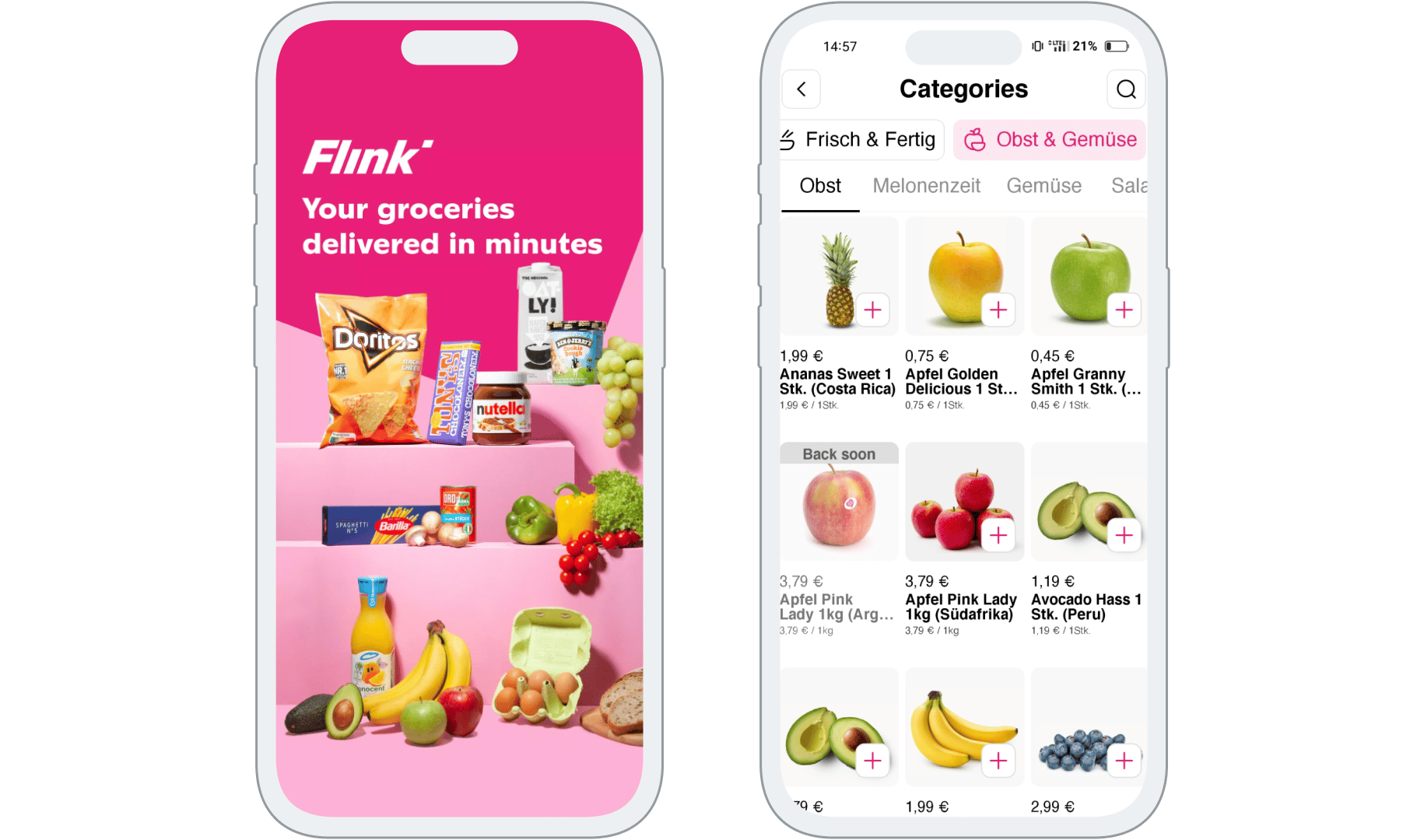
Flink, the German quick-commerce grocery startup, raised $240 million in under six months and needed its backend production-ready before growth outran it. Monterail joined in March 2021 with Go and QA expertise, beginning with a backend code review and moving straight into implementation: checkout and payments, order location tracking, user authentication, a desktop webshop, and back-office systems covering a warehouse employee app, order management, and inventory. The team built a custom API to migrate data from Saleor to Commerce Tools without end users noticing the change, and broke the checkout and cart monoliths into microservices so separate teams could ship without colliding. Staffing grew from two engineers to eleven as demand required. Flink now reaches up to 10 million customers across 60 cities in four countries, and adding a new warehouse to the system, once a substantial engineering task, no longer requires an engineer at all. Read the full case study.
How Much Does Monterail Retail Software Development Cost?
Monterail's Clutch profile lists a minimum project size of $10,000 and an average hourly rate of $25-$49, the lowest published band in this list, with a cost rating of 4.4/5. Real engagements run considerably wider than the entry point suggests: Clutch's verified review summary puts typical project costs between $30,000 and over $1 million, and the most common web development project size is $50,000-$199,999 across 18 reviews. That rate sits under the Western European agency benchmark in the pricing section below, though the company's own positioning is explicitly not the lowest-bid one.
What Do Clients Say About Working With Monterail?
"We moved from reactive scheduling to proactive, data-driven decisions. The ability to see a prototype in one day and scale it to an enterprise-ready solution so quickly was a game-changer for our resource management."
Bram Verstraeten, Senior Project Manager, SPIE Belgium
"Product and business management from Monterail are amazing. They make sure that we are happy as a client and they are willing to go as far as possible to make sure that the clients' requirements are met. It was a superb cooperation."
Ahmed Khalil, Head of Engineering, Flink
"If you want to outsource your coding to the lowest hourly rate, then Monterail aren't for you. If you want to build winning products at pace, then Monterail need to be on your shortlist."
Alan Buxton, CTO, Simfoni
Why Do Businesses Choose Monterail?
Sixteen years and 900+ delivered projects mean most failure modes have already been met once, including the ones specific to high-traffic commerce.
The Flink team scaled from two people to eleven inside a year, which matters when your demand curve is unpredictable.
Clients repeatedly cite proactive problem-solving: issues get raised early rather than surfacing during acceptance testing.
Delivery hours overlap with US mornings, and the company sells into US and UK markets from Europe.
AI-assisted development is part of how work gets done rather than a separately priced add-on.
Ingsoftware
Ingsoftware is a full-cycle software company founded in 2009 in Niš, Serbia, with 150+ professionals, 200+ projects, and 100+ clients over 15 years. Its service mix is unusually balanced for a firm of its size: custom software development at 30%, web development at 25%, mobile at 15%, and generative AI, IT strategy consulting, and UX/UI design at 10% each. The company's most visible work is in retail at chain scale.
Example Project by Ingsoftware
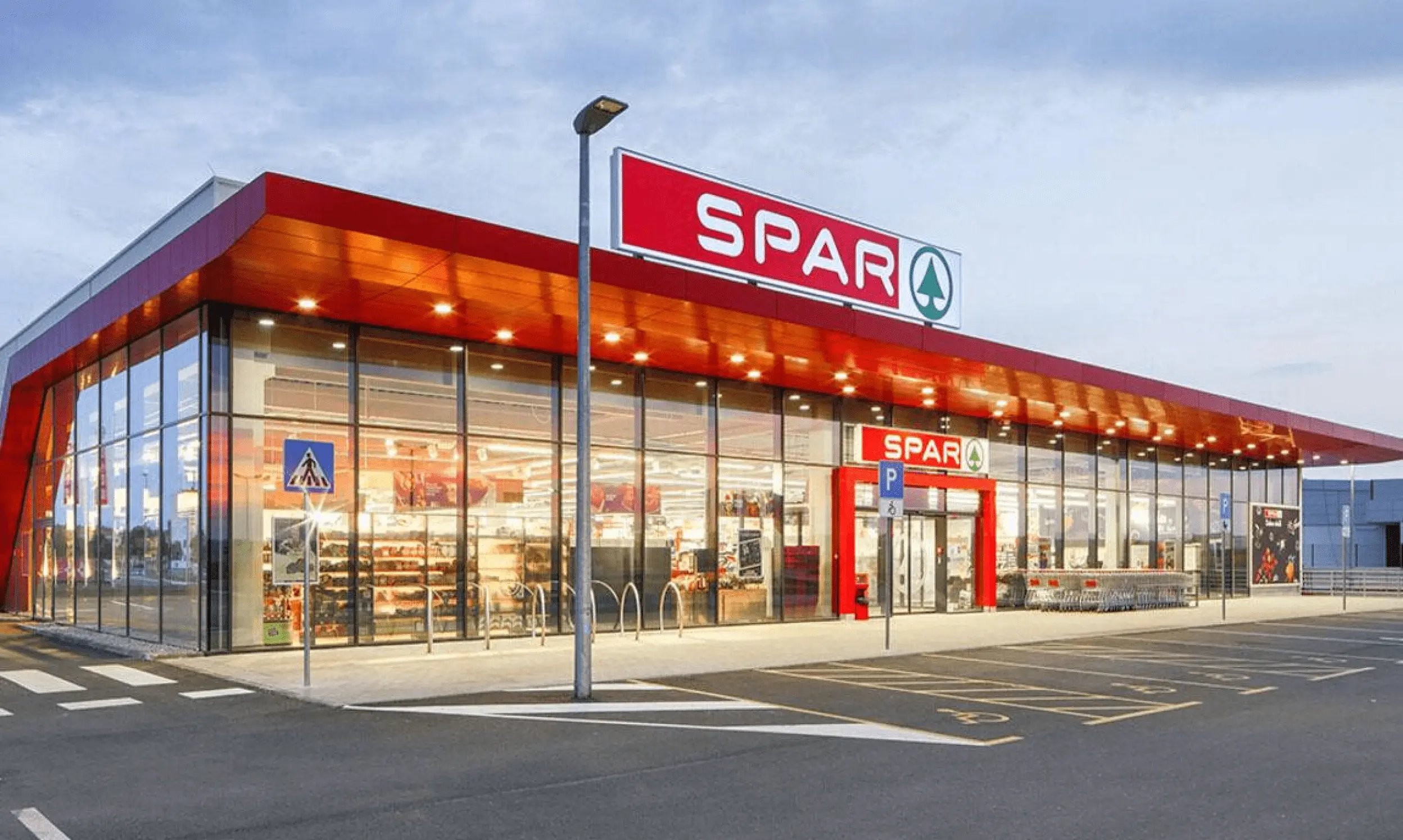
SPAR ICS is the IT unit of the SPAR Austria Group, running technology for the SPAR, INTERSPAR, Hervis, and SPAR European Shopping Centers chains. When Ingsoftware joined in Q2 2022, SPAR was maintaining multiple promotion and loyalty engines across its distribution channels, some of them country-specific with their own pricing logic, none of them built for omnichannel. Ingsoftware helped establish the Customer Experience team and built three modules of a new cloud CX Engine on Java microservices and Azure: a Price and Promotion Engine handling pricing, promotions, and loyalty points for every SPAR and Hervis channel, a Voucher Service covering all SPAR retail brands, and eLoader for gift card processing across markets. Performance-critical components were migrated to the cloud with Azure messaging. The finished system handles millions of daily requests for a multi-million user base, and the practices Ingsoftware introduced were adopted by other teams inside SPAR ICS. Read the full case study.
 Source: www.ing.dev
How Much Does Ingsoftware Retail Software Development Cost?
Ingsoftware lists a minimum project size of $10,000 and an average hourly rate of $50-$99, with a cost rating of 4.6/5. Clutch's verified summary notes several projects in the $50,000 to $200,000 range, while the most common project size is under $49,999 across 27 reviews. That places it squarely in the Balkan and Central European band described in the pricing table below, at roughly half of comparable US agency billing.
What Do Clients Say About Working With Ingsoftware?
"What stands out throughout the cooperation is that they don't want to only execute tasks put in front of them; they also want to understand the reasoning behind them."
Michael Meike, Head of Retail Technologies, SPAR ICS
"I was most impressed by Ingsoftware's speed, as well as the number of times they went above and beyond."
Tim Hebel, Owner, Beanstalk Games
"Their dedication to our project was above standard. It felt like this was their project too."
Grzegorz Gwoźdź, Technical Director, Svexa
Why Do Businesses Choose Ingsoftware?
Very few mid-sized agencies can point to a live promotion and loyalty engine serving four retail chains across multiple countries.
The SPAR work is proof of load engineering, not just feature delivery: millions of daily requests without degrading the CX Engine.
Clients describe a team that questions requirements before building them, which is what you want on pricing logic where a wrong rule costs real margin.
MVP delivery shows up repeatedly in reviews, so the same team handles both greenfield validation and multi-year platform work.
Consistent performance has turned into extended engagements rather than one-off projects.
Curotec
Curotec is a 120-person product development firm founded in 2010 and headquartered in Philadelphia, with 15+ years in business and 500+ clients served. Custom software development accounts for 60% of its work, with web design and web development splitting the rest. Its stack centers on Laravel, Vue.js, React, Python, Node.js, and WordPress, and it offers three engagement models: staff augmentation, retainer, and full project delivery. Past work includes modernizing Comcast's legacy network design software and building an FDA submission portal for a Fortune 50 healthcare company. The firm has been recognized by Inc. 5000, Philly 100, and the W3 Awards.
Example Project by Curotec
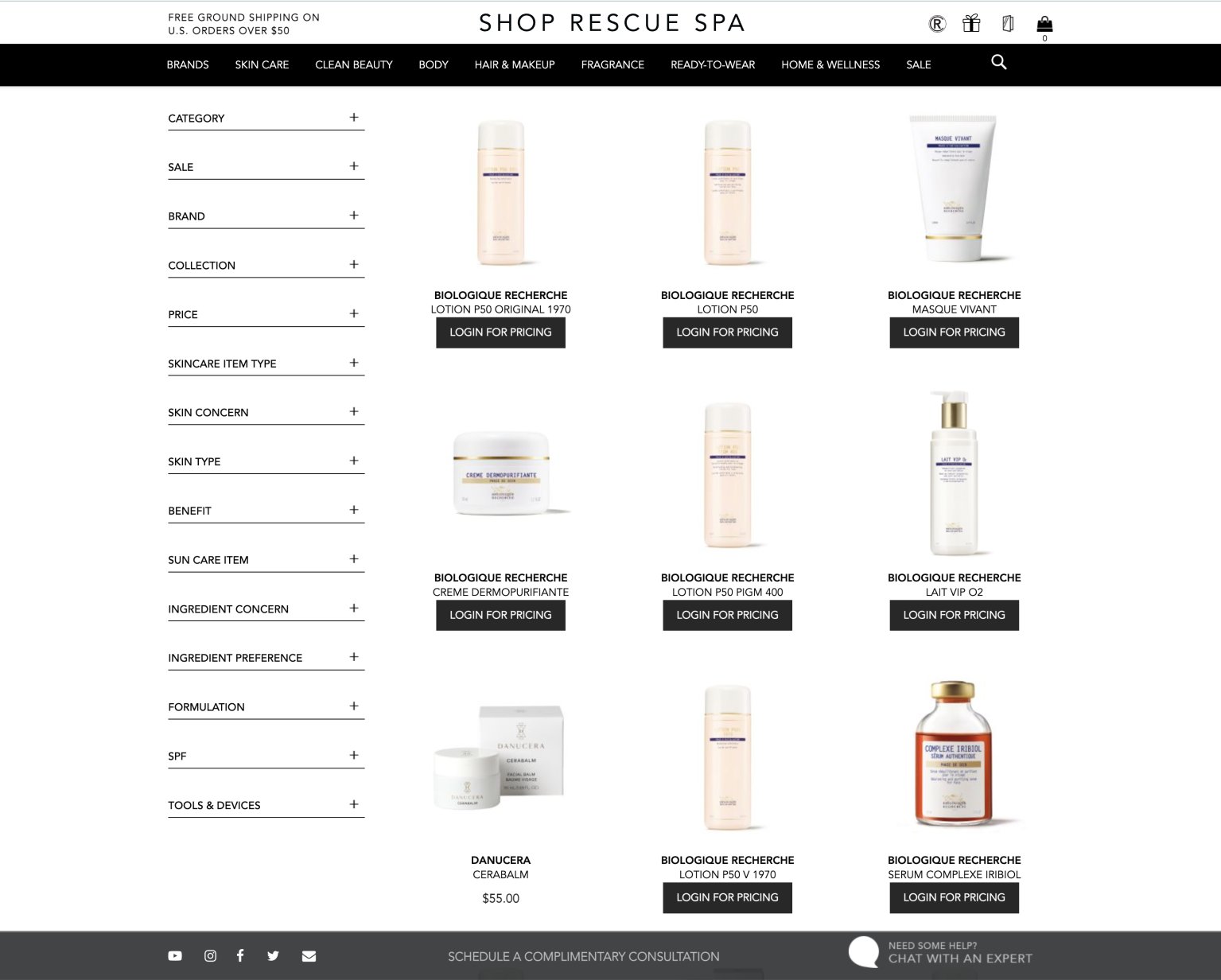
Rescue Spa, a high-end beauty retailer, was running three separate web properties that had drifted apart in both function and identity, with no bridge between its physical stores and online operations. Curotec rebuilt the entire digital estate, redesigning the online presence, tightening the path from content pages into the shopping experience, and unifying the visual identity across every property. The team then integrated Rescue Spa's business systems so staff could serve customers consistently across channels, working across WordPress and Magento with an omnichannel fulfillment solution behind it. Sales doubled within 12 months and quadrupled over three years. Read the full case study.
 Source: www.curotec.com
How Much Does Curotec Retail Software Development Cost?
Curotec's minimum project size is $10,000 with an average hourly rate of $50-$99 and a cost rating of 4.8/5. Clutch's verified summary puts actual project costs between $5,000 and over $300,000, with the most common project size at $50,000-$199,999 across 15 reviews. For a US-based firm that sits below the $100-$300 mid-market benchmark in the pricing table below, which is part of why it appears on shortlists that would otherwise be all-nearshore.
What Do Clients Say About Working With Curotec?
"They have been amazing partners throughout the process. We have been highly impressed with their ability to audit and enhance our website accessibility."
Joseph Dolle, Director of Web Services, GTT
"I appreciate that Curotec is committed to building a long-term relationship with us."
Stanley Berry, President, Berry Writing Group
"Curotec has been a strong partner for us. They understand what we're trying to achieve and what a community foundation is about."
Diane Melley, Executive Director, Philadelphia Foundation
Why Do Businesses Choose Curotec?
A 4X sales increase over three years is the kind of commerce outcome that survives a CFO's questions.
US contracting and full working-day overlap, at rates below the typical American mid-market firm.
Three engagement models mean you can start with two augmented engineers and convert to full delivery without changing vendors.
Accessibility auditing is an in-house capability, which matters for retailers facing ADA exposure on their storefronts.
Enterprise references like Comcast and a Fortune 50 healthcare client indicate the firm handles procurement and security review as well as code.
Cogniteq
Cogniteq has been building software since 2005 and now runs 150+ full-time specialists from offices in Ząbki, Poland and Lithuania, with 300+ completed projects for 100+ clients across more than 30 countries. Mobile app development is the core of the business at 75% of its service mix, backed by web, enterprise, and IoT work. The firm's compliance posture is stronger than most agencies its size: it has completed a SOC 2 Type 2 examination and holds ISO/IEC 27001 and ISO 9001:2015 certifications, and it offers a dedicated development center model alongside project delivery.
Example Project by Cogniteq
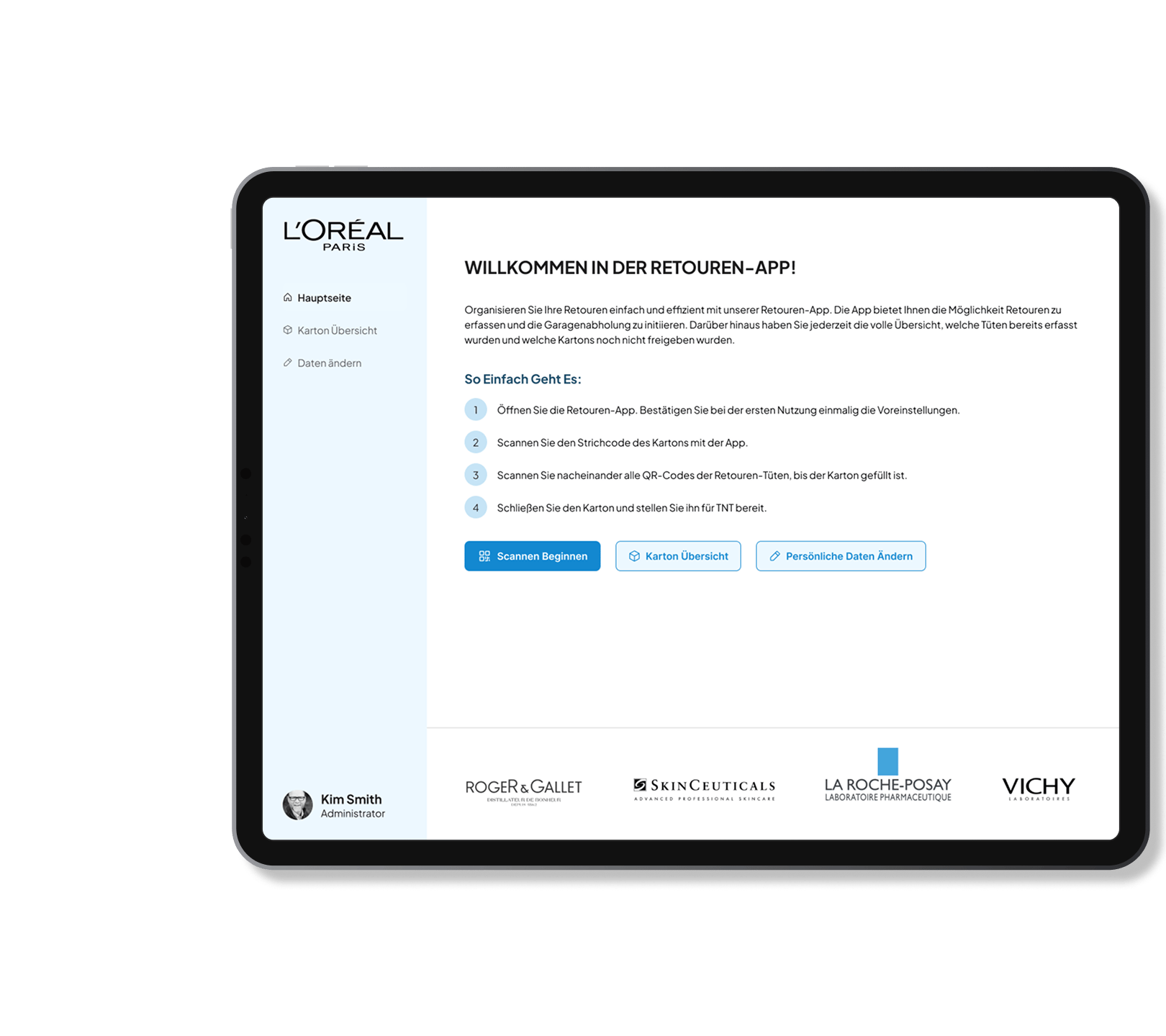
L'Oréal needed an internal iOS application to cope with a sharp rise in parcel volume moving through its own operations. Cogniteq built it in Swift with CoreData and Alamofire, centered on barcode and QR scanning that pulls complete package metadata (type, origin, destination, dispatch date) in a single pass with no manual entry. Shipment statuses update automatically from tracking numbers, a multi-parcel dashboard sorts dozens of packages by stage, location, or date, offline scanning keeps working in warehouses with poor signal, and a custom backend synchronizes every scan into L'Oréal's corporate database in real time. The result was faster package handling and materially less manual tracking across departments. This is retail operations tooling rather than a storefront, and it is a useful read on how the team handles enterprise mobile work held to a global brand's standards. Read the full case study.
 Source: www.cogniteq.com
How Much Does Cogniteq Retail Software Development Cost?
Cogniteq lists a minimum project size of $10,000, an average hourly rate of $50-$99, and a cost rating of 4.9/5, the highest in this list. Its most common project size is under $49,999 across 18 reviews, which fits the profile of a firm doing focused mobile builds and embedded engineers rather than multi-year platform programs. Clutch reviewers consistently describe pricing that fit the budget they came in with.
What Do Clients Say About Working With Cogniteq?
"We were impressed by Cogniteq's work culture and continuous availability."
Steven Braun, CEO, Directional GmbH
"The team was always in touch addressing all the questions from our side and providing options of possible solutions with detailed descriptions of pros and cons so that we could choose the one that fits our needs and budget."
Alexander Ehm, CEO, Visions 101 GmbH
"What stood out most about this company was its proactive approach to communication and planning."
Vadim Myadelets, CBDO, EnCata
Why Do Businesses Choose Cogniteq?
SOC 2 Type 2 plus ISO 27001 is a genuine differentiator when your app touches customer or payment data and your security team gets a veto.
Twenty years in business and a mobile-first service mix suit retailers whose priority is the store-associate app or the shopper app rather than the web platform.
The 4.9/5 cost rating is the highest here, and reviewers tie it to clear scoping rather than low rates.
Options are presented with trade-offs and price attached, which shortens the decision loop for budget owners.
The dedicated development center model works when you want an embedded team rather than a delivered artifact.
Newwave Solutions
Newwave Solutions is a 300+ engineer outsourcing company founded in 2011, headquartered in Hanoi, Vietnam with a presence in Japan, and carrying 800+ completed projects and 200+ active clients over 14 years. Its client roster includes VinID, UNDP, Onkyo, and Daito Trust Construction. The commercial model is built for de-risking: a 14-day risk-free trial, dedicated teams committed at 480 hours per month, daily progress updates, and a stated 99% of developers with 3+ years of experience. It covers 4 languages and 23 time zones, and services span web and mobile, custom enterprise systems, blockchain, AI, game development, and UI/UX design.
Example Project by Newwave Solutions
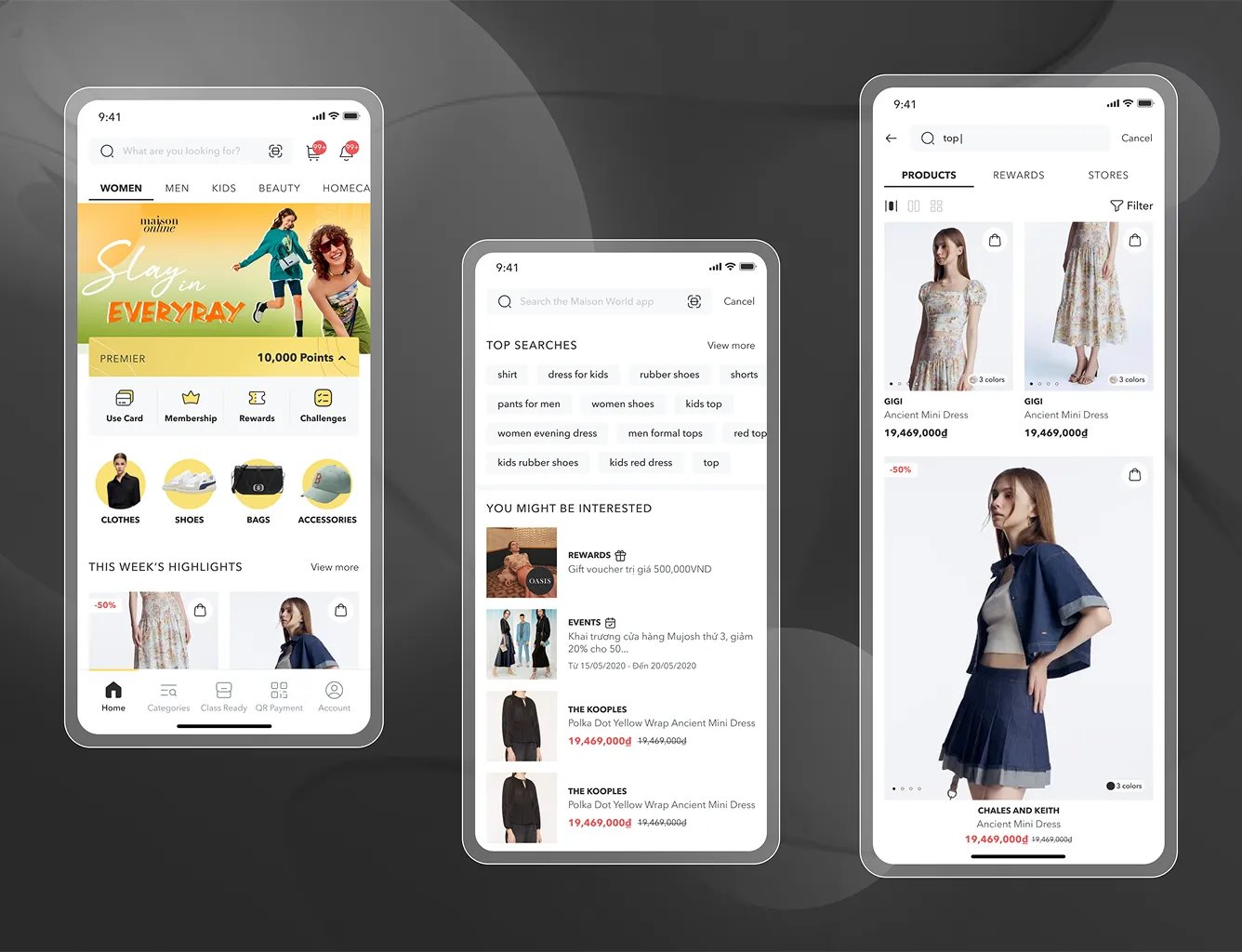
A premium multi-brand fashion and lifestyle platform in Vietnam, distributing official products from international brands inside a larger retail ecosystem, needed a shopping experience that held its brand partners' perceived value while still converting. Newwave Solutions took the UI/UX design across a 15-month engagement with a two-designer team: restructuring the information architecture across a catalog spanning fashion, cosmetics, and lifestyle; adding search suggestions, autocomplete, and filtering so shoppers could narrow by brand, category, or interest; shortening the cart-to-payment flow across web and mobile; and designing the post-purchase surface covering loyalty points, vouchers, saved favorites, order tracking, and store locator. Every design iteration was reviewed against shopping outcomes rather than visual preference, which kept a long approval cycle moving. The app passed 10,000+ downloads on Google Play after launch. Read the full case study.
 Source: newwavesolution.com
How Much Does Newwave Solutions Retail Software Development Cost?
Newwave Solutions has the lowest entry point in this list: a minimum project size of $5,000 and an average hourly rate of under $25, with published rates starting from $13 per hour and a cost rating of 4.8/5. The interesting detail is the mismatch between rate and scope. The most common project size is $50,000-$199,999 across 63 reviews, the largest review base of any company here, which means clients are buying large hour counts rather than small scopes. Against the $75-$250 US boutique benchmark below, that is roughly a third of the cost per hour.
What Do Clients Say About Working With Newwave Solutions?
"Their conversation was equally outstanding. Throughout the project, they communicated in an open and transparent manner, giving us frequent updates and making sure we always understood the technical nuances."
Mike Greeby, Digital Experiences Manager, Wilson Sporting Goods
"Working with Newwave Solutions was special because of their proactive attitude to problem-solving. They were fast to come up with creative ideas and often foresaw possible problems before they became problems."
Griffin Shea, Author, Bridge Books
"Their outstanding dedication to teamwork and customer-focused service impressed me most about them."
Srinivas Murthy, Director, Via
Why Do Businesses Choose Newwave Solutions?
The rate is the headline: under $25 an hour puts a five-person team inside the budget of two US contractors.
A 300+ engineer bench absorbs a scope increase without a hiring cycle, which is the constraint that usually bites mid-project.
The 14-day risk-free trial removes most of the downside from testing a new vendor.
63 reviewed projects at $50,000-$199,999 is a large and consistent evidence base, not a handful of flagship engagements.
Japanese operations and 23 time zones covered make it a practical option for retailers with APAC exposure.
Railwaymen
Railwaymen is a compact Kraków, Poland software house founded in 2009, with 17+ years behind it, 150+ web and mobile apps delivered across five continents, and 10+ international awards. Team size sits in the 35 to 55 range depending on which of the company's own figures you read, and its defining operational claim is near-zero staff rotation, which means the engineers who build a product tend to be the ones still supporting it years later. The stack covers Ruby on Rails, Go, React, Vue, Angular, Node, and PostgreSQL on the web side, with Swift, Kotlin, and React Native for mobile. Its discovery phase is sold as fixed programs with published hour counts, from a 44-hour module through a 150-hour premium option.
Example Project by Railwaymen
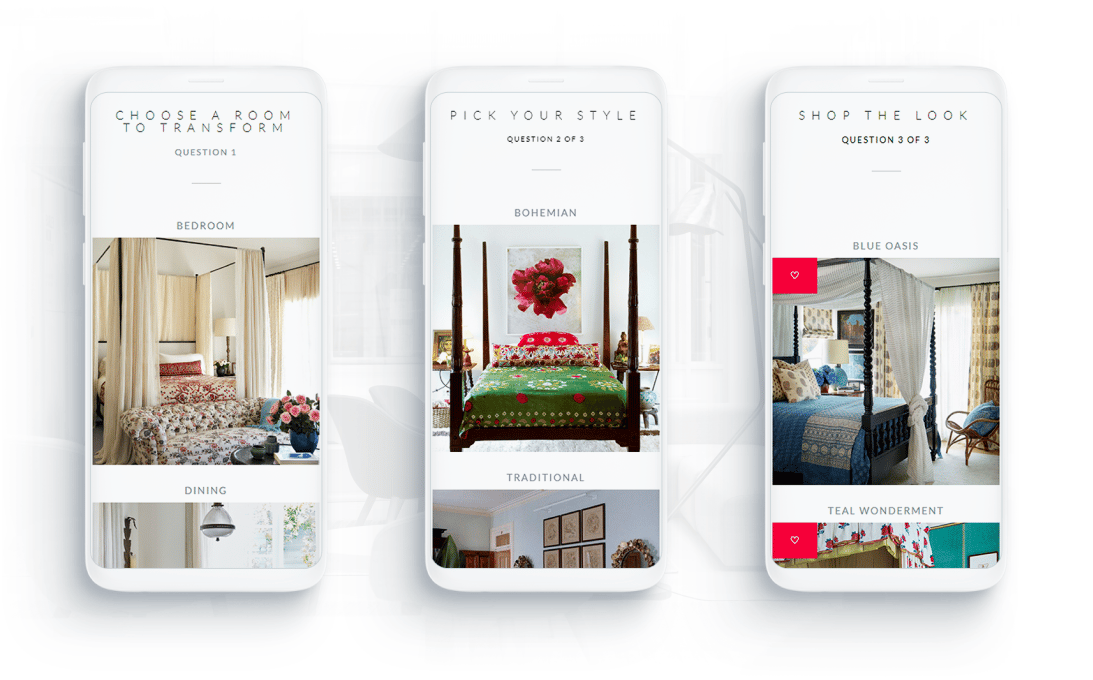
The Perfect Room turned an interior design service into an online product: shoppable luxury decor packages with full white-glove installation, founded by the LA designer Kathryn M. Ireland. Railwaymen built the marketplace on Ruby on Rails and PostgreSQL and owned delivery and QA end to end. The centerpiece is a visual style quiz that matches shoppers to collections through an algorithm the client's own administrators can reconfigure from the admin panel, alongside the complete Stripe checkout, favorites, order history, moodboards, bookable design consultations, and a lightweight CMS for the homepage and featured designers. Google Tag Manager and Analytics were integrated with the client's data scientist to track the actions that mattered. The least glamorous integration is also one of the most useful: AvaTax, which calculates US sales tax by zip code and refreshes the order summary before checkout completes, keeping the number the shopper sees honest and every invoice in one place. Read the full case study.
 Source: railwaymen.org
How Much Does Railwaymen Retail Software Development Cost?
Railwaymen's minimum project size is $25,000, its average hourly rate is $50-$99, and its cost rating is 4.8/5. Clutch's verified summary shows project costs from $10,000 to over $800,000, with the most common web development project at $10,000-$49,999 across 14 reviews. The higher minimum filters out very small jobs, and the published discovery packages mean you can buy a scoped estimate before committing to a build.
What Do Clients Say About Working With Railwaymen?
"Our search for the right development team lasted for a month, interviewing over 30 companies. We are confident that our decision to go with Railwaymen was the perfect choice. Not only do you have direct access to the executive team but have a development staff with knowledge and creativity that is unmatched."
Jeff Gerardi, President and CEO, ProEst
"They didn't just execute our ideas; they brought fresh, innovative suggestions to the table. Their ability to introduce new concepts enhanced our project significantly."
Senior Security Analyst, Cybersecurity Company
"The way the team really invested in my project to ensure the most success and satisfaction. I think that's hard to find these days with B2B or even just in general."
Jacob Dombrowski, Founder, Education Firm
Why Do Businesses Choose Railwaymen?
Near-zero team rotation means institutional memory stays with your product instead of leaving with a resignation.
Marketplace mechanics are already solved here: Stripe checkout, favorites, order history, tax calculation by zip code, and a client-editable recommendation quiz.
Discovery is sold as fixed programs with stated hours, so scoping has a price and a boundary before the build starts.
One client shortlisted Railwaymen after interviewing more than 30 firms and singled out direct access to the executive team.
At 35 to 55 people, senior engineers are on your project rather than supervising it from three layers up.
Lounge Lizard
Lounge Lizard has been in business since 1998, making it by some margin the oldest firm here at 28 years, with 1,000+ projects completed, a stated 98% client retention rate, and 10 US offices spanning New York, Long Island, Washington DC, Miami, Nashville, Virginia, Las Vegas, Austin, Los Angeles, and Charleston. Co-founder Ken Braun is a Webby Awards judge and a Forbes contributor on web design and digital growth. The agency runs brand strategy, e-commerce design and development, enterprise WordPress, interactive 3D configurators, SEO, PPC, CRO, and AI search optimization under one roof, which makes it a different animal from the engineering-led firms on this list.
Example Project by Lounge Lizard
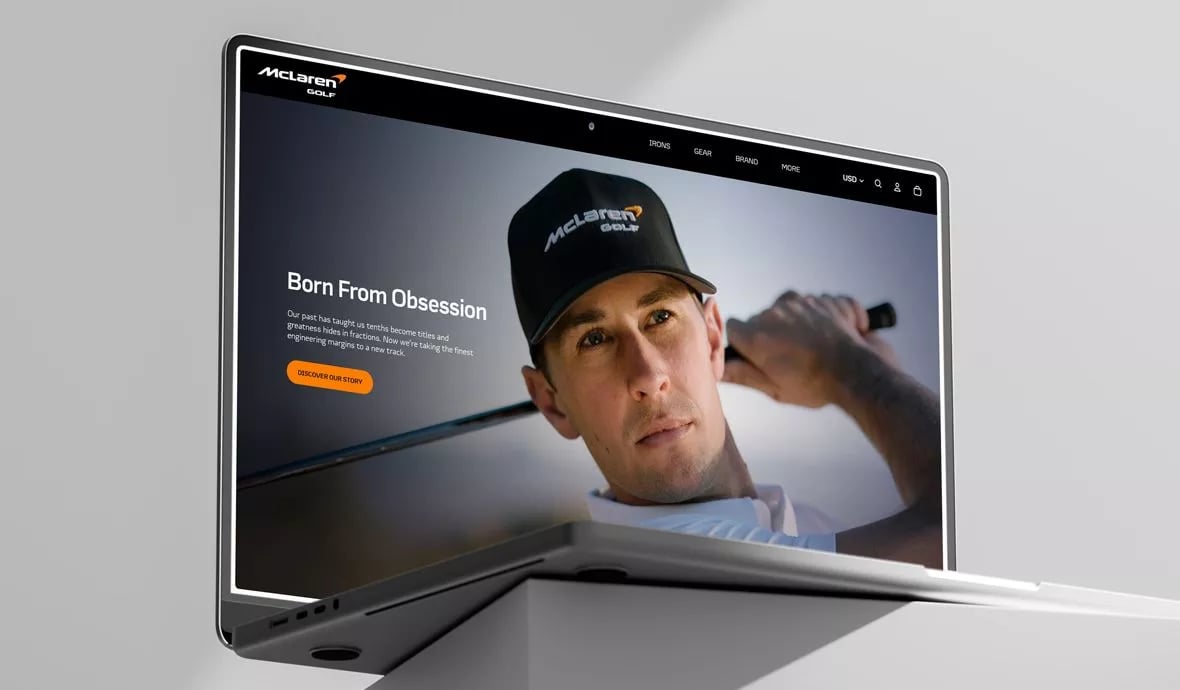
When McLaren extended its brand into golf, the launch needed an e-commerce flagship that read as unmistakably McLaren while establishing a distinct identity for a category with nothing in common with motorsport. Lounge Lizard handled digital strategy, UX/UI design, e-commerce web design, development, and quality assurance, drawing the visual direction from McLaren's racing and automotive heritage through strong visual storytelling and a disciplined interface. The audience brief was narrow: affluent, globally minded golfers who care about engineering, while staying open to McLaren enthusiasts arriving from the car side. Every touchpoint had to clear McLaren's global brand standards from visual direction through final QA, which is the constraint that usually decides whether a brand extension launches on time. Read the full case study.
 Source: www.loungelizard.com
How Much Does Lounge Lizard Retail Software Development Cost?
Lounge Lizard's minimum project size is $25,000 and its cost rating is 4.8/5, but its average hourly rate is undisclosed on Clutch, so there is no published figure to quote. For comparison, the US boutique agency benchmark in the pricing table below runs roughly $75-$250 per hour. What the review data does show is a wide spread: verified project costs from $5,000 to over $180,000, with the most common web development project size under $10,000 across 17 reviews, which suggests a business built on many focused engagements rather than a few large platform programs.
What Do Clients Say About Working With Lounge Lizard?
"I'm impressed with their combination of talent and responsiveness."
Pamela Siegel, Marketing Director, Financial Services Company
"Ken, founder of LoungeLizard, is a former BOCES graduate and understands the complexities of our organization. He met with our leadership team and, based on his findings and our input, created a vision for the new website that is unlike many in the education space."
Mike Rukavina, Director of Communications and Development, Erie 2-Chautauqua-Cattaraugus BOCES
"Lounge Lizard's team is very creative and provides good design suggestions."
Claudia Lin, CEO and Founder, WinBridge
Why Do Businesses Choose Lounge Lizard?
Twenty-eight years and 1,000+ projects is a longer track record than anyone else on this list, and a 98% retention rate says clients stay.
Premium and luxury retail is the sweet spot: the McLaren Golf build was judged against a global brand's standards, not a style guide.
Design, SEO, PPC, CRO, and AI search optimization sit in the same building, which suits retailers where the storefront is also the primary marketing channel.
10 US offices make in-person workshops and stakeholder sessions practical in most major markets.
Founder-level involvement is visible in client accounts, including leadership sessions before a line of code is written.
BotsCrew
BotsCrew is an AI consulting and development company founded in 2016, headquartered in San Francisco with offices in Austin, San Diego, Cincinnati, Minneapolis, and Lviv, Ukraine. It runs 60+ AI experts, has delivered 200+ AI projects including 50+ generative AI products for 100+ clients, and counts Honda, Adidas, Samsung NEXT, Mars, Natera, and Virgin Holidays among them. The firm was building conversational interfaces years before generative AI had a name, shipped its first global GenAI production deployment in April 2023, and became part of the Court Avenue collective in January 2025. Clutch has named it a Top Generative AI Company from 2024 to 2026, a Top AI Consulting Company for 2025 and 2026, and a Top Chatbot Development Company every year from 2017 to 2025, on a 4.8 average rating.
Example Project by BotsCrew
Pluggi wanted a white-label AI product-recommendation chatbot it could resell to cannabis dispensaries, and it had already pre-sold customers before anything existed. BotsCrew ran a discovery phase covering integrations and bot mockups, then shipped the pilot for the first real client in six weeks under a $10,000 budget, built on its own conversational AI platform with OpenAI behind it. Shoppers answer three questions about desired effect and taste and get matched products in seconds; anything else routes to GPT, with a handoff to a live agent when the conversation needs one. The bot speaks over 50 languages and integrates natively with Dutchie, Treez, and iHeartJane. Because it sits on a platform rather than a bespoke codebase, Pluggi launches a new dispensary bot in two working days and manages content and settings without writing code. Since March 2022 it has launched 100+ white-label bots reaching 23,600+ users, taking the client from $0 to over $10,000 in monthly recurring revenue, at a reported 15.6x average ROI, a 28% increase in cart value, and a 15% drop in cart abandonment. Read the full case study.
) Source: botscrew.com
Source: botscrew.com
How Much Does BotsCrew Retail Software Development Cost?
BotsCrew lists a minimum project size of $10,000, an average hourly rate of $50-$99, and a cost rating of 4.7/5. Clutch's verified summary puts project costs between $5,000 and $200,000, with the most common project size at $10,000-$49,999 across 30 reviews. The Pluggi pilot landing under $10,000 is a useful reference point for what an initial production deployment can cost when the vendor brings a platform instead of starting from an empty repository.
What Do Clients Say About Working With BotsCrew?
"Their professionalism and constant responsiveness stand out. Whenever we need urgent answers, they always respond."
Afshin Saffari, Client Director of Digital Solutions, Leo Burnett
"BotsCrew was an incredible partner from inception to launch. The team was proactive, well-organized, and flexible. They are deeply committed to achieving successful outcomes and exceeding expectations."
Jacklyn Trejo, Product Manager, Samsung NEXT
"Engagements with external consultants can suffer if the external party is very linear in their approach. But the BotsCrew team was incredibly collaborative and eager to understand our use case. It made our team feel like we were truly partnered on our project."
Jesse Lazarus, Chief Technology Officer, Kravet
Why Do Businesses Choose BotsCrew?
Ten years of conversational AI work predating the generative wave, which separates it from firms that rebranded into AI in 2023.
The Pluggi numbers are commerce metrics rather than engagement metrics: cart value up 28%, abandonment down 15%, 15.6x ROI.
Production deployments for Honda, Adidas, Samsung NEXT, and Mars show the work survives enterprise legal and brand review.
Building on an existing platform compresses time to a first live bot from months to weeks, and to days for each one after that.
Nine consecutive years of Clutch recognition in chatbot development is an unusually long consistency record in a fast-moving category.
What Separates a Great Retail Software Development Company From a Mediocre One?
The difference shows up in the integration layer, not the storefront. Anyone can build a product listing page. The firms worth hiring are the ones that ask what runs your inventory before they quote, because POS, inventory, and ERP integration drives more budget overruns than any other line item in retail projects. The arithmetic is public: each POS integration such as Shopify, Square, or Lightspeed typically adds $10,000-$20,000, multi-channel sync across stores, ecommerce, and wholesale adds $15,000-$30,000, and supporting more than five warehouses or going international adds $35,000-$50,000. A proposal that treats "integrations" as one line is a proposal that has not been costed.
Four other things reliably separate the strong from the average.
Peak season release discipline. Retailers have traditionally frozen code a month or two before Black Friday, and the freeze is increasingly seen as a blunt instrument: it collides with continuous delivery, creates a release backlog that lands all at once in January, and offers comfort more than safety. Stronger teams separate deployment from release with feature flags, so security patches and performance fixes still ship during peak while new features stay dark until the rush passes. Ask a prospective vendor what they did last November, specifically.
Payment page compliance. The future-dated requirements of PCI DSS v4.0.1 took effect on 31 March 2025, and the first full assessments against them are landing now. Requirements 6.4.3 and 11.6.1 mean every script rendered on a payment page must be authorized, integrity-checked, and monitored for tampering, in the browser as well as on the server, and SAQ A eligibility was narrowed in January 2025. Any vendor who has genuinely shipped checkout recently will have an answer ready about third-party script management. Any vendor who has not will improvise one.
Architecture that survives the next replatform. Composable and headless setups are now the default among premium and mid-market retailers, and MACH principles exist mainly so ERP, POS, and CRM can be connected without a rip-and-replace program. A partner who proposes a monolith in 2026 is optimizing for their delivery convenience rather than your next five years.
Machine-readable product data. This one moved from marketing to engineering in the space of about eighteen months. AI traffic to US retailers grew 393% year over year in Adobe's Q1 2026 data and is up more than 1,300% since October 2024, and by March 2026 that traffic was converting 42% better than conventional sources after converting 38% worse a year earlier. Morgan Stanley projects $385 billion of US e-commerce moving to agentic channels by 2030. If a shopping agent cannot parse your catalog, structured product data stops being an SEO task and becomes a revenue dependency.
How Much Does Retail Software Development Cost in 2026?
Budget $30,000 for a retail app MVP, $100,000-$300,000 for a mid-market commerce platform, and $500,000 to $2 million or more for an enterprise unified commerce build. Hourly rates vary more by geography than by capability, and the spread across the companies profiled above is roughly four to one.
Region or tier | Typical agency rate (USD/hr) | Notes |
|---|---|---|
Enterprise consultancy (global SI, Big Four) | $250-$500+ | Procurement-friendly, slowest to start |
US or Western European mid-market firm | $100-$300 | Full onshore contracting and time zone |
US boutique agency | $75-$250 | Where Lounge Lizard and Curotec sit |
Established freelancer | $75-$150 | Fine for a module, risky for a platform |
Latin America agency | $40-$100 | Nearshore, strong US overlap |
Poland, Ukraine, and the Balkans | $40-$99 | EU regulatory alignment, deep talent pool |
India agency | $25-$75 | Large benches, wide seniority spread |
Southeast Asia agency (Vietnam, Philippines) | $25-$65 | Rates open around $13-$20/hr |
Rate figures are drawn from the FullStack Labs 2026 price guide and current regional benchmarks for Poland and Ukraine, where senior engineers bill roughly $40-$90 an hour.
The second table is the one that actually predicts your invoice, because retail cost is additive and the additions are where estimates break.
What you are building | Typical cost | What drives it |
|---|---|---|
Retail app MVP | $30,000-$60,000 | Whether scope holds for 12 weeks |
Basic POS software | $8,000-$30,000 | Hardware compatibility |
Full POS system | $25,000-$75,000 | Payment certification and edge cases |
Inventory management build | $50,000-$120,000 | Multi-location stock logic |
Each POS integration | Add $10,000-$20,000 | Maturity of the vendor's API |
Multi-channel sync | Add $15,000-$30,000 | Reconciling conflicting stock truth |
Multi-warehouse, 2-5 sites | Add $20,000-$35,000 | Allocation and transfer rules |
Multi-warehouse or international, 5+ sites | Add $35,000-$50,000 | Tax, currency, localization |
Mid-market commerce platform | $100,000-$300,000 | Number of systems being connected |
Enterprise unified commerce | $500,000-$2,000,000+ | Migration and parallel running |
Sources for these ranges include RaftLabs and current retail build cost surveys.
Three things move a quote more than the hourly rate. The first is integration count, which compounds rather than adds, since each connected system multiplies the test matrix. The second is data migration, which is nearly always underestimated because nobody audits the legacy data until the migration starts failing. The third is how much discovery happened before the number was produced. A fixed price quoted from a one-hour call is a guess wearing a suit, and you will pay for the difference in change requests.
How Do You Choose the Right Retail Software Development Partner?
Match the vendor to your actual constraint rather than to a category. A retailer replatforming a storefront and a chain unifying loyalty across four brands are not shopping for the same firm, even though both would search for the same phrase.
If you are | Prioritize | Firms on this list that fit |
|---|---|---|
A retail startup validating a concept | Low minimum, speed to something live, flexible scope | Newwave Solutions, BotsCrew |
A DTC brand replatforming its storefront | Conversion track record and design capability | Curotec, Lounge Lizard |
A chain unifying pricing, promotions, and loyalty | Enterprise architecture and load engineering | Ingsoftware, Monterail |
Adding AI to the shopping or support path | Production AI deployments, not pilots | BotsCrew, Monterail |
Handling sensitive customer or payment data | Audited controls and certifications | Cogniteq |
Building a marketplace or two-sided platform | Checkout, tax, and payout mechanics already solved | Railwaymen |
Budget-constrained and needing a large bench | Rate, bench depth, and a trial period | Newwave Solutions |
Once you have a shortlist of three to five, the useful work is verification rather than more browsing. Compare the firm's typical reviewed project size against yours: a company whose median engagement is under $10,000 runs a different business from one whose median is $200,000, regardless of what the capabilities page claims. Ask for a reference from a project that went badly, since how a team behaves during a bad quarter tells you more than a case study written after a good one. Insist on meeting the named engineers who will actually do the work, not the delivery director who sells it. And check whether the people who built the reference project are still at the company, which is precisely why low staff rotation, as at Railwaymen, is worth asking about.
What Should You Ask a Retail Software Vendor Before You Sign?
Ask questions that are expensive to answer dishonestly. Generic capability questions produce generic answers; specific operational questions expose whether a team has actually run a retail system in production.
Which of your engineers has integrated the exact POS or ERP we run, and can we speak to that client directly?
What was your release policy last November, and do you use feature flags or a full code freeze during peak?
How do you manage third-party scripts on the payment page under PCI DSS 4.0.1 requirements 6.4.3 and 11.6.1?
Who owns the code, the repositories, and the cloud accounts on day one, and what happens to them the day we leave?
What is the confidence interval on this estimate, and what are the three things most likely to push it up?
Is our product data structured so AI shopping agents can parse it, and whose job is that in this contract?
The red flags are equally practical. Be wary of a fixed price quoted before any discovery work, integrations counted as a single line item, a proposal with no named engineers on it, a firm whose reviewed project sizes are an order of magnitude away from your budget, and a full senior team that is somehow available to start on Monday. Good teams are usually booked four to eight weeks out, and the ones who say otherwise are telling you something about their pipeline.
Which Retail Software Development Partner Fits Your 2026 Roadmap?
The published rates on this list run from under $25 to about $99 an hour, a four-fold spread. The finished cost of a retail system does not vary by four times on that basis, because the number is driven far more by how many systems get connected and how stable the scope stays than by where the engineers sit. A firm billing $99 an hour that interrogates your POS setup before quoting will frequently land under a firm billing $25 an hour that quotes from a feature list and discovers the inventory logic in month three.
That is the practical filter. Look for evidence of a team having solved your specific structural problem, whether that is promotions across multiple markets like the SPAR ICS work, checkout scaling under quick-commerce load like Flink, tax and payout mechanics in a marketplace, or a shopping agent that measurably moved cart value. Then compare rates among the firms that clear that bar. Retail punishes systems thinking failures more visibly than most sectors, because the failure happens on the busiest day of the year and every customer sees it.
Key Takeaways
Integration work across POS, ERP, and inventory is the largest source of retail budget overruns, and each POS connection typically adds $10,000-$20,000 on its own.
Regional rates range from under $25 an hour in Southeast Asia to $250-$500 at global consultancies, but scope stability affects the final invoice more than geography does.
PCI DSS v4.0.1 requirements covering payment page scripts have been in force since March 2025, and a vendor without a ready answer on script management has not shipped checkout recently.
AI-referred retail traffic grew 393% year over year in early 2026 and now converts 42% better than conventional channels, which makes structured product data an engineering dependency rather than a marketing task.
The strongest signal in vendor selection is proximity of proof: a team that has already solved your structural problem, at your scale, with a client who will take the call.
Retail software development FAQ

Grzegorz Hajdukiewicz
Chief Delivery Officer

With over a decade of experience in the IT industry, Grzegorz has a proven track record of delivering complex projects on time and on budget. At Monterail, he leads a team of dozens of developers, designers, project managers, and business analysts, ensuring the successful delivery of software solutions for clients worldwide. Passionate about agile methodologies and continuous improvement, he constantly seeks new ways to optimize the delivery process.