The New Default. Your hub for building smart, fast, and sustainable AI software

See now
Abstract illustration of digital healthcare.

The Future of Healthcare and Digital Health Solutions

Piotr Zając
|   Dec 30, 2025

We live in very dynamic times. Changes, both awaited and unexpected, are all around us. The new isn't always good, but it's always a driving force that makes us evolve.

Healthcare is experiencing a technological revolution. Artificial intelligence is transforming diagnostics and treatment, with approximately 100 new approvals annually. Investment in digital health has surged, with US digital health startups raising $10.1 billion in 2024, while AI-enabled startups captured 62% of all digital health venture funding in the first half of 2025 - the first time AI reached majority funding.

The digital health market itself has grown to $288.55 billion in 2024 and is projected to reach $946.04 billion by 2030, representing a compound annual growth rate of 22.2%.

The world is recognizing that a big part of the answer to better healthcare outcomes, reduced costs, and improved patient experiences lies in digital innovation. From wearable devices that detect diseases before symptoms appear, to AI systems that aid human diagnosticians in specific tasks, or telehealth platforms connecting patients with care from anywhere.

Yet, there is still so much more potential to unlock. As Churchill once said, "Never let a good crisis go to waste." Today, the crisis is the unsustainable trajectory of healthcare costs, the shortage of 3 million healthcare workers by 2026, and the need to provide better care to aging populations. Digital health solutions are rising to meet these challenges head-on.

What is driving the demand for digital health solutions?

The convergence of technological breakthroughs, regulatory progress, and shifting consumer expectations is fueling explosive growth in digital health. 

Investment momentum continues to accelerate. US digital health companies raised $10.1 billion across 497 deals in 2024, with global investment reaching $25.1 billion across 1,623 deals. What's particularly striking is the shift toward AI: AI-enabled startups captured 37% of 2024 funding, jumping to 62% in the first half of 2025. Average deal sizes have grown from $20.4 million in 2024 to $28.1 million in H1 2025, signaling investor confidence in the sector's maturity.

Telehealth adoption has stabilized at meaningful levels following initial pandemic-driven spikes. 78.6% of US hospitals had installed telemedicine solutions as of February 2024. Mental health has been particularly transformed, offering people unprecedented access to therapists and psychologists.

The explosion of AI and machine learning in healthcare represents perhaps the most significant driver. Increasingly more AI/ML-enabled medical devices are being approved. The regulatory infrastructure is expanding to support this growth.

Consumer behavior reflects this transformation. People search for medical information online, book doctor visits, even use AI chatbots to understand their health better.

Healthcare providers are equally enthusiastic. Many physicians see an advantage in integrating digital health tools in health systems, citing improved care quality and reduced provider stress.

Why should healthcare systems focus on patients, not institutions?

The problem of healthcare is profound, systemic, and therefore requires fundamental changes. Without reorienting toward patient-centered care, technological development will only benefit a fraction of those who need it.

The system should focus on patients and their needs. Physicians serve patients, not the other way around. Yet too often, healthcare systems prioritize institutional convenience over patient experience, making it difficult to get appointments, navigate care, or access one's own health information.

Digital health is finally enabling the patient-centered transformation that's been talked about for decades.

Patient access to health information has more than doubled in the past decade. 65% of individuals were offered and accessed their online medical record or patient portal in 2024, up dramatically from just 25% in 2014. App-based access has surged from 38% in 2020 to 57% in 2024, putting health data literally in patients' pockets.

However, fragmentation remains a challenge. 59% of individuals now have multiple online medical records or patient portals, yet only 7% report using a portal organizing app to consolidate this scattered information. This highlights both progress and remaining work.

Consumer health technology is stepping up to fill these gaps. Apple Health Records consolidates health data from various providers into a single platform, empowering patients to take control of their health information. Google Health Connect is expanding beyond fitness tracking to include symptom logging, alcohol intake, and lifestyle factors, supporting over 50 data types across activity, sleep, nutrition, vitals, and medical records.

This shift toward patient empowerment is practical. When patients have easy access to their health data, they become active participants in their care rather than passive recipients. They can share complete medical histories with new providers, track trends over time, and make informed decisions about their health. The technology to make healthcare truly patient-centered now exists. The question is whether health systems will embrace it fully.

How does prevention reduce healthcare costs more than treatment?

People don't want their lives consumed by health concerns. We want to play freely with our kids, practice sports without limitations, and maintain good physical and mental condition. The promise of digital health is making this possible. Not through constant worry, but through passive, continuous monitoring that prevents problems before they become crises.

The economics of prevention versus treatment are compelling. Investment of just $10 per person per year in community-based prevention programs saves $16 billion annually within five years, delivering a return of $5.60 for every $1 spent on proven public health efforts. Preventive movement programs save an average of $1,663 per member per year and generate a 3.1x ROI, though they typically require 2-3 years to achieve positive returns. Even basic medication adherence pays dividends: every dollar spent on adherence to prescribed care reduces medical costs by $2.

AI-powered early disease detection is transforming screening and diagnosis. DermaSensor, approved by the FDA in January 2024, became the first AI-powered tool for noninvasive skin cancer diagnosis, detecting melanoma, basal cell carcinoma, and squamous cell carcinoma at the point of care. For diseases like colorectal cancer, the difference is life-or-death: five-year survival rates are 90% with early diagnosis versus just 14% when diagnosed late. AI systems are achieving 93% accuracy in heart disease classification, with nearly 950 FDA-cleared AI/ML devices now available and approximately 100 new approvals annually.

Remote patient monitoring delivers measurable clinical outcomes. A 2024 HealthSnap study of 100,000+ patients across 150+ health systems in 33 states demonstrated remarkable results:

Corporate wellness programs demonstrate strong ROI when well-executed. A 2024 Wellhub study found that 95% of companies measuring ROI see positive returns, up from 90% in 2023. 91% of HR leaders report decreased healthcare benefits costs, up from 78% in 2023. Nearly two-thirds earn $2 or more back for every $1 spent, with comprehensive programs yielding $6 in healthcare savings for every $1 invested.

Musculoskeletal (MSK) disorder prevention offers particularly compelling returns. MSK disorders account for over $500 billion annually in U.S. healthcare costs, yet early physical therapy can prevent up to 80% of unnecessary surgeries and imaging. A June 2024 Risk Strategies Consulting study of Sword Health participants found they save $3,177 annually on MSK-related healthcare expenses, with a 50% reduction in MSK surgeries and 3.2x overall medical cost ROI. Highmark Health projected $30 million in savings for 19,256 active members in 2024.

Modern healthcare is about education, prevention, and making healthy choices effortless. Thanks to digital solutions, you don't need to set aside extra time. You can monitor your health while watching Netflix, working, or going about your daily life. The technology works in the background, alerting you and your care team only when intervention is needed.

Digital health solutions are already addressing the challenges of overloaded hospitals and healthcare workforce shortages. Advanced devices detect diseases at early stages when hospitalization isn't required, or eliminate them entirely through prevention. These are current realities delivering measurable results.

How do mobile devices and wearables enable digital health?

We tend to postpone doctors' appointments. We live in a rush, trying to reconcile career and private life, taking from both as much as possible. And health? We are still young, it can wait.

Although it can't and doesn't have to.

The whole idea of digital health is to make healthcare more accessible, meaning convenient and safe. In many cases, there is no need for a traditional medical appointment to conduct an examination, get a diagnosis, or simply enhance health. It all can be done in the privacy of your home or any other place you wish.

There are more and more services and products helping us monitor our health and facilitate our daily lives. A significant part of them connect physical devices with mobile applications. This combination makes it easy to use these products, collect data, and analyze it in one place. After all, we always have our phones at hand.

The wearable medical device market has exploded. From $42.74 billion in 2024, the market is projected to reach $430 billion by 2034. 

Consumer adoption is substantial. About 35% of U.S. adults now use a wearable health device, while 40% use health apps. Diagnostic devices command 57.6% of the total market share in 2024. 

Ten years ago, patients were happy with an annual physical examination. If something was wrong, they'd follow their doctor's instructions. If fine, they'd forget about health for another year.

Today, patients focus on prevention and demand information about their health more frequently, sometimes daily. Technology makes this possible without extra effort or time commitment.

Here are examples of cutting-edge wearable technology in digital health:

Apple Watch Series 10 (September 2024) introduced FDA-approved sleep apnea detection using advanced breathing analysis with accelerometer sensors. The FDA cleared this Sleep Apnea Notification Feature on September 16, 2024, making it available on Series 9, Series 10, and Ultra 2 models. It also features a Training Load Tracker, water depth and temperature sensing, ECG, fall detection, and Crash Detection.

Apple Watch Series 11 (September 2025) brought 24-hour battery life through a reengineered battery system and introduced a new Sleep Score metric to help users improve sleep and overall health. It also features enhanced 5G connectivity.

Apple Watch Ultra 3 (September 2025) offers groundbreaking hypertension notifications that alert users if signs of chronic high blood pressure are detected through optical heart sensor monitoring over 30-day periods. It includes Emergency SOS via Satellite, a Workout Buddy fitness experience powered by Apple Intelligence, and up to 42 hours of battery life.

Samsung Galaxy Watch 7 and Watch Ultra (2024) feature Samsung's most advanced BioActive Sensor for tracking heart rate and sleep patterns. They introduce an Energy Score with Galaxy AI that provides personalized energy scores based on sleep data, blood oxygen, snoring time, skin temperature, and heart rate. The watches also debut the AGEs Index, tracking Advanced Glycation End-products to show how diet affects metabolic health. Additional features include AI-enhanced heart rate tracking, body composition analysis, sleep apnea detection, cycle tracking, SpO2, ECG, and blood pressure monitoring.

Oura Ring 4 (October 2024) at $349 plus $5.99/month subscription features Smart Sensing Technology that adapts to unique physiology for accurate, continuous data, with sensors detecting signals even if the ring twists 30 degrees. The design improvements include recessed sensors (reduced from 1.3mm to 0.3mm bumps) with fully titanium coating, up to 8 days of battery life, and expanded size range (sizes 4-15). It offers automatic activity detection with average heart rate and HR zones for 40+ activities.

WHOOP 5.0 and WHOOP MG (May 2025) deliver 14-day battery life with a 7% smaller form factor and sensors capturing data 26 times per second with 10x more power efficiency. They introduce Healthspan & WHOOP Age to quantify Pace of Aging and provide physiological age insights. WHOOP MG offers Blood Pressure Insights with daily systolic and diastolic range estimates using overnight analysis, plus medical-grade ECG readings that detect signs of atrial fibrillation. Women's Hormonal Insights provide personalized insights on how hormonal shifts influence recovery, sleep, stress, and performance.

Google Pixel Watch 3 (2024) features a Daily Readiness Algorithm that analyzes HRV, sleep, and resting heart rate. It offers Cardio Load & Target Load monitoring for exercise intensity guidance—now FREE for Pixel Watch 3 owners. Advanced running features provide up to 40% more accurate heart rate tracking during intense activities, along with ECG scans, fall detection, loss of pulse alerts, and comprehensive sleep tracking.

These are FDA-cleared medical devices delivering continuous health monitoring that would have required multiple doctor visits just years ago. The future of healthcare is already on your wrist.

Why is real-time health data a game-changer?

You go to the clinic and have an examination. You leave and wait for 7 workdays for the results. After another 3 days, you go to the physician to collect and interpret them.

During these 10 days, your condition could have gotten worse or disappeared, which means the suggested treatment might not be effective or even needed.

Digital health solutions provide real-time data, transforming this outdated model. The technology has evolved far beyond basic heart rate monitoring. We now have FDA-cleared devices delivering medical-grade diagnostics continuously.

FDA-Cleared Continuous Monitoring:

Clinical Validation:

The BASEL Wearable Study (2023-2024) enrolled consecutive patients undergoing electrophysiological procedures to test atrial fibrillation detection. Results showed Apple Watch 6 and Samsung Galaxy Watch 3 both achieved 85% sensitivity and 75% specificity. A systematic review of 12 studies with a combined 1,075,088 participants found most validation measures of wearable smartwatches were above 90% and comparable with FDA-approved KardiaBand.

A 2024 scoping review examined 80 studies on wearable devices for remote health monitoring. 85% focused on monitoring existing chronic diseases, with neurodegenerative diseases most commonly monitored (32%). Watches and bracelets were the most common devices (63%). Only 6 studies (8%) were randomized controlled trials, with 4 of 6 (67%) showing evidence of positive clinical impact.

Garmin Health has supported over 1,000 research studies worldwide in sleep, well-being, rehabilitation, physical activity, and disease management. Studies by Dartmouth College and Northeastern University confirmed Garmin smartwatches produce reliable health data.

AI-Powered Real-Time Analysis:

AI empowers wearables with continuous monitoring and instant analysis of sensor data, evaluating signals like heart rhythm, glucose levels, or blood pressure on the fly. This enables immediate detection of abnormal patterns with real-time alerts. 

Consumer trust is growing: studies suggest between 76% and 90% of adults are willing to share wearable data with their physician. Funding for wearable tech startups topped $4.8 billion in 2023, reflecting investor confidence in the technology's clinical value.

Healthcare System Integration:

Over 250 hospitals and health systems are building or expanding hospital-level care at home programs. The global remote patient monitoring market was estimated at $14 billion in 2023, expected to reach $41.7 billion by 2028.

Thanks to data from innovative devices combined with machine learning and artificial intelligence, healthcare is shifting from reactive treatment to predictive prevention. The goal is detecting and preventing diseases before they happen. For millions of people using these devices daily, that future is already here.

Why does centralized health data lead to better care?

Physicians and clinics collect extensive data about each patient. The challenge is centralizing this information to create a consistent, complete picture of a patient's state of health.

Currently, data is scattered across clinics and institutions. There's a lack of consolidation and integration between physicians of different specializations. The data exists but isn't fully utilized.

Centralization of health data leads to more effective diagnosis and more holistic treatment rather than selective, punctual interventions. It's an essential step toward treating the whole person rather than isolated diseases.

The good news? Significant progress is being made, particularly in the United States.

U.S. Interoperability Progress:

The HTI-1 final rule (January 9, 2024) establishes USCDI version 3 with more than 80 data elements as the new standard for nationwide interoperability. USCDI v3 expands from 52 data elements in 16 data classes to 94 data elements in 19 data classes, adding 24 data elements focused on equity, reducing disparities, and supporting public health data interoperability.

The Trusted Exchange Framework and Common Agreement (TEFCA) final rule became effective January 15, 2025. As of 2025, 11,419 organizations are live on TEFCA, representing over 60,000 unique connections to clinicians, hospitals, clinics, post-acute care/long-term care facilities, and public health authorities. FHIR (Fast Healthcare Interoperability Resources) exchange between QHINs is planned as Stage 3, piloted in 2025.

EHR Market Dynamics:

Epic's acute care EHR market share reached 42.3% in 2024, up from 39.1% a year prior. The company captured approximately 70% of U.S. hospital EHR decisions in 2024, the biggest net gain on record.

Health Information Exchange Networks:

CommonWell Health Alliance became a Designated QHIN in TEFCA in 2024, connecting over 70+ members, 37,000 provider organizations, and serving more than 244 million unique individuals. The network has retrieved more than 8.5 billion records. The CommonWell-Carequality collaboration provides health data sharing options to over 15,000 hospitals, clinics, and other healthcare organizations.

Patient Data Access:

Progress on patient access to their own data has been dramatic. The share of individuals who accessed their online medical record or patient portal more than doubled from 25% in 2014 to 65% in 2024. App-based access increased from 38% in 2020 to 57% in 2024.

International Leaders:

Estonia leads globally with 99% of health data digitalized, ranking #1 in the 2024 Digital Health Index by Bertelsmann Stiftung. As of early 2024, Finnish citizens can consent to share patient data with Estonian healthcare providers.

The European Union's MyHealth@EU program has 15 EU Member States supporting sharing of patient summaries and ePrescriptions, with most member states expected to join in 2025. The European Health Data Space regulation was adopted in April 2024.

The UK's NHS awarded a £330 million FDP contract and announced a Health Data Research Service in April 2025 with £600 million in joint funding from the UK government and Wellcome Trust.

Privacy and Security:

Centralization brings privacy responsibilities. In 2024, over 180 million people were affected by breaches involving PHI, a new record. Recent healthcare breaches cost an average of $10.1 million per incident. The HIPAA Security Rule updates (December 2024 NPRM) propose mandatory multi-factor authentication and encryption, shifting from optional to compulsory protection of ePHI at rest and in transit.

The infrastructure for centralized, interoperable health data is being built. The question is no longer whether it's possible, but how quickly it can be implemented safely and securely.

What environmental and lifestyle factors affect your health?

A patient's state of health encompasses far more than physical and mental condition. The context and environment in which a person lives are equally essential.

As late as 20-30 years ago, 85% of medical visits involved questions about the patient's history, surroundings, and feelings, with only 15% dedicated to tests and examinations. Today, these proportions are distorted because physicians face strict time limits for each patient.

Health is affected by our entire environment:

  • Place of residence (zip code)

  • Genes

  • Upbringing and family

  • Social connections and loneliness

  • Diet

  • Physical activity

It has been proven that patients treated by physicians they trust and who show empathy experience much better treatment outcomes than those with unfriendly, non-empathic doctors.

It's about all the little things that make up a person's general wellbeing. To properly evaluate health, we need to consider the full context, and digital health solutions make it easier.

Genetic Risk Assessment:

23andMe provides genetic health screening with Health Predisposition Reports for diabetes, breast/ovarian/prostate/pancreatic cancer, and chronic kidney disease. 23andMe Total Health uses exome sequencing to detect 200x more disease-causing variants, providing clinical interpretations of 100+ high-impact genes associated with 55+ health conditions.

Comprehensive Lifestyle Tracking:

Samsung Health expanded capabilities in 2024 for accessing health records, managing medications, and tracking food intake. It features Walgreens integration for direct prescription tracking and virtual doctor visits via Find Care powered by HealthTap.

Modern apps enable holistic health tracking that considers diet, activity, interpersonal contacts, and environment, all the factors that traditional medicine often overlooks due to time constraints.

Mental Health and Wellness Apps:

The mental health app market is experiencing explosive growth. The global mental health apps market is projected to grow from $7.48 billion in 2024 to $17.52 billion by 2030 (CAGR 14.6%). The broader digital mental health market is expected to expand from $27.8 billion in 2024 to $153 billion by 2034. The depression and anxiety management segment commands 28.7% of market revenue share in 2024, with home-care settings representing 62.86% of market share.

Top mental health apps addressing environmental and lifestyle factors include:

  • Headspace: Guided meditation and mindfulness for stress reduction and sleep improvement

  • Calm: Sleep, meditation, and relaxation programs for stress and anxiety management

  • BetterHelp: Licensed therapists via text, voice, and video

  • Talkspace: Online therapy platform with licensed therapists

  • Sanvello: Clinically validated techniques for stress, anxiety, and depression

  • Woebot: AI-based therapy chatbot using CBT principles

Important considerations: Many mental health apps lack clinical regulation, and creators often lack clinical training. These apps should supplement, not replace, professional mental health care.

Digital health solutions help track, collect, and analyze the full context of your health, from genetics to diet to mental wellbeing to social connections. It's your private health assistant that you carry in your pocket, available 24/7 to help you understand and improve every aspect of your health.

How are digital health leaders shaping the industry?

Major technology companies recognized the potential of digital health years ago. Today, they're delivering on that promise with FDA-cleared medical devices, AI-powered diagnostics, and integrated healthcare platforms that are transforming how care is delivered.

Apple

Apple's commitment to digital health centers on wearable devices collecting real-time health data. The company continues to see health as a key growth area, hiring medical professionals to incorporate advanced features into its products.

The Apple Watch Series 10 (September 2024) introduced FDA-approved sleep apnea detection using advanced breathing analysis with accelerometer sensors, with FDA clearance granted September 16, 2024. The Apple Watch Series 11 (September 2025) features 24-hour battery life and a new Sleep Score metric to help users improve sleep and overall health.

Most significantly, the Apple Watch Ultra 3 (September 2025) offers groundbreaking hypertension notifications that alert users if signs of chronic high blood pressure are detected through optical heart sensor monitoring over 30-day periods—representing a major advancement in chronic disease detection. It includes Emergency SOS via Satellite, a Workout Buddy fitness experience powered by Apple Intelligence, and up to 42 hours of battery life.

Apple and Johnson & Johnson's Heartline study continues investigating whether the Apple Watch can help reduce stroke risk and detect atrial fibrillation (AFib) early. AFib is the leading cause of stroke but difficult to diagnose because people often don't exhibit symptoms.

Google/Alphabet

Google's digital health strategy spans consumer wellness tools and groundbreaking AI research.

Fitbit Labs launched in March 2024, allowing Fitbit Premium users to test experimental AI features. The centerpiece is a Personal Health Large Language Model created by Fitbit and Google Research, powering a conversational chatbot that answers natural questions about Fitbit data.

AlphaFold, developed by Google DeepMind, represents one of AI's most significant healthcare breakthroughs. Demis Hassabis and John Jumper shared the 2024 Nobel Prize in Chemistry for protein structure prediction. AlphaFold 3, announced May 8, 2024, predicts structures of complexes created by proteins with DNA, RNA, ligands, and ions. The system is now used by more than 2 million researchers for enzyme design, drug discovery, tackling antibiotic resistance, designing enzymes that degrade plastic, and vaccine development.

Verily Life Sciences finalized separation to own its technical and operational infrastructure at the end of 2024. In October 2024, a Verily-led data and technology consortium received a $4.8 million award from NIH. Alphabet is preparing to potentially sell Verily.

Isomorphic Labs focuses on using AI for drug discovery, building on AlphaFold's success as part of Alphabet's "Other Bets" segment.

Amazon Healthcare

Amazon consolidated its healthcare offerings in 2024, integrating Amazon Clinic into One Medical to form the unified Amazon One Medical brand. The acquisition of One Medical was completed in 2023 for $3.9 billion, offering pay-per-visit telehealth for 30+ common conditions with membership plans for Prime members at $9/month or $99/year.

Amazon Pharmacy Kiosks launched in December 2024 in One Medical locations in the greater Los Angeles area, allowing patients to pick up medication within minutes using the Amazon app. The company announced a partnership with Hackensack Meridian Health in July to open two offices in New Jersey in early 2026.

Microsoft Health AI and Cloud Services

Microsoft is delivering enterprise-grade AI tools for healthcare organizations.

In October 2024, Microsoft released the MedImageParse 2D Model in the Azure AI model catalog for precise image segmentation, supporting x-rays, CTs, MRIs, ultrasounds, dermatology images, and pathology slides. The company also launched a Healthcare Agent Service public preview in Microsoft Copilot Studio for rapid, secure, compliant development of healthcare copilots for appointment scheduling, clinical trial matching, and patient triaging.

Azure AI Health Insights reached general availability in May 2024, offering an AI models suite including patient timeline, clinical trial matching, and oncophenotyping models. Dragon Copilot serves as an AI healthcare tool that listens to and creates notes on clinical consultations.

Samsung Health Developments

Samsung continues expanding its digital health ecosystem beyond wearables.

Samsung Health Research Stack 2.0 Beta launched in October 2024 with enhanced Sensor SDK Support, allowing researchers to create watch apps measuring ECG, blood oxygen level, and body composition data from Galaxy Watch sensors.

In October 2024, Samsung expanded capabilities for accessing health records, managing medications, and tracking food intake, with Walgreens integration for prescription tracking and virtual doctor visits via Find Care powered by HealthTap.

Galaxy Ring updates in May 2025 introduced Activity Consistency features in Energy Score and Sleep Environment Management. An AI Health Coach beta version is planned for U.S. rollout by end of year.

AI and Machine Learning Leaders

The explosive growth of AI in healthcare has attracted major AI companies and created a thriving ecosystem of specialized healthcare AI applications.

NVIDIA has become a powerhouse in healthcare AI infrastructure. At the GTC AI Conference 2024, NVIDIA launched about two dozen new AI-powered, healthcare-focused tools, with major partnerships with Johnson & Johnson for digital surgery ecosystems and GE Healthcare for medical imaging. In March 2024, NVIDIA launched more than two dozen generative AI microservices for healthcare enterprises. The 2025 State of AI Report found that more than 80% of healthcare and life sciences professionals say AI has helped boost revenue, with 45% seeing gains in less than a year. NVIDIA VP of Healthcare Kimberly Powell states: "Healthcare will probably be more affected by AI than any other area of life."

OpenAI is making significant healthcare inroads. The HealthBench benchmark, built in partnership with 262 physicians from 60 countries, includes 5,000 realistic health conversations. The o1-Preview Model released September 12, 2024 uses chain of thought processes for complex medical queries. CEO Sam Altman described GPT-5 as "a legitimate Ph.D. expert." OpenAI is inking deals with healthcare customers for summarizing medical records and suggesting treatment plans.

Anthropic (Claude) launched Claude for Life Sciences in October 2025 with applications including literature reviews, hypothesis development, data analysis, and regulatory submission drafting. The company signed the CMS Health Tech Ecosystem pledge in July 2025, and Claude for Government is available across the Department of Health and Human Services. Sanofi uses Claude as integral to its AI transformation, with most Sanofians using it daily. Deloitte's 2025 deal equips 470,000 employees with Claude. The Claude 3 family achieved the highest accuracy among evaluated AI models in medical diagnostics (58.8% to 59.8%), surpassing average human accuracy of 49.4% by around 10%.

Meta leverages Llama models for healthcare applications, with researchers using them to improve radiological diagnostic tools and match patients with clinical trials. Zauron Labs' Guardian AI double-checks radiological imaging exams and reports to find errors. Mendel's Hypercube is an AI platform using Llama to help health organizations draw insights from patient data.

The AI in Healthcare Market:

The global AI in Healthcare market reached $29.01 billion in 2024, projected to grow to $504.17 billion by 2032 (CAGR: 44.0%). Approximately 950 FDA-cleared AI/ML devices exist by mid-2024, with roughly 100 new approvals annually.

Recent company milestones include:

  • GE HealthCare at RSNA 2024: Unveiled suite of AI-enabled imaging innovations; leads in regulatory-cleared AI devices with 58 FDA clearances for AI/ML features

  • Stryker in 2024: Acquired Care.ai for AI-powered virtual care and smart hospital rooms

  • Johnson & Johnson in 2024: Signed MOU with NVIDIA to integrate NVIDIA's edge AI computing platform into J&J's digital surgery ecosystem

  • AliveCor mid-2024: FDA clearance of Kardia 12L system—portable 12-lead ECG with AI algorithms detecting 35 cardiac conditions

The convergence of technology giants, AI leaders, and specialized healthcare companies is creating an ecosystem where innovation accelerates exponentially. These aren't isolated experiments—they're fundamental transformations in how healthcare is practiced, experienced, and delivered.

What makes a successful digital health application?

The digital health market has matured significantly. However, 90% of mHealth apps are NOT regularly used once downloaded, with poor user experience being the primary reason for failure.

Creating a successful digital health application requires excellence across multiple dimensions:

Core Development Principles

1. Find a Problem Worth Solving

Development requires meticulous attention to detail, compliance with stringent regulations, and deep understanding of user needs. Start with a genuine problem and validate that your solution addresses it effectively.

2. Security (Non-Negotiable)

You're working with highly sensitive health data. Establish a zero-trust security architecture with:

  • Encryption for data at rest and in transit

  • Strong authentication mechanisms including MFA

  • Regular security audits and penetration testing

  • Secure API design and implementation

  • Protection against common vulnerabilities (OWASP Top 10)

3. Regulatory Compliance (HIPAA, FDA, EU MDR)

Data security and regulatory compliance are non-negotiable—you must build compliance into design from the beginning.

HIPAA Compliance (United States):

Major 2024-2025 developments include:

Enforcement is serious: In 2024, HHS Office for Civil Rights issued $36 million in HIPAA violation fines (40% year-over-year increase). Over 275 million records were breached in 2024, with the Change Healthcare ransomware attack affecting approximately 190 million individuals—the largest-ever healthcare data breach. 721 incidents were reported to OCR in 2024.

The FTC Health Breach Notification Rule (effective July 29, 2024) now covers fitness apps, fertility tracking apps, mental health apps, and other health data tracking apps not covered by HIPAA.

FDA Regulations:

FDA published draft guidance on January 6, 2025: "Artificial Intelligence-Enabled Device Software Functions: Lifecycle Management and Marketing Submission Recommendations."

December 2024 final guidance covers "Marketing Submission Recommendations for a Predetermined Change Control Plan for Artificial Intelligence-Enabled Device Software Functions."

Key 2025 requirements:

  • Comprehensive clinical evidence to prove efficacy

  • Robust cybersecurity protocols to safeguard user data

  • Continuous monitoring with stronger emphasis on real-world evidence post-approval

  • Predetermined Change Control Plans (PCCPs) for AI technologies

On December 8, 2025, FDA announced the TEMPO pilot for certain digital health devices.

FDA Cybersecurity Requirements:

Final guidance released June 27, 2025: "Cybersecurity in Medical Devices: Quality System Considerations and Content of Premarket Submissions."

Section 524B requirements for "Cyber Devices" include:

Q1 2025 alone: U.S. agencies issued over $220 million in cybersecurity-related penalties. Cyberattacks on healthcare sector surged 86% globally in 2024.

EU MDR Compliance (European Union):

The European Commission confirmed functionality of four EUDAMED modules on November 26, 2025, triggering a six-month transition period with mandatory use beginning May 28, 2026.

Regulation (EU) 2024/1860 (July 9, 2024) amends MDR and IVDR. December 2025 simplification proposal aims to make rules easier, faster, and more effective.

The EU regulates AI medical devices through MDR (effective May 2021) and AI Act (effective mid-2024, full implementation by 2026). MDCG 2025-4 provides guidance on safe making available of medical device software (MDSW) apps on online platforms.

23 General Safety and Performance Requirements (GSPR) address safety, clinical performance, usability, labeling, software reliability, and risk management.

Cybersecurity requirements include:

  • Built-in cybersecurity protections as fundamental requirement

  • User authentication, session timeouts, multi-factor authentication

  • Data encryption at rest and in transit

  • Digitally signed, authenticated, validated software updates

4. User Experience (Critical Success Factor)

Mobile healthcare apps that provide attractive data visualization are much more likely to retain and engage patients. Remember: 90% of mHealth apps are NOT regularly used once downloaded, with poor UX being the primary failure reason.

Focus on:

  • Intuitive design and clear navigation

  • Meaningful data presentation

  • Minimal steps to accomplish tasks

  • Consultation with medical specialists for professional advice

FDA-Cleared Digital Therapeutics Examples

The digital therapeutics market has matured significantly. More than 360 software-based digital therapies are commercially available, with 140 prescription digital therapeutics approved for at-home patient use and over 220 therapies used within digital care or in clinics.

Recent FDA clearances include:

Cautionary Tales

Real-world enforcement actions demonstrate the importance of compliance:

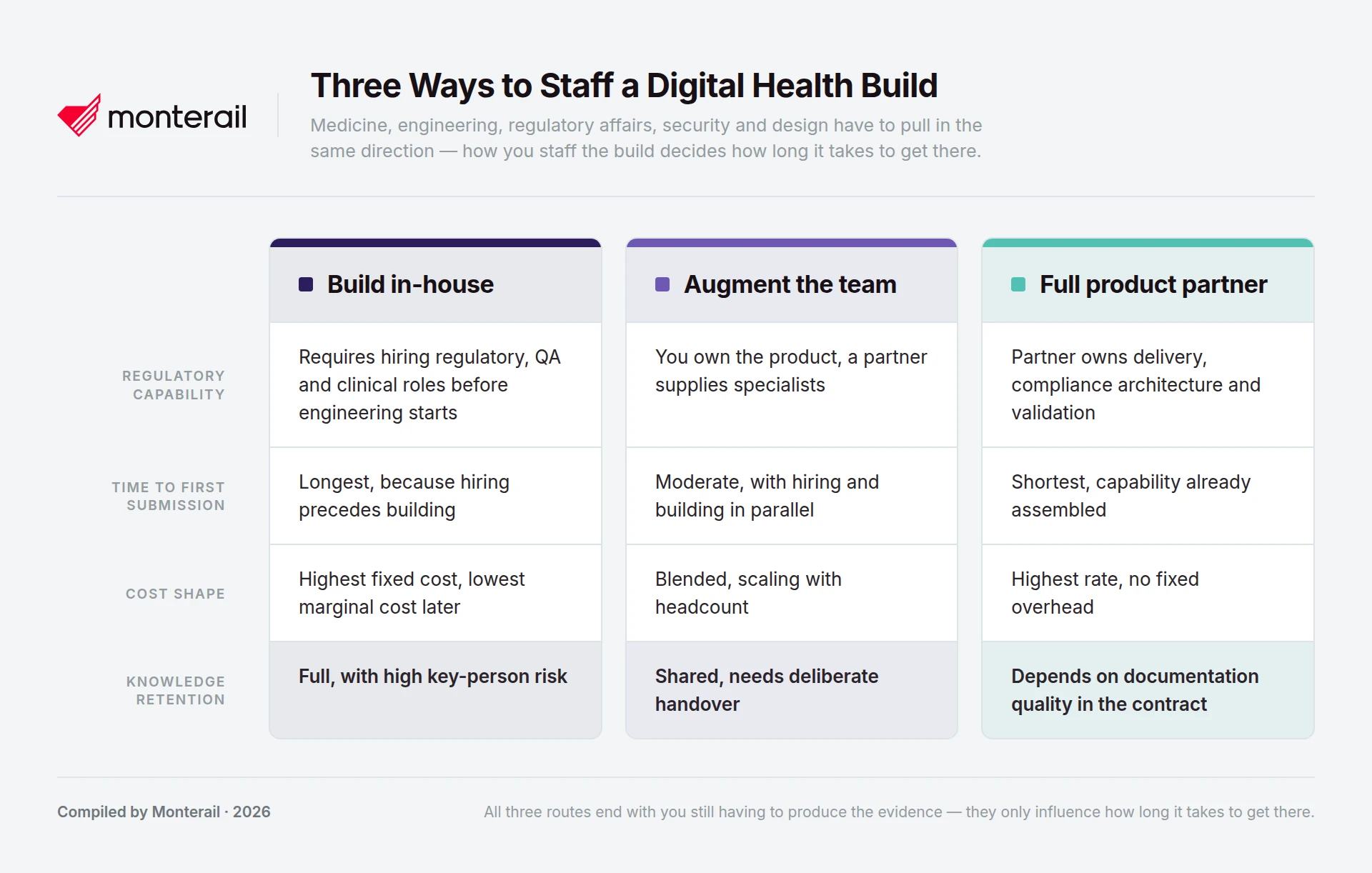
Success requires a multidisciplinary team with expertise spanning medicine, software development, regulatory compliance, cybersecurity, and user experience design. It's impossible to find all these skills in one or two people, such an undertaking requires a team of professionals and experts to succeed.

How do you choose the right partner for digital health development?

To secure all the conditions mentioned in the previous section, you need extensive knowledge, experience, and skills from different fields. It's impossible to find them in one or two people. Such an undertaking requires a team of professionals and experts to succeed.

Key Partner Selection Criteria

Regulatory Expertise:

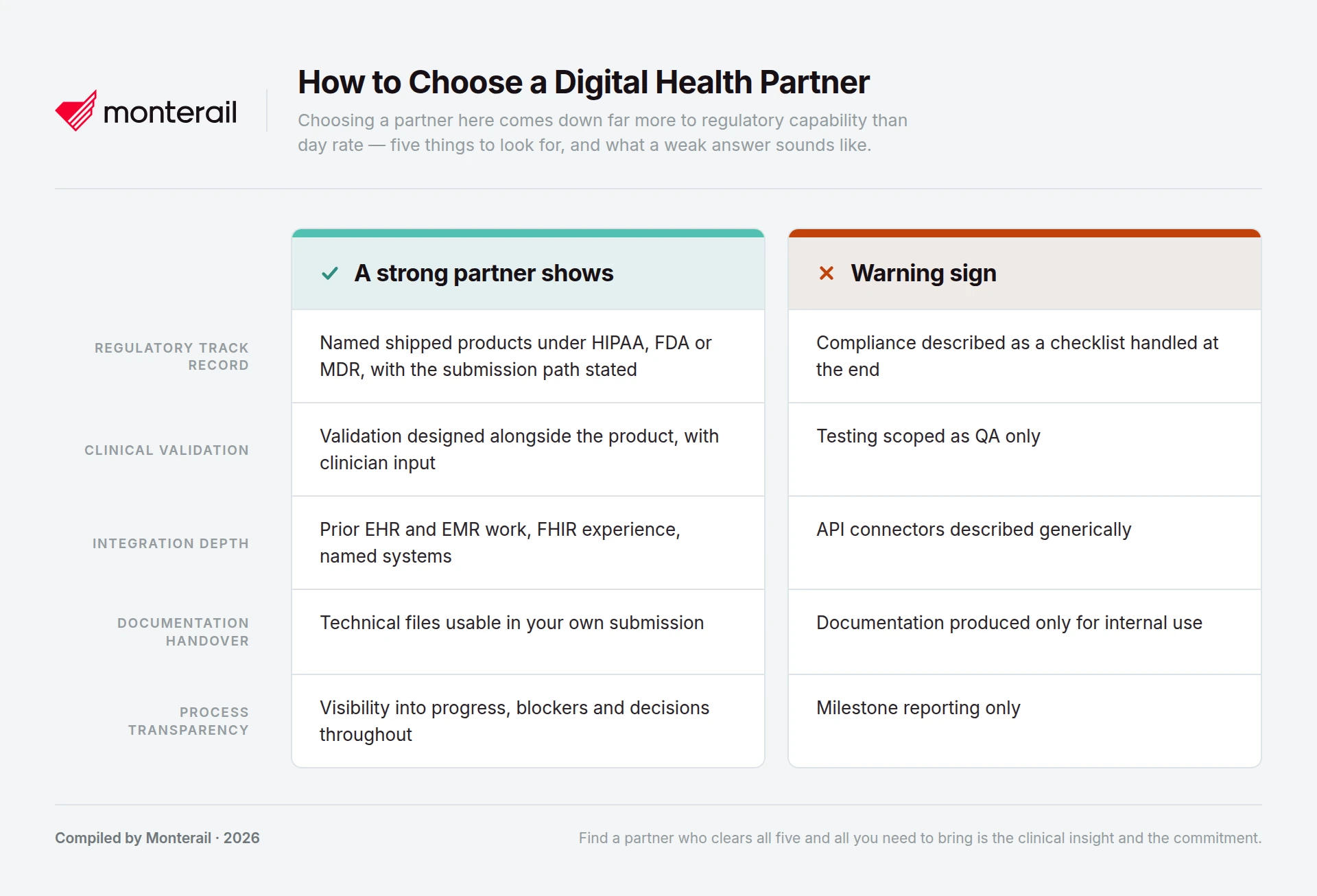
Your partner must develop applications compatible with HIPAA, FDA, or MDR regulations. The software company you choose should:

  • Discuss every step with you and verify absolutely every assumption

  • Demonstrate experience with compliance integration from day one

  • Ensure the best user experience through rigorous testing

If they emphasize that testing is the key to success, you've found a serious partner in digital health.

Technical Capabilities (2025 Standards):

A comprehensive digital product studio should provide:

  • Web & mobile app development for medical devices

  • AI/ML integration expertise

  • Tech & product consultancy

  • UI & UX design

  • Software & hardware prototyping

  • Cloud infrastructure (scalable, secure, HIPAA-compliant)

  • EHR/EMR system integration

  • Regular security audits and penetration testing

  • Clinical validation testing

  • Continuous monitoring capabilities

Industry Investment Trends:

According to a 2024 Accenture survey, over 85% of healthcare CIOs plan to increase spending on interoperability over the next 12 months. This reflects the industry's recognition that digital health solutions require sophisticated technical infrastructure.

Process Transparency:

The whole development process should be transparent and convenient for both sides. You should have clear visibility into progress, challenges, and decision points throughout the project lifecycle.

When working with a software company, all you need to bring is an idea and engagement. The right digital health partner handles the technical complexity, regulatory navigation, and user experience design that transforms your vision into a compliant, successful digital health solution.

What does the future hold for digital health?

The future of digital health is already here, and it's accelerating. As we look toward 2026 and beyond, several transformative trends are reshaping healthcare delivery.

The end of the AI pilot era

2026 marks the year that generative AI will finally move past hype and see practical returns in healthcare. Healthcare organizations are shifting from isolated pilots to governed, organization-wide AI strategies. The narrative centers on "Agentic AI"—tools that move from "predicting to acting" with platform-based workflows.

Ambient scribes are healthcare AI's first breakout category, generating $600 million in 2025 (+2.4x YoY). McKinsey reports that nearly 80% of organizations use AI in at least one function, with 92% of executives planning to invest more in the next three years.

Healthcare EBITDA is expected to increase at 7% CAGR to $987 billion in 2028 from a baseline of $676 billion in 2023. The number of FDA-cleared AI/ML devices nearly doubled between 2022 and 2025.

Dr. Eric Topol's vision for AI in healthcare

Dr. Eric Topol, one of the most cited researchers in medicine and featured in the inaugural TIME100 Health list, expresses growing optimism about AI's potential. When asked whether he remains upbeat about AI's potential, Topol stated he is "more optimistic" in 2025 than in 2019.

Key insights:

Personalized medicine and genomics

Major technological breakthroughs are already here. SOPHiA GENETICS announced in 2025 that their AI-driven platform had analyzed over two million patient genomes. GeneDx released ultraRapid Genome in March 2025. Multi-omics integration is combining genomics, proteomics, and metabolomics for complete patient profiles.

Currently, 4,469 gene and cell therapies are in development, of which 49% are gene therapies.

Virtual reality and augmented reality in healthcare

The U.S. AR/VR in healthcare market reached $1.03 billion in 2024, projected CAGR of 15.4% from 2025 to 2030.

Key growth drivers include:

Hospital-at-home and decentralized care

The original Hospital-at-Home waiver expired September 30, 2025. As of November 2025, the program officially lapsed without Congressional action. The House passed the Hospital Inpatient Services Modernization Act (H.R. 4313) on December 1, and federal legislation proposed in November 2025 would extend the waiver for five years through 2030.

Originally, 413 hospitals across 146 health systems and 39 states received approval. The broader shift is significant: Up to $265 billion in Medicare spending on primary and behavioral health services could shift from traditional settings to home-based care by 2025.

Healthcare workforce impact

The shortage of more than 3 million healthcare workers by 2026 includes 1.1 million registered nurses. The U.S. is still over 500,000 nurses short in 2025. Two in five healthcare workers report that their jobs feel unsustainable heading into 2026.

AI is demonstrating measurable impact. A Duke University study found AI transcription reduced note-taking time by approximately 20% and after-hours work by approximately 30%. Mass General Brigham reported 40% reduction in physician burnout from AI scribes within weeks.

However, shadow AI surged across healthcare organizations in 2025. In 2026, healthcare leaders will be forced to rethink AI governance models to balance innovation with safety.

Wearables and remote patient monitoring

The global wearable technology market is expected to exceed $70 billion by 2025. The global wearable medical devices market reached $54.0 billion in 2025. The global RPM market is projected to reach $88 billion by 2030 with 12% annual growth.

35% of U.S. adults now use a wearable health device, while 40% use health apps. AI-driven RPM platforms feature predictive analytics, real-time risk scoring, and automated alerts. AI is transforming raw data into personalized, actionable insights, potentially saving the U.S. healthcare system $150-$360 billion annually.

Digital therapeutics

The Digital Therapeutics Market will grow from $9.94 billion in 2025 to $61.29 billion by 2034 (CAGR: 22.4%). Mental health specifically shows 27.5% CAGR for 2025-2034.

Digital therapeutic use doubled from 44 million people in 2021 to 90.2 million in 2022, projected to reach 652.4 million by end of 2025. The FDA will convene experts to discuss challenges around regulating mental health products using AI.

Industry outlook

McKinsey's 2025 Healthcare Outlook highlights the rise of agentic AI, scaling of AI across industries, and mounting concerns around digital trust and cybersecurity. 

Deloitte's 2025 Healthcare Predictions note that about 90% of surveyed C-suite executives expect use of digital technologies to accelerate in 2025. About one-third of healthcare executives identified technology investments as a priority for 2025. 2025 could mark a turnaround period for the healthcare sector, with nearly 60% of industry leaders having a positive outlook, up from 52% in the previous year.

HIMSS 2025 key themes emphasize AI implementation shifting from theoretical to practical, cybersecurity threats (only 11% of healthcare providers report being hit by ransomware, but consequences can be catastrophic), smart hospital automation with AI-driven analytics, and infrastructure investment needs. HIMSS called for $36-40 billion investment in public health data modernization (current US funding: just $190 million).

Digital health is the foundation of modern healthcare. The convergence of AI, genomics, wearables, remote monitoring, and digital therapeutics is creating a healthcare system that is more predictive, personalized, accessible, and effective than ever before. Those who embrace this transformation will lead healthcare's next chapter. Those who hesitate risk obsolescence.

Author photo for Piotr Zajac
Piotr Zając
HealthTech Director at Monterail
Linkedin
Piotr, Monterail’s Director of HealthTech brings over 15 years of entrepreneurial leadership and strategic innovation to the MedTech and HealthTech sectors. Piotr has demonstrated exceptional ability to build and scale healthcare solutions. Former President of EO Poland, part of the world's largest entrepreneur network. Combining his entrepreneurial background with Management 3.0 principles, Piotr specializes in helping organizations drive sustainable innovation in the rapidly evolving HealthTech landscape.