The New Default. Your hub for building smart, fast, and sustainable AI software
Table of Contents
Why AI-Native Development Is the New Default
AI-native development is rapidly becoming the new standard for how modern software gets built, shifting teams from experimenting with intelligent tools to fully integrating them into architecture, workflow, and delivery. The AI-native approach to development focuses on the entire lifecycle. It treats AI as a foundational layer, from architecture and planning to delivery and ongoing maintenance, so teams can design systems that rely on automation, intelligence, and adaptive workflows by default rather than as add-ons.
We've introduced The New Default as an initiative emerging from real conversations with practitioners who are already reshaping how products are designed and shipped. That’s why, in this article, we'd like to spotlight the speakers featured in The New Default project, the builders, leaders, and thinkers defining what this new era of development looks like, and explore what their insights mean for teams preparing to embrace the next, AI-native wave of software craftsmanship.
The New Default: Where AI-Native Development Becomes Today's Standard
The New Default was created as a hub designed to help teams understand and practically apply the shift toward AI-native development. The platform brings together expert perspectives, hands-on tactics, and real conversations with practitioners who are already navigating this transition inside their organizations. Rather than treating AI as a bolt-on tool, The New Default aims to transform it into a structural backbone for modern software development, providing guidance that blends strategic thinking with day-to-day execution.
In this article, we highlight the practitioners featured in The New Default, preview the themes driving their work, and outline how their insights can help your team build smarter, faster, and more resilient products.

Meet the Voices Behind The New Default
The New Default brings together AI practitioners. Each speaker approaches the AI shift from a different angle, whether it's rethinking architecture, redefining specification, or recognising where AI shouldn't be used at all. Together, their insights offer a grounded, practical view of how AI-native practices are already transforming software delivery. Below, we highlight the first three of the voices and the key ideas they bring to the conversation.
Oji Udezue, Chief Product Officer
Oji Udezue is an AI Product Expert and innovation-focused product leader who has served as Chief Product Officer at Typeform and Calendly, and led product teams at Twitter (Creators, Tweets, DMs, Spaces, Communities), Atlassian, and Microsoft. He is the co-author of “Building Rocketships” with ProductMind, a blueprint for fast-growing companies in the age of AI that draws on over 50 years of combined experience to democratize the secrets of building Silicon Valley product and technology companies.
Oji holds an MBA in Marketing, Product & Business Strategy, and Private Equity from Columbia Business School and is known for strategic clarity, customer focus, and building high-performance teams that bring products to market. Because his work spans product strategy, engineering, and AI-driven innovation, Udezue's experience positions him as a key voice in the shift from merely using AI tools to fully embracing AI-native ways of building software.
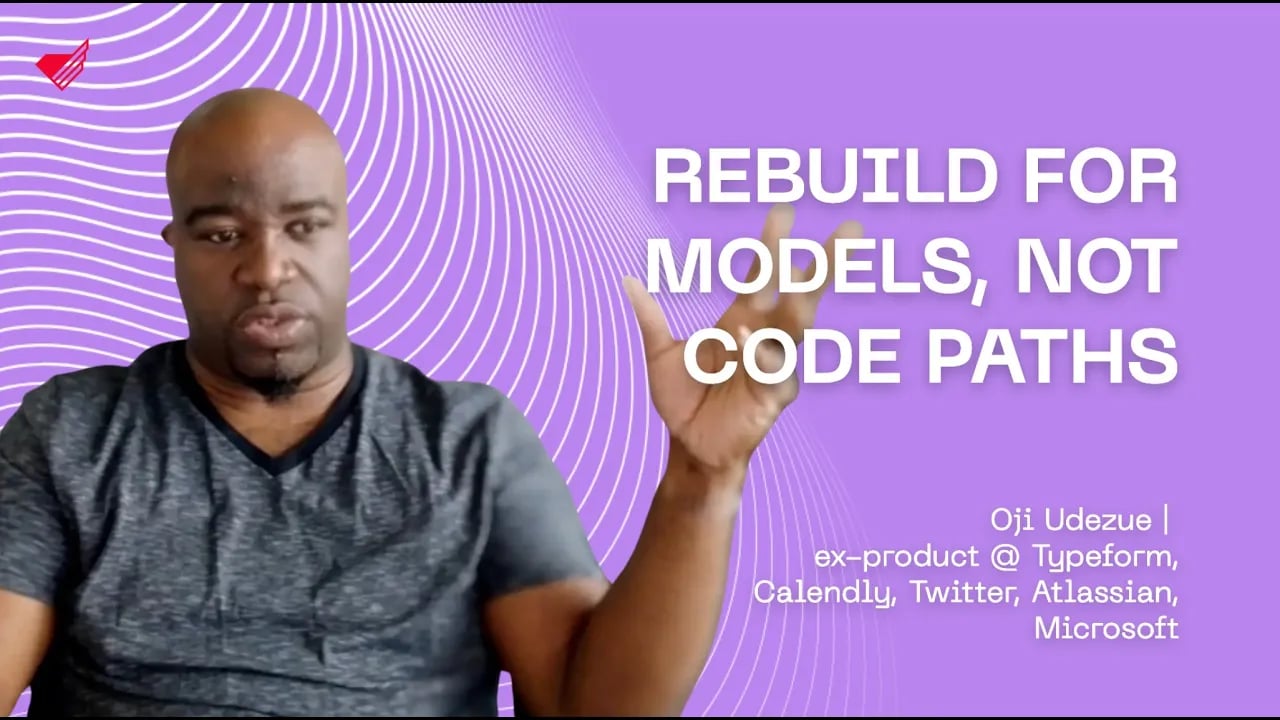
In his contribution to The New Default, Oji focuses on the shift from simply using AI tools to embedding AI as a core architectural and operational dimension of software development. For example, in the video titled “From Edge to Core: The AI-Native Revolution", he argues that:
“AI at the core is when you build with your model at the core, when like more than 50% of your code base is model-based... Because what models essentially are is a large block of code you can direct."
For engineering teams, product managers, and tech-leaders, Udezue's insight signals several shifts that will impact how you plan development, architecture, and workflow:
Architecture rethink: If AI models are intended to be at the heart of your system, you'll need to move away from legacy architectures built on deterministic pipelines. Design for model-centric, probabilistic systems and accept that unpredictability becomes a first-class concern.
Development workflow: When engineering is no longer the bottleneck (thanks to AI tools), product discovery, validation, specification, and go-to-market become the gating factors. Teams must reorganise around faster feedback loops, tighter collaboration, and embedded customer insight.
Team roles & capabilities: As Udezue suggests, product roles will evolve. PMs must understand AI's mechanics (generation, synthesis, personalization, autonomy) and be comfortable with "intent-to-code" workflows. Testing, monitoring, and ethics also gain prominence.
Strategic focus: Teams must resist the urge to "sprinkle AI" into existing systems and instead ask: which core workflows should become AI-native first? What guardrails, monitoring, and evaluation systems do we need? Udezue's work gives a framework for tackling that.
Competitive advantage: For a software house (like yours), embracing this mindset means you can help clients move beyond incremental AI adoption to full-stack transformation—making it a key differentiator in B2B product development.
In short, Udezue's message helps engineering teams see that "AI-native" is a fundamental redesign of how software is built, shipped, and sustained. By internalising his framework, teams are better positioned to lead rather than follow the shift.
Chris Rickard, Founder of UserDocs
Chris Rickard is the Founder & CEO of UserDoc, based in Melbourne, Australia, an AI-powered platform that specialises in documentation, frameworks, and adaptive QA for modern engineering teams. With over 20 years of experience leading software teams across Australia, Canada, and the U.S., he founded Userdoc after witnessing firsthand the devastating impact of poorly defined requirements on software projects.
Chris advocates for “Spec-Driven Development” and has helped companies reduce requirements and design time from weeks to hours using AI-powered requirements generation. In his talk for The New Default, titled “The Waterfall Renaissance: Why Speed Requires Specification”, he takes a deep dive into how teams working in AI-enabled environments must revisit, refine, and elevate their specification and QA practices.
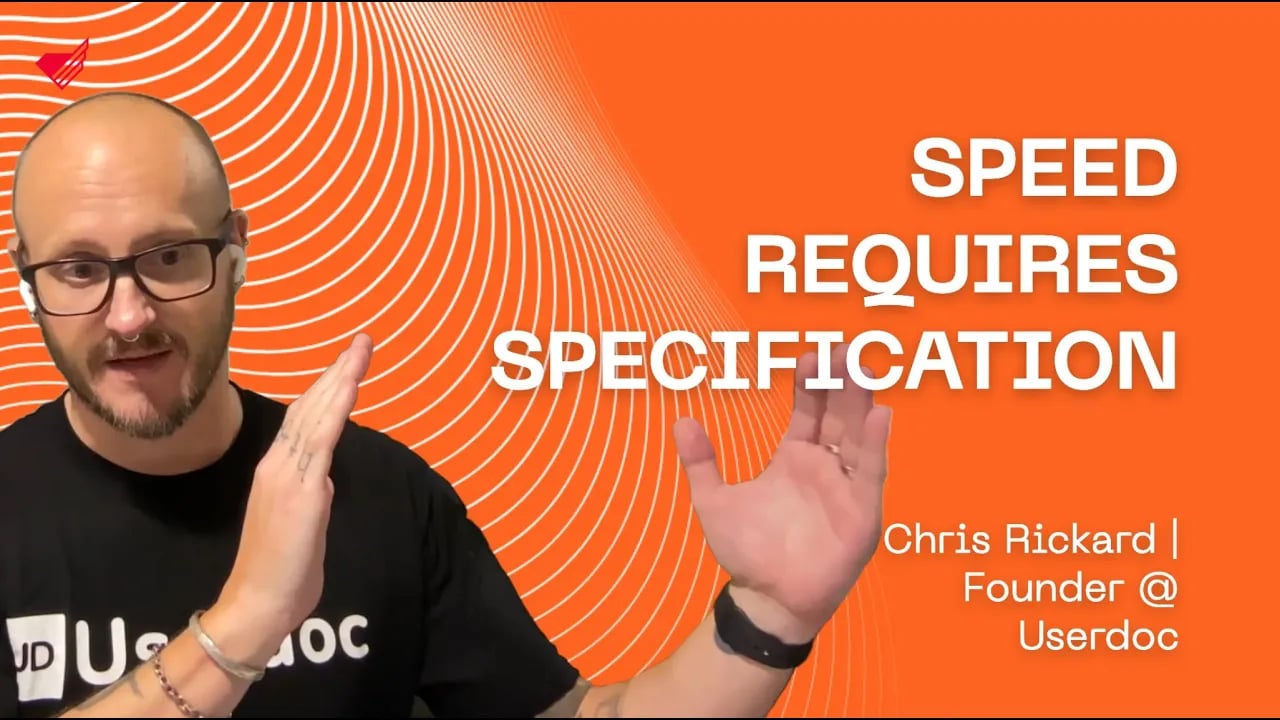
Rickard argues that as AI tools accelerate development, the traditional bottleneck shifts: coding becomes faster, but ambiguity and insufficient specification become far greater risks. In his own words:
“What does this new world look like when we can spend 5 minutes putting together 68 highly detailed requirements, and then spend an hour building them out? I think it's a new paradigm. The reason there was such a backlash against Waterfall was that companies would spend a year putting together a 500-page document. Then, inevitably, they'd find out after 2 years of development that it didn't work”.
Use Chris's insight as a cue to revisit your pipeline: ask how much of your workflow remains ambiguous, and where you might now need to double down on specification to realise the full benefits of AI-native development.
Up-front planning matters more than ever. When AI accelerates development, the time you spend clarifying what you’ll build must increase. Rickard suggests that investing in crisp, comprehensive specs upfront leads to faster, more reliable outcomes.
Balance agility with structure. Rather than abandoning lightweight planning altogether, combine agile iterations with a stronger layer of specification when working with AI-native systems. This means teams might adopt a “Waterfall-style” front-loaded specification phase, not as regression, but as an enabler.
Guardrails are still essential. AI-native workflows shouldn’t mean no oversight or documentation. Rickard emphasises that detailed, current documentation (especially when codebase automations are involved) is critical to avoid costly assumptions and misalignment.
Shift team roles & focus. Engineering velocity may rise, but product management, QA, and specification roles must evolve: PMs need to frame clearer intents; QA must validate not just code but assumptions and edge cases; Engineering must integrate AI models with documented context.
Leverage AI to generate specs, but verify them. Rickard points out that AI can help quickly dissect legacy systems into requirements, but that doesn't remove the need for human validation and clarity.
For software houses and internal product teams alike, Rickard’s talk is a timely reminder that accelerating delivery is only helpful if what's delivered is aligned, durable, and maintainable.
Alan Buxton, CTO at Simfoni
Alan Buxton is the Chief Technology Officer at Simfoni, a procurement technology firm, where he has steered the integration of artificial intelligence capabilities into enterprise-scale systems. He leads tech and product work for startups from inception to Series B, focusing on how technology can impact real people daily. He got his Master's degree in Social Anthropology from Robinson College, University of Cambridge.
Alan brings extensive experience from previous CTO roles at OpenCorporates and DealGlobe, emphasizing practical technical leadership in the UK startup ecosystem. His work spans evolving models in sourcing, spend analytics, and intelligent automation, and he brings that real-world AI experience into the conversations of the The New Default project. For example, in his talk titled "The Judgment Gap: Knowing When NOT to Use AI,” he explores the often-overlooked topic of AI limitations and maturity in software systems.
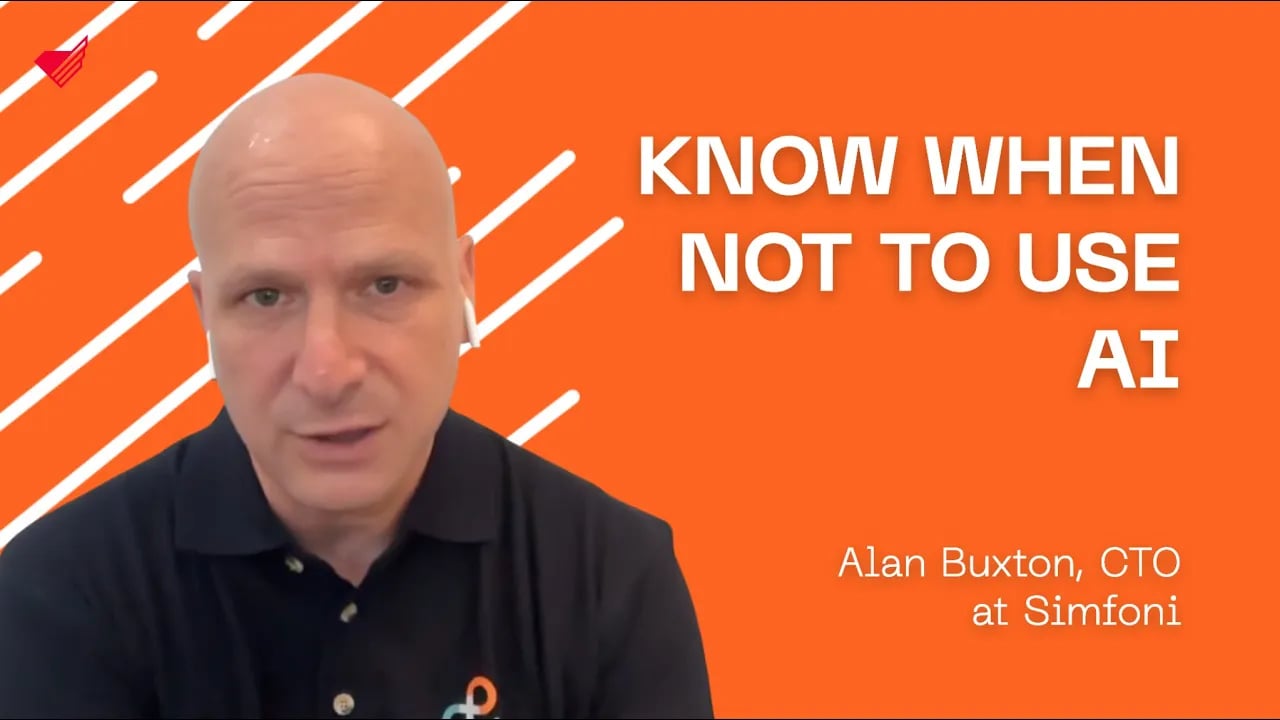
In his addition to The New Default platform, Buxton underscores: AI is powerful, but it isn't universally appropriate. He states:
“I am optimistic about the things that it's good at, and I'm pessimistic about the state of the industry at figuring out what it's good at.”
His key message emphasises the need for teams to be discerning about when to deploy AI and when simpler, more traditional approaches may be more effective. Rather than rushing into broad-scale "AI everywhere" initiatives, Buxton advises focusing on areas where AI genuinely adds value and avoiding applying it where it won't.
For engineering and product teams pursuing AI-native development, Buxton's perspective offers several essential takeaways:
Build for sustainability and reliability: AI-enabled modules require ongoing monitoring, versioning, and maintenance. Knowing when not to use AI reduces risk and avoids complexity where simpler solutions suffice.
Put guardrails in place: Teams should augment AI-capable workflows with human oversight, clear acceptance criteria, and fallback paths—especially in contexts where the model's behavior is uncertain or evolving.
Measure value, not hype: Before embedding an AI component, ask: What measurable benefit will it deliver, compared to a non-AI alternative? Buxton's work encourages this discipline, helping teams avoid chasing “AI for the sake of AI".
Design architecture around choice and fallback: When AI becomes part of your system architecture, you need provisions for when the model fails, drifts, or produces undesirable output—so system design must support graceful degradation or manual fallback.
Allocate resources appropriately: Because AI modules often come with non-trivial costs (data management, monitoring, model drift, compliance), teams need to budget for the full lifecycle—not just the initial build.
In short, Alan Buxton's talk reminds teams that while AI-native development holds enormous promise, its success often depends less on the novelty of the model and more on thoughtful integration, guardrails, and operational discipline.
What's Next for The New Default: More Voices, More Insights
What makes this initiative valuable isn't theory but practice: the experts featured here are already applying AI-native thinking inside real teams and real products. Use their insights to spark internal workshops, map ideas to your own processes, and run focused pilots to test new AI-native workflows on an upcoming project. By engaging now, you're not just observing the shift toward AI-native development; you're actively stepping into it and helping shape your team's next default.
The New Default is only just beginning, with more conversations, speakers, and practical guidance rolling out in the months ahead. Bookmark the platform to ensure you won't miss new talks or fresh perspectives.
)
Barbara Kujawa
Content Manager and Tech Writer at Monterail

Barbara Kujawa is a seasoned tech content writer and content manager at Monterail, with a focus on software development for business and AI solutions. As a digital content strategist, she has authored numerous in-depth articles on emerging technologies. Barbara holds a degree in English and has built her expertise in B2B content marketing through years of collaboration with leading Polish software agencies.