The New Default. Your hub for building smart, fast, and sustainable AI software
Table of Contents
A Flutter app is a mobile, web, desktop, or embedded application built from a single Dart codebase using Google's Flutter UI toolkit.
The companies running Flutter in production range from Google itself to a 50-year-old retail brand and four-person startups, and their published results point the same way: one codebase, shipped to more platforms, with smaller teams and faster release cycles.
Flutter is the most-used cross-platform framework in Statista's developer survey, used by 46% of developers. This article walks through twelve real Flutter app examples, grouped by the business problem each one solved, with the verified numbers behind them.
Executive Summary
Every case study below comes from a published source, and every number is the company's own.
The pattern across all twelve is consistent: a single Flutter codebase removes duplicate iOS and Android work, which raises release velocity and code reuse, which lets smaller teams cover more platforms and markets at lower cost.
Google Pay rebuilt a 1.7-million-line app into 1.1 million lines and saved an estimated 60-70% of engineering time. Kikoff reached over a million users with four mobile engineers.
Toyota moved infotainment changes from a multi-year wait to same-day iteration.
Flutter is not the right tool for every situation, and the strongest teams bridge to native code where it pays off, but the evidence for the cross-platform bet is now hard to argue with.
Why Should You Consider Choosing Flutter?
The real driver behind every story here is the cost of shipping to two platforms at once. Most products need both iOS and Android, and increasingly web and desktop too. Building each one natively means two teams, two codebases, and two backlogs solving the same problems twice. That is expensive when budgets are tight and hard to staff when iOS or Android talent is scarce in a given market.
A single codebase changes that math. The work happens once, the design stays consistent across devices, and the freed-up engineering time goes toward features and markets instead of reconciling two builds. The companies below treated that as a strategic choice, not a tooling preference, which is why their results show up as business outcomes: faster releases, lower cost, more countries served, and smaller teams operating at larger scale.
Does Flutter Create Value For Companies, And How?
The mechanism is the same in every case, and it runs in a chain. One Dart codebase produces high code reuse, often above 90%. High reuse plus fast feedback tools like hot reload raises development velocity. Higher velocity lets a company either ship features faster or hold output steady with a smaller team. That, in turn, lowers cost and keeps the experience consistent across platforms, which protects the brand and reduces support load. The end result is more frequent releases and quicker expansion into new markets.
Flutter does not erase native code so much as minimize how much of it you write. When a feature needs platform-specific work, payments, Bluetooth, turn-by-turn navigation, teams reach for Add-to-App or platform channels to drop into native code for that slice while keeping everything else shared. The honest trade-offs are real too: a migration means retraining engineers and, for live apps, doing security and compliance work a second time.
Can Flutter Help You Scale Globally With One Codebase?
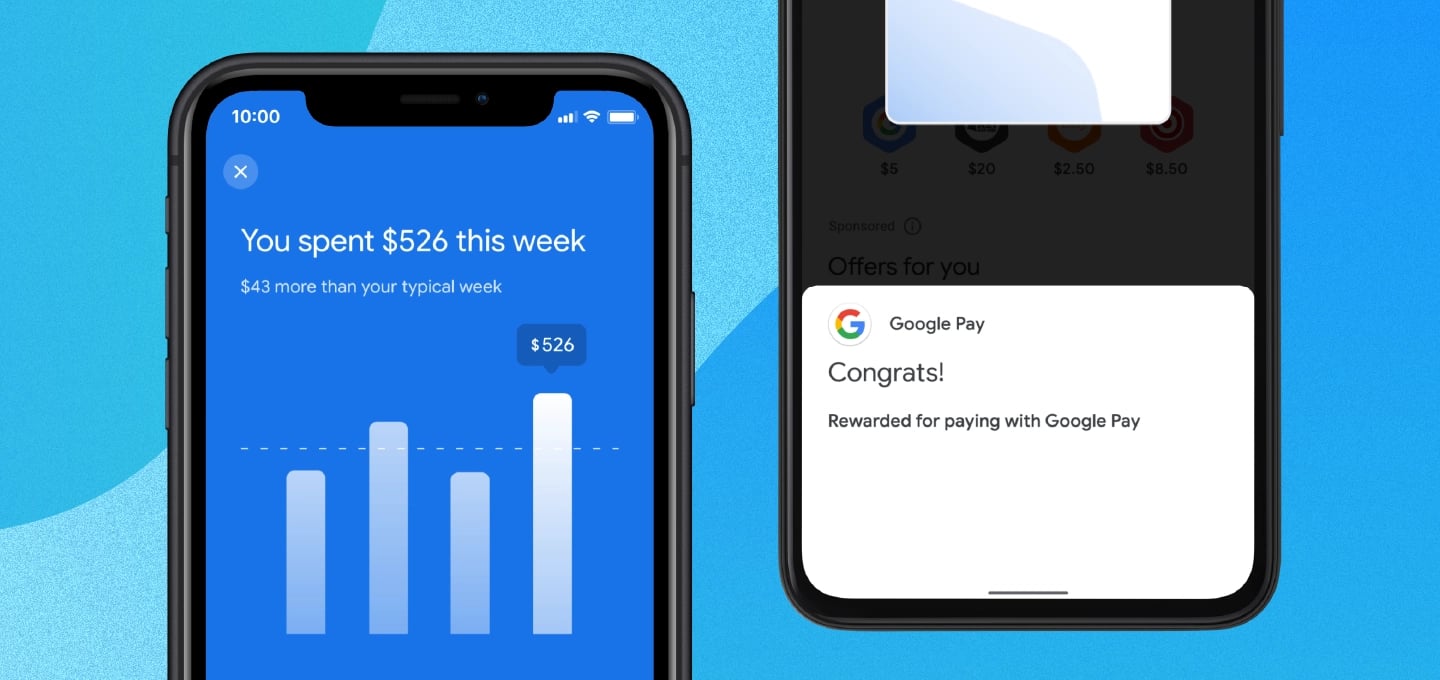
Google Pay
Google Pay served 100 million users across dozens of countries on 1.7 million lines of code split between separate Android and iOS apps. Expanding to new regions meant building every feature twice and hiring iOS engineers for markets that had been Android-first. The team rewrote the app on Flutter, starting with a three-engineer proof of concept and scaling to roughly 180 engineers. The rebuilt app is 35% smaller, 1.1 million lines instead of 1.7 million, even after adding features, and the team estimates Flutter saved 60-70% of engineering time. Cross-platform work that once required double the effort now takes about 1.2 times a single build.
What it proves: a single codebase is a scaling strategy, not just a cost saving, when every new market would otherwise double the work.
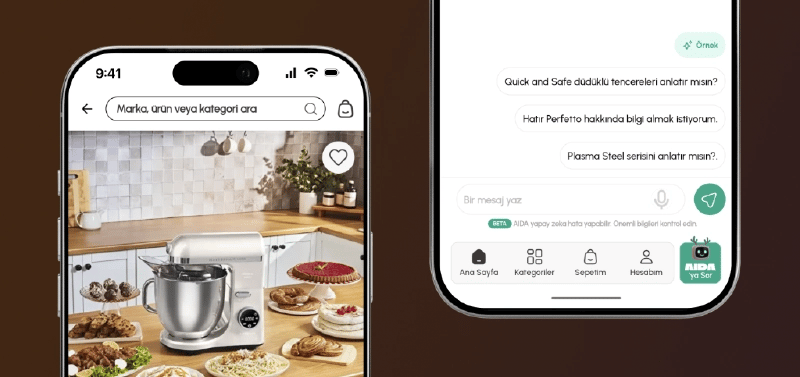
Karaca
Karaca grew from a small glass workshop into an omnichannel retail brand serving over a million monthly active users across 43 countries. Two native codebases had become the bottleneck. Engineers spent their time reconciling differences between the iOS and Android apps instead of building features customers wanted. The team rebuilt the entire experience in Flutter and shipped their first Flutter feature within a few months. They used pub.dev packages such as the camera plugin for after-sales invoice capture and the Google Maps widget for store locations, and dropped to native code through Add-to-App only for specific payment integrations. Features now ship twice as fast, with one consistent experience across every device and market.
What it proves: heritage brands with large, established user bases can rebuild on Flutter without losing speed.
Xiaomi
Xiaomi built the companion app for its SU7 electric vehicle on Flutter. The app handles remote vehicle control, real-time updates, shopping, and community features for current and prospective owners. Using Flutter, the team built it about 60% faster than with native frameworks while keeping the experience consistent across iOS and Android. For a flagship hardware launch, that consistency carries weight, because the companion app is part of the car's first impression and a uniform interface across platforms protects the brand.
What it proves: when an app ships alongside a high-profile hardware launch, Flutter's speed and cross-platform consistency cut both time-to-market and brand risk.
Can You De-Risk Live App Migration With Flutter?
talabat
talabat is the leading on-demand delivery platform in the Middle East and North Africa, serving millions of customers across eight countries. By 2021, siloed native development had produced duplicated work and inconsistent interfaces between markets. A big-bang rewrite was off the table for an app this critical, so the team migrated incrementally with Flutter's Add-to-App approach. They started with static, low-traffic screens to prove the concept, then migrated the restaurant menu, one of the highest-traffic screens in the app, as an endurance test. More than 50 native engineers were upskilled along the way. After completing the migration in 2024, release cadence rose fourfold, app stability improved on both platforms, and start-to-interactive times got faster with fewer frozen frames.
What it proves: high-traffic apps can move to Flutter screen by screen, de-risking the transition while keeping the product live.
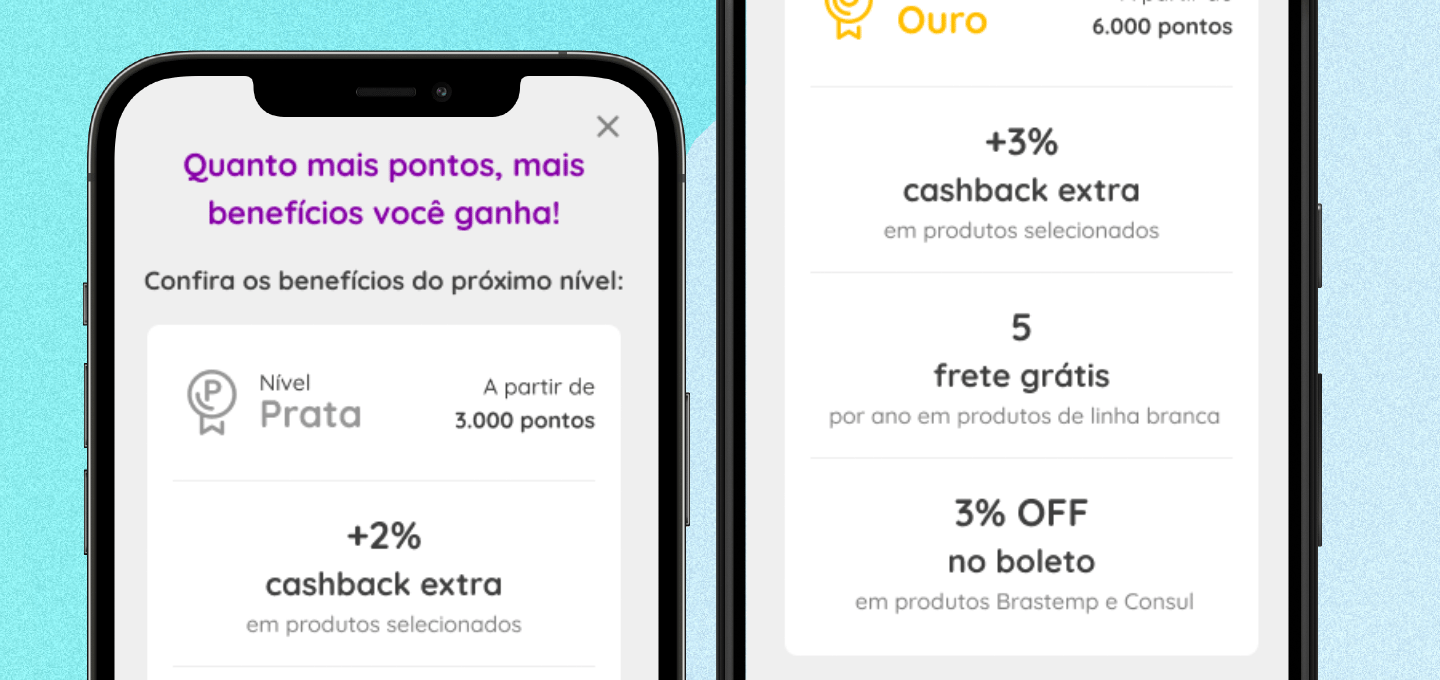
Whirlpool
Whirlpool wanted a mobile channel for Compra Certa, its Brazilian appliance marketplace, which had a popular web store but no app. It engaged Kobe Apps, a mobile commerce platform built on Flutter, to build a proof of concept. Kobe Apps migrated its existing e-commerce engine to Flutter so it could apply Whirlpool's branding across platforms, then used hot reload and Flutter's widget library to build a custom onboarding journey along with cashback and loyalty features. The first version shipped in 30 days with a 92% shareable codebase, a 50% reduction in development cost, and a 35% increase in development speed. Post-launch, the team uses Firebase Remote Config to update content without full releases.
What it proves: an agency with a Flutter-based platform can deliver a branded, production e-commerce app for a global manufacturer in a month.
Wolt
Wolt, part of DoorDash since 2022, serves over 36 million registered users across 27 countries. As the company expanded from restaurant delivery into wider retail, its merchant partners needed an app that worked beyond the iPad-only native Merchant app. Two developers built the first version of a new cross-platform Flutter app in about a month and a half, followed by production testing. Flutter's widget architecture kept the design consistent across platforms, and native integrations like camera barcode scanning and Bluetooth printer connections were straightforward to add. Wolt now ships bi-weekly updates to iOS and Android together, and has open-sourced two packages: the Wolt Modal Sheet and the Wolt Responsive Layout Grid.
What it proves: a small team can stand up a new cross-platform app quickly and contribute back to the community while doing it.
Lean teams punching above their weight
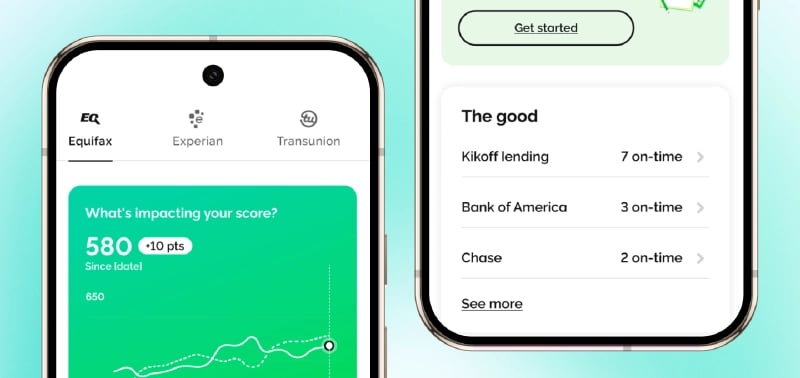
Kikoff
Kikoff is a personal finance company that helps users build credit and access liquidity. It chose Flutter early, when the team was small and needed to move fast. Building both iOS and Android from one codebase let a four-engineer mobile team reach over a million users, and later millions, with close to 100% code reuse. In the early days, the team combined Flutter with webviews to reuse existing web functionality and shorten time-to-market, then migrated to native Flutter as the product matured. They run extensive A/B testing through custom in-app tooling, use Shorebird for over-the-air updates that skip app-store delays, and have added an in-app AI financial coach called Fynn.
What it proves: a single codebase lets a very small team operate at a scale that would normally demand separate iOS and Android groups.
Arc, by Atlas Associates
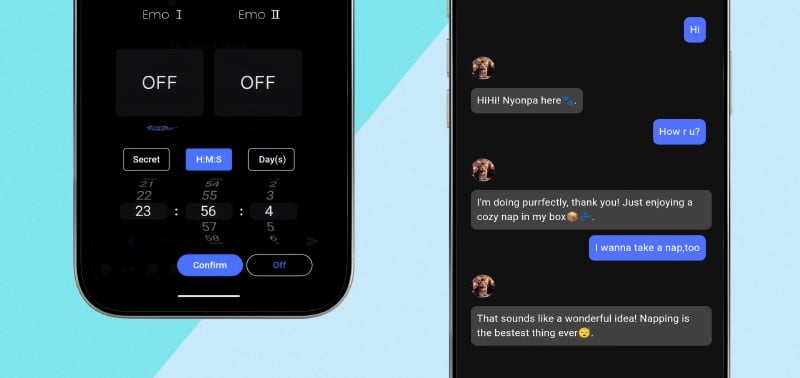
Arc is an AI-powered messaging app from Atlas Associates, a Japan-based startup. Messages, including group chats, disappear over time, which set a high bar for performance and security. The team picked Flutter for development velocity with a compact team, and rejected the idea that cross-platform means sluggish, arguing that responsiveness is mostly an architecture problem. They used Flutter DevTools to profile frame rendering, CPU, and memory, and minimized widget rebuilds for a fluid feel. The backend combines Firebase (Firestore, Authentication, App Check) with Google Cloud Run and Vertex AI for Gemini, RAG, and search. The compact team shipped 144 updates in 34 months.
What it proves: with disciplined architecture, a small team can reach native-grade performance and a fast release rhythm on Flutter, even for a demanding real-time app.
Agapé
Agapé Wellness took the single-codebase idea further than most. According to its engineering lead, 99.9% of all code written at the company is Dart, the language Flutter is built on, covering the mobile apps, CI pipelines, backend services, internal tooling, and web apps. Every behavior is validated by automated tests that give pixel-perfect confidence in each change, and the team deploys to production multiple times a day. Standardizing on one language across the whole stack let the company think about the product first and the platform second, which is what made that release cadence sustainable.
What it proves: Flutter and Dart can anchor an entire engineering stack, not only the mobile front end, and that consolidation pays off in test confidence and deploy frequency.
Flutter beyond the phone

Toyota
Toyota built its next-generation infotainment system on Flutter. Working through bespoke supplier platforms used to mean specifying a feature and not seeing it for a year or two, with little time left to make changes. Toyota wanted direct control over the in-car experience. Flutter felt more like a modern device than a kiosk, was open source rather than per-seat licensed, and let designers and developers solve problems side by side. The team built a custom Flutter embedder and wrote plugins for automotive functions. Feedback that once took years now becomes working code within a day, and teams in North America, Europe, and Japan build on the same codebase. The system debuts on the 2026 RAV4 and Lexus ES.
What it proves: Flutter reaches into embedded hardware, giving manufacturers direct control over experiences they used to outsource.
Expo City Dubai
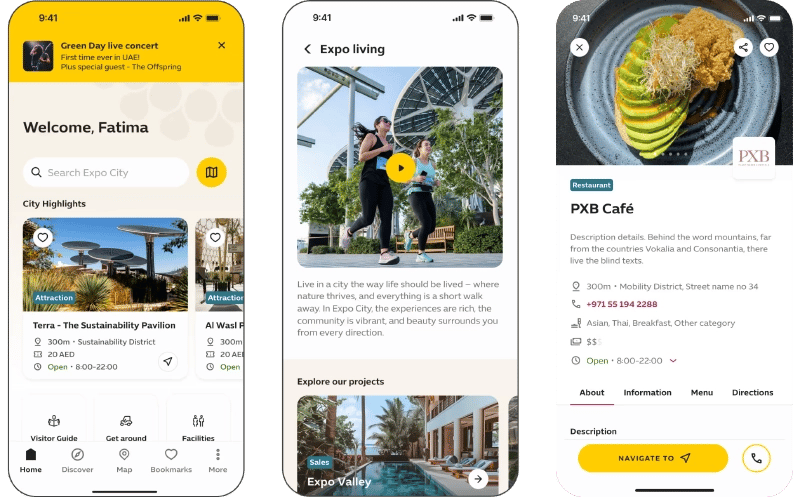
Expo City Dubai is a mixed-use smart-city district built on the Expo 2020 site, serving tourists, residents, tenants, and employees across many languages, including right-to-left scripts. Its tech partner, Merixstudio, built a map-first companion app organized around one question: where am I and how do I get there. A single Flutter codebase kept the map-heavy, heavily branded experience consistent across iOS and Android. For navigation, the team used the official Mapbox Maps Flutter SDK and bridged to the native Mapbox Navigation SDKs through platform channels, keeping product logic in Dart. The architecture relies on flutter_bloc, Dio, and go_router, with Contentful for content and autoscaling on AWS. Load tests verified stability for up to 400,000 simultaneous users, and the app earned a 10/10 NPS from users.
What it proves: Flutter holds up as an enterprise-grade foundation for a superapp that has to scale, localize, and stay consistent across very different audiences.
Flutter Folio
Flutter Folio is a multi-platform scrapbooking app the gskinner team built for Google's Flutter Engage event. It is a reference project rather than a commercial product, designed to show how one codebase can feel native on iOS, Android, macOS, Linux, Windows, and the web. Over 95% of the code is shared across all six platforms. The app adapts to each one: mobile focuses on capturing photos, desktop and tablet on creation, and the web on read-only sharing, with custom OS title bars and platform-appropriate controls such as modals on desktop and sheets on mobile. It is open source under an MIT license.
A single Flutter codebase can target six platforms at once while still respecting each platform's conventions, with almost no platform-specific code.
Twelve Flutter-using Companies At a Glance
App | Company / sector | What they built | Headline result |
|---|---|---|---|
Google / payments | Global payments app rewrite | 35% smaller codebase, ~60-70% eng. time saved, 100M+ users | |
Retail (homeware) | Full app rebuild | 2x faster shipping, 1M+ MAU, 43 countries | |
Automotive / consumer tech | SU7 EV companion app | ~60% faster to build than native | |
Food & grocery delivery | Incremental native-to-Flutter migration | 4x release cadence, 50+ engineers upskilled | |
E-commerce (built by Kobe Apps) | Branded marketplace app | 30-day first version, 92% shared code, 50% lower cost | |
Delivery (DoorDash) | New cross-platform Merchant app | 2 devs, ~6 weeks to v1; bi-weekly releases | |
Fintech / credit | Full mobile app from day one | ~100% code reuse, millions of users, 4 engineers | |
Startup / AI messaging | Ephemeral AI messenger | 144 updates in 34 months, compact team | |
Wellness | Dart across the full stack | 99.9% Dart codebase, multiple prod deploys/day | |
Automotive | In-car infotainment | Same-day iteration vs. years; 2026 RAV4 & Lexus ES | |
Smart city (built by Merixstudio) | Superapp / city companion | Stable to 400k concurrent users, 10/10 NPS | |
Reference app (gskinner) | Six-platform scrapbook app | 95%+ shared code across 6 platforms |
What has to be true for Flutter to pay off
Flutter is a strong default for cross-platform products, and these case studies also show where it needs help. A few patterns repeat across them.
Plan to bridge to native code. talabat, Karaca, and Expo City Dubai all kept their core in Dart and dropped into native through Add-to-App or platform channels for payments, specific SDKs, and turn-by-turn navigation.
Budget for retraining. Google Pay retrained 50 engineers over six months before its beta, and talabat upskilled more than 50. Dart is quick to learn, but a migration is still an investment in people.
Repeat security and compliance work. Google Pay had to pass its security reviews a second time for an already-launched app, and Expo City Dubai's code went through a client security audit. A rewrite does not exempt you from the audits the original passed.
Prefer incremental migration for live apps. The high-traffic apps here moved screen by screen rather than rewriting everything at once, which kept the product stable during the transition.
Key Takeaways
One codebase is a scaling lever, not only a cost saving. Google Pay's 35% smaller codebase and Kikoff's millions of users on four engineers both trace back to removing duplicate iOS and Android work.
Migration can be incremental. talabat (4x release cadence) and Karaca (2x faster shipping) moved live apps to Flutter screen by screen using Add-to-App.
Small teams ship fast. Wolt built a new app with two developers in about six weeks, and Atlas shipped 144 updates in 34 months.
Flutter runs well beyond mobile. Toyota's in-car infotainment, Expo City Dubai's superapp at 400,000 concurrent users, and Folio's six-platform build show the same codebase reaching new surfaces.
It is not magic. Expect to retrain engineers, bridge to native where needed, and repeat security work after a migration.
To Consolidate Your Codebase, Consider Using Flutter
The twelve apps differ in size, sector, and stage, and they made the same structural bet: consolidate platform work into one codebase, then spend the freed-up capacity on features, markets, and reliability instead of maintaining two builds.
The headline numbers are downstream effects of that bet, not the goal itself. Google Pay's smaller codebase, Karaca's faster shipping, and Toyota's same-day iteration are the same mechanism showing up in different businesses.
For your own roadmap, the useful question is where a single codebase would remove the most duplicate work, and that is the calculation worth running before a rewrite or a new build.
If you are weighing that decision, Monterail has written about where Flutter fits across platforms, the reasons teams choose it, and how it compares with React Native, and works with teams from startups to enterprises on exactly these calls.
Flutter FAQ

Marcin Wróblewski
Senior Mobile Developer

Open-source enthusiast, focusing on Dart and Flutter due to their technical excellence. Codeusse’s creator.