The New Default. Your hub for building smart, fast, and sustainable AI software

Table of Contents
AI's most useful role in workplace mental health is not the therapist's chair. It is the work that happens before and around therapy: triaging who needs urgent human help versus who needs a few minutes of guided practice, widening access when there are not enough clinicians to go around, lowering the stigma that stops people from speaking up, and spotting early signs of strain before they turn into burnout.
Diagnosis of serious conditions and any response to crisis still belong to trained people. Used inside those limits, AI extends a care team's reach. Used outside them, it becomes a liability.
Executive summary
Untreated depression and anxiety cost the global economy about $1 trillion a year in lost productivity, and the same WHO-backed research found that every $1 spent scaling up treatment returns about $4 in better health and capacity to work. Employers feel this directly through presenteeism, absenteeism, and turnover.
AI is now part of how companies try to close the gap, mostly through chatbots, coaching tools, and predictive analytics layered onto existing benefits. The business case rests on a simple mechanism: cheaper, always-available first-line support pulls more people into care earlier, which reduces the downstream cost of untreated illness.
The catch is that this only works when privacy, clinical evidence, and human escalation are built in from the start, because the regulatory and safety risks of getting it wrong are real and growing.
Why workplace mental health is a business problem
The cost of doing nothing is measurable. WHO-led research published in The Lancet Psychiatry put global lost productivity from depression and anxiety at roughly $1 trillion a year and 12 billion lost workdays. In the United States, the picture is just as stark.
Nearly a third of employees (32%) reported worsening symptoms of anxiety, depression, and ADHD over a six-month period, according to The Conference Board.
A 2022 analysis of 65 studies found high prevalence among workers: 15% for anxiety disorders, 11% for mood disorders, and 7% for substance use disorders.
In a survey of 1,500 U.S. employees, 62% reported anxiety and depression, and 20% missed work because of it.
Depression-related presenteeism alone costs U.S. employers an estimated $44 billion a year, more than absenteeism and direct medical spending.
Access is the other half of the problem. There are not enough clinicians: in the U.S., the available specialists can serve only about 28% of the population that needs care. Roughly half of people who need treatment never get it, held back by cost, stigma, or simple unavailability. For employers, the return runs the other way too. Independent studies cited by the National Safety Council estimate a four-to-five-times return on mental health investment, and employees who feel genuinely supported are more than twice as likely to recommend their workplace.
Where AI actually helps: the mechanism
The value of AI in this space follows a clear chain. The product gives people a low-cost, private, always-on entry point. That changes behavior, because more people engage earlier and more honestly than they would with a human first. Earlier engagement produces better outcomes and lower cost, because problems get caught while they are still small. A 2024 systematic review in the British Medical Bulletin found that AI-based workplace interventions can reduce symptoms of stress, anxiety, and depression, while also noting that the evidence base is still thin and uneven. That tension, real promise alongside immature proof, runs through every honest discussion of the topic.
Four uses do most of the work:
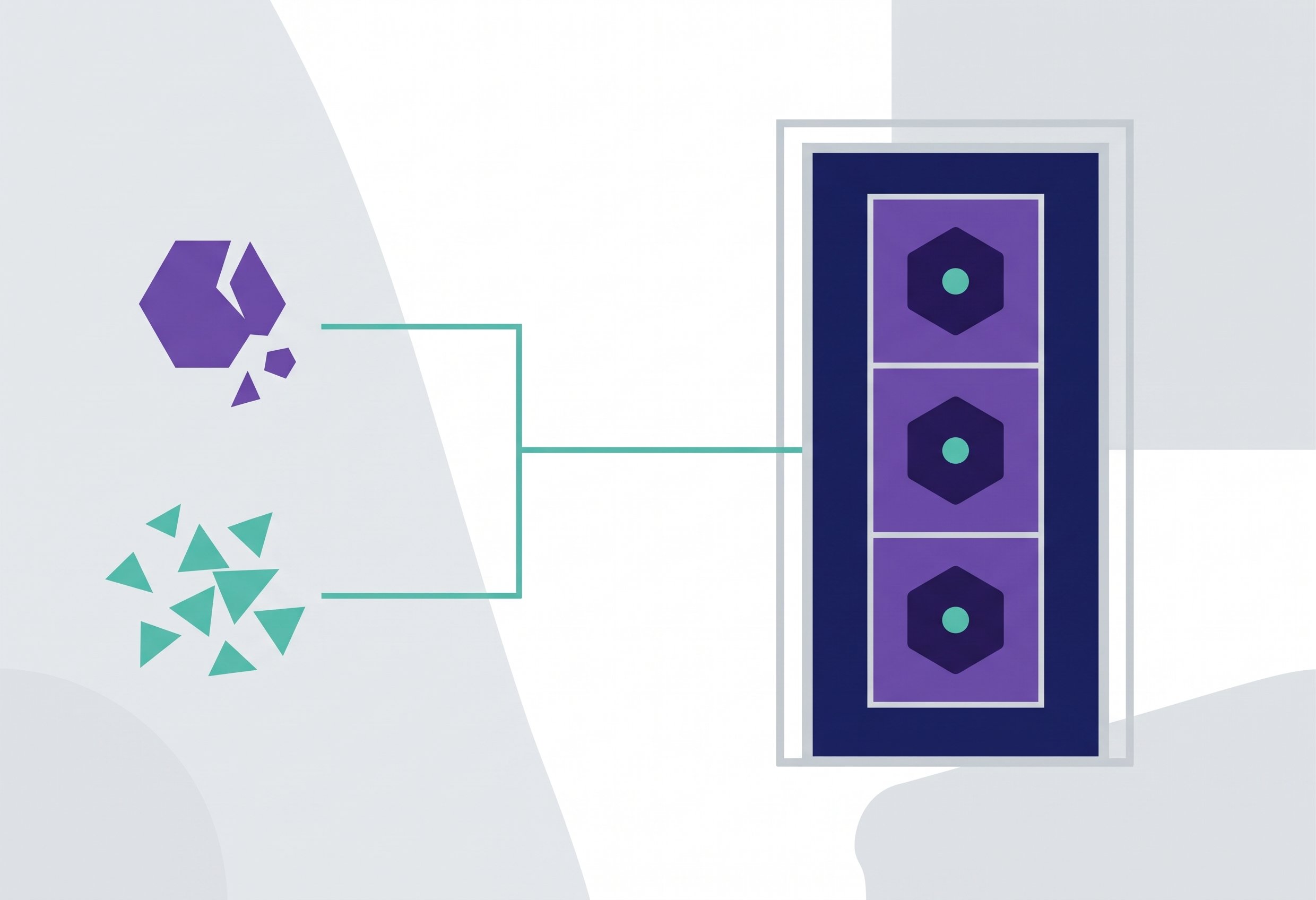
AI triage and stepped care. A chatbot can handle low-acuity needs and route higher-acuity cases to a human counselor, which is exactly how tools like Wysa are deployed. Wysa reports more than 6.5 million users and is used by the UK's NHS and by employers as first-line support, with anonymized analytics that help benefits teams see where demand sits.
Wider access. When the bottleneck is a shortage of clinicians, software that delivers structured, evidence-based exercises can reach people who would otherwise wait weeks. Woebot built its case on published randomized controlled trials before winding down its consumer app, a reminder that traction and durability are different things.
Lower stigma. For some people it is easier to type a hard sentence to a machine than to say it to a manager or a stranger in a group. That first, anonymous step can be what gets someone into care at all.
Proactive and predictive support. AI can flag patterns that suggest rising strain and prompt small interventions, such as sleep or workload changes, before a crisis. This is the shift from reactive treatment toward earlier, lighter-touch help.
A closer look: how Panda Health applies AI
Panda Health, a proactive workplace mental health platform built with Monterail, is a useful concrete example because it covers most of those uses in one product. Alon Lits, who co-founded October Health after early days building Uber in South Africa alongside clinical psychologist Allan Sweidan, has described the goal as catching problems early rather than waiting for a breakdown.
In practice, AI shows up in several places. During live sessions, users can ask questions of the human host or query Panda's AI assistant, Luna, and get answers in real time; some sessions are hosted by Luna directly. The app offers short AI coaching sessions, five to ten minutes a day, aimed at a specific skill or goal. Behind the scenes, AI builds a profile for each user to time and personalize what they are offered, and to flag when someone may need more advanced help so they can be escalated. For team leaders, anonymized analytics show how healthy a team's culture is and where support might help, without exposing any individual.
Anonymity is the design choice that makes the rest work. Users interact without identifying details, and even someone who speaks during a live event has their voice disguised. As Lits frames the ethical line, AI-based features suit education, triage, and escalation, but when someone expresses thoughts of self-harm, a human, not a model, has to take over.
There'll always be a place for mental health professionals, but AI will allow for better diagnosis. Imagine you could bring your AI mental health profile to your first therapy session, with a summary of everything you've dealt with and possible diagnoses.
Alon Lits, Founder & CEO October Health
What has to be true for it to work
AI in mental health is not plug-and-play. A handful of conditions decide whether a deployment helps or harms.
Privacy and trust. People share honestly only when they believe the data cannot be used against them at work. Anonymity, clear data boundaries, and separation from HR performance systems are the price of entry, not a nice-to-have.
Leadership buy-in. Employees can tell when a benefit exists only to tick a box. Programs work when leaders use them visibly and talk openly about their own experience, which signals that it is safe to do the same.
A real evidence base. Many tools market therapeutic benefits without the trials to back them. Buyers should ask for published, peer-reviewed evidence, not testimonials.
Human escalation for crisis. There must be a clear, tested path for a model to hand off to a person the moment risk appears. Researchers have flagged that conversational systems still respond inconsistently to expressions of self-harm, which makes this the single most important safeguard.
Regulatory awareness. No AI chatbot has been authorized by the FDA to diagnose or treat a mental health condition, and most emotional-support tools operate outside FDA review. In November 2025 the agency's Digital Health Advisory Committee met to weigh guardrails for generative-AI mental health devices, signaling tighter oversight ahead. Known risks include misdiagnosis from overlapping symptoms, over-reliance, and harm to vulnerable users.
Where AI leads vs. where humans must lead
Use case | AI's role | Human's role | Why |
|---|---|---|---|
First-line, low-acuity support | Leads: 24/7 guided exercises, CBT-style prompts | Backs up, reviews patterns | Cheap, always available, low risk for mild needs |
Triage and routing | Leads: screens and directs to the right level | Sets the rules, takes the handoff | Speed and scale, with a human owning the decision boundary |
Skill-building and coaching | Leads: short daily practice, nudges | Designs the program | Habit formation suits automation |
Diagnosis of clinical conditions | Assists: summarizes history, surfaces signals | Leads and decides | Symptom overlap and liability demand clinical judgment |
Crisis and self-harm response | Detects and escalates only | Leads entirely | Stakes are too high; models respond inconsistently |
Data and culture insight | Leads: anonymized, aggregate analytics | Acts on it ethically | Useful only if it cannot identify or penalize individuals |
Treat AI as one layer in a stepped-care system, not a product you buy to solve mental health. The layers below it, anonymity, clinician oversight, leadership behavior, and a crisis pathway, are what make the AI layer safe to use at all. Companies that get the order right, building the human system first and adding AI to extend its reach, will widen access and lower cost. Companies that buy a chatbot and call it a strategy will inherit the risk.
Key takeaways
The cost of untreated mental illness is large and measurable, and the return on treatment is roughly fourfold, which is why this is a budget conversation, not only a wellbeing one.
AI's strongest contributions are triage, access, stigma reduction, and early detection, not standalone therapy.
The mechanism is simple: a cheap, private entry point pulls people into care earlier, lowering downstream cost.
Deployments succeed or fail on privacy, leadership buy-in, evidence, and a tested human-escalation path.
Regulation is tightening; treat any tool that claims to diagnose or treat without FDA clearance with caution.
FAQ

Matylda Chmielewska
Former Content Specialist

Experienced marketing specialist specialized in the tech sector. Currently works as a Junior Carbon Specialist at a global corporate design, engineering and sustainability company, where she helps large and medium-sized companies make their first steps towards a more sustainable business model by providing ESG reporting services and sustainable development strategies.
Tags