The New Default. Your hub for building smart, fast, and sustainable AI software

Table of Contents
and 5 more
An AI-first development company is one that designs the data model, architecture, and evaluation loop around AI from the first sprint, instead of adding a model to a finished product. In practice, the difference shows up in what the company ships: an agent wired into an ERP with permissions and monitoring, versus a chat widget bolted onto a marketing site. The label is now on almost every agency website in Europe, which is exactly why it stopped being a useful filter.
The numbers explain the skepticism. MIT's NANDA initiative found that 95% of enterprise generative AI pilots produce no measurable P&L impact, with only 5% of evaluated systems reaching production. Gartner expects more than 40% of agentic AI projects to be canceled by the end of 2027 on cost, unclear value, or weak risk controls. In a market like that, the useful question is not who can build a demo. It is who has moved one into production and kept it running.
Executive Summary
Europe's AI development market has split into two groups that look identical on a homepage: teams that ship production systems with evaluation, observability, and integration work built in, and teams that ship prototypes and call them products.
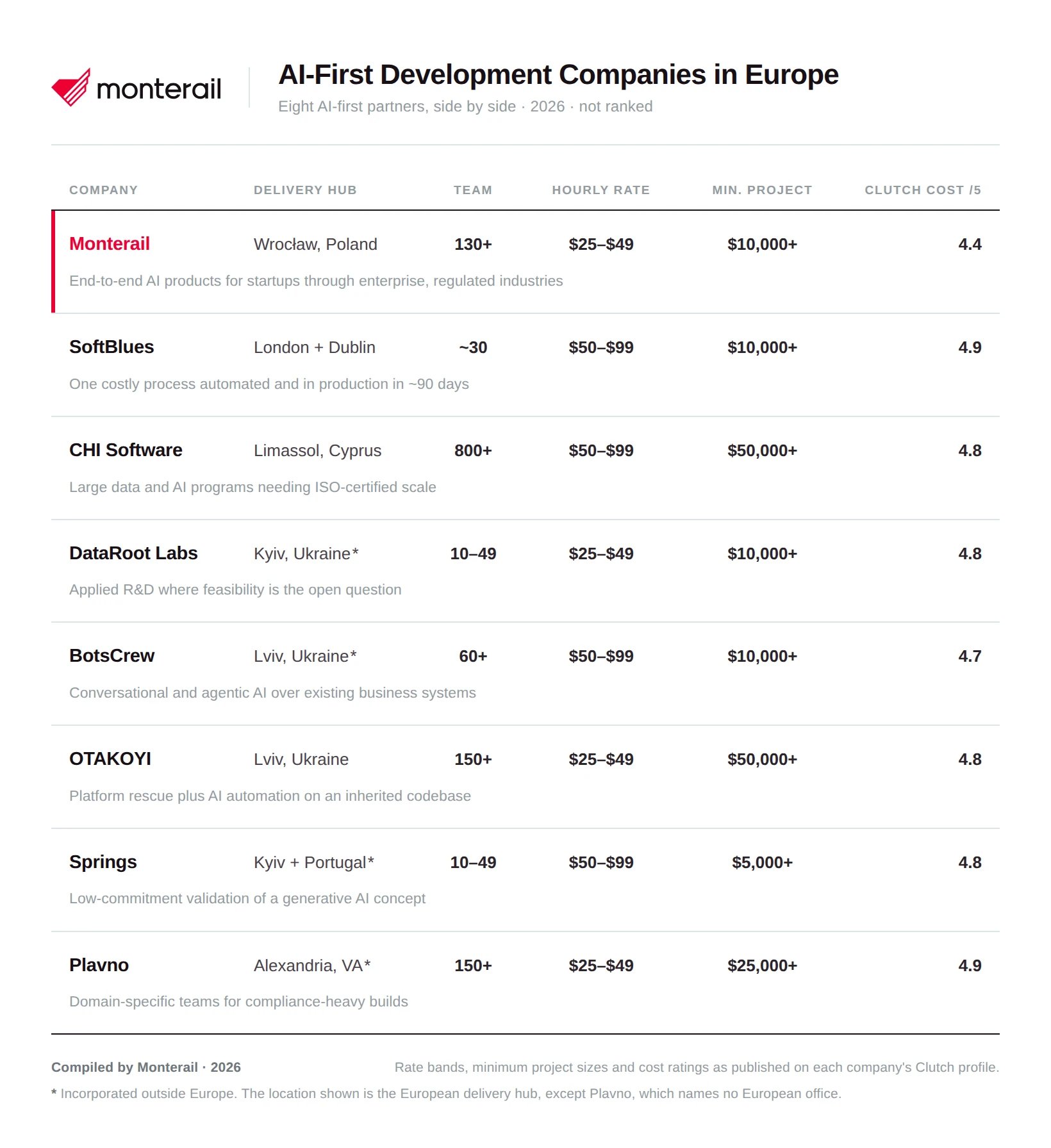
The eight companies below all sit in the first group, with delivery hubs in Poland, Ukraine, Cyprus, Portugal, the UK, and Ireland, and Clutch-verified track records to check the claim against. Rates across the group run from $25 to $99 per hour, and minimum project sizes from $5,000 to $50,000, a spread wide enough that the right choice depends on your stage far more than on any ranking.
What separates these companies from each other is the shape of the engagement: a focused agent build, a full product team, an R&D partner, or a compliance-heavy enterprise rollout.
This guide profiles all eight, then sets out what AI work actually costs in 2026 and how to test a vendor before you sign.
AI-First Development Companies in Europe Compared
Rate bands, minimum project sizes, and cost ratings are as published on each company's Clutch profile at the time of writing (September, 2026).
Top AI-First Development Companies in Europe in 2026
This list is not ranked. The eight companies below were selected to show the range of what "AI-first" means in practice, not to establish an order of merit. Inclusion rule: AI sits at the center of the service mix, and engineering is delivered from European hubs. Four of the eight are incorporated outside Europe (BotsCrew in San Francisco, DataRoot Labs and Plavno in the US, Springs in Canada) while their engineering teams work from Lviv, Kyiv, Portugal, and elsewhere in the region. Each profile names both.
The spread is deliberate: team sizes from around 10 to more than 800, hourly rates from $25 to $99, and specialties ranging from conversational agents to full product engineering to applied AI research. A 12-person startup validating an idea and a 5,000-person manufacturer replacing five SaaS tools are not shopping in the same aisle.
Monterail
Monterail is an agentic development company headquartered in Wrocław, Poland, founded in 2010, with 130+ in-house engineers, designers, and product specialists. The team has delivered 900+ projects over 16 years, including 75+ healthcare applications, for clients that include Bosch, Merck, EY, DocPlanner, and SharkNinja. Three acquisitions since 2024 (Untitled Kingdom, EL Passion, and Lakeview Labs) added MedTech, product design, and mobile depth to the core web and AI engineering practice. Monterail is an official Vue.js and Nuxt partner, has been recognized by Deloitte as one of Central Europe's fastest-growing tech companies, and appeared in the Financial Times 1000. Current NPS is 71.
Example project by Monterail
SPIE Belgium, the Belgian arm of the European multi-technical services group, was running workforce scheduling for 600 field workers across a disconnected mix of databases, attendance trackers, time-billing software, and spreadsheets. Nothing talked to anything else. Leave requests moved through email chains, scheduling conflicts surfaced only after they caused problems, and staff spent hours each week cross-referencing files to work out who was where.
Monterail built a functional, enterprise-grade prototype in 24 hours to prove that a Supabase architecture could carry the resource logic, then delivered a production MVP in a 7-week fixed-price engagement, followed by 13 releases over four months. The platform replaced the previous SaaS combination with a single system SPIE owns outright, integrated with its internal ERP and authenticated through Microsoft SSO. The measured result: 100 hours reclaimed per week, the equivalent of a full working week of manual data reconciliation, with real-time visibility and conflict detection across the entire Belgian workforce. Because SPIE works in sensitive sectors including nuclear energy, data ownership and enterprise-grade security were architectural requirements from day one rather than a later hardening pass.

How Much Does Monterail's AI Development Cost?
Monterail's average hourly rate on Clutch is $25–$49, with a minimum project size of $10,000+ and a cost rating of 4.4/5. Actual engagements range from around $30,000 to over $1 million, and the most common project size across 45 reviews is $50,000–$199,999. That places Monterail at the lower end of the European rate table for a team with enterprise references, though the cost rating is the most modest in this list, which fits a company that competes on delivered outcomes instead of on price. As Simfoni's CTO puts it below, the lowest hourly rate is not the pitch.
What Do Clients Say About Working With Monterail?
"We moved from reactive scheduling to proactive, data-driven decisions. The ability to see a prototype in one day and scale it to an enterprise-ready solution so quickly was a game-changer for our resource management."
Bram Verstraeten, Senior Project Manager, SPIE Belgium
"I was impressed with the speed at which Monterail was able to grasp a complex and niche industry and translate that into a clear and practical system structure. I have confidence in their understanding of both the product vision and commercial context."
Amelia Christie, Director, Christie Constructive
"If you want to outsource your coding to the lowest hourly rate, then Monterail aren't for you. If you want to build winning products at pace, then Monterail need to be on your shortlist."
Alan Buxton, CTO, Simfoni
One caveat appears in the Clutch review record: while development capability rates highly, some clients have noted that design was an area where they brought in outside help. The 2025 acquisition of EL Passion, a product design and development agency, was aimed at that gap, but a design-led engagement is worth probing during scoping.
Why Do Businesses Choose Monterail?
The SPIE engagement shows the pattern clients keep buying: a working prototype in a day, a fixed-price MVP in seven weeks, then iteration on production data instead of on a slide deck.
Regulated-industry experience runs deep, with 75+ healthcare applications delivered and dedicated MedTech consulting following the Untitled Kingdom acquisition.
Clients repeatedly describe the team integrating into their own organization instead of operating as an external vendor, which matters on multi-year engagements like the 12-year Cooleaf partnership that scaled to 110,000+ users.
Enterprise and startup work sit side by side, so the same team handles a funded healthtech MVP and a Fortune 500 rollout without switching playbooks.
Wrocław timing overlaps the US working day enough for daily contact, one reason the client base skews toward US and UK markets.
SoftBlues
SoftBlues is the smallest and most tightly specialized company on this list: roughly 30 AI specialists working from a London headquarters in Covent Garden and a Dublin presence, with remote engineering teams across Germany, Spain, Poland, Portugal, Italy, and Ukraine. Founded in 2014, the company has delivered 200+ projects and 50+ AI builds in production. Its distinguishing credential is a team of certified Claude Architects trained directly by Anthropic, alongside registered partner status with Google Cloud and Microsoft and membership of techUK. The stated delivery promise is production in about 90 days, with an average of 4–8 weeks to MVP.
Example project by SoftBlues
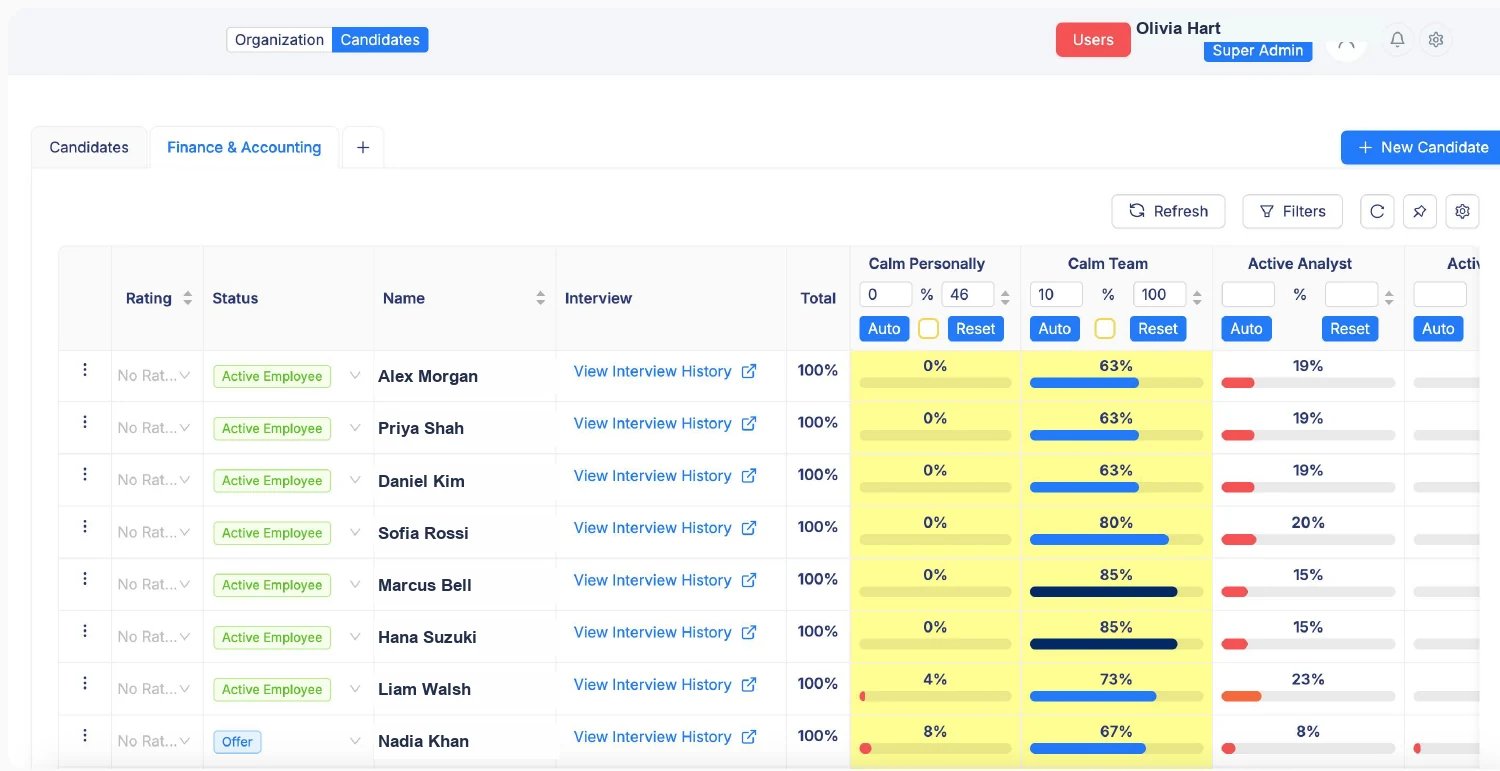
SofiaHR, an HR-tech company, had a candidate assessment method that worked and could not scale. Trained analysts read the structure of a candidate's speech, pauses, hedging, clause depth, self-correction, and scored it across ten bipolar psychological dimensions. Each assessment took an analyst two to three hours, one analyst could handle three or four interviews a day, and training a new one took months. As the team grew, small differences crept into how each analyst read the same patterns, threatening the consistency the method depended on.
SoftBlues fine-tuned a separate model for each of the ten dimensions, training each on roughly 20,000 labeled phrases drawn from the client's 2,000+ expert-coded interviews, then validated every model against held-out interviews with human analysts checking the results. After two months the models matched the analysts at 90%+ accuracy, with several dimensions above 95%. Only then did the team build the platform around them: an autonomous voice interviewer on the OpenAI Realtime API with ElevenLabs and LiveKit, Claude Sonnet handling flow and transcript segmentation, and ten fine-tuned Gemini Flash models scoring the output into a recruiter-facing dashboard that feeds the client's existing ATS. A two-to-three-hour expert read now takes minutes, and the platform runs 300+ interviews a week in beta across 10 clients.
 Source: softblues.io
How Much Does SoftBlues' AI Development Cost?
SoftBlues lists an average hourly rate of $50–$99 with a minimum project size of $10,000+ and the highest cost rating in this list at 4.9/5. Client projects range from $5,000 to over $100,000, and the most common band across 30 reviews is $10,000–$49,999, which is smaller than most of the group. That profile fits the company's model of automating one costly process at a time instead of running multi-year platform programs, with hands-on training folded into every rollout.
What Do Clients Say About Working With SoftBlues?
"Throughout hardship, they've been honest, willing to keep high standards to successfully complete project on time."
Mark Morinaga, COO, Virtusize
"They were always responsive to our needs, quickly resolving any issues."
Halgard Stolte, Managing Partner, ArtFlex Software GmbH
"What impressed me most about Softblues was their ability to go beyond expectations."
Kateryna Kravets, Founder, Klasserina AI
The recurring criticism in the review record is speed at the front end: several clients found initial project estimation took longer than expected, though the same reviews credit the resulting estimates as accurate and realistic. If you need a number in 48 hours, set that expectation early.
Why Do Businesses Choose SoftBlues?
Anthropic-trained Claude Architects plus Google Cloud and Microsoft partnerships mean the team can build on whichever stack a client already runs, instead of arguing for a migration.
The 90-day production commitment is a real constraint on scope, which suits companies that want one workflow automated and measured before committing to a wider program.
Regulated sectors are the core focus, healthcare, financial services, manufacturing, and education, with GDPR and Responsible AI practices stated as non-negotiable.
Founders who have built and exited a product serving 200K+ subscribers run the company, which shows up in how the team handles runway pressure and pivot decisions.
A London base with distributed European engineering gives UK and Irish clients a local contracting entity without London-only cost structures.
CHI Software
CHI Software is the largest company here by a wide margin: 800+ specialists across offices in Limassol, Cyprus, plus Ukraine, Poland, and Spain, organized into 16 engineering and 5 product support teams. Founded in 2006 as a ten-person web studio called City Hall Illustrations, the company opened a dedicated AI R&D Centre in 2019 and now centers its offering on AI, cloud, and data engineering for fintech, edtech, and healthcare. CHI holds ISO 27001 and ISO 9001 certification, partners with Databricks, and appears on the Global Outsourcing 100 list.
Example project by CHI Software
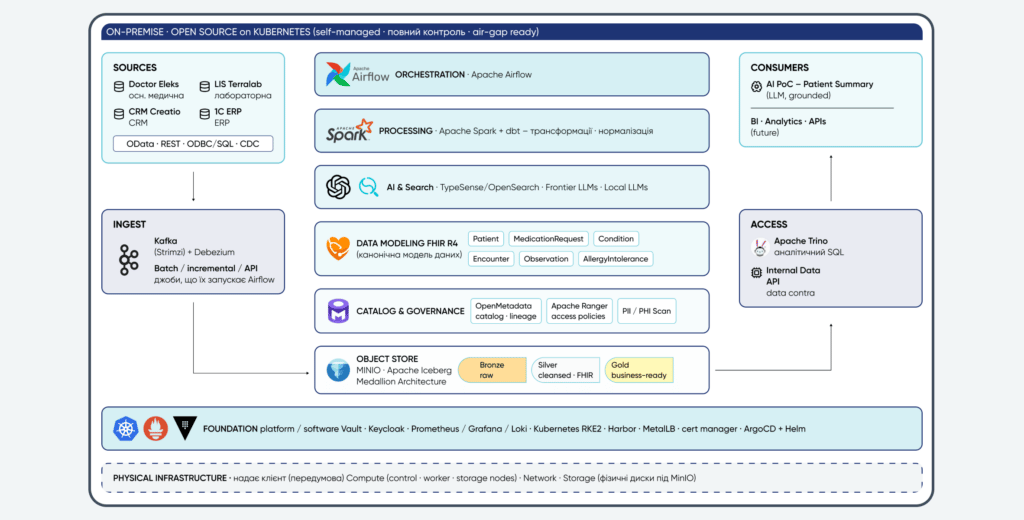
A private healthcare provider had accumulated 30 million clinical documents over ten years and no practical route to using them for AI, research, or analytics. Records sat as unstructured free text, external laboratory PDFs were never parsed, and searching a patient cohort by clinical criteria was simply not possible. The client arrived with a business problem, not a specification.
CHI assigned a single Forward Deployed Engineer who worked inside the client's existing workflows and IT environment. The FDE assessed how clinical information was actually stored and used, mapped the findings to five priority areas, and designed MedStore: a de-identified FHIR R4 layer sitting over the existing medical information system instead of replacing it, combining OCR, entity extraction, cohort and semantic search with Ukrainian clinical terminology support, Power BI reporting, and an AI patient summary. The engagement produced an implementation-ready architecture and roadmap with projected outcomes of 2+ hours released per physician per week, 40–50% faster clinical trial recruitment, and cohort queries returning in under 30 seconds across 30 million documents. CHI is explicit that these are projections from the discovery stage that must be validated against measured baselines during implementation, which is a more honest framing than most case studies offer.
 Source: chisw.com
How Much Does CHI Software's AI Development Cost?
CHI Software's average hourly rate is $50–$99 with the highest minimum project size in this list at $50,000+ and a cost rating of 4.8/5. Reported engagements run from $3,000–$4,000 per month for smaller retainers up to $100,000 for larger builds, with the most common project size across 25 reviews landing at $50,000–$199,999. The $50K floor is the main filter here: CHI is built for programs, not for single-workflow automations.
What Do Clients Say About Working With CHI Software?
"What stood out was CHI Software's ability to understand our requirements and translate them into practical solutions."
Andrey Yatsenko, CEO, UniRidge
"Their dedication to quality work and willingness to help as soon as possible are impressive."
David Gillo, VP of Business Development, Exelerate Smart Traffic Ltd
"The CHI Software team demonstrates very high communication and professional skills."
Anna Kravchuk, Head of Sales, SoftGroup
A handful of reviews mention minor miscommunications early in engagements, which is a common cost of scale in an 800-person organization. Reviewers otherwise single out responsiveness and the speed at which CHI can add resources to a running project.
Why Do Businesses Choose CHI Software?
Depth of bench is the main argument: 16 engineering teams means a project can scale from a two-person discovery to a full program without a hiring cycle.
ISO 27001 and ISO 9001 certification plus a Databricks partnership answer the procurement questions that stop many smaller vendors at the security review.
The Forward Deployed Engineer model puts one technical owner across business context, architecture, engineering, and deployment, so discovery context survives into implementation.
Twenty years of history and four European offices give continuity that matters on multi-year data platform work.
Healthcare, fintech, and edtech experience is documented in detail, including data modernization work most generalist agencies will not take on.
DataRoot Labs
DataRoot Labs has worked exclusively in AI since 2016, running applied R&D and production machine learning from a development hub in Kyiv, Ukraine, under a US corporate entity, with delivery coverage across 17 time zones. The team is deliberately small, 10 to 49 people, and staffed senior-only, with no juniors and no staff augmentation: every engagement is led by someone who has shipped production AI before. Clients include OLX, IBM, Databand, and Moxie (Embodied). The company has been named among the Top 10 AI Consulting Companies by Forbes and repeatedly recognized as a Clutch Top AI Developer. It reports 43 projects built and launched, 6+ petabytes of data processed, and an average of 8 weeks to MVP.
Example project by DataRoot Labs
A multinational manufacturer ran biannual customer satisfaction surveys across thousands of clients in Latin America, North America, and international markets. The results landed in flat files segmented by cycle, region, account manager, and service aspect, with no query layer on top. Every question from a commercial director had to go through the analytics team, who ran pivot tables by hand. Meanwhile the most valuable signal, dissatisfied clients and competitor mentions buried in open-ended comments, went unread between cycles.
DataRoot Labs built a survey intelligence agent giving commercial and operations teams a natural language interface to 35,000+ responses across multiple cycles and geographies, with no SQL or spreadsheet work required. It surfaces KPI dashboards for any segment on demand, scores each service dimension separately, ranks top and bottom clients with statistical thresholds applied, synthesizes thousands of free-text comments into recurring themes, and automatically flags comments mentioning competitors or migration intent as churn-risk signals for commercial review. The architecture uses a lightweight model for filtering and scope resolution and a full-size model for analysis and report generation, balancing response speed against analytical depth, with both typed and voice interaction on a LangChain and LangGraph stack.
How Much Does DataRoot Labs' AI Development Cost?
DataRoot Labs lists an average hourly rate of $25–$49 with a minimum project size of $10,000+ and a cost rating of 4.8/5, which is unusually low for senior-only staffing. Projects range from $10,000 to over $500,000, with the most common band across 20 reviews at $50,000–$199,999. Startups get a free one-hour AI consulting session with the senior tech team, a detailed roadmap with transparent pricing and team breakdown before contracting, and full IP transfer on completion with no shared ownership.
What Do Clients Say About Working With DataRoot Labs?
"Their project management was flawless."
Alex P., Co-Founder, Pressmaster
"I was truly impressed by their communication style and high-quality output."
David R., Founder and CEO, financial services company
"DRL has the professional skills in Deep Learning to successfully research and architecture AI models, train and tune them, and construct the cloud native infrastructure to productize them as a service for us. A pleasure to work with: very insightful, diligent and able to deliver!"
Joshua Reuben, AI System Architect and Dev Team Leader, Kami Computing
One reviewer noted that documentation of the team's own processes could be more detailed and proactive, which is a fair critique of a research-led shop and worth writing into the contract if you plan to take the system in-house later.
Why Do Businesses Choose DataRoot Labs?
Senior-only teams with no staff augmentation remove the most common outsourcing failure mode, where a strong pitch team hands off to juniors after signature.
Clean IP transfer with no lock-in and no shared ownership is stated up front, which matters when the model is the product.
The R&D orientation suits problems where the answer is not known at the start, such as whether a model can reach a required accuracy threshold at all.
Venture services extend past code into fundraising support, including pitch deck and financial model preparation and investor outreach, which is unusual for a development partner.
An 8-week average to MVP with a free consulting session and roadmap first makes it cheap to find out whether the project is viable.
BotsCrew
BotsCrew has built conversational and agentic AI since 2016, well before generative AI had a market name. The company runs its engineering from Lviv, Ukraine, under a San Francisco headquarters with additional US offices, and fields 60+ AI experts. It has delivered 200+ AI projects, including 50+ built with generative AI, for 100+ clients including Honda, Adidas, Samsung NEXT, Mars, Natera, and Virgin Holidays. Clutch has named it a Top Generative AI Company three years running (2024–2026), a Top AI Consulting Company for 2025–2026, and a Top Chatbot Development Company every year from 2017 to 2025. In January 2025 BotsCrew became part of the Court Avenue collective. Its average Clutch rating is 4.8.
Example project by BotsCrew
S&B Filters, a US manufacturer of high-performance air filters with 700+ employees, runs its order management, internal workflows, and customer data on NetSuite. Its CEO, Berry Carter, had already wired Claude's Model Context Protocol connector to NetSuite himself, written the prompts, and stood up an internal order-status assistant. It proved the use case and then hit the limits of an experiment: responses took 4 to 6 minutes, a 40-page prompt made behavior hard to control, and purchase order numbers arrived in three different formats across Shopify, phone, and email.
BotsCrew rebuilt the architecture instead of extending the prototype, delivering a production AI layer over NetSuite in under four weeks. It validates inputs across formats and falls back across identifiers when one is missing, serves both an internal assistant for support agents and a customer-facing assistant on the website from a single foundation, and adds a dynamic knowledge layer connected through OneDrive so the client updates product and installation content without a redeployment. Reported outcomes: ~50% of support requests fully automated, 24x faster first response, $140K in annual cost savings, and a ~251% ROI in year one. BotsCrew publishes its methodology note for those figures, which is worth reading before you quote them.
) Source: botscrew.com
Source: botscrew.com
How Much Does BotsCrew's AI Development Cost?
BotsCrew's average hourly rate is $50–$99 with a minimum project size of $10,000+ and a cost rating of 4.7/5. Projects range from $5,000 to $200,000, and the most common size across 30 reviews is $10,000–$49,999, which reflects a business built on focused agent deployments, not long platform programs. Service mix splits roughly evenly across AI development, generative AI, and AI consulting.
What Do Clients Say About Working With BotsCrew?
"The initial solution I built was slower than I needed it to be, simply because I wrote it. So we hired BotsCrew because we wanted to speed it up dramatically. They came in and did exactly that, we now get all that information in 15 seconds for our techs, which is just phenomenal."
Berry Carter, CEO, S&B Filters
"BotsCrew was an incredible partner from inception to launch. The team was proactive, well-organized, and flexible. They are deeply committed to achieving successful outcomes and exceeding expectations."
Jacklyn Trejo, Product Manager, Samsung NEXT
"Engagements with external consultants can suffer if the external party is very linear in their approach. But the BotsCrew team was incredibly collaborative and eager to understand our use case. It made our team feel like we were truly partnered on our project."
Jesse Lazarus, Chief Technology Officer, Kravet
Balancing that, some clients report initial misunderstandings about project scope that required adjustment later in the engagement. A thorough discovery phase, which BotsCrew sells as a separate service, is the obvious mitigation.
Why Do Businesses Choose BotsCrew?
Ten years of conversational AI work predates the current wave, so the team has production experience with the failure modes that only appear after launch.
The S&B Filters engagement is a useful reference for anyone whose data lives in an ERP: the AI layer sat on top of NetSuite and served internal and external users from one architecture.
Enterprise brand references (Honda, Adidas, Samsung NEXT, Mars) carry weight in procurement conversations where an unknown vendor stalls.
The founders are openly skeptical of "AI experts" who were blockchain experts two years ago, and the delivery model reflects that with an emphasis on measurable, supported production systems.
A dedicated discovery phase and conversational design service exist as standalone engagements, so you can buy the thinking before the build.
OTAKOYI
OTAKOYI has been building software from Lviv, Ukraine since 2011, with 150+ team members, 200+ projects completed, and clients in 30+ countries. Its client list runs to Lenovo, Philip Morris, Credit Agricole, METRO, Engel & Völkers, KIA, Kraft Heinz, and Knight Frank. The company operates three divisions: OTAKOYI for end-to-end development and team augmentation, SolveMind for AI systems, and HOLY.DESIGN for brand and UI/UX work. AI development and generative AI now account for half its declared service mix. Average client relationship length is 5+ years. The name is a Ukrainian expression of surprise, written ОТАКОЇ.
Example project by OTAKOYI
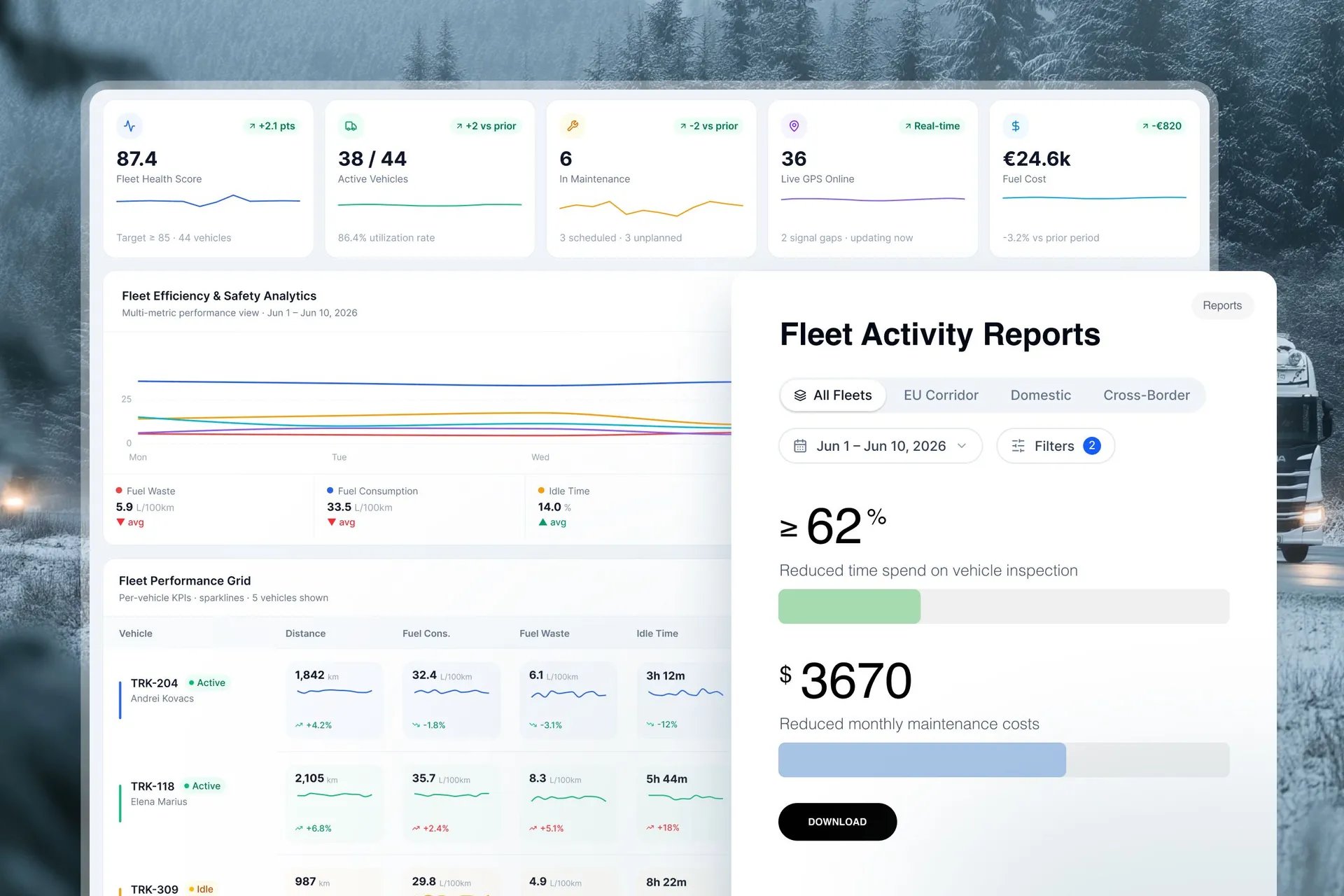
A UK fleet management SaaS company arrived mid-divorce from its previous vendor, with a live platform serving thousands of fleet operators, AI ambitions on the roadmap, and no safe way to get there. OTAKOYI's technical audit found a single authentication function carrying a SQL injection vulnerability called from over 200 places in the codebase, API tokens for live telematics providers hardcoded into source files, and production running with permissive CORS and unencrypted service traffic. Separately, a 2 TB operational database had grown so heavy that a single backup ran for two days, with roughly 90% of the storage in one table recording every GPS coordinate and sensor reading from every vehicle.
OTAKOYI treated it as two connected projects and refused to reverse the order. First the foundation: parameterized queries across all 200+ call sites, credentials moved into a managed secrets layer with rotation, TLS on PostgreSQL and the MQTT broker, authorization gaps closed, and time-based data tiering that keeps six months hot while older records move to archive tables, with a query layer routing automatically and no application changes required. Only then the AI work, prioritized by an operations audit that interviewed transport managers and scored every candidate workflow. Three automations shipped into the live platform: AI-generated fleet activity reports, a tachograph compliance co-pilot, and a natural-language fleet operations co-pilot. Results included a 60% reduction in time spent preparing fleet activity reports, 95%+ of tachograph infringements flagged before becoming violations, and 3x faster ad-hoc fleet inquiries. Two years on, the client describes OTAKOYI as the engineering team behind the product, not a vendor.
 Source: otakoyi.software
How Much Does OTAKOYI's AI Development Cost?
OTAKOYI's average hourly rate is $25–$49 with a minimum project size of $50,000+ and a cost rating of 4.8/5. Client investments range from $3,000 to over $500,000, and the most common project size across 53 reviews, the largest review base in this list, is $50,000–$199,999. The combination of a low hourly band and a high project floor points at the same thing the fleet case does: OTAKOYI is set up for sustained engagements, not one-off builds.
What Do Clients Say About Working With OTAKOYI?
"OTAKOYI's team members have the capability to quickly understand our work domain."
Kristian Borum, CTO, software company
"The team's professionalism, efficiency, and collaboration make it a pleasure to work with them."
Steven Eschinger, CTO, Kumori Labo
"We came to OTAKOYI in a difficult position, leaving a vendor we'd outgrown, with a platform that needed both stabilization and a real path toward AI. They executed the handover cleanly, fixed the foundations our previous partner had let drift, and then delivered the automation we'd wanted for years across all three of our product lines."
Transport Operations Director, UK fleet management company
Some clients have asked for more creative and strategic input, particularly on branding and naming work. Engineering and delivery draw consistently strong feedback; if the brief is primarily creative, HOLY.DESIGN is the division to scope against.
Why Do Businesses Choose OTAKOYI?
Vendor handovers and platform rescues are a documented specialty, including recovery of projects built quickly without engineering discipline.
The AI operations audit runs before any build, interviewing the people who actually use the software and scoring workflows on automation potential, operator time saved, and integration complexity.
Enterprise references like Lenovo, Credit Agricole, and Kraft Heinz sit alongside startup work, and average client tenure of 5+ years suggests those relationships hold.
Security and database work count as prerequisites for AI, not optional cleanup, which is the sequencing most stalled AI projects skipped.
Three in-house divisions cover engineering, AI, and design without subcontracting.
Springs
Springs is a 10 to 49 person AI development company specializing in conversational and generative AI, with engineering in Kyiv, Ukraine and Portugal, under a Vancouver headquarters. Founded in 2016, it reports 170+ delivered projects, 10+ years of industry experience, and a 95%+ client retention rate. Generative AI accounts for 45% of its service mix, the highest concentration in this list, with AI development and AI consulting making up most of the rest. Springs has been recognized by Clutch, DesignRush, and Upwork, and holds a 4.8/5 cost rating.
Example project by Springs
IONI is an AI compliance platform built for teams that spend their weeks reading regulations and comparing them against internal policy documents. The manual version of that work is slow, inconsistent between reviewers, and reactive: gaps surface during an audit instead of before one.
Springs delivered the MVP in six months with a team spanning Python and AI/ML engineers, React and Node developers, a project manager, a QA engineer, and a CTO, and continues to develop it. Three capabilities carry the product. Gap Analysis compares internal compliance policies, contracts, and regulatory requirements automatically, using natural language processing to flag where an organization falls short and suggest corrective action. Document Research locates the exact clause or section a team needs across large document sets. Document Drafting then creates or edits policies and regulatory responses against the gaps that were found, so the analysis produces a draft instead of a to-do list. All three run from a single admin panel where compliance activities are tracked and assigned. The system is built on Anthropic and GPT-4 models with a Python, React, and Node stack.
How Much Does Springs' AI Development Cost?
Springs has the lowest entry point in this list: a $5,000+ minimum project size, with an average hourly rate of $50–$99 and a cost rating of 4.8/5. Client projects range from $52,000 to over $250,000, with the most common size across 20 reviews at $10,000–$49,999. Website development packages start at $25,000 total. Reviews specifically credit budget alignment with no hidden costs, which is the kind of detail that only shows up after a project has run long enough to change scope.
What Do Clients Say About Working With Springs?
"The way they had a 360-degree view of every feature even before they are pushed into production gave me peace of mind."
Mohammed Alharthi, Founder & CEO, Vision First LLC
"I was very impressed with the Springs' Team's ability to grasp the concept and build out a framework for the project."
Pete Ciliberto, President & CEO, Real Estate Inspections
"Springs amazingly merge our ideas and theirs."
Andreas Past, Managing Director, Aviation Heaven GmbH
The consistent critique concerns internal communication between Springs' own teams and committees, which some clients felt could be tighter to avoid delays. On the external side, project management and client communication draw strong marks, with Slack, Trello, and Jira used throughout.
Why Do Businesses Choose Springs?
A 95%+ client retention rate is the strongest single signal here, and it holds across geopolitical disruption that would have broken weaker delivery arrangements.
The $5,000 entry point makes Springs one of the few credible options for validating an AI concept before committing real budget.
A deep discovery phase runs before any project starts, which the company treats as a prerequisite, not an upsell.
Generative AI is the core of the business at 45% of service mix, not an addition to a general development shop.
The IONI build shows the team can carry a regulated-domain product from MVP through ongoing development instead of handing over at launch.
Plavno
Plavno is a custom software development company founded in 2007, headquartered in Alexandria, Virginia, with four offices and delivery centers globally and 150+ vetted tech experts. It reports 800+ projects delivered and a 91% customer satisfaction score. The distinguishing choice is structural: since a 2022 pivot, Plavno organizes senior teams by industry instead of by technology, so a client is paired with people who already know the domain's compliance requirements, whether that is HIPAA in healthcare, IDX/MLS in real estate, or GDPR and CCPA in fintech and HR tech. Agile teams are stated to be deployable within 2 to 3 weeks. Its cost rating on Clutch is 4.9/5, the joint highest here.
Example project by Plavno
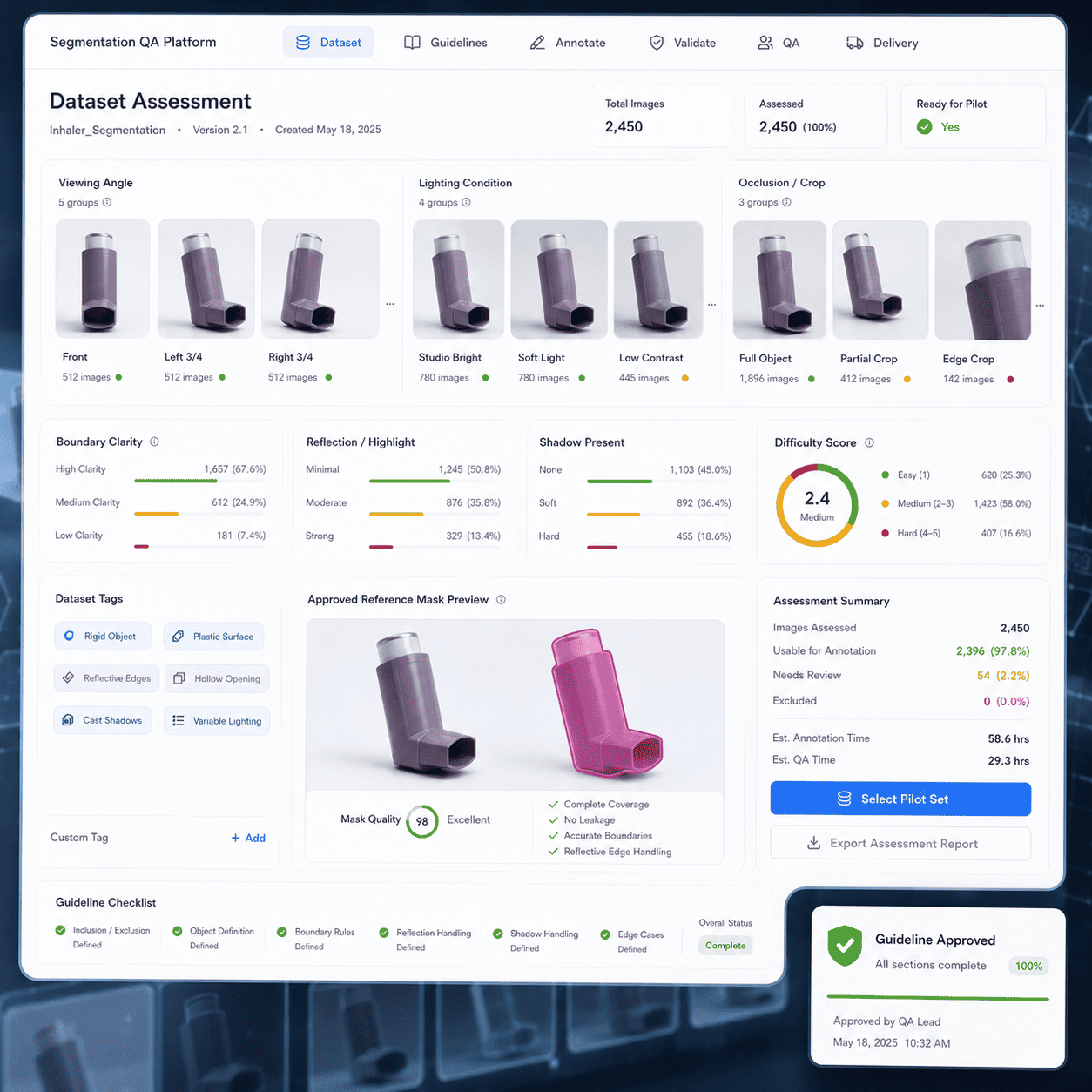
A European medical device manufacturer had a large image library of catheters, infusion components, and molded plastic parts, and an internal computer vision team stuck at a data bottleneck. The images had been captured in different environments across years, so boundaries were obscured by reflections off plastic and glass, shadows, low contrast, cropping, and partial occlusion. Annotating a single image was not hard. Annotating thousands the same way was, and without a documented standard two annotators would produce reasonable but inconsistent masks, one including a narrow component the other treated as background.
Plavno's answer was process rather than model. The team classified the dataset by boundary clarity and difficulty, wrote project-specific segmentation guidelines documenting correct and incorrect masks, ran a pilot batch to calibrate annotators before any of them got production access, then processed the dataset in controlled batches where every mask passed automated technical validation and an independent visual review by someone who had not created it. Ambiguous images were escalated to senior reviewers, the decisions documented and folded back into the guideline. 10,000+ medical product images went through the pipeline with full image-level revision and approval history retained, delivered in validated batches in the client's required training format. The client's own computer vision team stayed involved in defining rules and resolving genuinely product-specific questions instead of becoming the project's QA department.
 Source: plavno.io
How Much Does Plavno's AI Development Cost?
Plavno's average hourly rate is $25–$49 with a minimum project size of $25,000+ and a 4.9/5 cost rating. Specific project costs are not disclosed in its Clutch reviews, so there is no published range to quote here; reviewers report satisfaction with deliverables relative to investment and with pricing that matched budget expectations. The most common project size across 49 reviews is $50,000–$199,999, which is consistent with the rest of this group. For planning purposes, use the benchmark table further down instead of a company-specific figure.
What Do Clients Say About Working With Plavno?
"What impresses us most about Plavno is their ability to combine deep technical expertise with a real understanding of our business goals."
Eka Shtern, Co-Founder, Punch Creative
"Through the partnership with Plavno, we built a system used by more than 40 million connected channels. Throughout the engagement, the team was communicative and quick in responding to our concerns."
Michael Bychenok, CEO, MediaCube
"Plavno met or exceeded expectations on quality, schedule, and responsiveness."
Anna Bernin, Business Development Manager, Exaware LLC
Unusually, Plavno's Clutch review record notes no significant areas for improvement identified by clients. Read that as a clean record, not a perfect one; 49 reviews is a solid base, but the absence of criticism is not the same as its impossibility.
Why Do Businesses Choose Plavno?
Industry-specific senior teams mean the compliance conversation starts from shared knowledge instead of from a briefing document.
Teams deploy in 2 to 3 weeks, which is fast for a company of this size and useful when an internal team has already hit a bottleneck.
The medical imaging project shows Plavno will take on the unglamorous data work that determines whether a computer vision model succeeds, complete with independent QA and traceability.
Nineteen years of operating history through several technology cycles, with a 91% customer satisfaction score and 95% customer retention through the pandemic period.
Coverage across 32 time zones with four delivery centers suits clients who need working-hours overlap in more than one region.
What Separates an AI-First Development Company From an Agency With an AI Page?
The honest answer is production evidence. Gartner coined the term "agent washing" for vendors rebranding existing assistants, RPA tools, and chatbots as agentic AI without the underlying capability, and estimates that only around 130 of the thousands of self-described agentic AI vendors are real. Every company can now generate a convincing demo. Far fewer can show you a system that has been running against real users for a year.
Three findings from 2025 research are worth carrying into any vendor conversation.
AI amplifies what a team already is. Google's DORA State of AI-assisted Software Development 2025 found that AI magnifies existing organizational strengths and weaknesses instead of compensating for either, and that the organizations getting returns share three traits: stable pipelines, clean architecture, and solid product discovery. A vendor whose delivery process is weak will not be rescued by better models, and neither will yours.
Most projects die in the gap between working and shipped. MIT's research put the number at 5% of evaluated GenAI systems reaching production, with failures traced to brittle workflows and misalignment with daily operations, not to model quality. Both the S&B Filters and SPIE cases above started from exactly this position: something that technically worked and could not be operated.
AI-generated code also needs more review than handwritten code, which cuts against the usual pitch. The 2025 Stack Overflow Developer Survey found 84% of developers using or planning to use AI tools while trust in their accuracy fell to 29%, and 66% naming "almost right, but not quite" solutions as their top frustration, with 45% reporting that debugging AI-generated code takes longer. A partner who treats AI-assisted development as a reason to cut QA is selling you their own margin.
What an AI-first company does differently is unremarkable in description and rare in practice. It structures data for the AI use case before writing feature code, defines how accuracy will be measured and against which held-out set, and budgets for observability and evaluation after launch. Then it can point you at a system that survived contact with real users.
How Much Does an AI-First Development Company Cost in 2026?
European AI development runs roughly $25 to $99 per hour at agency level, and a production deployment typically lands between $60,000 and $150,000 before running costs. Two numbers drive that: the hourly rate for the team, and the total benchmark for the piece of work.
European developer rates by region, 2026
Region | Countries | Contractor rate (general dev) | With AI/ML premium |
|---|---|---|---|
Nordics | Sweden, Finland | $80–$140/hr | $110–$195/hr |
Western Europe | UK, Germany, Netherlands | $64–$128/hr | $90–$180/hr |
Southern Europe | Spain, Italy, France | $37–$77/hr | $52–$108/hr |
Central Europe | Poland, Czechia | $32–$100/hr | $45–$140/hr |
Eastern Europe | Ukraine, Romania, Bulgaria | $45–$70/hr | $63–$98/hr |
Contractor bands are drawn from index.dev's 2026 European developer rate data; the AI/ML column applies the premium of up to 40% that the same research reports for AI and machine learning specialization. Agency rates typically sit inside or slightly above these bands because they include project management, QA, and DevOps on top of a single engineer's time. That is why six of the eight companies profiled above quote $25–$99 per hour across the whole team.
Typical total cost by engagement stage
Engagement | What you get | Typical cost |
|---|---|---|
Discovery / AI operations audit | Workflow mapping, use case scoring, architecture and roadmap | $5,000–$25,000 |
Proof of concept | One workflow, one model, no production integration | $15,000–$35,000 |
MVP | Working system, limited integrations, real users | $25,000–$60,000 |
Production deployment | Integrations, permissions, monitoring, evaluation, support | $60,000–$150,000 |
Enterprise multi-agent platform | Orchestration, deep integrations, compliance architecture | $200,000–$400,000+ |
Ongoing run cost | LLM API, cloud, vector database, monitoring | $400–$7,500/month |
Benchmarks compiled from 2026 AI agent development cost surveys including Neoteric and SoftTeco. Two costs get missed here. Running costs rarely make it into the original budget at all, and the jump from MVP to production absorbs most of the money, because integration, permissions, monitoring, and evaluation all live in that step.
Against these benchmarks, the companies above cluster in a predictable way. Springs at a $5,000 minimum and SoftBlues with a $10,000–$49,999 typical project sit at the PoC-to-MVP end. CHI Software's $50,000 floor puts it firmly at the production and platform end. Monterail's $30,000-to-$1M range spans both, which is what a 130-person team with a fixed-price MVP practice looks like on paper.
How Do You Choose the Right AI-First Development Partner?
Start by naming the shape of the engagement you actually need. A feasibility question, a single automated workflow, a full product, and a platform program are four different purchases, and the company that excels at one is rarely the cheapest way to buy another.
Then work through this in the first two conversations:
Ask for a system that has been in production for at least six months, then ask what broke in month three. Anyone can show a launch; the second answer tells you whether they were still around for the aftermath.
Find out how accuracy gets measured, and against what. SoftBlues validated ten fine-tuned models against held-out interviews, with human analysts checking the results, before any platform work started. Prove it works, then build around it.
Pin down what happens to your data and your IP. DataRoot Labs states full IP transfer with no shared ownership; SPIE's requirement was owning its own database instead of scattering data across vendor systems. Get the answer into the contract.
Get the team named. Senior-only staffing, industry-specific teams, and general staff augmentation produce very different outcomes at the same hourly rate.
Ask what they will refuse to build. OTAKOYI put security and database work ahead of AI on the fleet platform and would not reverse the order. A partner who agrees to everything in the first call has not read your codebase.
Get the monthly run cost in writing, along with who absorbs it when a model provider changes pricing or deprecates a version.
Match the answers against your constraints, not against a ranking. If your data sits in an ERP, prioritize a team with integration evidence. Where the model itself is the product, research depth and IP terms matter more. And if procurement runs a security review, ISO 27001 and a named EU entity will save you months.
What Are the Red Flags When Hiring an AI Development Company?
The most expensive one is a demo with no architecture behind it. The S&B Filters case is the archetype: a prototype that worked, on a 40-page prompt, with four-to-six-minute response times and no route to production. If a vendor's pitch is a screen recording and the architecture conversation keeps getting deferred, you are buying a prototype at production prices.
Watch for a proposal with no data-readiness step. CHI Software's healthcare engagement spent its first phase working out what could be built and in what order, before anyone drew an architecture. Plavno's medical imaging project spent its first phase writing annotation rules. A vendor who jumps straight to model selection is skipping the part that decides whether the model can work at all.
Silence on evaluation and monitoring is the next one. Ask what happens when accuracy drifts. If the estimate contains no held-out set, no measurement plan, and no observability, the estimate is for a demo.
Then there is agentic vocabulary attached to non-agentic behavior, which is where Gartner's agent-washing finding lands on the buyer. Ask what the system does autonomously, what it escalates, and what it is never permitted to do. A system with no escalation path is a chatbot with a new name.
Junior-heavy staffing behind a senior pitch predates AI by decades and has not improved with it. Get the team named by seniority and written into the statement of work.
Last, a rate quoted without a run cost. A build quote that ignores $400 to $7,500 a month in API, infrastructure, and monitoring spend is incomplete, and the gap arrives on your budget in month two.
What Does the EU AI Act Mean for an AI Build in 2026?
The timeline moved this year, and the change is easy to misread. Regulation (EU) 2026/1744, the Digital Omnibus on AI, was published in the Official Journal on July 24, 2026 and entered into force on July 27, 2026. It deferred the compliance deadline for standalone high-risk AI systems under Annex III from August 2, 2026 to December 2, 2027, and for AI embedded in products already covered by EU product-safety law under Annex I to August 2, 2028. The Cloud Security Alliance's research note sets out the two-tier structure in detail.
What did not move matters more for most buyers. Article 50 transparency and AI-content-labeling duties stayed on the August 2, 2026 date. General-purpose AI provider obligations have applied since August 2, 2025, and the Article 5 prohibited-practices regime has been in force since February 2025. Scope is broad: if your system's output touches the EU through sales, access, or downstream integration, it is potentially in scope regardless of where you are incorporated, and non-EU providers of high-risk systems must appoint an authorized representative in the Union before placing a system on the market.
The practical reading, per Holland & Knight's analysis, is that classification, documentation, risk management, and governance work take months, especially across multiple systems and vendors. Treating December 2027 as permission to start in 2027 is how organizations end up doing compliance archaeology on systems built without records.
Three things to require from a development partner on any EU-facing build: documentation of training data provenance and model versions from the first sprint, a written classification of where the system sits under the Act, and a clear allocation of provider versus deployer obligations between you and them. Several companies in this list already build to this standard for other reasons. SoftBlues states GDPR and Responsible AI compliance as delivery requirements, CHI Software holds ISO 27001, and Monterail's SPIE platform was architected for data ownership because the client operates in nuclear energy.
Which AI-First Development Company Fits Your 2026 Roadmap?
Almost none of what separates these eight companies comes from model access. Everyone in this list can call the same APIs. The variable is production discipline: whether the team validates before it builds, whether it fixes the database before stacking an agent on top, and whether it is still around in month twelve when accuracy starts to drift.
The failure statistics point at the same thing. Pilots stall because nobody structured the data for the use case, nobody built the evaluation loop, and nobody owned the system after launch. Score your shortlist against those three questions and it gets shorter fast.
Key Takeaways
Production evidence beats capability claims. Ask for a system running six months or longer and what broke in month three; Gartner's estimate that only ~130 of thousands of agentic AI vendors are genuine makes this the highest-value question you can ask.
Budget for the jump from MVP to production, where integration, permissions, monitoring, and evaluation live. Expect $25,000–$60,000 for an MVP and $60,000–$150,000 for a production deployment, plus $400–$7,500 a month to run it.
European agency rates of $25–$99 per hour bundle project management, QA, and DevOps, which is why they compare favorably with individual contractor rates of $45–$140 for AI-specialized engineers in the same countries.
Sequence matters more than speed. OTAKOYI's fleet platform needed 200+ SQL injection call sites fixed and a 2 TB database tiered before AI could ship at all, and the client credits that ordering for the result.
The EU AI Act's high-risk deadline moved to December 2, 2027 under Regulation (EU) 2026/1744, but Article 50 transparency duties held at August 2, 2026 and GPAI obligations have applied since 2025. Documentation started now is cheaper than documentation reconstructed later.
AI-first development partner FAQ

Maciej Korolik
Senior Frontend Developer and AI Expert at Monterail

Maciej is a Senior Frontend Developer and AI Expert at Monterail, specializing in React.js and Next.js. Passionate about AI-driven development, he leads AI initiatives by implementing advanced solutions, educating teams, and helping clients integrate AI technologies into their products. With hands-on experience in generative AI tools, Maciej bridges the gap between innovation and practical application in modern software development.