The New Default. Your hub for building smart, fast, and sustainable AI software

Table of Contents
Rapid prototyping is a time-boxed engagement, typically four weeks, that turns an early-stage innovation idea into a working software prototype. The output gives decision-makers something to evaluate directly, rather than a projected business case built on untested assumptions.
Executive Summary
For Fortune 500 innovation and R&D teams, the biggest challenge is usually speed. Internal teams move at enterprise pace. External consultancies want six-month discovery engagements. The market doesn't wait. A four-week rapid prototyping engagement with an external team produces a working, interactive prototype that gives decision-makers something concrete to evaluate before the organization runs a full procurement or funding process. That prototype makes the investment decision less risky, uncovers real technical constraints, and gives you something you can actually put in front of a board.
Why Corporate Innovation Gets Stuck Before It Starts
Most innovation programs either stall or fail because there's no fast path from "this idea has potential" to a funding decision.
Large organizations are built to reduce operational risk, and that's the right default for running at scale. However, it creates predictable friction for early-stage ideas that need speed to survive. Internal teams carry roadmap obligations, compliance requirements, legacy system dependencies, and competing priorities. The result is a pattern that anyone in a corporate R&D or innovation role has lived through. A promising concept sits in a queue behind core product work, architecture reviews, and leadership approval windows. By the time internal capacity clears, the budget cycle has closed, or the sponsor has moved on.
According to a Boston Consulting Group study, 83% of senior executives rank innovation among their top three priorities. Yet only 3% of organizations qualified as "innovation ready" in 2024, down from 20% just two years earlier. The gap stems from the system between idea and a decision.
You Don't Need Full Approval to Find Out If Your Idea Works
A large transformation project triggers the full procurement chain: legal, finance, leadership sign-off, you name it. A prototype engagement sits below that threshold — because it asks a different, smaller question. Not whether to fund a product team, but whether the idea is worth funding at all.
That distinction changes who needs to be involved and how long it takes to get started. You run the prototype first. The follow-on investment request arrives with evidence rather than projections, which is a considerably easier conversation to have with procurement, finance, and the CFO.
What Rapid Prototyping Actually Is
Rapid prototyping is a scoped exercise to answer one question: is this idea technically and commercially feasible enough to justify the next investment?
The scope follows from that framing. It needs to test the riskiest assumption behind the idea, whether that's a technical integration, a user behavior, a data dependency, or a hardware constraint. Once that assumption is tested, the organization has something concrete to decide on.
When to Apply Rapid Prototyping
Approach | Best for | Typical risk | Output |
Traditional discovery | Broad strategic questions | It can take months before anything is tested | Research, recommendations, roadmap |
Internal innovation project | Ideas already on the roadmap | Competes with existing priorities | Internal build or planned initiative |
Rapid prototyping | Testing a specific idea or risky assumption | Requires a clear scope and decision criteria upfront | Working software prototype |
Full MVP development | Validated ideas ready for market | Higher cost if core assumptions were wrong | Market-ready or pilot-ready product |
The perfect moment for rapid prototyping is the gap between "this idea has potential" and "we're ready to fund a product team." It's a deliberate step, not a shortcut past proper development or a compressed version of it.
Why HealthTech and MedTech Can't Afford Slow Validation
The stakes are especially high if you work in healthcare or medical technology.
The problem is that the cost structure is back-loaded. Most of what a medical product development program spends comes after the build decision has already been made. Regulatory activities, clinical validation, and integration work with existing clinical systems are the costs that follow. That means a feasibility assumption that turns out to be wrong doesn't just cost you the development budget; it costs you everything that was already committed downstream of it.
In Monterail's experience, late discovery is what typically drives this kind of waste.
Finding out that an integration doesn't work, or that the data flow has a fundamental flaw, after a significant investment round is exactly the failure mode that rapid prototyping prevents. It surfaces the hard questions in weeks one and two before the organization has committed to a direction that's expensive to exit.
What a Working Prototype Does That a Business Case Can't
If you're trying to get an innovation idea funded inside a large organization, you already know the problem. You need to convince people who weren't in the room when the idea formed. And you're doing it while carrying personal credibility risk. If you back a concept that turns out to be technically unfeasible or commercially weak, that's on you.
A compelling presentation rarely closes this gap. The people you're presenting to want to know whether the concept works, not just whether it sounds credible. A working prototype changes that conversation and it changes what the follow-on investment looks like.
Stakeholder alignment through something tangible
When stakeholders can see how a concept behaves, probe its edges, and form their own view of feasibility, alignment happens in a way that slide decks don't produce. The conversation shifts from "do you believe this could work?" to "what would it take to scale this?", which is a far more productive place to make a funding decision.
Faster validation cycles that protect your budget
A compressed feedback loop means learning before committing. Testing with real users within the four-week window surfaces what works and what doesn't before development begins. Features validated in a prototype are features that won't need redesigning after the build and the budget request that follows is grounded in tested reality.
Reduced downstream waste
Every usability issue, misaligned expectation, or flawed assumption caught in a prototype is one that won't become an expensive code change later. The prototype also surfaces integration constraints, data requirements, and technical dependencies that a business case document can only estimate. In regulated industries, where those downstream costs compound quickly, catching a feasibility problem in early is key.
When Rapid Prototyping Is the Right Tool
Rapid Prototyping works best when the team has a specific idea they need to validate quickly, and a decision that depends on the outcome. Three situations where it tends to produce the clearest results:
You need to validate a concept with stakeholders before committing budget.
The idea has internal support but decision-makers need to see it before they'll fund it. A working, interactive prototype demonstrates what the product will actually feel like in a way that wireframes and slide decks don't.
You're weighing multiple directions before committing to one.
Different approaches to a feature or product experience are being debated in meetings. Building a scoped prototype of each direction lets the evidence decide, rather than the person with the loudest opinion in the room.
You need a functional prototype to secure funding or board approval.
Investors and internal committees want to see more than a pitch. A working prototype demonstrates that the concept has been tested, that the technical approach is viable, and that the team understands what the next investment would actually need to solve.
There are two situations in which I do not recommend rapid prototyping. First, when the scope is entirely undefined, a broader strategy engagement comes first. Second, when the idea is already validated, and the team knows exactly what to build. In this case, you need a full product development. The four-week format is for the gap between those two.
Case Study: Prototyping of AI-Powered Menstrual Monitoring Technology
The approval chain problem is most visible in large organizations, but the underlying issue which is committing to a full build before proving the riskiest assumption, costs startups just as much. The stakes are different but the logic is the same.
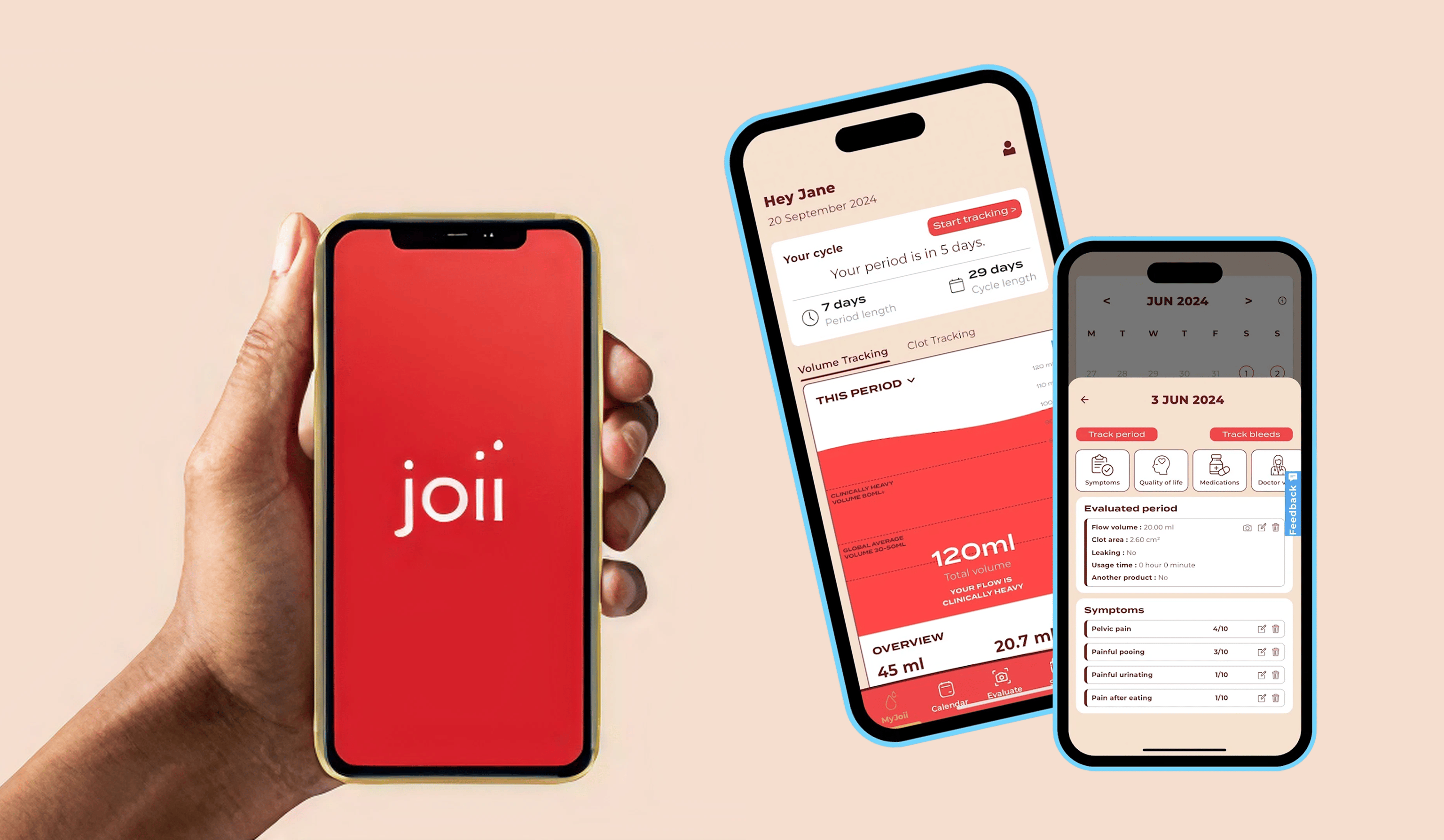
Joii had an innovative concept: using AI to analyze menstrual flow from photos. The idea was medically compelling. The technical question was whether it was feasible at all.
Before committing to a full product, they needed one thing answered: could an AI model analyze real-world photos accurately enough to be clinically useful, across varying lighting conditions and camera quality?
 Source: Joii Case Study
Monterail built a functional prototype with a real-time image scanner integrated into iOS and Android apps. The prototype pushed image processing accuracy to 99%, enough to validate the concept and establish the technical foundation for the full build.
The result: a validated prototype that proved the core assumption, fed directly into regulatory submissions, and became the foundation of a publicly available app with Class I Medical Device certification in the UK, protected by multiple patents.
The business question rapid prototyping answered in this case was "can this work?" That question was answered before a full product was commissioned. The evidence it produced made everything that followed possible.
Key Takeaways
Corporate innovation stalls because there's no fast path from idea to funding decision. Rapid prototyping creates that path at a scope that fits within how most innovation teams can move without triggering a full approval chain.
In regulated industries like HealthTech and MedTech, the cost of late-stage feasibility failure is categorically higher than the cost of an early prototype that surfaces the same problem.
A working prototype is a more tangible asset than a pitch deck and shifts board-level conversations towards potential scaling.
A documented "no" from a prototype is still better than six months of full development ending in the same answer, and it protects your credibility in the process.
Rapid prototyping works best when decision criteria are defined upfront. Undefined success criteria are the most common reason a prototype fails to produce a useful answer.
Strategic Takeaway
The organizations making rapid prototyping work have separated the cost of testing an assumption from the cost of building a product. In healthcare and MedTech, where the regulatory pipeline amplifies every downstream decision, that separation is especially visible. A four-week engagement buys a better-informed decision at a fraction of what it costs to find out you were wrong once you're already in the regulatory pipeline.
Ready to move an idea from brief to working prototype?
Monterail runs four-week rapid prototyping engagements for HealthTech and corporate innovation teams. Scoped to one hypothesis, built to produce a decision your stakeholders can act on. Share the brief with the Monterail team.
Rapid Prototyping FAQ
)
Piotr Zając
HealthTech Director

Piotr, Monterail’s Director of HealthTech brings over 15 years of entrepreneurial leadership and strategic innovation to the MedTech and HealthTech sectors. Piotr has demonstrated exceptional ability to build and scale healthcare solutions. Former President of EO Poland, part of the world's largest entrepreneur network. Combining his entrepreneurial background with Management 3.0 principles, Piotr specializes in helping organizations drive sustainable innovation in the rapidly evolving HealthTech landscape.