The New Default. Your hub for building smart, fast, and sustainable AI software
Table of Contents
Picking a mobile development partner is mostly a pricing problem disguised as a technology problem. The stack question usually answers itself within a week of discovery. The harder question is which firm will still be worth its rate in month eighteen, when the roadmap has changed twice, an SDK deprecation has broken your build, and Apple has added a new privacy requirement you didn't budget for.
This article does two things. First, it profiles seven mobile app development companies with their actual Clutch rate bands, real projects, and verbatim client reviews, including the criticisms. Second, it gives you the benchmark numbers and the vetting questions you need to judge any vendor, including the seven below.
Executive Summary
Mobile development rates split into three clear tiers in 2026: roughly $25 to $50 an hour at the low end, $50 to $99 in the mid-market where most credible European and Latin American firms sit, and $120 to $250 in North America. Global rates have fallen about 9% to 16% as AI tooling compressed delivery time, but total project budgets have held steady because scope grew to fill the gap.
The rate you pay matters less than what sits behind it: domain knowledge in your regulated vertical, a team that survives past the pilot, and someone who has already shipped through an App Store review cycle in your category. Apple rejected roughly a quarter of the 7.77 million submissions it reviewed, and most of those rejections were compliance plumbing rather than engineering failures.
Budget 15% to 20% of your build cost per year for maintenance from day one, because the vendors who quote without it are the ones who will surprise you.
Top Mobile App Development Companies in 2026
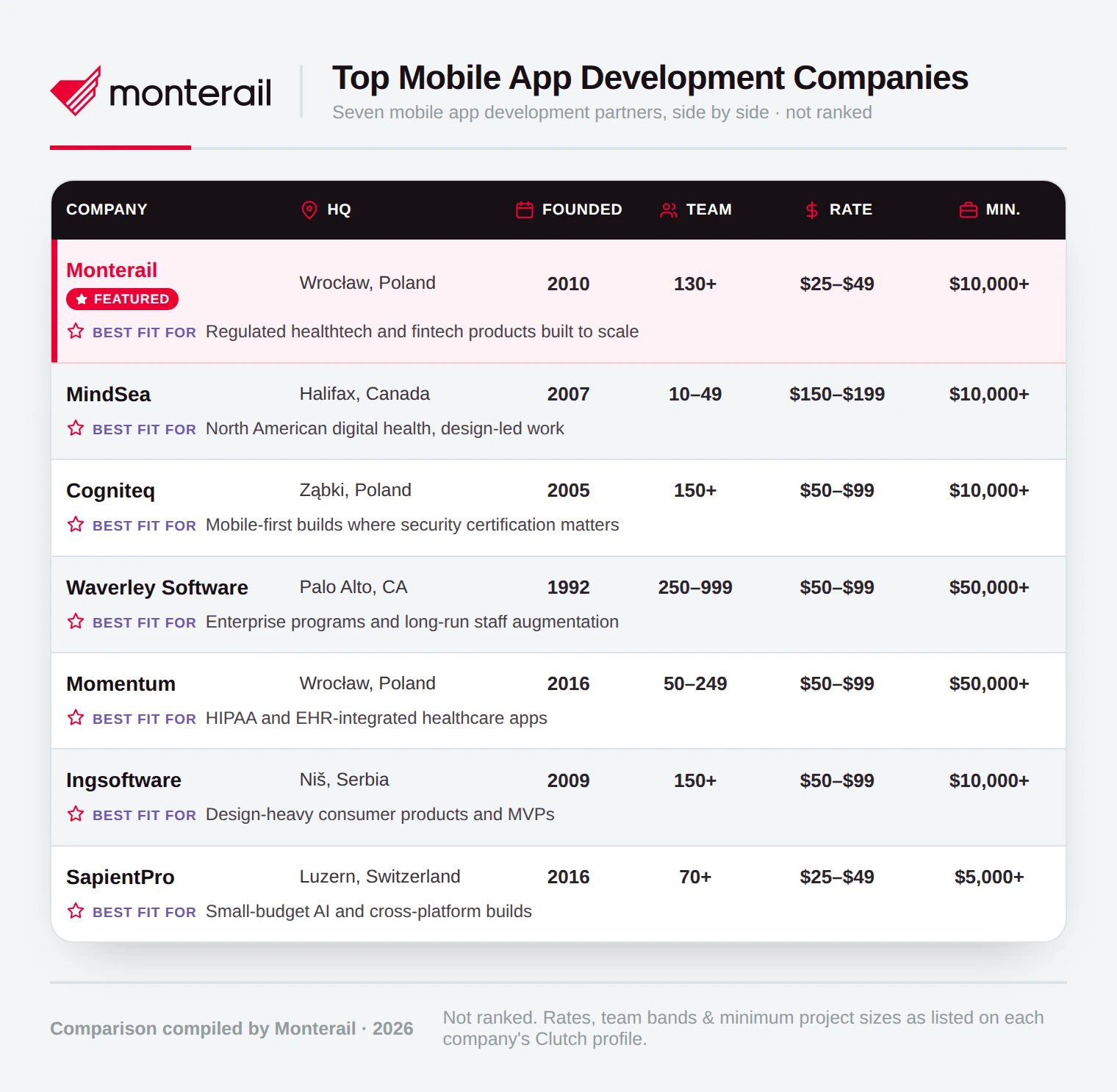
This list is not ranked. The seven companies below were chosen to show the range of what "mobile app development company" actually means in 2026. One is a ten-person digital health boutique in Nova Scotia billing $150 to $199 an hour. Another is a 300-person engineering organization founded in 1992 with delivery centers on three continents. Between them sit specialists in regulated healthcare, a firm where mobile is three quarters of all revenue, and a generalist with a $5,000 entry point.
Read the profiles as a set of reference points. The one that fits a seed-stage founder validating a concept is almost never the one that fits a Fortune 500 modernizing a field-service app.
Monterail
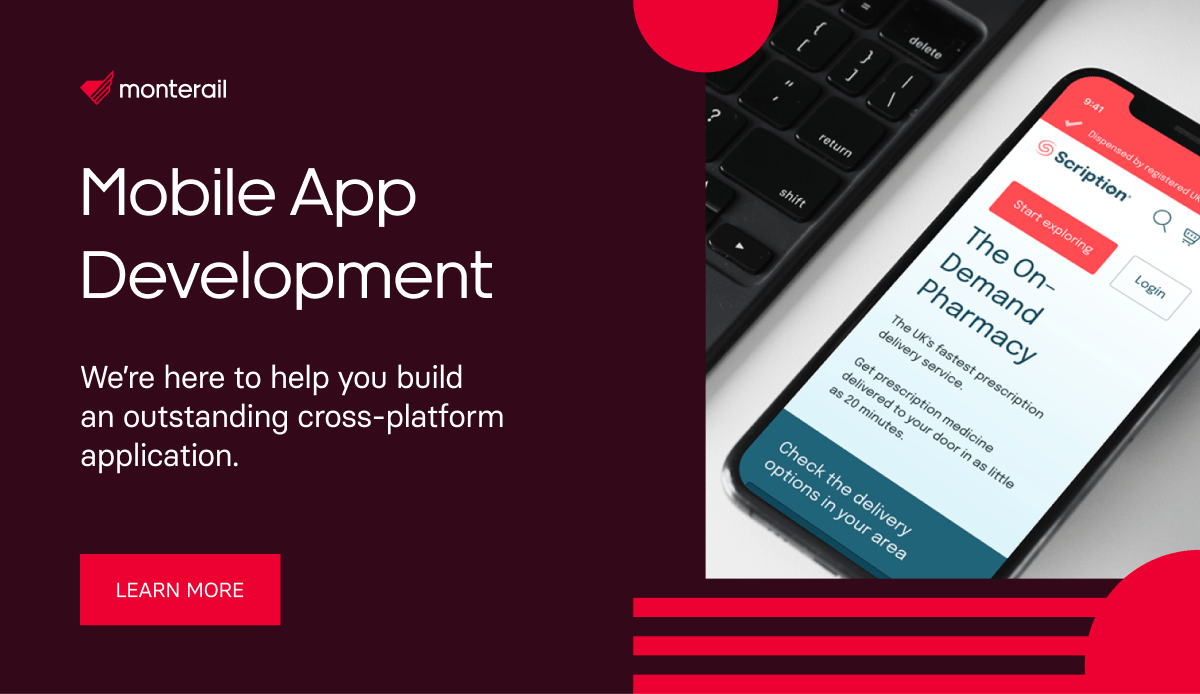
Monterail is an agentic development company headquartered in Wrocław, Poland, building web and mobile products for startups, scale-ups, and enterprises. Founded in 2010, the company now runs a team of 130+ in-house engineers, designers, and product specialists and has delivered 900+ projects, including 75+ healthcare applications. Clients include Bosch, DocPlanner, EY, Merck, and SharkNinja. Monterail is an official Vue.js and Nuxt partner, works in React Native and Flutter on mobile, and was named to the Financial Times 1000 in 2018 after two consecutive years on Deloitte's fastest-growing Central European tech ranking. Three acquisitions since 2024, Untitled Kingdom, ElPassion, and Lakeview Labs, added MedTech, FemTech, product design, and mobile depth. Current NPS is 71.
Example project by Monterail
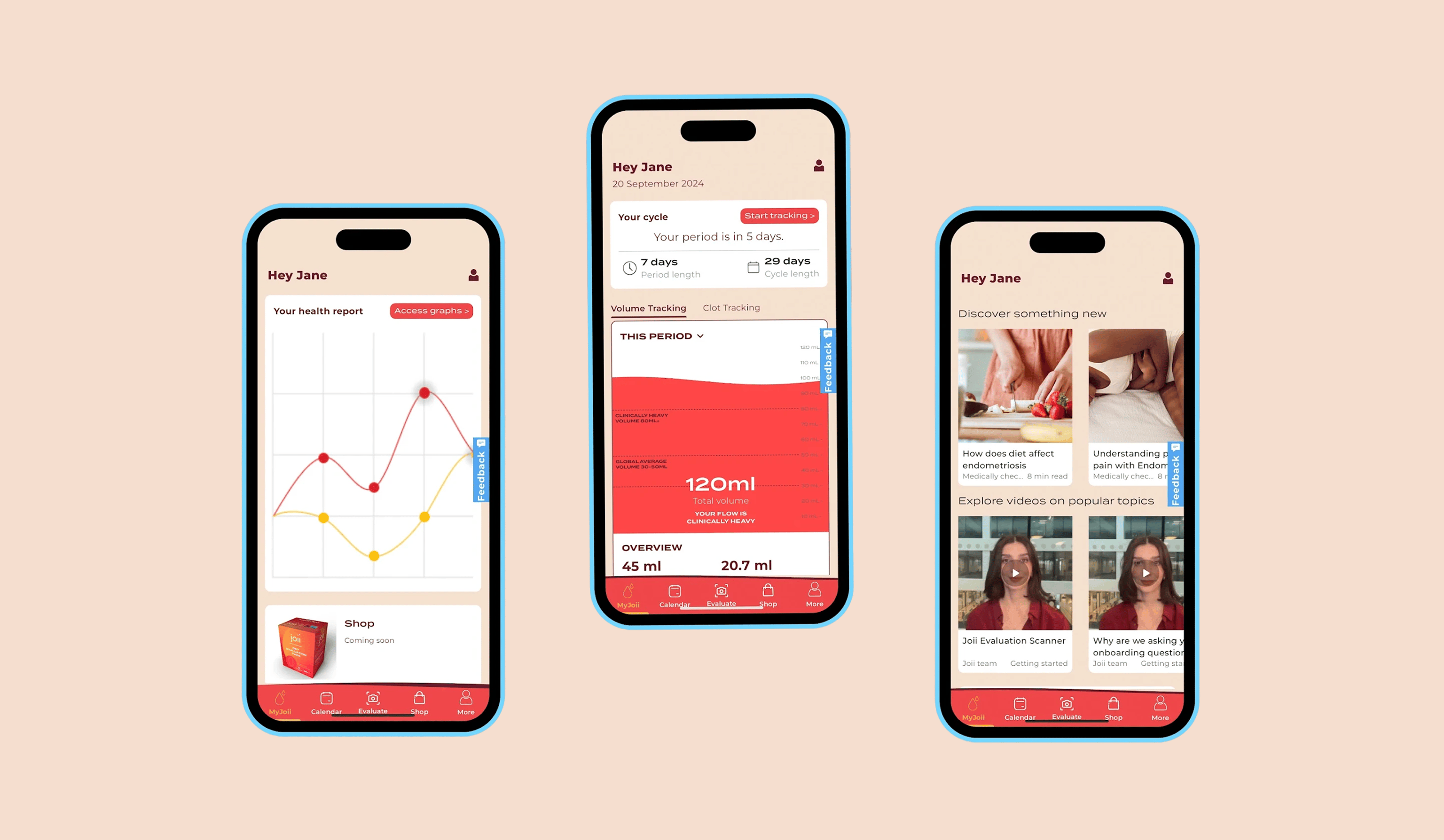
Joii, a Dublin-based femtech startup, wanted to replace the guesswork in menstrual health tracking with actual measurement. Patients describe their flow to clinicians in adjectives, which makes conditions like heavy menstrual bleeding hard to diagnose and easy to dismiss. Monterail built a hybrid Flutter app for iOS and Android with an AI computer vision scanner that analyzes a photo of a used period pad and converts it into quantified data: flow volume to milliliter-level precision, clot detection, and cycle trends. The scanner reaches 99% accuracy, the product carries Class I Medical Device certification in the UK, and the technology is protected by multiple patents. It launched free on both stores in 2025. You can read the full Joii case study for the technical detail.
How Much Does Monterail Mobile App Development Cost?
Monterail's Clutch profile lists an average hourly rate of $25 to $49, which places it at the affordable end of the European market and well below the $40 to $80 Eastern European benchmark. Minimum project size is $10,000, though the most common engagement across 45 reviews falls between $50,000 and $199,999, and individual projects have run from $30,000 to over $1 million. Its rating for cost is 4.4 out of 5, the lowest of the seven companies here, which reflects a company that competes on delivered outcome rather than on the invoice. As one CTO put it in the quotes below, the lowest hourly rate is not the pitch.
What Do Clients Say About Working With Monterail?
"We moved from reactive scheduling to proactive, data-driven decisions. The ability to see a prototype in one day and scale it to an enterprise-ready solution so quickly was a game-changer for our resource management." - Bram Verstraeten, Senior Project Manager, SPIE Belgium
"I was impressed with the speed at which Monterail was able to grasp a complex and niche industry and translate that into a clear and practical system structure. I have confidence in their understanding of both the product vision and commercial context." - Amelia Christie, Limited Director, Christie Constructive
"If you want to outsource your coding to the lowest hourly rate, then Monterail aren't for you. If you want to build winning products at pace, then Monterail need to be on your shortlist." - Alan Buxton, CTO, Simfoni
Reviewers are consistent about engineering strength and onboarding speed. The recurring criticism in older Clutch reviews is design: some clients brought in outside designers for specific visual work. The 2025 acquisition of ElPassion, a product design and development agency, was a direct answer to that gap, though buyers with a heavy brand-design component should still ask to see recent design portfolios rather than assume it.
Why Do Businesses Choose Monterail?
Deep regulated-industry experience, with 75+ healthcare applications shipped and Class I medical device work already through certification
Teams operate in US-friendly hours from Poland, which removes most of the async lag that makes offshore delivery painful
An AI-assisted development approach applied to how the teams themselves build, which is where the delivery speed comes from
Clients stay: the Cooleaf partnership has run 12 years and scaled from startup to 110,000+ users across 103 organizations
Rates in the $25 to $49 band buy enterprise-grade engineering that would cost three to five times as much in North America
MindSea
MindSea is a digital health specialist in Halifax, Nova Scotia, founded in 2007 and deliberately kept small at 10 to 49 people. It serves clients across the US and Canada and turns down work outside its focus. Mobile app development and custom software each account for 40% of its service mix, with UX design and IoT making up the rest. Every team member is trained on privacy guidelines, and the company builds to HIPAA, PIPEDA, PIPA, and GDPR as a matter of internal process rather than as a project add-on. Apps built by MindSea have been featured in both the App Store and Google Play.
Example project by MindSea
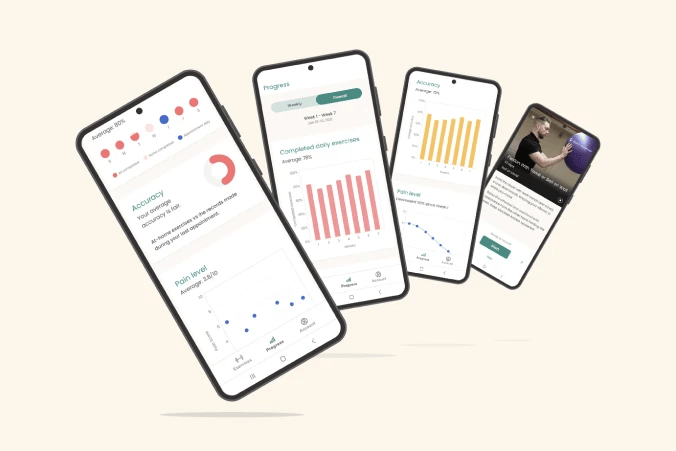
Halterix founder Dr. David Burns, an orthopedic surgeon, discovered during his PhD research that a smartwatch's sensors alone could recognize and evaluate human motion. His clinical motivation was blunt: too many surgeries happen that better physical therapy adherence would have prevented, and no clinician can see what a patient actually does at home. Measuring that had previously required at least three wearable sensors. MindSea visited physical therapy sites to watch how people really move through their sessions, then helped build a first-of-its-kind system connecting a smartwatch app, a patient app, a practitioner app, and a server running the AI engine. A key design finding came from asking users directly whether being scored by their watch felt invasive; it did not, as long as the data went to their therapist rather than an insurer. Halterix has since beta-tested in multiple clinics across Canada, with the Sunnybrook Research Institute monitoring clinical research.
How Much Does MindSea Mobile App Development Cost?
MindSea is the most expensive company on this list, billing $150 to $199 per hour, roughly triple the Eastern European average and in line with senior North American rates. Minimum project size is $10,000, and the most common engagement across 31 reviews sits between $50,000 and $199,999, with the full range running from $10,000 to over $1 million CAD. Its rating for cost is 4.7 out of 5, which is high for a premium shop and tells you clients feel the rate is justified. Some reviewers do note that final costs ran above what they had budgeted, so lock scope carefully at the estimate stage.
What Do Clients Say About Working With MindSea?
"The company's best quality is their ability to 'really' listen and transition the clients thoughts into an executable plan." - Rachel Boryachinskiy, CEO Development & Operations, Healthcare Deciphered
"What I find to be the most impressive about MindSea is the way in which each person I have interacted with takes the time to explain things and make sure that we understand and are comfortable with what is going on." - Kelsey Mazzuca, Director of Operations, The Skogen Company Inc.
"MindSea has been very responsive. The team has been supportive in helping us with various written materials and design sketches that we've been able to include in our grant proposals." - Alex Mariakakis, Computer Science Assistant Professor, University of Toronto
Design and UX quality is the most frequently praised part of the service. The honest counterweight is proactive communication: several clients wanted earlier warning about timeline shifts and unexpected issues rather than answers on request.
Why Do Businesses Choose MindSea?
Nearly two decades focused on one vertical, which shows up as clinical fluency rather than generic healthcare vocabulary
Privacy and compliance built into the internal design process, covering both Canadian and US regulatory requirements
Small team, senior people, direct access, with no account layer between you and the engineers
A track record of producing artifacts clients reuse in grant applications and investor conversations
Same time zone as US and Canadian clients, which matters more than most buyers expect on a design-heavy build
Cogniteq
Cogniteq has been building software since 2005 and is the most mobile-concentrated company here: mobile app development accounts for 75% of its service lines, and Clutch certifies it in that category. The team is 150+ full-time specialists working from offices in Poland and Lithuania, and has delivered 300+ projects for 100+ clients across more than 30 countries. Its security posture is unusually well documented for a mid-size firm: SOC 2 Type 2 examination completed, plus ISO/IEC 27001 and ISO 9001:2015 certification. Specialisms include IoT, eLearning, AR/VR, live streaming, and video broadcasting.
Example project by Cogniteq
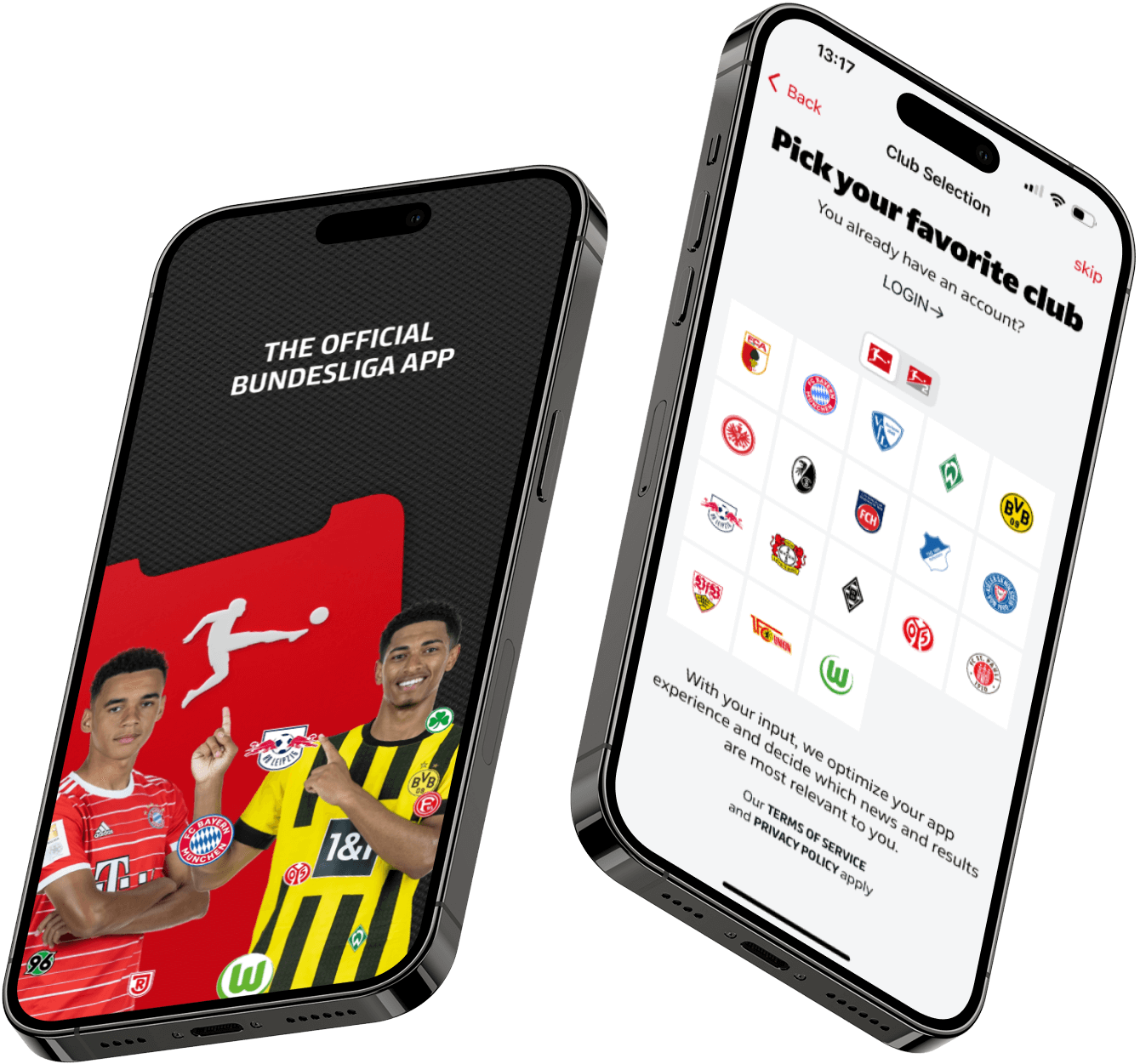
A league of German football clubs, Bundesliga, came to Cogniteq with a two-part problem. Their public fan app needed to be better, and the PR managers at individual clubs had no shared tooling, so league-wide messaging was inconsistent and coordination happened over email. Cogniteq improved the existing fan-facing app and built new native iOS and Android apps for internal club use, using Java, Objective-C, RxJava, and Dagger. The public app gained new features and UX improvements that increased fan engagement; the internal tool gave PR staff a single place to coordinate, which produced consistent messaging across the league for the first time.
How Much Does Cogniteq Mobile App Development Cost?
Cogniteq bills $50 to $99 per hour, squarely in the mid-market band where most credible European firms sit. Minimum project size is $10,000, and the most common engagement across 18 reviews comes in under $49,999, which makes it one of the more accessible options for a first mobile build or a platform port. Its rating for cost is 4.9 out of 5, the joint highest here. Clients repeatedly describe the pricing as affordable relative to what they received, and several mention that Cogniteq presented solution options with explicit cost and trade-off breakdowns so they could pick against budget.
What Do Clients Say About Working With Cogniteq?
"We were impressed by Cogniteq's work culture and continuous availability." - Steven Braun, CEO, Directional GmbH
"The team was always in touch addressing all the questions from our side and providing options of possible solutions with detailed descriptions of pros and cons so that we could choose the one that fits our needs and budget." - Alexander Ehm, CEO, Visions 101 GmbH
"Thanks to the contribution from the highly talented Cogniteq staff we implemented the Native Mobile Application on both iOS and Android platforms. The workflow between our teams was easy and adaptive. On top, Cogniteq helped us increase knowledge of swift (iOS) and Kotlin (Android)." - Jan-Willem Luijters, Head of Delivery, Cellpoint Digital
The one recurring caveat is English proficiency: communication with project managers is praised consistently, but a few clients noted that fluency varied among individual engineers. If your model involves direct daily contact with developers rather than a PM, interview the specific people.
Why Do Businesses Choose Cogniteq?
Mobile is the core business at 75% of service lines, with Clutch certification in the category to match
SOC 2 Type 2 plus ISO 27001 gives procurement teams a documented answer on data handling
Genuine native depth in Swift and Kotlin, including knowledge transfer to client teams
Two decades of continuity, with several clients returning across multiple projects and platform ports
Cost rating of 4.9 out of 5 from clients whose typical project came in under $50,000
Waverley Software
Waverley Software was founded in 1992 by Matt Brown in Silicon Valley and is headquartered in Palo Alto, California, making it by far the oldest company on this list. It now runs a distributed team of 300+ specialists across three continents, with delivery centers built out over three decades in Romania, Bulgaria, Ukraine, Vietnam, Poland, and Latin America. All technical talent is in-house and never subcontracted, which is a meaningful distinction in a market where a lot of "300-person firms" are brokerages. AI development is now 45% of the service mix, and the company started life building first-generation mobile applications, so mobile is founding territory for it. Clients range from Fortune 500 companies to funded startups, including automotive work with Toyota.
Example project by Waverley Software
Addus is a national home care provider running 300+ home care contracts, 30,000 consumers weekly, and 120 offices across 21 states. Its field employees managed client relationships and internal communication by phone. Waverley began work in 2013 on the Addus Mobile Portal, a cross-platform app consolidating open, scheduled, and completed visits, announcements, message transcripts, and payroll into a single tool, with a browser build so the same information was reachable from tablets and desktops. The original design brief had missed several mobile-specific realities, so Waverley produced a free prototype in under a week with usability recommendations; Addus reviewed it and commissioned a full UI/UX design off the back of it. The technical constraint was supporting older Android and iOS versions on a JavaScript-based app, which ruled out heavy animation and pushed the team toward a deliberately simple interface.
How Much Does Waverley Software Mobile App Development Cost?
Waverley bills $50 to $99 per hour despite the Palo Alto headquarters, because delivery happens from its European and Latin American centers. Minimum project size is $50,000, and the most common custom software engagement across 16 reviews falls between $200,000 and $999,999, with the full spread running from $10,000 to over $2 million. Its rating for cost is 4.7 out of 5. This is the profile of a firm built for programs rather than projects, so a single-app MVP is not the natural fit.
What Do Clients Say About Working With Waverley Software?
"This was truly staff augmentation - the Waverley crew was part of the team. They're experts in their respective fields and proactively share suggestions at all stages of the process, from system design to requirements to QA automation to DevOps optimization." - Bridges Smith, VP Product, Financial Management Company
"I was most impressed with how Waverley Software let us engage with their developers since we had a lot of say in selecting our team." - David Fitzjarrell, SVP of Engineering, NTRINSEC Inc.
"We were impressed with their accessibility and ability to provide us with technical employees who can deliver our needs." - Patrick Rousseau, Co-Founder & Partner, XetaOne Inc.
Reviews cluster around the staff augmentation model working as advertised, with clients getting real input into who joins the team. As with several distributed firms here, a minority of clients reported minor language barriers that took some adjustment.
Why Do Businesses Choose Waverley Software?
Thirty-plus years of continuous operation through multiple downturns, which is the clearest available signal that a vendor will outlast your roadmap
Clients select their own team members rather than receiving assigned resources
In-house talent only, so the people on your standup are Waverley employees with Waverley accountability
Delivery centers across Europe and Latin America give real time zone coverage for US teams
Proven capacity for $200,000 to $2 million programs where scaling a team quickly is the actual requirement
Momentum
Momentum is a healthcare software specialist in Wrocław, Poland, founded in 2016 as Applover and renamed in 2024 after shifting focus entirely to digital health. It has delivered 100+ healthcare applications and 220+ projects overall for clients across the US, UK, and Europe, including Kilo Health, Egis Pharmaceuticals, Telemedi, Airly, and Plenty of Fish. The team holds ISO 13485 certification for medical device software, has appeared in the Financial Times FT1000 in both 2023 and 2024, won a Forbes Diamond in 2023, and features in Deloitte's Fast 50. Momentum also maintains an open-source HealthTech toolkit that every client gets access to: Terraform HealthStack for HIPAA-compliant infrastructure, FHIR-based EHR integration frameworks, an AI notetaker for medical documentation, and FHIRboard for health data analytics.
Example project by Momentum
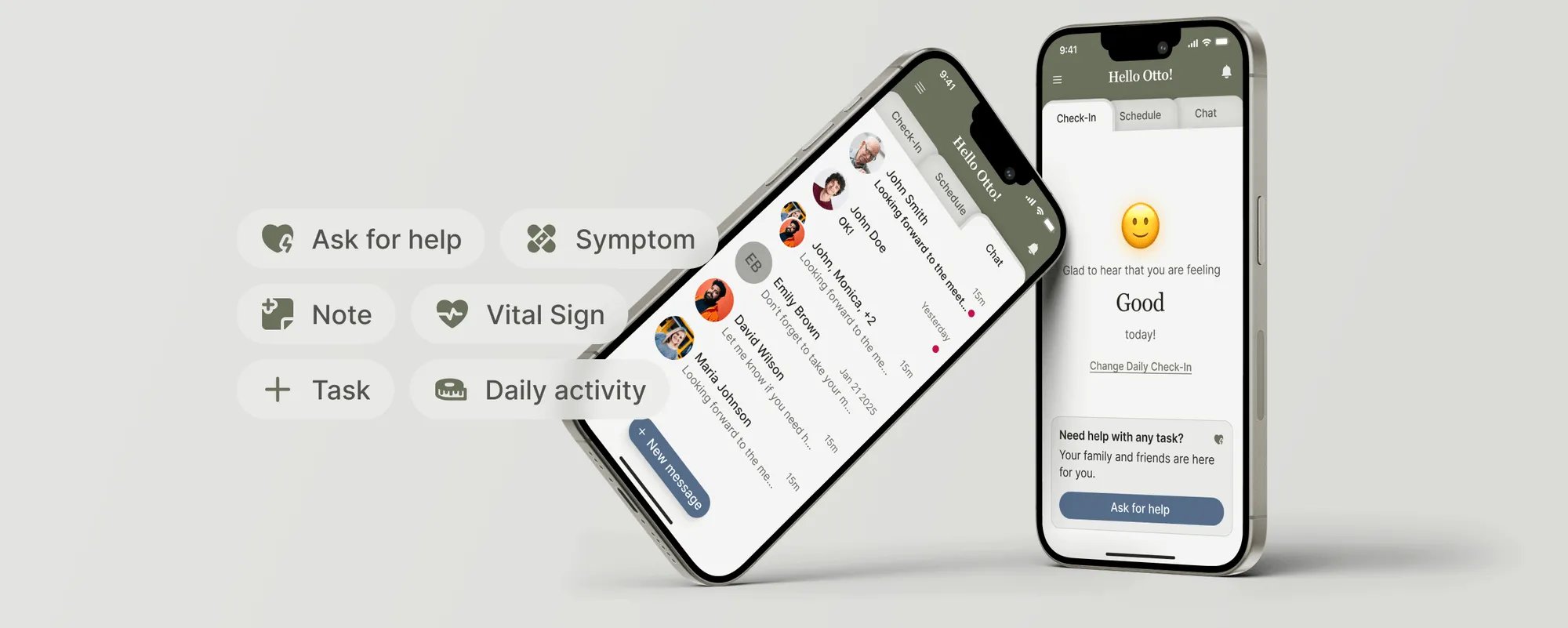
Wynter Johnson founded Caily after her family struggled to coordinate her grandmother's care across phone calls, missed medication schedules, and scattered records. The 53.4 million American family caregivers face the same gap: either spreadsheets and group texts, or clinical software designed for hospitals. Momentum built the platform from scratch, using Ruby on Rails and PostgreSQL on the backend, Flutter for iOS and Android, and React for web, on HIPAA-ready AWS infrastructure with EHR connectivity architected for Epic, Cerner, AthenaHealth, and others. The hardest technical problem was permissions: Caily's core idea is that the care receiver controls their own coordination, so someone needs to be able to share a mood check-in with one adult child and not another, without the family losing the coordination thread. Caily launched on schedule in July 2025 across iOS, Android, and web with zero downtime, all five MVP modules delivered within timeline and budget.
How Much Does Momentum Mobile App Development Cost?
Momentum bills $50 to $99 per hour with a $50,000 minimum project size, the higher entry point reflecting a compliance-heavy practice where discovery and regulatory groundwork are non-negotiable. The most common custom software engagement across 13 reviews falls between $10,000 and $49,999, which suggests a mix of smaller follow-on work alongside larger builds. Its rating for cost is 4.8 out of 5. Specific project costs are not disclosed in its Clutch reviews, so treat the healthcare mid-complexity benchmark of $75,000 to $200,000 as the planning range for a first HIPAA-scoped app.
What Do Clients Say About Working With Momentum?
"What impressed us most was Momentum's deep understanding of the healthcare technology ecosystem combined with their technical expertise. Their team didn't just build what we asked for—they brought valuable insights that improved our product." - Wynter Johnson, President & Co-Founder, Caily
"The way Momentum presented their proposal was incredibly clear and comprehensive. I could walk into a meeting with our investors, show them the detailed breakdown of resources, timelines, and deliverables, and feel confident that we were making the right decision for Caily's development." - McKenna McCormick, Vice President & Co-Founder, Caily
"What I found most impressive about Applover is their ability to navigate complex challenges with ease and efficiency. They demonstrated high proficiency in adapting our app to handle diverse and complex medication schedules." - Tomasz Smal, Senior Digital Marketing Specialist, Egis Polska
Reviews written before the 2024 rename still refer to the company as Applover, so search both names when you do your own diligence. The recurring criticism is that early technical communication was pitched too high for non-technical stakeholders, though clients note the team adjusted once told.
Why Do Businesses Choose Momentum?
ISO 13485 certification, which is the specific standard that matters if your product may ever be classified as a medical device
An open-source HIPAA infrastructure and FHIR integration toolkit that removes weeks of setup from the start of a project
Documented experience with EHR systems including Epic, Cerner, AthenaHealth, Veradigm, and AllScripts
Proposals detailed enough that founders have taken them straight into investor meetings
Willingness to push back on client assumptions, which several reviewers cite as the reason they stayed
Ingsoftware
Ingsoftware is a full-cycle product company in Niš, Serbia, founded in 2009 by Nenad Ilijic, who left a secure job to build a software company in his home city. The team is now 150+ engineers, designers, and analysts who have shipped 200+ projects for 100+ clients. The service mix is deliberately broad: custom software at 30%, web at 25%, mobile at 15%, plus generative AI, IT strategy consulting, and UX design. An advisory board covering corporate finance, executive search, and Silicon Valley venture experience sits alongside the leadership team, which is unusual for a firm this size and shows up in how it engages with early-stage clients.
Example project by Ingsoftware
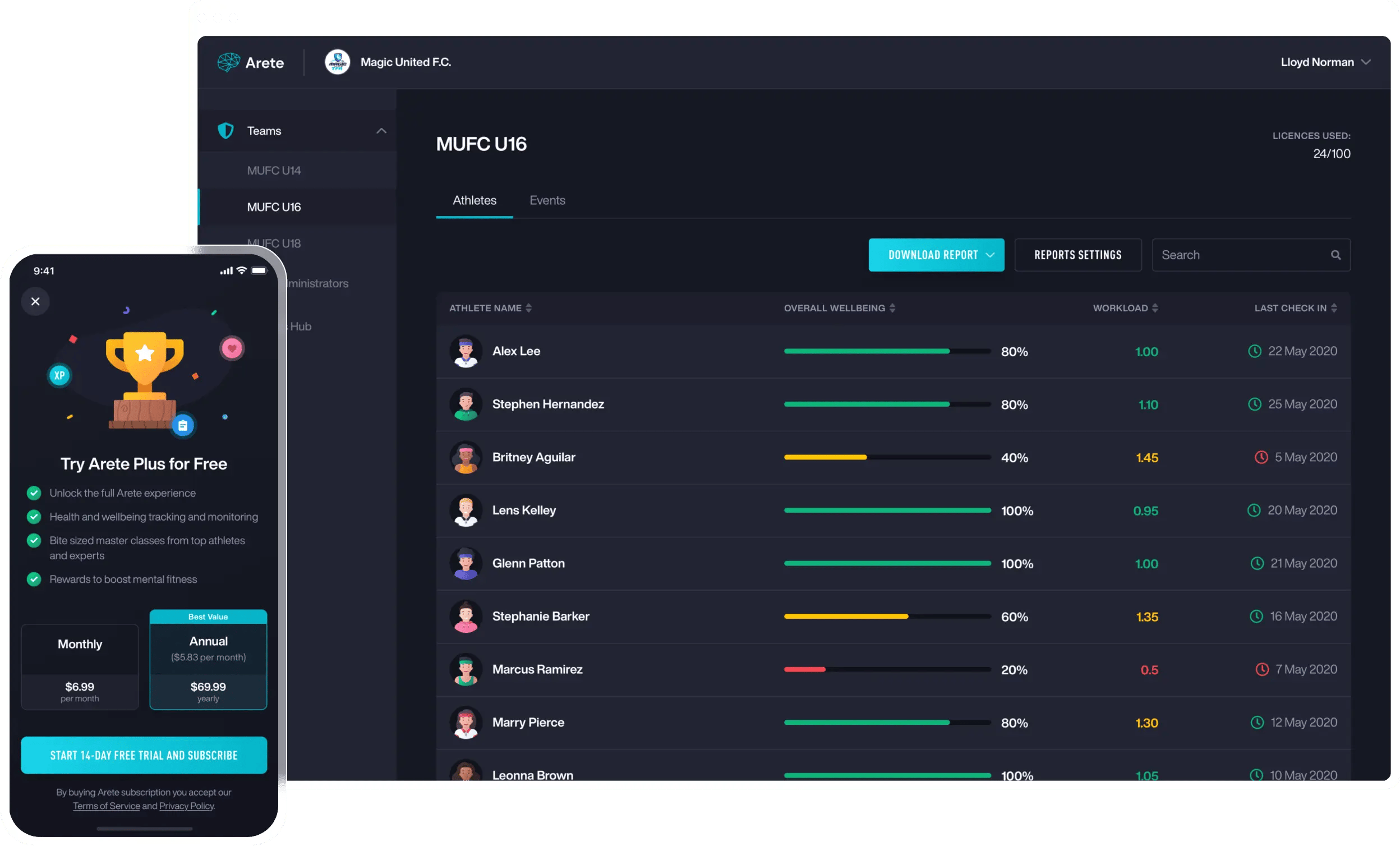
Arete is a Melbourne startup founded by people who understood the pressure young athletes are under, and who noticed that youth sport obsesses over physical conditioning while ignoring mental stamina. Over a one-year engagement with a nine-person team spanning product design, illustration, iOS, Android, backend, and QA, Ingsoftware built a mobile well-being coach for young athletes. Instead of a profile photo, users build an avatar during signup while an AI-powered chatbot talks them through it, then guides them to mental exercises written by sports psychologists. The retention mechanic is gamified: completing a task or a challenge routine earns experience points and badges, and athletes can share their wellness stats with coaches or parents. The whole product is built around habit formation rather than content delivery, which is the reason it works for teenagers.
How Much Does Ingsoftware Mobile App Development Cost?
Ingsoftware bills $50 to $99 per hour with a $10,000 minimum project size. The most common engagement across 27 reviews lands under $49,999, though several documented projects run between $50,000 and $200,000. Its rating for cost is 4.6 out of 5. For a design-led build with a full multidisciplinary team, that combination of low entry point and mid-market rate is the most accessible on this list outside SapientPro.
What Do Clients Say About Working With Ingsoftware?
"I was most impressed by Ingsoftware's speed, as well as the number of times they went above and beyond." - Tim Hebel, Owner, Beanstalk Games
"We were impressed with their expertise and proactive approach, which led to excellent work and timely delivery." - Mauricio Morales-Bilbao, Partner, Aktagold
"Their dedication to our project was above standard. It felt like this was their project too." - Grzegorz Gwoźdź, Technical Director, Svexa
MVP delivery on schedule is the most consistent theme across reviews. A few clients wanted deeper expertise in specific commerce platforms such as nopCommerce and BigCommerce, so confirm platform-specific experience if your build depends on one.
Why Do Businesses Choose Ingsoftware?
Full product teams on a single engagement, covering product design, illustration, both mobile platforms, backend, and QA
Repeated success launching MVPs on schedule, which is the metric that decides whether a seed round gets extended
Serbian rates with Western European delivery standards and overlapping hours for European clients
An advisory board with real venture and corporate finance experience, useful for founders who need more than code
Clients extend rather than churn, with several turning a first project into an ongoing relationship
SapientPro
SapientPro is a software company registered in Luzern, Switzerland, founded in 2016, with 70+ specialists working across three time zones and five languages. It has delivered 200+ projects and holds a perfect 5.0 rating on Clutch from 36 verified reviews. The service mix is broad, with custom software, UX design, and web development each at 20%, and mobile app development at 10%, alongside AI, API, and blockchain work. That makes SapientPro a generalist that does mobile rather than a mobile house, which is worth knowing up front. Its leadership team is unusually credentialed for its size, including a CTO with a PhD in applied mathematics.
Example project by SapientPro
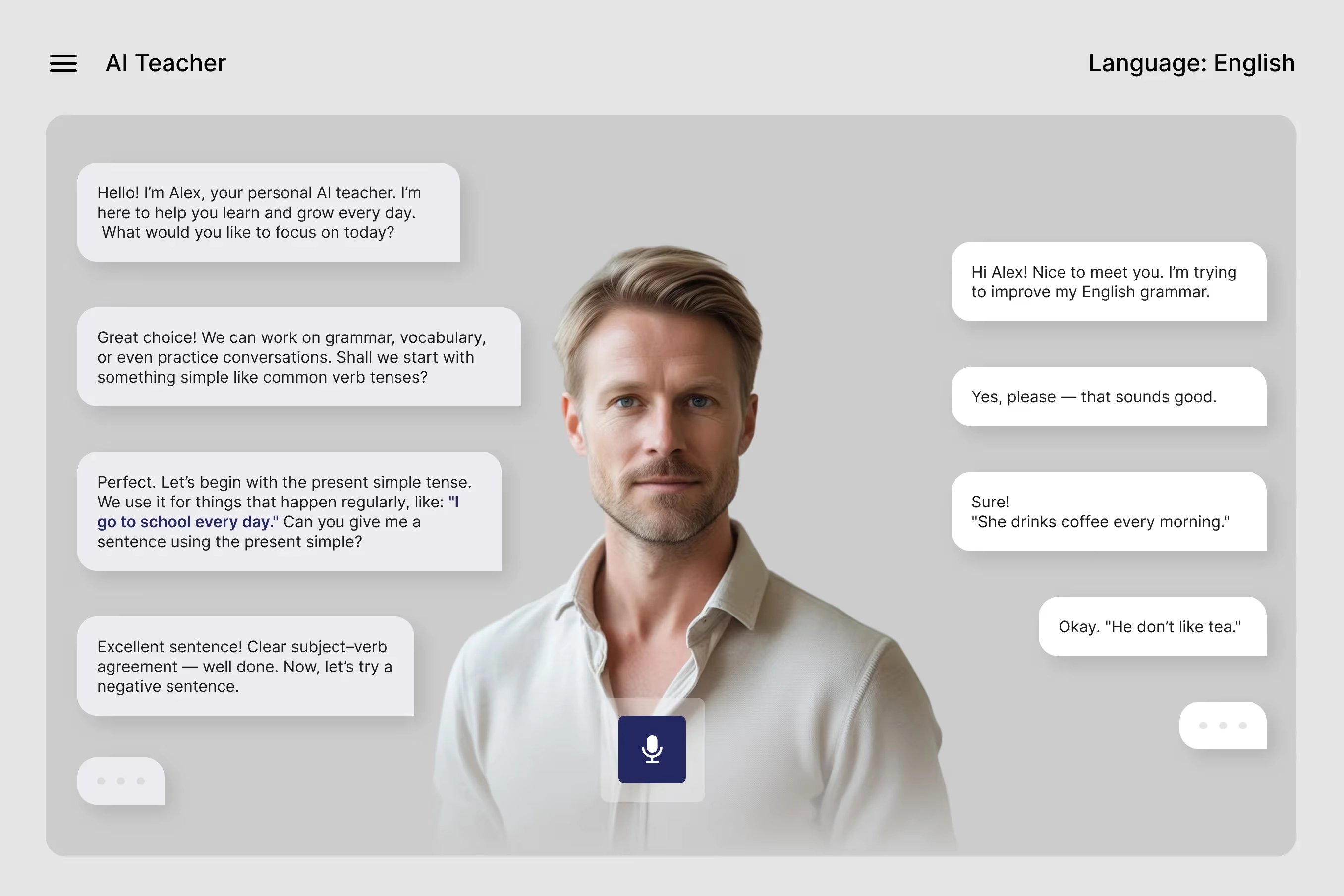
In December 2024, a Dutch language school approached SapientPro to build a voice-enabled AI teacher. The result, delivered by March 2025, is a cross-platform mobile app where students hold live conversations with animated avatars that correct pronunciation as they speak. The engineering problem was latency: to feel like a conversation rather than a query, the system had to capture voice input, generate a response, and produce spoken output within milliseconds, while animating facial expressions in sync and supporting multiple simultaneous learners without performance drops. SapientPro built a custom low-latency speech engine on NestJS, PostgreSQL, Next.js, Azure AI Services, and OpenAI, and added phoneme-level pronunciation scoring delivered mid-conversation rather than in a post-session report. Total project volume was 300 hours with a team of two.
How Much Does SapientPro Mobile App Development Cost?
SapientPro has the lowest entry point on this list: $25 to $49 per hour with a $5,000 minimum project size. The most common engagement across 37 reviews comes in under $49,999, with documented projects running from $12,000 to over $500,000. Its rating for cost is 4.9 out of 5, joint highest here. For a proof of concept or a scoped AI feature on an existing app, this is the cheapest credible way onto the list. The 300-hour language learning build gives you a concrete reference: at the top of that rate band, roughly $15,000.
What Do Clients Say About Working With SapientPro?
"I'm super excited about where we are with the platform's modules, which is a testament to SapientPro's skill." - Onno Halsema, CEO, Contentoo
"They delivered on time and accommodated multiple extensions as our plans and feature set evolved." - Luke Baker, Founder, Zenyte Ltd
"Their speed of issue resolution and delivery quality was impressive." - Gaurav Singh Basnyat, Digital Programme Dev Manager, Norwegian Refugee Council
Speed, English proficiency, and flexibility on changing scope come up repeatedly. The criticism to weigh is QA: some clients asked for more thorough code review and technical testing before final delivery, which is the trade-off you should expect at this price point. Budget for your own acceptance testing.
Why Do Businesses Choose SapientPro?
A $5,000 minimum makes it viable for proof of concept work that most agencies will not quote
Genuine AI engineering depth, including real-time voice systems and computer vision, not chatbot wrappers
A perfect 5.0 Clutch score across 36 reviews, which is rare at any size
Accommodating on scope changes mid-engagement, cited by multiple clients as the reason projects finished
Swiss-registered and operating across five languages and three time zones, which suits European buyers with procurement or contracting constraints
What Makes a Great Mobile App Development Company?
A great mobile development company is distinguished by what happens after launch: domain fluency in your vertical, a clean release record with the app stores, research that shapes the product, team continuity, and honest cost conversations at proposal stage. Every firm on this list can write Swift, Kotlin, Flutter, and React Native, so the stack is rarely the deciding factor.
Does the team know your industry, or just your framework?
Very few agencies can tell you which of Apple's HealthKit permissions will get your submission rejected, or what an FHIR integration actually costs in engineering weeks. That knowledge is expensive to acquire and cheap to verify. Momentum's ISO 13485 certification and Monterail's 75+ shipped healthcare apps carry more weight on a regulated build than any framework preference.
What is their app store release record?
Apple reviewed roughly 7.77 million submissions and rejected close to 25% of them, and the leading causes were compliance details rather than engineering failures: a broken support URL, a privacy policy that contradicted the App Privacy disclosure, a missing account deletion flow, and third-party libraries shipping without privacy manifests. Ask a prospective partner how many rejections they have had in the last year and what caused them. A team that answers specifically has been through it, and a team that claims a perfect record has probably not shipped much.
Is design a research practice or a decoration phase?
MindSea's Halterix work started by visiting physical therapy clinics to watch how patients actually move, and by asking users directly whether smartwatch scoring felt invasive. Ingsoftware built Arete's retention mechanics around habit formation because teenage athletes ignore content libraries. Research at that stage changes what gets built, which is a different job from making the built thing look good.
Will the same people still be there in year two?
Ask who specifically will be assigned, whether you get to interview them, and what the firm's average tenure looks like. Waverley lets clients select their own team members, and says many of the core team it built in its first decade are still with the company. Firms that answer only in role titles and headcount are selling capacity rather than a team.
Do they talk about money honestly before you sign?
The firms whose clients rate them 4.8 or higher on cost are consistently described as presenting options with explicit trade-offs attached. Cogniteq's reviewers mention receiving solution alternatives with documented pros, cons, and prices so they could choose against budget. That behavior at proposal stage predicts how a vendor handles a scope change at month six.
How Much Does Mobile App Development Cost in 2026?
Mobile app development in 2026 costs between $15,000 for a narrow single-platform MVP and $500,000 or more for a complex platform, with most business apps landing between $50,000 and $120,000. The single biggest variable is where your team sits, and the second is how complex the app is. According to Second Talent's 2026 rate survey, global developer rates fell roughly 9% to 16% over the past year as AI tooling compressed delivery time. Total budgets stayed flat, because teams spent the savings on AI features, deeper integrations, and richer analytics.
Hourly rates by region
Region | Typical hourly rate | Notes |
|---|---|---|
United States and Canada | $120–$250 | Senior engineers commonly $130–$200; the only band where same-time-zone senior product leadership is standard |
Western Europe | $80–$150 | Strong regulatory and design depth, premium for GDPR-native teams |
Eastern Europe (Poland, Serbia, Baltics, Ukraine) | $40–$80 | Best quality-to-cost ratio in the market; most firms on this list sit here |
Latin America | $40–$85 | Growing fast, valued for US time zone overlap |
India | $25–$55 | Lowest rates; management overhead usually higher |
Southeast Asia | $29–$72 | Mid-level $29–$50, senior $46–$72 |
Headquarters and delivery location are different things. Waverley is headquartered in Palo Alto and bills $50 to $99 because engineering happens in Europe and Latin America. Always read the delivery center list rather than the address in the website footer.
Project cost by complexity
App complexity | Engineering hours | Typical total cost | What that buys |
|---|---|---|---|
MVP, single platform | 300–500 | $15,000–$35,000 | Core flow only, one platform, minimal backend |
Simple app | 400–700 | $30,000–$75,000 | Both platforms, standard auth, basic backend |
Mid-complexity | 800–1,500 | $75,000–$200,000 | Accounts, payments, push, third-party APIs, analytics |
Complex platform | 2,500–5,000+ | $200,000–$500,000+ | Multi-role systems, real-time features, regulated data, EHR or ERP integration |
Cross-platform frameworks cut 30% to 60% off the cost of building separate native apps, which is why Flutter and React Native dominate the mid-market. That saving is real but not free: animation-heavy and hardware-integrated products still favor native, which is why Monterail built Joii's scanner in Flutter but Elvie's pump control natively over Bluetooth.
The costs that do not appear in the quote
Budget 15% to 20% of your build cost per year for maintenance, starting the month you launch. On a $200,000 app that is $30,000 to $40,000 annually, covering OS updates, SDK deprecations, security patches, and store policy changes. Store fees are trivial by comparison: $99 per year for Apple, $25 once for Google Play. The variable costs that actually move are infrastructure, API usage, and support, all of which scale with users, so model them as ranges at several user-volume scenarios rather than as line items.
Fixed Price, Time and Materials, or Dedicated Team: Which Model Fits?
All three engagement models differ on one axis: who carries scope risk, and what flexibility you get in exchange.
Model | You pay for | Scope risk sits with | Best when |
|---|---|---|---|
Fixed price | An agreed deliverable | The vendor | Requirements are genuinely stable and documented; you have limited technical bandwidth to manage a team |
Time and materials | Hours worked at agreed rates | You | Scope will evolve, discovery is ongoing, or you want to reprioritize between sprints |
Dedicated team | A retained squad, monthly | Shared | Long-running product work where accumulated domain knowledge compounds |
Fixed price sounds safest and often is not. The vendor prices your uncertainty into the quote, then defends the original scope when you learn something in week six, which is exactly when you should be changing direction. It works when the specification is genuinely finished.
Time and materials has largely stopped being uncapped. Most 2026 contracts include a not-to-exceed clause that preserves flexibility while capping exposure, which is close to the best of both. Ask for capped T&M by name.
Dedicated team is the right answer more often than buyers expect, and it is what the longest partnerships on this list run on. Monterail's twelve-year Cooleaf engagement and Waverley's staff augmentation work both depend on the same people staying long enough to know the product better than a new hire would. The trade-off is a standing monthly commitment.
The most common effective structure is a hybrid: time and materials for discovery, then fixed price for a well-defined build phase, then a dedicated team for ongoing product work.
How Do You Choose the Right Mobile App Development Partner?
Shortlist three firms whose existing work most resembles what you are building, then run the same five checks on each.
Ask for a reference from a project that went wrong. Every vendor has one. What matters is how the firm behaved once it did: who raised the problem, how fast, and what it cost the client. A vendor who cannot produce this reference has either not been building long or is not being straight with you.
Interview the assigned team. Request names and CVs for the people who will actually do the work, and speak with the tech lead before signing rather than the sales engineer. Waverley's clients cite team selection as a specific reason for choosing them, so treat reluctance here as informative.
Get the maintenance figure in writing before the build figure. A partner who quotes $180,000 for the build and goes quiet on year two support has quoted you half a project. Ask for the annual number as a percentage of build cost and exactly what it covers.
Compare estimates, not prices. Give each shortlisted firm the same brief and look at how they break it down. The useful response questions your assumptions, flags the two features that will cost far more than you expect, and shows hours by workstream. A quote that arrives as a single number tells you nothing.
Read the reviews for the complaints. Every profile above includes the recurring criticism from that company's reviews, because that is the part that predicts your experience. Design gaps, English fluency, QA depth, and communication cadence are all manageable when you know about them in advance and expensive when you discover them in month three.
Red flags worth walking away from
No named individuals on the proposed team, only role titles and headcount
A fixed-price quote produced without a discovery phase on a product with unfinished requirements
No answer on App Store rejection history, or a claim of never having had one
Compliance treated as a later phase on a product that handles health or financial data
Sales conversations led by someone who never brings an engineer into the room
Which Mobile App Development Company Fits Your 2026 Roadmap?
The most useful finding from comparing these seven is that price and quality have almost fully decoupled by geography. MindSea at $150 to $199 an hour and Monterail at $25 to $49 both ship regulated medical software that passes certification. What separates them is structure: a ten-person Nova Scotia boutique in your time zone with deep US healthcare fluency, against a 130-person Polish organization that can put a full product team on the problem and keep it there for a decade. Both are correct answers to different questions.
Start from your constraint rather than your budget. If it is regulatory, shortlist the firms with the certification your product will need. If it is time zone, that eliminates more options than rate ever will. If it is runway, the $5,000 and $10,000 minimums on this list exist for a reason. Then let rate break the tie, because by that point it is the least informative variable you have.
If you are building in healthtech, fintech, or another regulated space and want a partner who has already been through certification, talk to Monterail about your product.
Key Takeaways
Mobile development rates in 2026 fall into three bands: $25 to $50 at the entry level, $50 to $99 across most credible European and Latin American firms, and $120 to $250 in North America. Delivery location matters more than headquarters location.
Budget 15% to 20% of your build cost annually for maintenance from launch day. A vendor who omits this from the proposal is quoting you an incomplete project.
Apple rejected close to a quarter of the 7.77 million app submissions it reviewed, and most rejections came from compliance details such as privacy policy mismatches, missing account deletion, and absent privacy manifests rather than from broken code.
Cross-platform frameworks save 30% to 60% against separate native builds, but hardware integration and animation-heavy interfaces still justify native development.
Capped time and materials has become the default sensible contract in 2026, preserving the flexibility of T&M while giving you the ceiling that makes fixed price attractive.
Sources for the benchmark data: Clutch app development pricing directory, Business of Apps app development cost research, Netguru mobile app development cost guide, Second Talent developer rates by country, Cleveroad app maintenance cost guide, ScienceSoft on time and materials versus fixed price, AppFollow App Store review guidelines. Company data is drawn from each firm's Clutch profile and website as of August 2026.
Mobile App Development Companies FAQ

Grzegorz Hajdukiewicz
Chief Delivery Officer

With over a decade of experience in the IT industry, Grzegorz has a proven track record of delivering complex projects on time and on budget. At Monterail, he leads a team of dozens of developers, designers, project managers, and business analysts, ensuring the successful delivery of software solutions for clients worldwide. Passionate about agile methodologies and continuous improvement, he constantly seeks new ways to optimize the delivery process.