The New Default. Your hub for building smart, fast, and sustainable AI software
Table of Contents
Executive Summary
Most companies have already adopted AI, yet very few see it reach their bottom line. McKinsey reports that 88 percent of companies have deployed AI in at least one function, but 94 percent have not achieved a significant impact on EBIT. MIT's 2025 research found a similar pattern: roughly 95 percent of generative AI pilots deliver no measurable profit-and-loss impact, according to reporting by Fortune.
The choice of partner moves those odds. In the same MIT study, buying from specialized vendors and building partnerships succeeded about 67 percent of the time, while internal-only builds succeeded at roughly a third of that rate. Choosing well is the difference between an expensive pilot graveyard and AI that changes how your business performs.
An AI development company is a service vendor that designs, builds, and ships AI and machine learning into your products, services, or internal operations.
The best way to choose one is to watch how it behaves before any contract is signed: a strong partner starts with your business problem and a small, measurable experiment, while a weak one starts with a buzzword-heavy demo. That single behavioral signal predicts more about your eventual return on investment than any slide in a sales deck.
This guide is written for the people who sign off on that decision: CTOs, CEOs, founders, board members, and the technical and non-technical managers who have to live with the result. It covers what to evaluate, the questions to ask by your role, how to match a vendor to your specific need, and the contract terms that protect you later.
A quick clarification: this is about vendors, not the AI 50
When people read about AI companies, they usually mean the firms on lists like the Forbes AI 50, which spotlights the most promising privately held AI businesses in the world: model builders and product companies such as OpenAI, Anthropic, Mistral, and Suno. Those companies make the foundation models and end-user products. They are not who you hire to integrate AI into your own systems.
This guide is about a different category: AI development companies, also called AI service vendors or integration partners. These are the firms that take a foundation model (or a classic machine learning approach) and turn it into something that works inside your product, your support queue, or your back office. Monterail is one of them. The vendor you choose connects the technology on the Forbes list to the messy reality of your data, your workflows, and your users.
Why it's important to choose the right AI development company
AI capability is now improving faster than a normal planning cycle can absorb.
McKinsey notes that overall AI capability is doubling roughly every 12 months, and that early movers learn where models fail, build proprietary data flows, and develop the institutional habits to adjust workflows quickly. Companies that wait risk falling behind on capability and talent while the technology keeps moving.
According to estimates, AI could generate more than €700 billion in value across Central Europe alone, with over €280 billion attributable to just automation, yet the region trails Western Europe in enterprise adoption by 16 percent.
The gap between companies that build AI into how they operate and companies that bolt it on late shows up in market value. McKinsey contrasts Duolingo, which lost a large share of its market value when investors feared AI-native rivals could copy it faster and cheaper, with Palantir, which built its operating model around AI and saw revenue grow 70 percent year over year. Your vendor choice is one of the levers that decides which trajectory you are on.
The criteria for choosing an AI development company
Here is a useful piece of irony. Anthropic's own documentation on choosing a Claude model tells developers to balance four factors: capabilities, speed, cost, and effort. Those are almost exactly the factors you should weigh when choosing the company that will build with that model.
Capabilities: what does this vendor actually need to be good at to solve your problem? Computer vision is a different skill set than retrieval-augmented generation, which is different again from classic forecasting.
Speed: how fast can they get a working version in front of real users? Time-to-value is a selection criterion in its own right.
Cost: what is the realistic budget across both the build and ongoing production usage, including model API costs, infrastructure, and monitoring?
Effort: how much of the work falls on your team versus theirs, and how much organizational change will adoption require?
If a vendor cannot have a grounded conversation across all four, that is a signal in itself. The factors that help you pick the right tool are the same ones that help you pick the right builder.
How AI actually creates value (the mechanism to look for)
Value from AI comes from embedding the model inside a real workflow that produces a measurable outcome, rather than from the model itself. McKinsey is blunt about this: adopting AI tools is not the same as changing how work gets done.
In software development, about 90 percent of developers now use AI coding tools, but only 20 to 30 percent have changed how they work, which is why overall productivity gains have stayed under 15 percent. In most cases the implementation, not the technology, was the thing holding results back.
The chain you want a vendor to reason about looks like this: a clearly scoped business problem leads to an AI capability embedded in a specific workflow, which changes a specific behavior, which produces a measurable outcome, which shows up in revenue or cost.
A vendor who can draw that chain for your situation, with numbers attached, understands the work. A vendor who talks about model accuracy without connecting it to a workflow does not. This is also why the MIT data favors partners over internal-only builds: experienced vendors have already learned where the chain breaks.
Green flags of a strong AI partner
The clearest signals come from sales conversations, before money changes hands. One Redditor put it bluntly:
"Big green flag: they talk about validation and small experiments first instead of pushing a huge build from day one."
That instinct lines up with how serious teams work. Look for these behaviors:
They lead with the business problem and return on investment, not the technology. If a partner can't connect what they are building to a measurable outcome before the contract is signed, that gap does not close afterward.
They ask a lot of questions before proposing anything. Good partners want to understand your goals, your data, and your constraints first.
They are honest about limitations and cost. Here, caution is a credential.
They talk about failure cases. A partner who only discusses capabilities and never mentions hallucinations, evaluation, monitoring, observability, or fallback handling is a worry. Teams that have shipped to production sound more vigilant because they've seen real systems break.
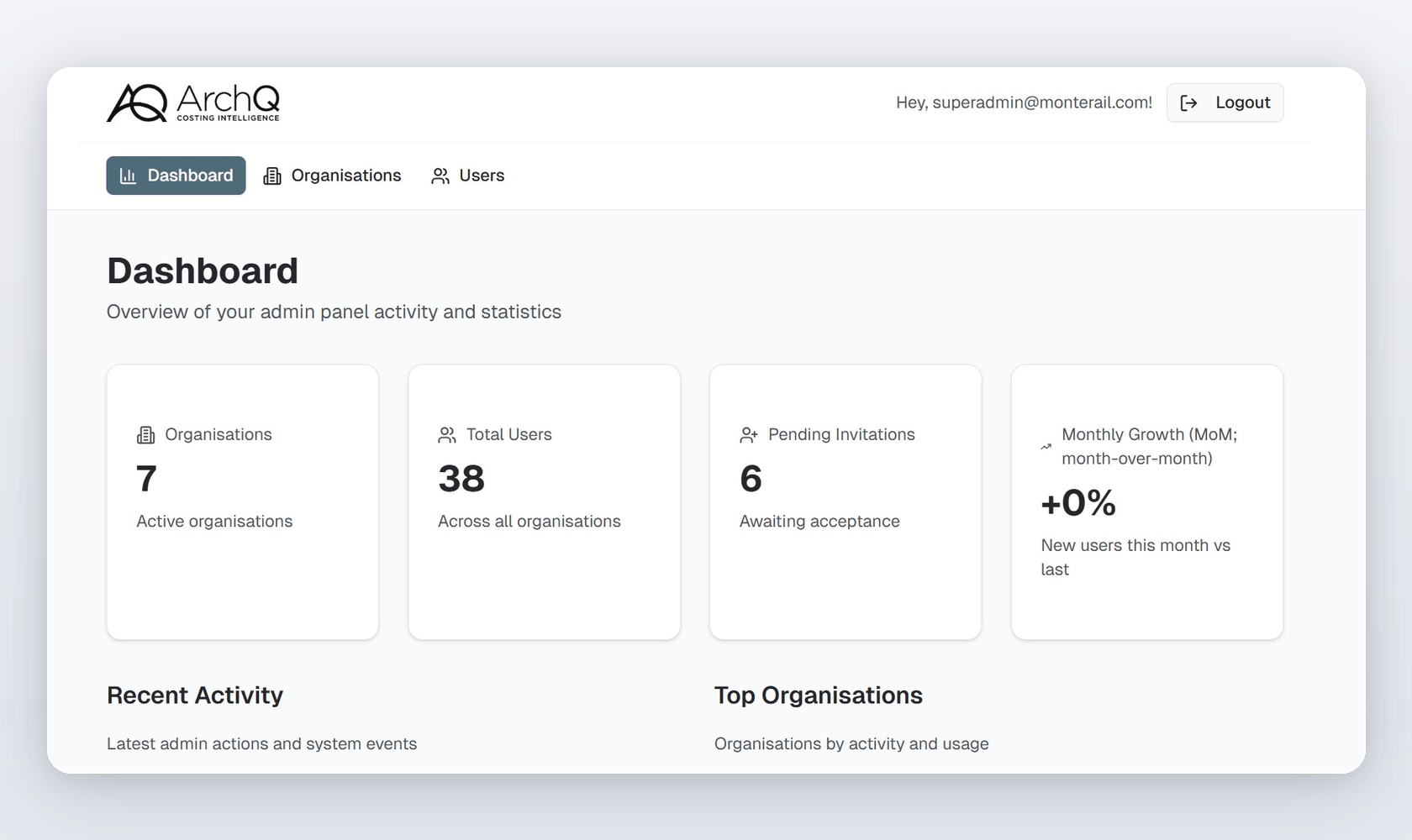
Monterail's work on an AI cost-intelligence platform for construction finance shows what that caution looks like in practice. The team deliberately paused AI features until the underlying data quality met board-level standards, because a wrong number in front of a CFO could permanently discredit the system. The short-term delay prevented a false signal that would have cost far more than the wait. That is a team optimizing for long-term trust over a flashy demo.
Red flags to watch out for
The warning signs are the mirror image of the green flags, and most of them surface early.
Technology-led pitches. Teams that lead with the model before understanding the problem tend to deliver impressive demos that never reach production.
Silence on observability and evaluation. No mention of how they measure quality, catch regressions, or handle the model getting it wrong.
Pilot theater. A long list of disconnected pilots that look like progress but never change end-to-end performance. McKinsey calls this out as the single most common reason technically sound solutions fail to deliver business impact.
The day-to-day team you work with matters far more than the marketing materials or the slide deck.
Choose an AI development company based on your role
Different seats at the table carry different risks. Here is what to weight depending on who you are.
As a CEO or founder
Your job is to protect the business case. Push for a small, time-boxed proof of value tied to one measurable outcome before committing to a large build. McKinsey's advice to leaders is to identify a small number of transformative bets rather than accumulate a wish list of pilots, and to treat AI work as product development with explicit success metrics, not as a project to be managed to completion. Ask the vendor: what outcome will we measure, by when, and what does success look like in numbers? If they cannot answer before the contract, that is your answer.
As a CTO
You own the architecture and the risk. Probe for model and vendor neutrality, so you are not locked into a single provider as prices and capabilities change. Confirm there is a real evaluation and observability story: how quality is measured, how regressions are caught, how the system behaves when the model is wrong. Then run a due-diligence pass on the contract. According to AI vendor due-diligence guidance, you should clarify who owns the model, the outputs, and any data used in training; check where data is processed and how it moves between your CRM, ticketing, and data warehouse; and verify that the vendor cannot use your data to improve its broader models without permission. Treat this as ongoing, since models and vendors change in ways that shift the risk profile.
As an engineering manager
You will inherit the code and the maintenance. Insist on meeting the technical lead and the people who will actually write the code. Ask about handoff: documentation, test coverage, how the system is structured for your team to extend it, and what the support arrangement looks like after launch. The quality of the team you work with day to day determines whether the system survives its first year.
As a non-technical or operations leader
Your risk is adoption. McKinsey is clear that the barriers at scale are structural, not technical: solutions get launched but never truly adopted because roles, incentives, and daily routines stay the same. Ask the vendor how they handle change management, how the new workflow will be designed around the people using it, and how usage will be measured after go-live. A partner who only talks about the software and never about the humans using it will leave you with shelfware.
Choose an AI development partner depending on what you need
The right partner depends heavily on what you are trying to build. Here are the common needs and what to look for in each, with examples of how the work actually plays out.
A new AI-powered product feature
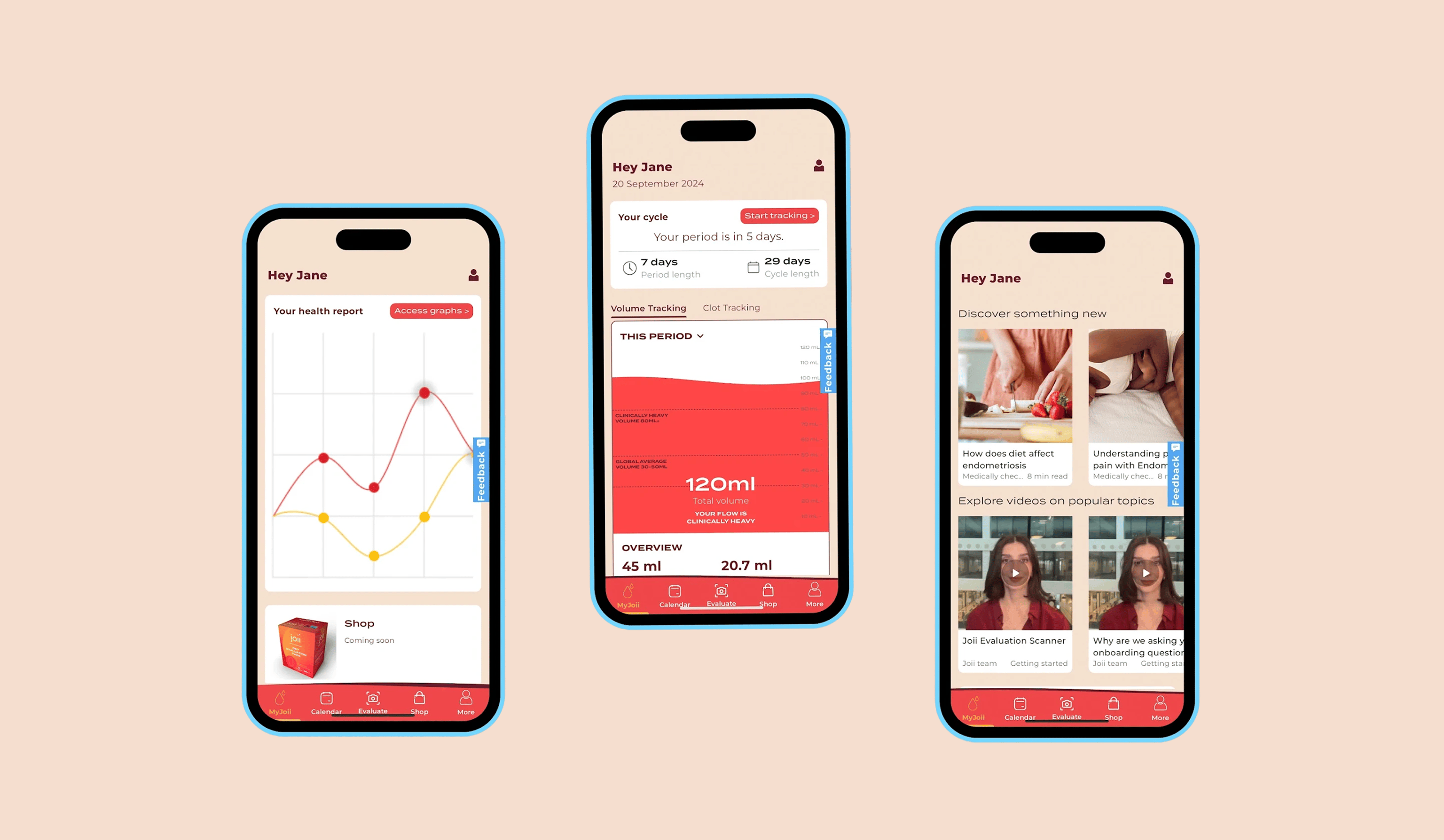
You need a team that can take a concept to a reliable feature, often under regulatory constraints. Accuracy and validation are the whole game. Monterail's work with Joii, a Dublin femtech startup, turned a concept (analyzing menstrual flow from photos) into a computer-vision scanner with 99 percent image-processing accuracy, built across iOS and Android. The app launched in 2025 and now holds Class I Medical Device certification in the UK. For product features, look for evidence of accuracy under real-world conditions and experience with the compliance bar your industry sets.
Customer support and service operations automation
You need a partner who designs for the cases where the AI is unsure, not just the happy path. McKinsey lists end-to-end contact-center automation and agentic service desks among the highest-value use cases, but the value comes from embedding agents directly into the workflow with human oversight for exceptions. Ask how the system escalates, how it handles low-confidence answers, and how it improves from feedback over time.
Internal operations and back-office automation
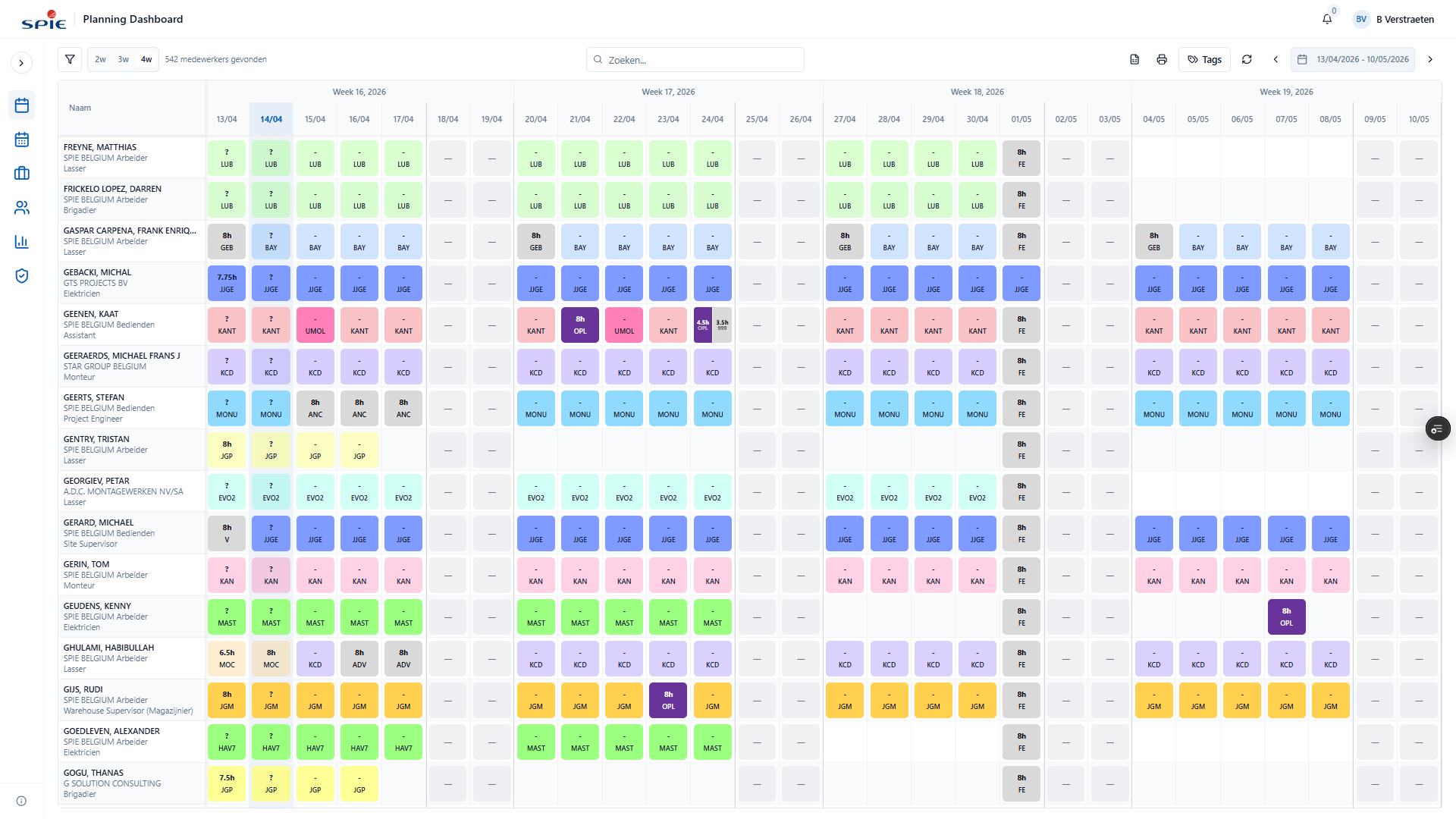
You need a team that can unify fragmented tools and reclaim time without a multi-year program. Monterail built an AI-first resource-management platform for SPIE Belgium, replacing five disconnected tools and spreadsheets that managed 600 active workers. The result was about 100 hours of manual reconciliation reclaimed every week, with a prototype delivered in a day and 13 releases over four months. For back-office work, the signal is fast, iterative delivery against a clear operational metric.
Knowledge management and analytics
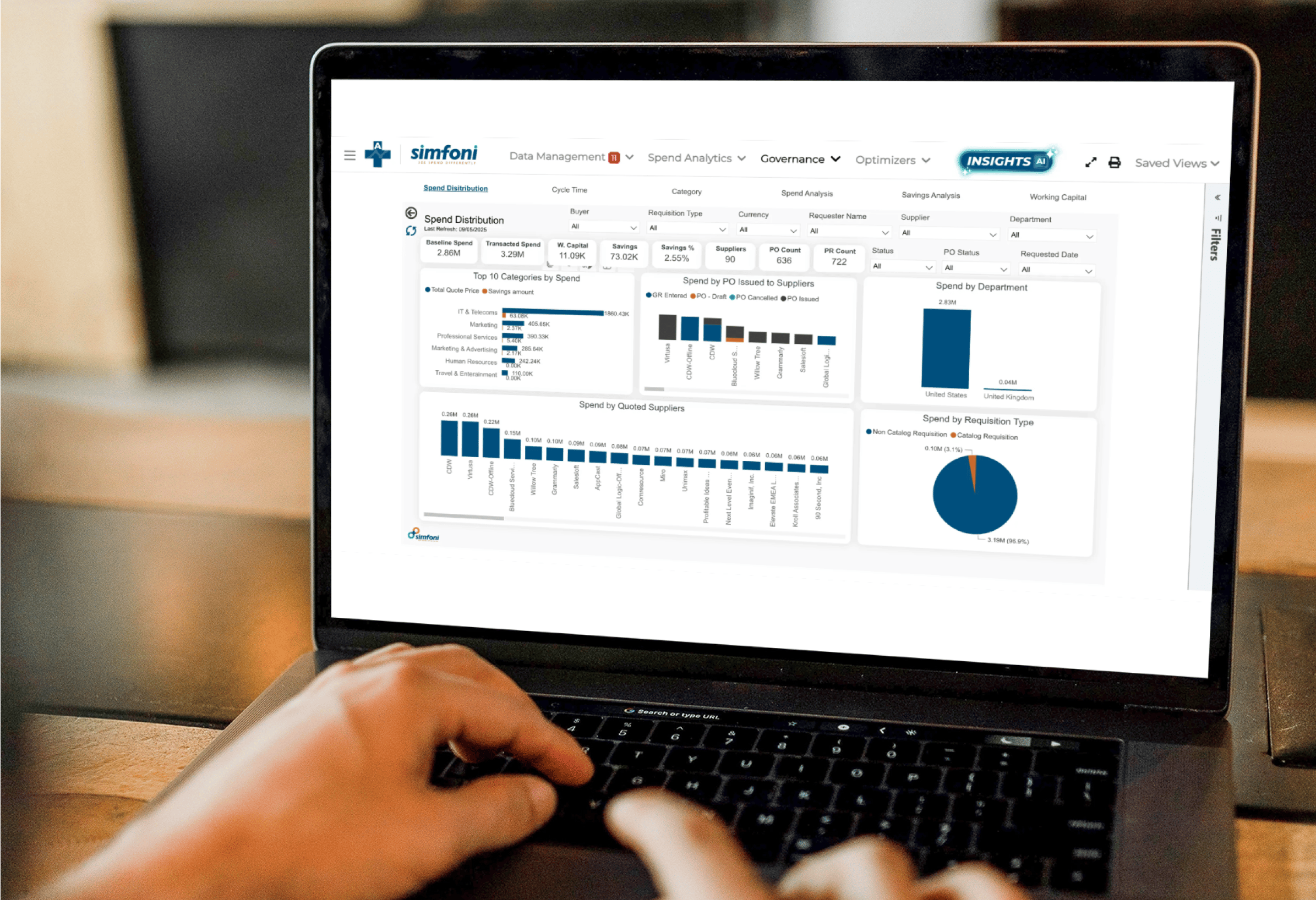
You need a partner who can turn large, messy datasets into decisions and ship it inside an existing product. Monterail built an LLM-powered insights system for Simfoni, a global spend-automation platform, using Claude through AWS Bedrock to analyze billions of dollars in spending and generate savings recommendations (and even the PowerPoint reports) at the click of a button. Work that previously took analysts hours became automated. Look for a vendor comfortable with data preprocessing and with integrating into your live product, not just building a standalone demo.
Moving a stalled pilot into production
This is where most companies get stuck, and where partner selection matters most. McKinsey notes that most organizations stall because no one owns the transition from concept to working product. The Simfoni and construction-finance examples both crossed that line by treating the work as product development with explicit accountability. If you already have a pilot, ask candidates exactly how they would take it to production: data quality, evaluation, monitoring, and ownership of the result.
Engagement models and the questions that protect you
Vendors sell their time in a few common shapes, and the right one depends on your need.
Discovery and MVP: a fixed, time-boxed engagement to validate a problem and ship a first working version. Best when you are still proving the business case. Monterail's delivery approach often follows this shape, moving from a short discovery and strategy phase into rapid prototyping before a production build and ongoing partnership (see AI development services).
Staff augmentation: embedding the vendor's engineers into your team. Best when you have the architecture and direction but need specialized hands.
Fixed-scope build: a defined deliverable for a defined price. Best when requirements are genuinely stable, which is rarer in AI than in traditional software.
Whichever model you pick, settle these questions in writing before you start: Who owns the model, the outputs, and the training data? Where is data processed and stored, and can the vendor use it to train anything else? Who is the named technical lead, and who writes the production code? What are the success metrics, and who measures them? How is the system monitored and supported after launch?
Comparison: signals of a strong versus weak AI partner
Criterion | Strong partner | Weak partner |
|---|---|---|
First conversation | Starts with your business problem and ROI | Starts with a model demo and buzzwords |
Scope | Proposes validation and a small experiment first | Pushes a large build from day one |
Failure handling | Talks openly about hallucinations, evaluation, monitoring, fallback | Talks only about capabilities and accuracy |
Team transparency | Names the technical lead; the people you meet build the work | Senior architects sell, juniors deliver |
Outcomes | Ties the build to a measurable metric before signing | Cannot connect the work to a business result |
Workflow | Embeds AI into a real workflow and plans adoption | Layers AI on top of existing processes |
Contract | Clear on IP, output ownership, data use, and support | Vague on ownership and data handling |
Key takeaways
Watch behavior before the contract. A partner who leads with your problem and a small experiment is the strongest early signal of success.
The odds are real and movable. Most AI pilots fail to reach the bottom line, but specialized vendors and partnerships succeed far more often than internal-only builds.
Value lives in the workflow that surrounds the model. Demand to see the chain from problem to embedded workflow to measurable outcome.
Match the vendor to the need. Product features, support automation, back-office work, and analytics each reward different strengths.
Protect yourself in writing. Settle IP, data use, the named technical lead, success metrics, and post-launch support before work begins.
Why choosing an AI development company is a systems decision
The vendor is one component in a larger system that includes your data, your workflows, your people, and your incentives, and AI only pays off when all of those move together. McKinsey's research shows that companies capture value by setting the right scope and then rewiring how work gets done, not by collecting pilots. The partner worth hiring is the one who understands that, who is honest about where models break, and who measures success the way you do: in outcomes your business can bank. Pick for that, and AI stops being an experiment and starts being part of how you operate.
If you are weighing that decision now, Monterail works with startups, scale-ups, and enterprises to take AI from a validated experiment to a production system embedded in real workflows. A short discovery conversation is a low-cost way to test how a partner thinks before you commit to a build.
AI Development Companies FAQ
)
Michał Nowakowski
Solution Architect and AI Expert at Monterail

Michał Nowakowski is a Solution Architect and AI Expert at Monterail. His strong data and automation foundation and background in operational business units give him a real-world understanding of company challenges. Michał leads feature discovery and business process design to surface hidden value and identify new verticals. He also advocates for AI-assisted development, skillfully integrating strict conditional logic with open-weight machine learning capabilities to build systems that reduce manual effort and unlock overlooked opportunities.