The New Default. Your hub for building smart, fast, and sustainable AI software

Table of Contents
and 6 more
The live shopping strategies that reliably boost sales come down to four decisions: host your streams where your buyers already shop, build each show around a few products you can demonstrate well, make buying possible without leaving the stream, and measure every show at the product level.
Live shopping is no longer a novelty in Western markets. In the US, TikTok Shop's gross merchandise value grew 68% to $15.1 billion in 2025, and live commerce's share of it rose from 10% to 14% (Momentum Works, February 2026). The same report shows how uneven the results are, which is why strategy matters more than simply going live.
We covered the benefits of live shopping for retailers in an earlier post. This one is for e-commerce and retail leaders who have decided to try it, or already have, and want it to pay off.
Executive Summary
Live shopping boosts sales when it removes the two things that stall online purchases: unanswered questions and a lack of urgency. The first strategic decision is the channel.
Social marketplaces such as TikTok Shop bring reach, while live video on your own store keeps the customer data and the margin. After that, results depend on execution: a tight product lineup, a host who sells in the chat, checkout that works mid-stream, and analytics that show which minutes of the show produced revenue.
Live shopping is a poor fit for low-consideration products or teams without host talent, so test it with a few shows before building around it.
What Is Live Shopping and Why Does It Matter for E-commerce in 2026?
Live shopping (also called live commerce or livestream shopping) is a real-time video broadcast in which a host presents products and viewers can ask questions and buy them during the stream. It combines the product demo of a TV shopping channel with the two-way chat and one-tap checkout of an online store.
The channel map has changed since live shopping first took off in the West. Meta closed Facebook Live Shopping in October 2022 and removed product tagging from Instagram Live on March 16, 2023, to focus on ads (TechCrunch). Native live shopping in the US now runs mainly through TikTok Shop, YouTube's product tagging in livestreams and marketplaces like Amazon Live and Whatnot. Many brands also embed live video in their own stores.
Growth is real but concentrated. Momentum Works found that more than half of US TikTok Shop stores recorded no sales in 2025, while more than 2,000 stores passed $1 million in GMV. Opening a shop and going live doesn't guarantee a single order.
Where Should You Host Live Shopping: A Social Marketplace or Your Own Store?
Choose a social marketplace when you need new customers, and live video on your own store when you need margin, data and brand control. Many retailers end up doing both, but starting with one keeps the first experiments readable. Shopify's live shopping guide also recommends hosting a first event on a single platform.
Social marketplace (TikTok Shop, YouTube) | Your own store (embedded live video) | |
|---|---|---|
Audience | Large built-in audience and algorithmic discovery | Only the traffic you bring: email, ads, existing customers |
Customer data | Owned largely by the platform | Yours, connected to your CRM and loyalty program |
Costs | Platform fees and commissions on every sale | Software build or license, plus streaming infrastructure |
Checkout | Inside the platform's app | Your cart, payments and order flow |
Brand control | Platform rules, formats and policy changes | Full control over format and experience |
Main risk | The platform changes the rules (as Meta did in 2023) | Low viewership if your audience is small |
The Meta shutdowns are the clearest argument for owning at least part of the channel. Retailers who had built their live selling around Instagram tags lost that checkout path with a few weeks' notice. If live shopping becomes a meaningful share of revenue, the customer relationship should not depend on a single platform's roadmap.
Why Does Live Shopping Increase Conversion and Order Value?
Live shopping increases conversion because a viewer's objections get answered while they are still deciding. On a product page, a question about sizing or ingredients usually means a bounce or a support ticket. In a stream, the host answers it in seconds, often while showing the product, and the rest of the audience sees the answer as social proof.
Urgency does the rest. Stock or prices available only during the show give viewers a reason to buy now rather than bookmark. The trade-off is that pressure-driven purchases can come back as returns, so keep limited-time offers honest and track returns per show, not just sales.
Order value grows through live cross-selling. A host demonstrating a lipstick can show the matching liner or the premium version in the same breath, the way a good shop assistant would. It works because the recommendation responds to what viewers are asking in the chat, not to a generic "frequently bought together" widget.
How Do You Plan a Live Shopping Event That Sells?
Plan each live shopping event around a short product list, a loose script, and a host who can sell. Shopify suggests featuring no more than 10 products in a stream. Fewer products mean longer demos, and longer demos answer more questions.
Script the structure, not the words. Decide the running order, the key demo for each product and when each offer drops, then leave room to react to the chat. Over-scripted shows feel like ads, and viewers leave. Each demo should show the problem the product solves in a realistic setting: the jacket in the rain, the blender with frozen fruit.
Production quality needs to be good enough, not cinematic. Clear sound and steady, well-lit shots of the product from several angles matter more than expensive cameras. Run a test stream before the first real event, especially on YouTube, where Google advises fixing product feed issues at least two weeks ahead so products can be tagged (Google Merchant Center Help).
The host is the biggest variable. An in-house product expert, a creator who already has the audience's trust, or a mix of both can work, but the person needs to be comfortable selling live and reading the chat at the same time.
How Do You Keep Live Shopping Viewers Engaged and Buying?
Keep viewers engaged by giving them something to do and buying by removing every step between interest and checkout. Polls, quizzes and "vote for the next product" segments turn passive watching into participation and tell you what the audience wants in real time.
Image source: Sprii case study
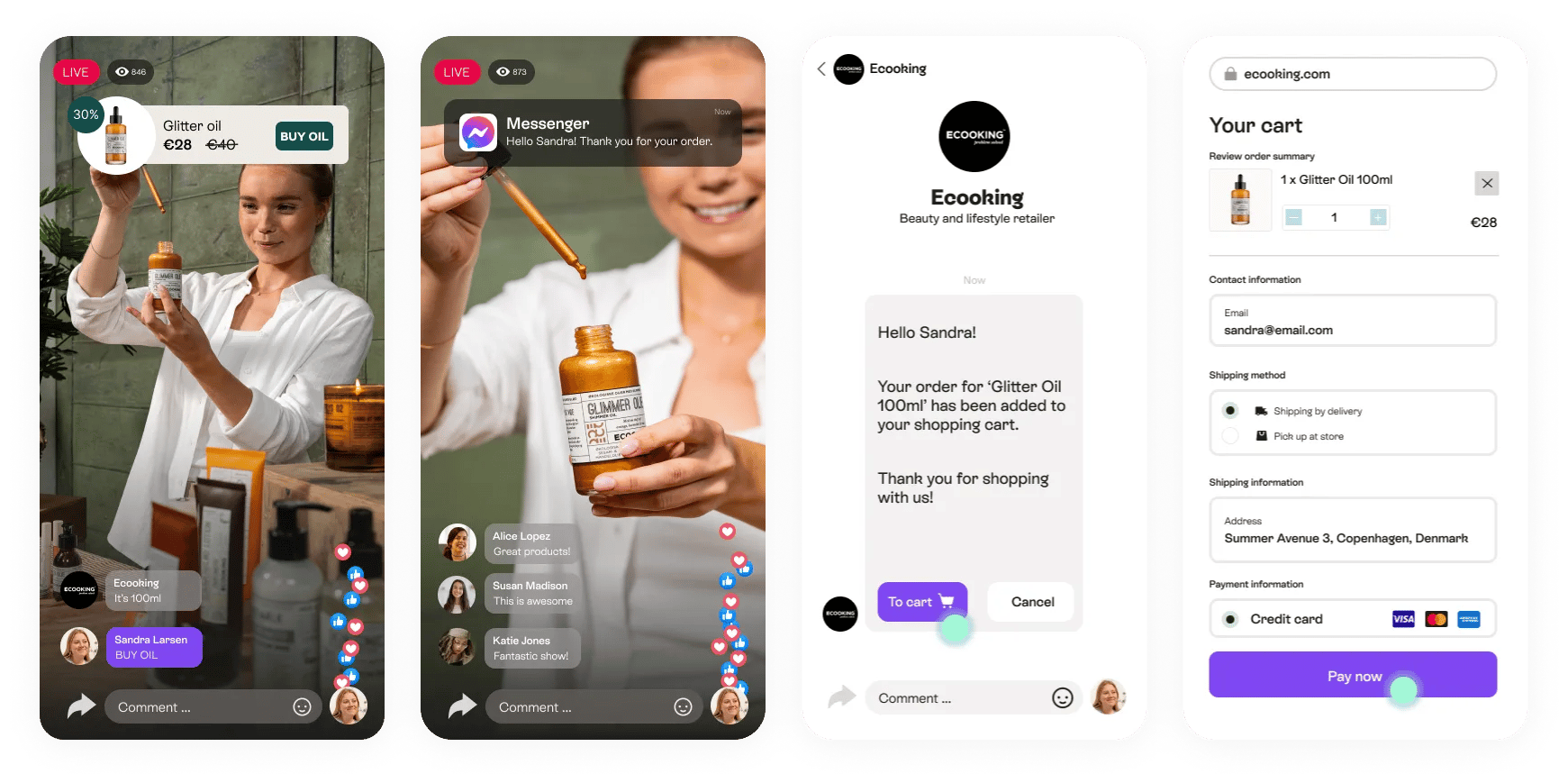
Answer questions as they arrive and address viewers by name. For anything bigger than a solo seller, put a second person on chat moderation so the host can keep demonstrating while questions, links and order issues are handled in parallel.
Make checkout work without leaving the stream. Pinned products, in-stream carts or comment-to-order flows (where a viewer types a code and gets a payment link) close the gap between "I want that" and a completed order. Make sure stock is reserved at checkout, too: overselling a limited offer during a busy show turns your best customers into refund requests.
Reward sharing. Discounts or perks for viewers who invite friends extend reach to people who don't follow you yet, which matters most on your own store, where there's no algorithm doing that work for you.
What Can Retailers Learn From the Sprii Live Shopping Platform?
Sprii shows what happens when live selling is built around the retailer's workflow rather than the camera. It started as a comment-selling bot on Facebook that helped small retailers move online during the COVID-19 pandemic and grew into a full live shopping platform. Monterail built the platform's video streaming, UI and integrations with Facebook, Magento and Shopify.
Image source: Sprii case study
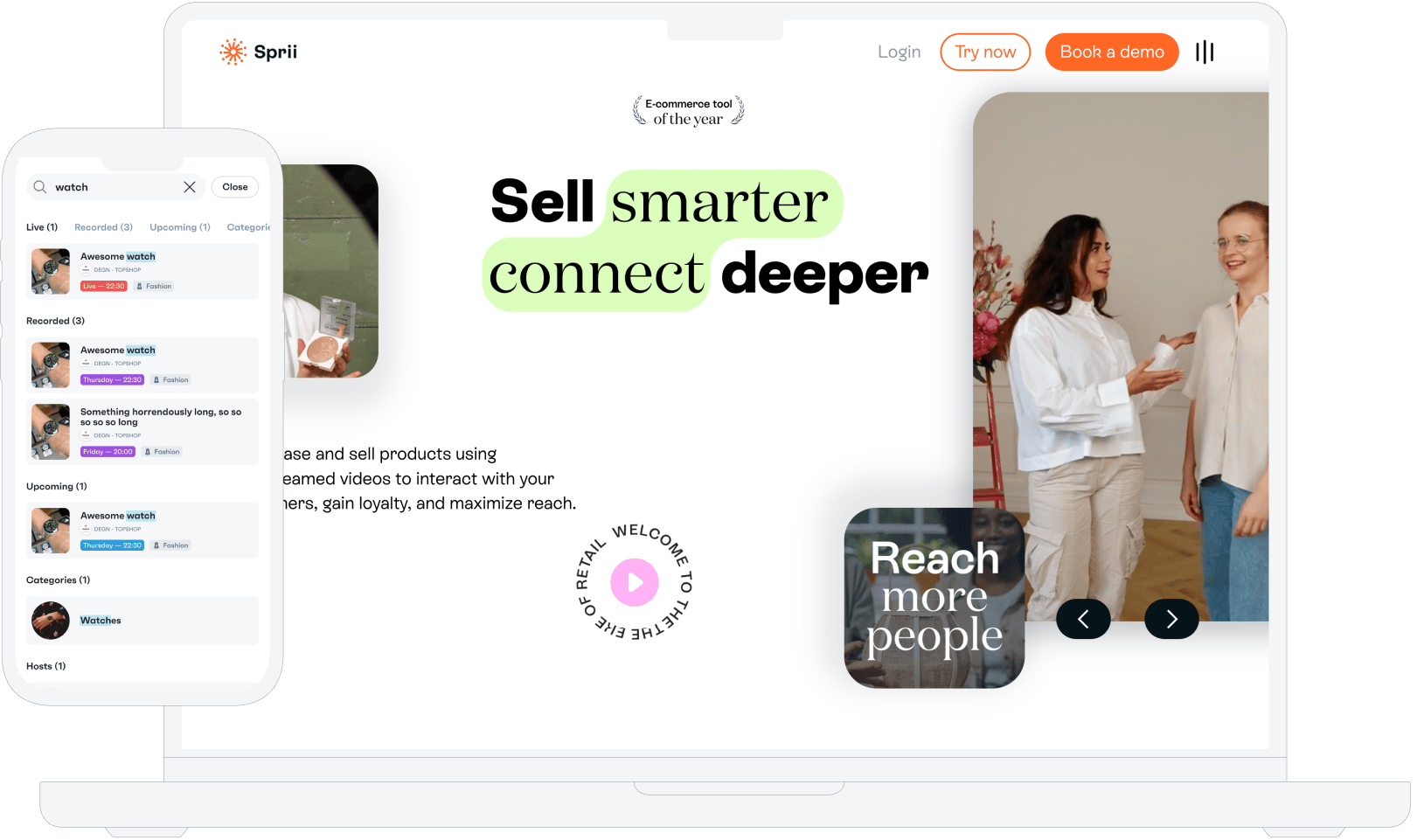
According to the Sprii case study, more than 700 retailers have used the platform to host over 31,000 live shopping events, selling more than 7 million products and generating over $123 million in revenue. The strategic lesson is that most of the work happens after the viewer says "I'll take it": orders, payments and stock need to be handled automatically, or the show creates more admin than sales.
Sprii's founder, Nikolai Aas Pedersen, described live shopping as "a nice link between cold e-commerce and warm real store experience." Shoppers come for that warmth, but it only turns into revenue when the operations behind the show can keep up.
Which Live Shopping Metrics Should You Track After Every Show?
Track conversion per product and drop-off over time, not just total views. Views tell you whether promotion worked. Sales per product and per segment of the show tell you whether the show itself worked.
The core metrics are peak and average concurrent viewers, average watch time, chat messages per minute, conversion rate per featured product, average order value, and returns from show-driven orders. Compare them across shows, not against social media benchmarks, because each channel counts views differently.
Drop-off points are the most useful diagnostic. If viewers leave in large numbers 15 minutes in, the show is losing momentum there. Move a strong product or an interactive segment to that point in the next show.
Segment the audience once you have a few shows of data. On your own store, you can tie viewers to customer profiles and see which segments buy which categories, then plan themed shows for each group. On social platforms, you are limited to the analytics the platform exposes. Finally, count replay sales separately: Shopify recommends posting the recording on product pages after the show, and a replay can keep selling for weeks.
When Is Live Shopping Not Worth the Investment?
Live shopping is not worth it when the product doesn't benefit from a demo, or when the team can't run shows consistently. Commodity items with no questions to answer, very low margins that can't absorb platform fees or host costs, and categories where a single show can't generate enough orders are all weak candidates.
The hidden costs are operational. Hosts, moderators and production time recur with every show. Inventory, pricing and order data have to stay in sync across the stream, your store and any marketplace. And a show that sells out fast but produces a wave of returns can lose money even while the dashboard looks good.
The safest approach is to test before you build. Run a handful of shows on an existing platform, measure conversion and returns per product, and invest in your own live shopping software only once you know the format works for your products and your audience.
Key Takeaways
Choose the channel first: social marketplaces bring reach, your own store keeps data and margin.
Since Meta dropped Facebook and Instagram live shopping, platform dependency is a real business risk.
Feature fewer products and demonstrate each one properly.
Checkout inside the stream and stock reserved at checkout matter as much as the show itself.
Measure conversion and returns per product, and test with a few shows before investing in custom software.
How Do You Turn Live Shopping Into a Repeatable Sales Channel?
Live shopping becomes a sales channel when it runs on a schedule, with a channel strategy you control, products chosen for demonstration, checkout that works mid-stream, and decisions based on per-product data. The brands that win treat each show like a release: planned, measured and improved in the next one.
If you're weighing whether to build live shopping into your own store, Monterail can help you decide what's worth building. We've built live shopping software with Sprii and offer mLS, our own live shopping solution. Tell us about your products and goals, and we'll help you work out the right setup.
Live Shopping FAQ

Barbara Kujawa
Content Manager and Tech Writer at Monterail

Barbara Kujawa is a seasoned tech content writer and content manager at Monterail, with a focus on software development for business and AI solutions. As a digital content strategist, she has authored numerous in-depth articles on emerging technologies. Barbara holds a degree in English and has built her expertise in B2B content marketing through years of collaboration with leading Polish software agencies.