The New Default. Your hub for building smart, fast, and sustainable AI software

Table of Contents
A successful healthcare app gets eight things right: regulatory compliance, data security, user-centered design, personalization, scalability, interoperability, cultural fit, and an interdisciplinary build team. Miss any one of them, and the app either fails a compliance review or never scales past its first market.
Executive Summary
Healthcare apps compete in a market moving toward $2.9 trillion in 2033 (Grand View Research), but most of that growth goes to products that got compliance and trust right from day one. The apps that scale share a common pattern: they treat regulatory classification as a design input, and they build data security and accessibility into the architecture before the first release – treating interoperability the same way. The eight aspects below are the operating conditions a healthcare app needs to pass a compliance audit, earn clinician trust, and keep working as the user base and the regulatory environment both grow. Skipping any one of them creates a launch risk that can stall a product indefinitely.
Healthcare App vs. Medical App: What's the Difference?
MedTech and HealthTech are often used as if they were interchangeable, but they're not. MedTech covers medical devices or clinical software used directly in diagnosis and treatment. HealthTech is the broader category – any technology that improves healthcare delivery or outcomes, from telemedicine to patient engagement software. Most consumer-facing healthcare apps sit in HealthTech, but the moment an app touches diagnosis, monitoring for clinical decisions, or treatment, it can cross into MedTech and face regulatory obligations.
MedTech | HealthTech | |
Scope | Medical and diagnostic devices, tools | Broad range of health-related technologies |
Regulatory oversight | Often requires FDA clearance or equivalent (e.g., MDR in the EU) | Lightly regulated or unregulated |
Application | Primarily clinical settings | Clinical and consumer-facing |
User base | Healthcare professionals | Professionals and consumers |
As the PubMed-published definition puts it: health apps are an umbrella term, and medical apps sit inside it as the subset regulated as mobile medical devices. Knowing which category your product falls into determines which regulations apply to it and what evidence you need to make sure you're compliant.
Why Healthcare Software Is High Reward and High Risk
Healthcare is one of the most regulated, highest-stakes software categories there is, and the market rewards products that treat that as an advantage. The global healthcare IT market was valued at roughly $866 billion in 2025 and is projected to reach nearly $2.9 trillion by 2033, according to Grand View Research. The broader digital health market – telehealth and wearables, plus patient-facing software generally – is separately projected to grow from $491.6 billion in 2026 to $2.35 trillion by 2034, per Fortune Business Insights. Over 350,000 mHealth apps are already available across app stores, according to NIH/NCBI, so a new entrant has to earn trust and prove it fits a specific clinical or patient workflow.
Weak compliance or security practices lead to data breaches and regulatory fines, which break clinicians’ and patients’ trust – causing lost market share in a category where trust is hard to rebuild. Healthcare has held the top spot for the highest average data breach cost of any industry for 14 straight years, at $7.42 million per incident in the US in 2025, according to IBM's Cost of a Data Breach Report. A healthcare app carries financial and reputational risk that most other software categories don't have to manage.
What Are the Different Types of Healthcare Applications?
Three application categories dominate the B2C healthcare software space:
Telehealth and Telemedicine Apps: enable remote consultations with providers and support ongoing management of chronic conditions without an in-person visit.
Patient Engagement and Education Apps: focus on medication management and personalized (often mental) health guidance, usually built around ongoing symptom tracking to encourage self-care.
Remote Patient Monitoring Apps: use wearable devices to collect continuous health data, enabling earlier detection of problems and better coordination between patients and providers.
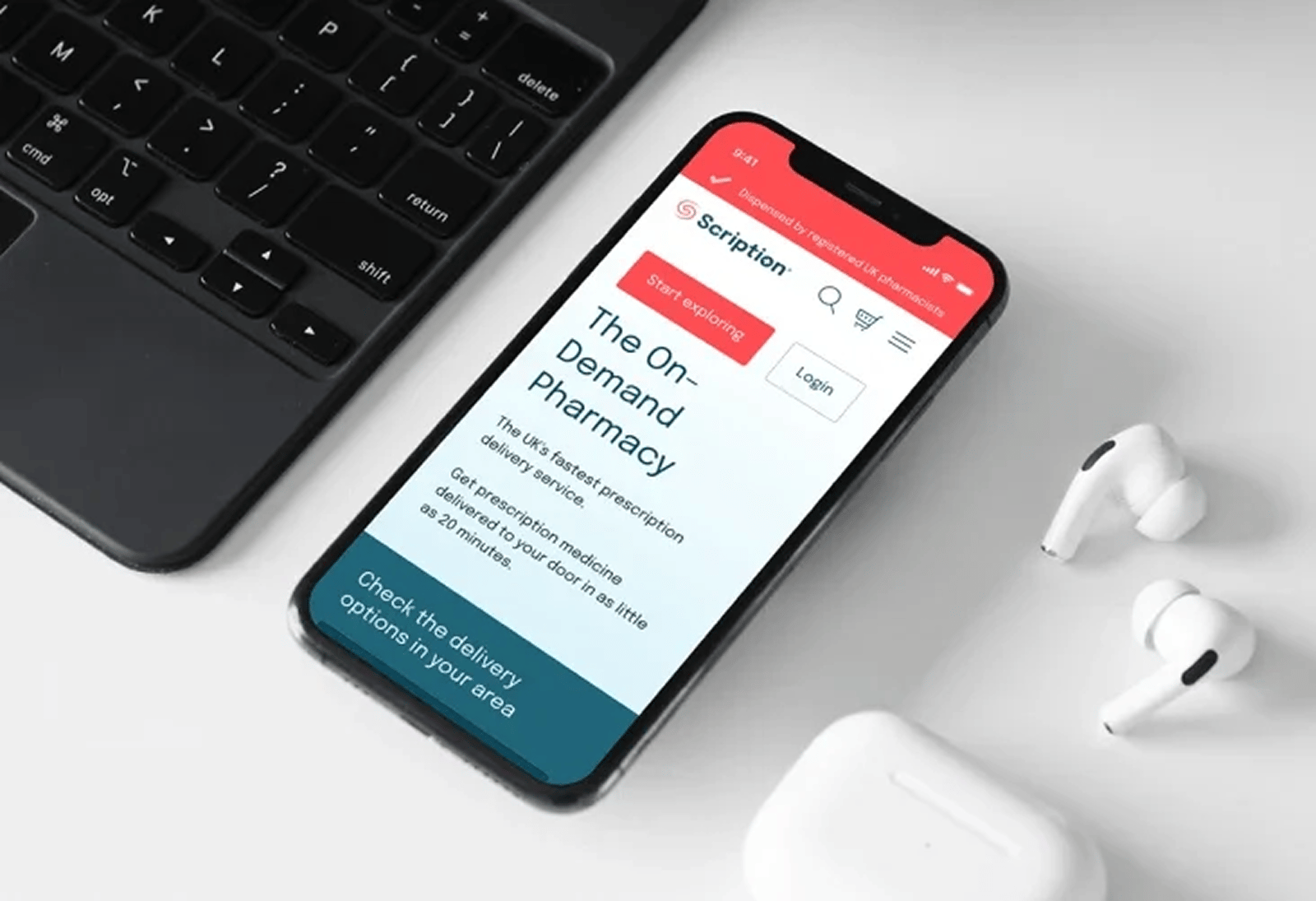 Source: Scription case study
Monterail's Scription case study is a working example of the second category in practice – a patient engagement app built around medication adherence.
8 Key Aspects of Successful Healthcare Software
Regulatory Compliance
What it does: Classifies your app against frameworks like the FDA's device software guidance in the US or the EU's Medical Device Regulation, then builds the evidence trail regulators expect.
Where it fits: At the very start of the project. Classification decisions shape architecture and testing requirements.
Why it matters: Software and devices get sorted into risk classes, and each class carries its own bar for demonstrating safety and effectiveness. Get the classification wrong, and you either over-invest in unnecessary controls or under-invest and fail review.
Evidence: Detailed regulatory breakdowns are their own specialist topic: see the European market guide and the FDA's non-device examples for the current thresholds.
How to apply this?
Familiarize your team with the regulations relevant to your specific use case
Build testing and documentation into the process from day one
Involve regulatory and legal experts early
Worth watching: as more healthcare apps add AI-driven features, regulators are starting to scrutinize the AI itself, so classification reviews need to account for how a model was trained and monitored
Data Management and Security
What it does: Protects protected health information (PHI) – where it’s stored and every time it moves between systems or gets pulled up on screen. Healthcare apps handle sensitive information: a patient's medical history, tied directly to their treatment plan and identity.
Where it fits: From the first architecture decision onward. Retrofitting security after launch is where most healthcare apps get expensive fast.
Why it matters: HIPAA is mandatory for US healthcare apps and requires strict PHI protection, enforced through specific security controls and regular audits. GDPR applies across the EU and, in many cases, to US companies acting as data controllers or processors for EU users' data – it's widely considered the strictest privacy law in the world, requiring explicit consent for handling personal health data.
Evidence: Healthcare breaches are the costliest of any industry and take the longest to contain – 279 days on average, per IBM. That gap between breach and detection is exactly what strong access controls and audit logging are meant to close. Before release, Google Play and the App Store both enforce their own health-app requirements on top of HIPAA and GDPR.
How to apply this?
Secure authentication (see our guides for Vue.js, Node.js, and Ruby on Rails)
Industry-standard encryption
Secure integration with other healthcare systems
Regular security audits
Monterail helped clients transition to GDPR compliance in 2018 and applied the same rigor building the Eargo hearing aid app, a sixth- and seventh-generation FDA Class II exempt device.
Personalization With Patient-Generated Health Data
What it does: Builds tailored recommendations and predictive alerts on top of patient-generated health data (PGHD) – health information patients generate themselves through wearables or manual symptom tracking.
Where it fits: In the core product loop: the app collects PGHD and turns it into personalized guidance, which feeds the resulting behavior change back into better outcomes.
Why it matters: This is the central mechanism behind a healthcare app's return: PGHD drives behavior (tailored recommendations, predictive alerts), behavior drives outcomes (better chronic disease management, earlier detection), and outcomes drive revenue (retention for B2C, renewed contracts for B2B2C). Generative AI is now compressing that chain further, letting patient-facing chat interfaces turn raw data into recommendations in real time.
Evidence: The global wearable technology market was valued at $86.78 billion in 2025 and is projected to reach $96.44 billion in 2026 and $231.43 billion by 2034, per Fortune Business Insights, which means the volume of PGHD available to build on is only growing. The Elvie Pump, a wireless breast pump built for comfort and discretion, is a good example of a product that turned a specific, underserved need into sustained category leadership by staying closely tied to how real users actually behave day to day.
How to apply this?
Introduce proven data collection methods (wearables, manual health journals) and explain in plain language what's collected and how it's used
Let users set explicit preferences and goals for tailored recommendations
Use machine learning models – validated on real patient data, not synthetic or demo datasets – to turn PGHD into real-time feedback like exercise recommendations or medication reminders
Use predictive analytics to flag potential risks (e.g., elevated blood pressure trends) and recommend preventive action
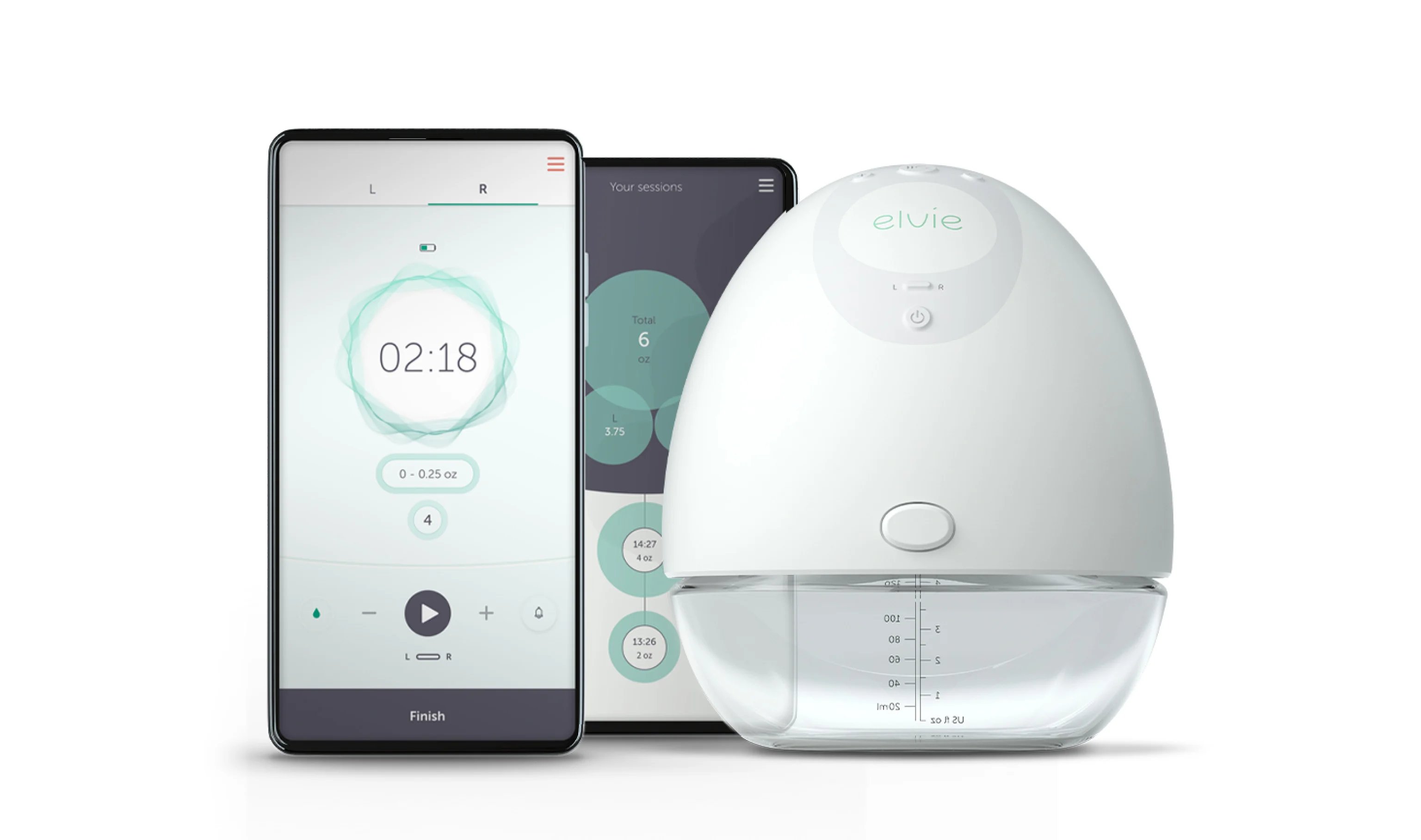 Source: Elvie
User-Centered Design and Accessibility
What it does: Designs the app around real patient and clinician needs with accessibility built in from the start.
Where it fits: From discovery through testing.
Why it matters: Poor design in a healthcare app can lead to medical errors or reduce treatment adherence. Users may have physical or cognitive limitations – sometimes both at once – that a generic consumer app wouldn't need to accommodate.
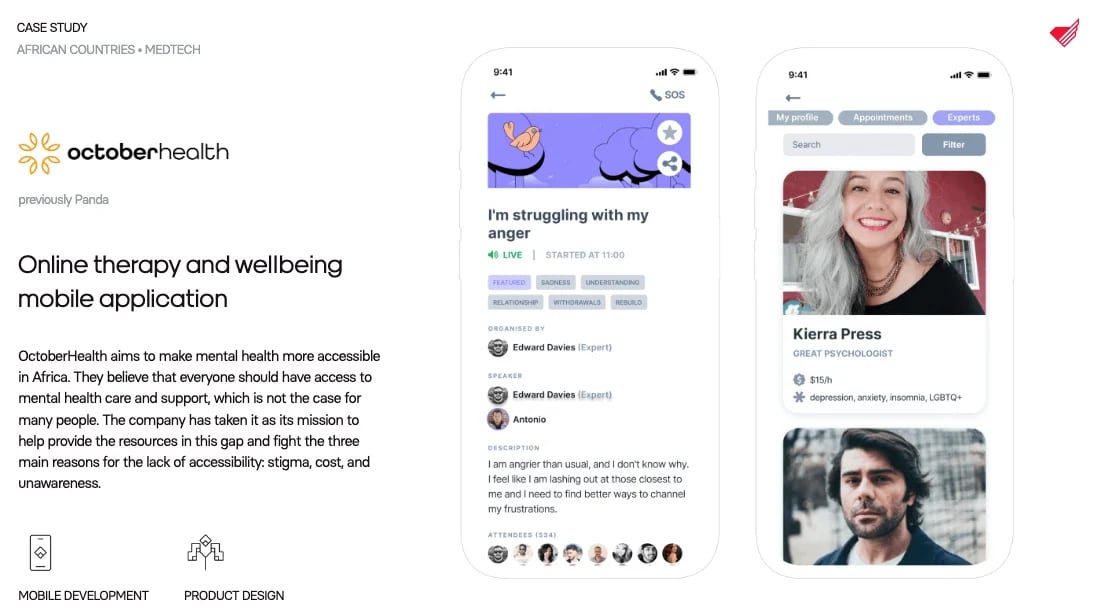
Evidence: During a discovery workshop, October Health mapped complete user journeys to validate its concept before writing a line of code, which shaped the MVP that shipped. See the October Health case study.
How to apply this?
Deep UX research including interviews and usability testing
Adjustable font sizes and contrast
Screen reader compatibility and voice command options
Alignment with the evolving WCAG 3.0 guidelines
 Source: October Health case study
Scalability and Maintainability
What it does: Designs the technical architecture to handle exponential growth in users and patient data without degrading performance.
Where it fits: In the initial technology stack and architecture decisions. Retrofitting scalability later usually means a rebuild.
Why it matters: Healthcare apps that start small can outgrow their original infrastructure quickly, and healthcare needs keep evolving alongside the technology, so the software has to be able to change with them.
Evidence: With Ruby on Rails, React Native, Vue.js, and other frameworks, Monterail has delivered over 390 projects across industries, choosing the right stack for each project's specific growth trajectory.
How to apply this?
Weigh business type and project complexity against architecture flexibility before picking a stack
Prioritize long-term support and integration capabilities, plus active developer/community support
Document code and define clear upgrade paths from the start
Budget for ongoing maintenance
Interoperability
What it does: Lets healthcare data flow between systems – from labs to patient portals – using standardized formats and protocols.
Where it fits: In how the app integrates with electronic health records (EHRs) and other healthcare IT infrastructure, from the API layer up.
Why it matters: When a blood test order moves electronically from ordering to lab processing to results delivery to the patient portal in near real time, that's interoperability working. It reduces medical errors and improves communication between every party involved in a patient's care.
How to apply this?
Adopt industry-standard data exchange protocols for EHR and practice management system integration
Work directly with industry stakeholders to stay aligned with interoperability guidelines as they evolve
Cultural Context
What it does: Adapts the product to the healthcare system and cultural expectations of each specific market, language included.
Where it fits: In market research and localization.
Why it matters: Healthcare systems vary enormously by country – many European countries run public healthcare, the US runs largely private. The goal (accessible, effective care) stays constant.
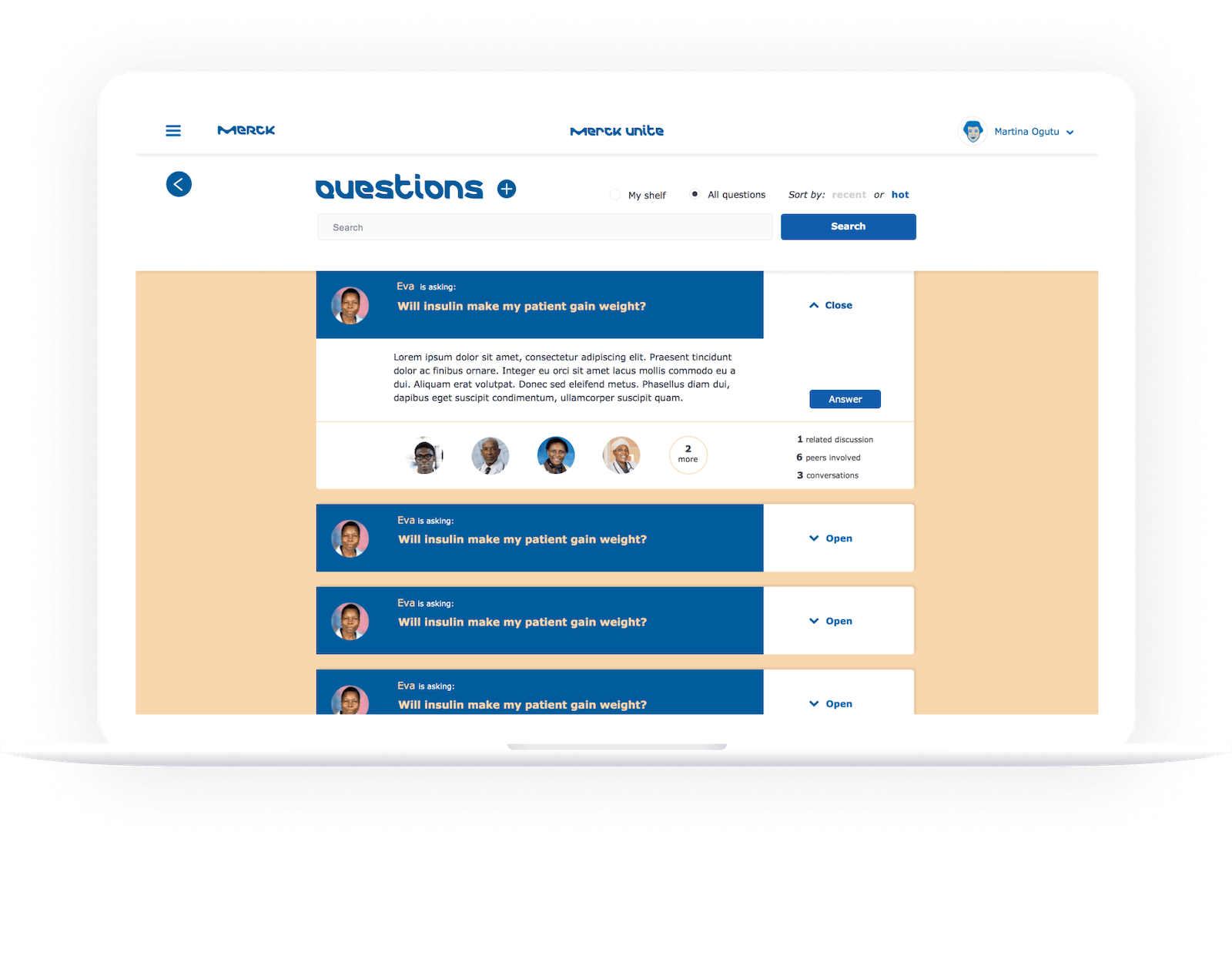
Evidence: Merck needed a platform built for doctors across Africa, which meant understanding Kenyan culture and internet habits directly rather than adapting a Western template. Alexander Hoffmann, Head of Digitalization Africa at Merck, said the team built “an extremely adequate application solution for the needs of healthcare providers in Kenya.”
How to apply this?
Market research into the target user base's cultural diversity
Localized design elements and language options
Direct collaboration with community leaders and patient advocates
 Source: Merck case study
Interdisciplinary Collaboration
What it does: Brings healthcare professionals and IT experts into the same build process.
Where it fits: From kickoff through delivery. Early clinical input means minimizing expensive pivots later.
Why it matters: The best technology and the best business idea both fail without the right team behind them. Effective communication between healthcare professionals and engineers is what turns a good idea into software that actually fits clinical workflows.
How to apply this?
Assemble a team spanning engineering and clinical expertise
Keep communication channels open between all stakeholders
Build a habit of pulling feedback from healthcare providers directly into the roadmap
Is Your Healthcare App Ready to Launch? 4 Requirements to Check
Every aspect above rolls up into four go/no-go conditions before a healthcare app can move from prototype to production. Think of this as the pre-launch gate, not a repeat of the detail already covered section by section:
Requirement | Covered in | Pre-launch check |
Integration | Interoperability | Does data actually flow with the EHRs and lab systems your users depend on – tested, not assumed? |
Compliance | Regulatory Compliance, Data Security | Is your risk classification finalized, with HIPAA/GDPR/FDA/MDR obligations mapped to specific architecture decisions? |
Scalability | Scalability and Maintainability | Can the current architecture absorb 10x user growth without a rebuild? |
Institutional trust | Data Security, Cultural Context | Do clinicians and patients have concrete reasons – not marketing claims – to trust the app with their data? |
Skip any one of these, and the other three don't matter. An app that's compliant but can't scale, or scalable but not trusted by clinicians, still fails to reach patients at meaningful volume.
Key Takeaways
Regulatory classification (MedTech vs. HealthTech) should be decided before architecture. It determines your entire compliance path.
Data security isn't a feature to add later; HIPAA and GDPR obligations shape how you architect storage and access from day one.
Personalization built on patient-generated health data is the core mechanism connecting product design to measurable health outcomes and revenue.
Scalability and interoperability are technical decisions with business consequences. They determine if an app can grow with its user base and integrate into real clinical workflows.
Cultural context and interdisciplinary collaboration are as decisive as the tech stack.
Deliver Business Value With a User-Centered Healthcare App
None of these eight aspects work in isolation. A healthcare app that nails data security but ignores interoperability still can't plug into a hospital's existing systems. One that's beautifully designed but skips regulatory classification can get pulled from app stores overnight. The pattern across every successful healthcare product we've built is systems thinking: treating compliance and security as inseparable from design and scalability.
Organizations that build this way from the start spend less time firefighting later and more time improving the product. That operational alignment between healthcare professionals and the engineering and compliance teams building for them is what determines whether an app still performs three years and ten times the user base later.
If you're mapping out your own healthcare app project, see how Monterail approaches healthcare software development and what that looks like for your specific market and compliance requirements.
Healthcare App Compliance FAQ
)
Joanna Staromiejska-Drwięga
Marketing Strategy Specialist

Joanna Staromiejska-Drwięga is a T-shaped marketer with over 10 years of experience in B2B tech marketing. As a Marketing Strategy Specialist at Monterail, she drives growth through multi-platform campaigns and cross-functional collaboration. Joanna holds a degree in International Business and Management. Her work spans landing pages, ebooks, and in-depth guides, including the well-known State of Vue reports.