The New Default. Your hub for building smart, fast, and sustainable AI software
Table of Contents
Offshore software development stopped being mainly a cost play a while ago. In Deloitte's Global Outsourcing Survey, 34% of organizations named cost reduction as their primary driver, down from 70% in 2020, with access to skilled talent and delivery agility now sitting alongside it. Rates are drifting down at the same time. Accelerance's 2026 rates study recorded year-over-year declines in every major delivery region, including 4.4% across Central and Eastern Europe and close to 8% across Asia.
That combination changes the shortlist question. When the price gap between regions is narrowing and talent is the reason you went looking abroad in the first place, filtering vendors by rate card is the fastest way to buy a rewrite.
So this piece does two jobs. The first half profiles nine offshore development companies with the same set of facts for each one: where they are, what they charge, what they have actually shipped, and what their clients say, including the criticisms. The second half is the buying guide: 2026 price benchmarks by region and seniority, the four engagement models and who carries the risk in each, and the due-diligence sequence worth running before you sign.
Executive Summary
Published engineering rates across the nine companies profiled here run from under $25 to $99 per hour, a spread of about 4x. The spread in delivered cost is far narrower, because rework, management overhead, and turnover eat into every budget regardless of the sticker rate, with industry estimates commonly putting rework alone at 15% to 26% of project hours.
For a US buyer, the variable that actually moves the total is domain fit: a partner who has already shipped inside your regulatory and technical context burns fewer hours discovering what you meant.
The nine companies below are grouped by specialism, and the guide that follows gives you regional benchmarks, engagement-model trade-offs, and a two-to-four-week vendor evaluation you can run before committing.
Top Offshore Software Development Companies in 2026
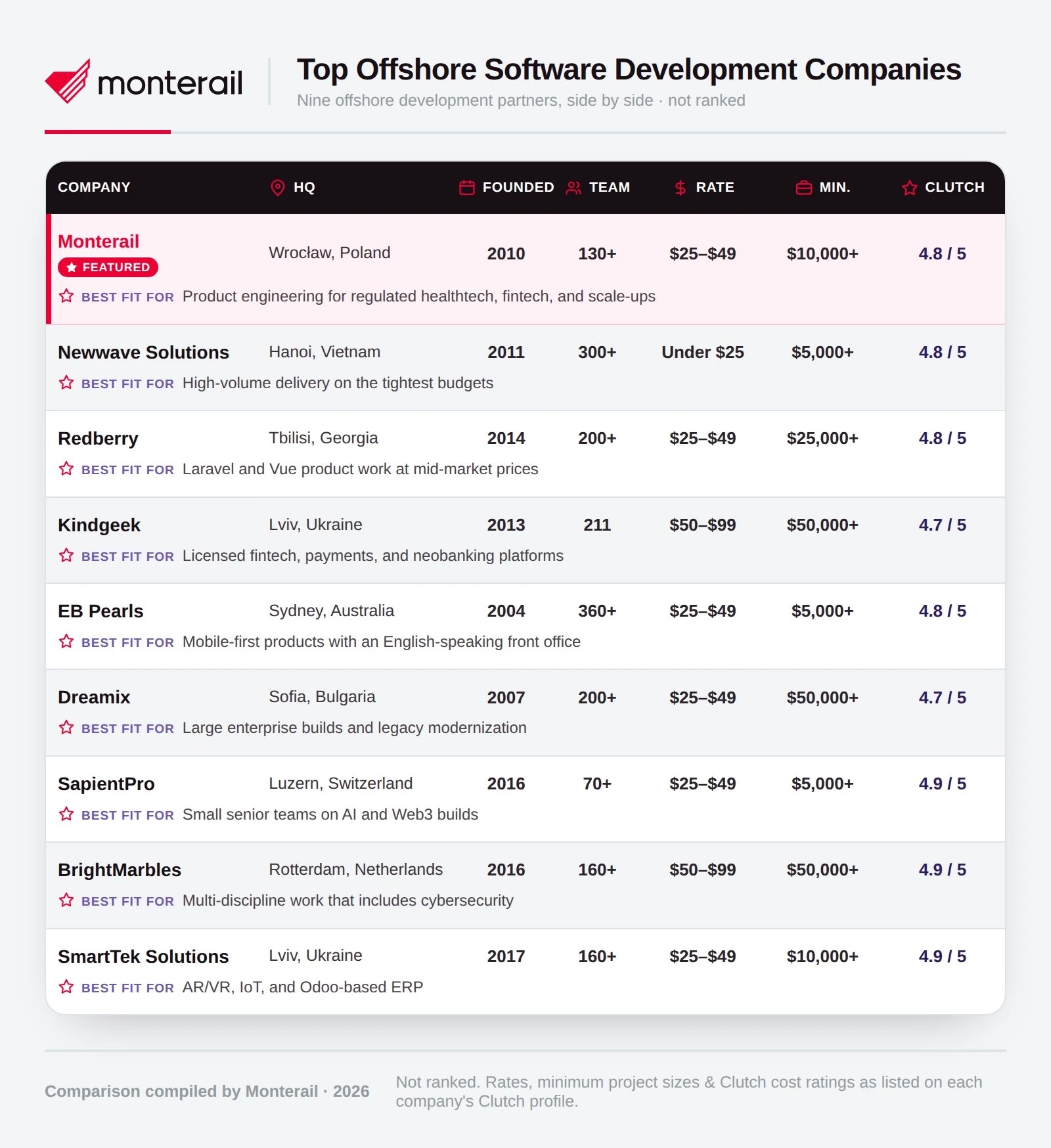
This list is not ranked. These nine were chosen to show how wide the term "offshore" has become in 2026: delivery hubs across Poland, Vietnam, Georgia, Ukraine, Nepal, Bulgaria, Switzerland, and the Netherlands; teams ranging from 70 to 360 people; published hourly rates from under $25 to $99; and specialisms running from regulated fintech through AR/VR to Laravel product work. Rates, minimum project sizes, and cost ratings are taken from each company's Clutch profile. Project details come from their own published case studies.
Monterail
Monterail is an agentic development company based in Wrocław, Poland, founded in 2010 and now 130+ in-house engineers, designers, and product specialists. The team has delivered 900+ projects, including 75+ healthcare applications, and works with Bosch, DocPlanner, EY, Merck, and SharkNinja. Core stack is Vue.js (Monterail is an official Vue.js and Nuxt partner), Ruby on Rails, React Native, Flutter, and Node.js, applied mostly in healthtech, MedTech, FemTech, fintech, proptech, and retail. Three acquisitions since 2024 (Untitled Kingdom, EL Passion, and Lakeview Labs) added MedTech, product design, and mobile depth. Recognition includes Deloitte's fastest-growing Central European tech companies list and the Financial Times 1000. Current NPS is 71.
Example project by Monterail
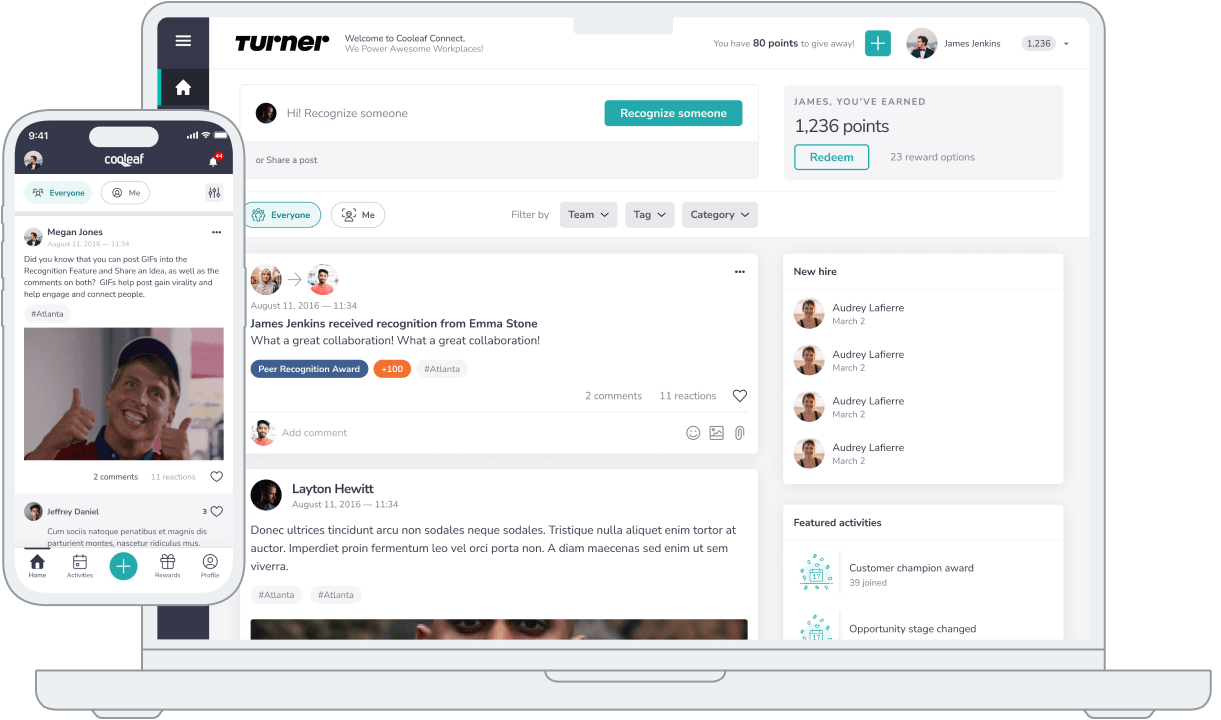
Cooleaf came to Monterail as a startup with an employee engagement product and a small user base. The partnership has now run 12 years, across which the platform grew into an enterprise-ready system serving 110,000+ users at 103 organizations worldwide. Long-running engagements like this one are the pattern Monterail optimizes for: the same team carries product context across years of roadmap instead of handing off at launch. A separate build for Merck took a diabetes-focused application into eight African markets with multiple language versions.
How Much Does Monterail Development Cost?
Monterail's published hourly rate is $25 to $49, with a $10,000 minimum project size and a Clutch cost rating of 4.4 out of 5 across 45 reviews. Actual engagements have ranged from $30,000 to over $1 million, and the most common project size sits between $50,000 and $199,999. That blended rate sits below the Accelerance senior benchmark for Central and Eastern Europe in the table further down, which is unusual for a team with this much enterprise and regulated-industry exposure.
What Do Clients Say About Working With Monterail?
"We moved from reactive scheduling to proactive, data-driven decisions. The ability to see a prototype in one day and scale it to an enterprise-ready solution so quickly was a game-changer for our resource management." - Bram Verstraeten, Senior Project Manager, SPIE Belgium
"I was impressed with the speed at which Monterail was able to grasp a complex and niche industry and translate that into a clear and practical system structure. I have confidence in their understanding of both the product vision and commercial context." - Amelia Christie, Limited Director, Christie Constructive
"If you want to outsource your coding to the lowest hourly rate, then Monterail aren't for you. If you want to build winning products at pace, then Monterail need to be on your shortlist." - Alan Buxton, CTO, Simfoni
Design is where the criticism lands in Monterail's reviews. Some clients have brought in external designers to meet specific visual requirements. The 2025 acquisition of EL Passion, a product design agency, was aimed at that gap, though buyers with design-led products should still ask to see recent portfolio work.
Why Do Businesses Choose Monterail?
Deep experience in regulated environments, with 75+ healthcare applications delivered and MedTech capability strengthened by the Untitled Kingdom acquisition
Reviewers repeatedly describe the onboarding as fast, with Monterail engineers folding into the client's existing team instead of operating as a walled-off vendor
Official Vue.js and Nuxt partner status, a real advantage if your front end is committed to Vue
A track record of MVP and prototype work that clients credit with establishing product-market fit, alongside the enterprise builds
European working hours with an explicit US and UK market focus, giving North American teams a workable morning overlap
Newwave Solutions
Newwave Solutions is the lowest-cost provider in this list, and by some distance. Founded in 2011 and headquartered in Hanoi, the company fields 300+ engineers across Vietnam and Japan and reports 800+ completed projects for 200+ active clients. Named clients include VinID, UNDP, Onkyo, and Daito Trust Construction. Service mix leans toward custom software, blockchain and Web3, and mobile, with AI development and UI/UX rounding it out. The company states that 99% of its developers have three or more years of experience, with team leads at five or more.
Example project by Newwave Solutions
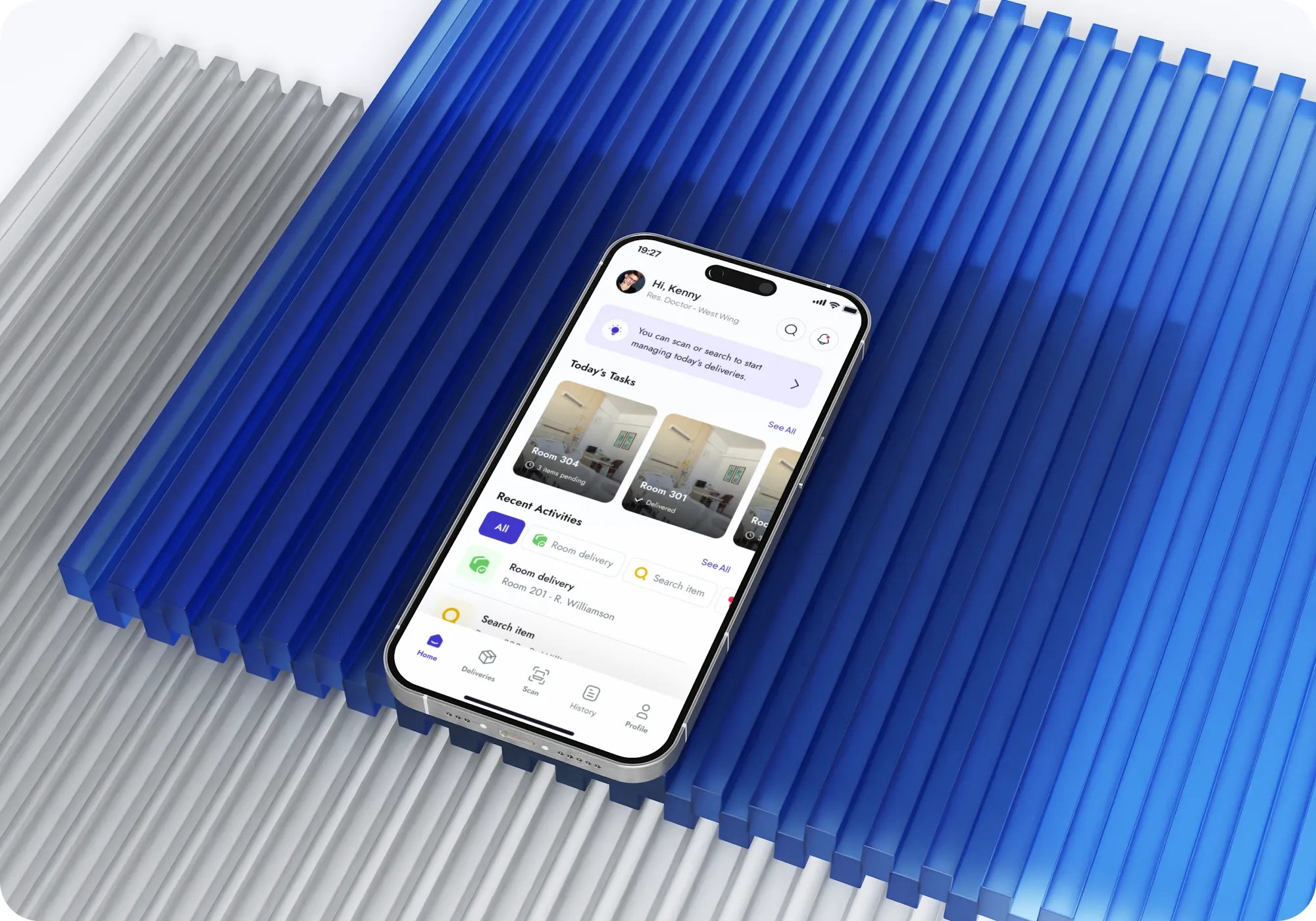
A client managing large volumes of garments and physical assets across multiple sites was tracking inventory by hand, which was slow, error-prone, and gave no real-time visibility. Newwave built a mobile application that pairs with RFID readers over Bluetooth and USB, letting staff scan, locate, and reconcile stock in batches. The engineering constraint was unusual: the team never had physical access to the RFID hardware. They built against detailed specifications with emulated device behavior, shipped sequential builds with testing checklists for the client to run real-world scans, and tuned the communication layer from the reported results. Staff can now audit hundreds of items in minutes.
How Much Does Newwave Solutions Development Cost?
Newwave's published rate is under $25 per hour, the only sub-$25 entry here, with a $5,000 minimum project size and a Clutch cost rating of 4.8 out of 5. The company advertises rates starting from $13 per hour, dedicated teams billed at 480 hours per month, and a 14-day risk-free trial. Most common project size is $50,000 to $199,999 across 63 reviews, which suggests clients put the rate advantage into more hours instead of smaller budgets.
What Do Clients Say About Working With Newwave Solutions?
"Their conversation was equally outstanding. Throughout the project, they communicated in an open and transparent manner, giving us frequent updates and making sure we always understood the technical nuances." - Mike Greeby, Digital Experiences Manager, Wilson Sporting Goods
"Working with Newwave Solutions was special because of their proactive attitude to problem-solving. They were fast to come up with creative ideas and often foresaw possible problems before they became problems." - Griffin Shea, Author, Bridge Books
"Their outstanding dedication to teamwork and customer-focused service impressed me most about them." - Srinivas Murthy, Director, Via
Reviewers who raised concerns pointed at communication from junior team members; senior staff and technical output drew no such comments. If you go this route, budget for a named senior contact and expect to invest more in written specifications than you would with a higher-rate partner.
Why Do Businesses Choose Newwave Solutions?
The lowest published rate in this list, low enough to make long-running, hours-heavy workstreams affordable at a scale most European vendors cannot match
A 14-day trial period that lets you test the working relationship before committing budget
Blockchain and Web3 account for a fifth of the business, so the depth there is real
Delivery presence in both Vietnam and Japan, useful if your product has APAC market requirements
Fortune 500 and NGO clients on the roster, including Wilson Sporting Goods and UNDP, an uncommon roster at this price point
Redberry
Redberry is a Premier Tier Laravel and Vue partner, one of very few agencies worldwide holding that status. Founded in 2014 by four friends in Tbilisi, Georgia, it now runs 200+ people including 100+ developers and has shipped 300+ web and mobile applications. Clients range from early-stage startups to publicly traded enterprises across the US, UK, the Middle East, and more than ten EU countries. The company is candid about why its pricing works: Georgia offers substantial tax advantages for software outsourcing, and Redberry passes the arbitrage through. LSE-listed Georgia Capital has invested in the business.
Example project by Redberry
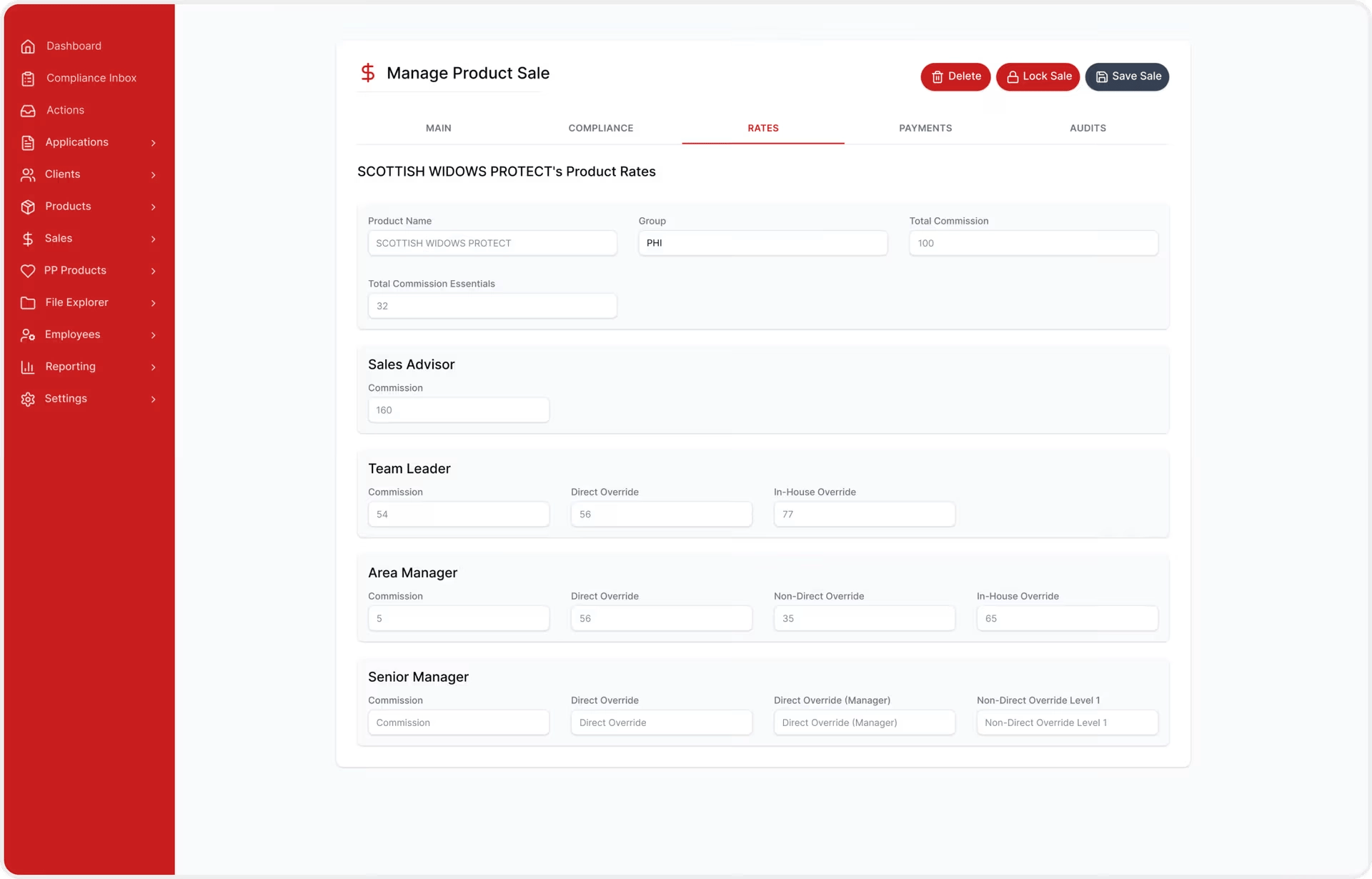
Tavistock Protect is one of the UK's fastest-growing mortgage and protection insurance specialists, part of a group with 400 advisers, 80,000 clients, and over £5bn under management. Its advisers were running an FCA-regulated advice process across disconnected tools: client data in one system, quotes in another, compliance review in email threads, commission calculated by hand. Redberry built PP Mobius, a Laravel and Livewire vertical CRM that carries the entire protection sales lifecycle from fact find through provider quote comparison, compliance sign-off, AML checking, policy submission, commission calculation, and payslip generation. State-gated workflows stop advisers from bypassing compliance steps, a deterministic commission engine produces auditable outputs across a multi-tier management hierarchy, and AI agents built on the Laravel AI SDK run compliance checks in parallel with confidence scoring and full trace outputs, streaming results to reviewers in real time. Every review version exports as a PDF built for FCA audit defensibility. The engagement runs on a four-person dedicated team and has been going for over two years.
How Much Does Redberry Development Cost?
Redberry's published rate is $25 to $49 per hour with a $25,000 minimum and a Clutch cost rating of 4.8 out of 5. Reviewed projects have ranged from $8,000 to over $500,000, with the most common band at $50,000 to $199,999. For Premier Tier Laravel expertise, that rate sits below what comparable specialist agencies in Western Europe or North America charge.
What Do Clients Say About Working With Redberry?
"[Their] breadth of knowledge and engagement across the senior team is impressive." - Geoff Brooks, CEO, Alpha Beta Partners Ltd
"We've really enjoyed the quality of people and the care exhibited throughout the organization." - Jud Mackrill, CEO, Milemarker
"The team is very well-suited and skilled at working autonomously based on a given objective rather than having everything specified in extreme detail." - Samuel Ciaramilaro, Owner, SC Codecraft
Reviews do mention occasional schedule slippage. Clients describe it as handled transparently: Redberry flags the problem early and works back to plan.
Why Do Businesses Choose Redberry?
Premier Tier Laravel and Vue partner status, a genuinely scarce credential that signals the depth serious Laravel and Vue work demands
Two clearly defined ways to buy: managed projects where Redberry owns design through launch, or staff augmentation that embeds its developers in your team
Georgian tax treatment for software outsourcing keeps rates below what equivalent expertise costs elsewhere in Europe
Clients single out the team's ability to work from an objective instead of a fully specified ticket, which cuts the specification burden on your side
A design and creative division alongside engineering, with over 100 international marketing awards, if brand work sits next to the build
Kindgeek
Kindgeek is the specialist in this list. Based in Lviv, Ukraine and founded in 2013, the 211-person team builds only for fintech: licensed fintechs, payment companies, neobanks, and enterprises shipping regulated financial products. The company reports 100+ regulated projects and platforms that have processed over €10 billion. Its white-label catalog covers neobanks, e-wallets, personal financial management, core banking, payments, acquiring, crypto, and lending. Compliance credentials are the substance of the pitch: ISO 27001:2023, ISO 9001:2015, PCI DSS, GDPR, and PSD3-ready architecture.
Example project by Kindgeek
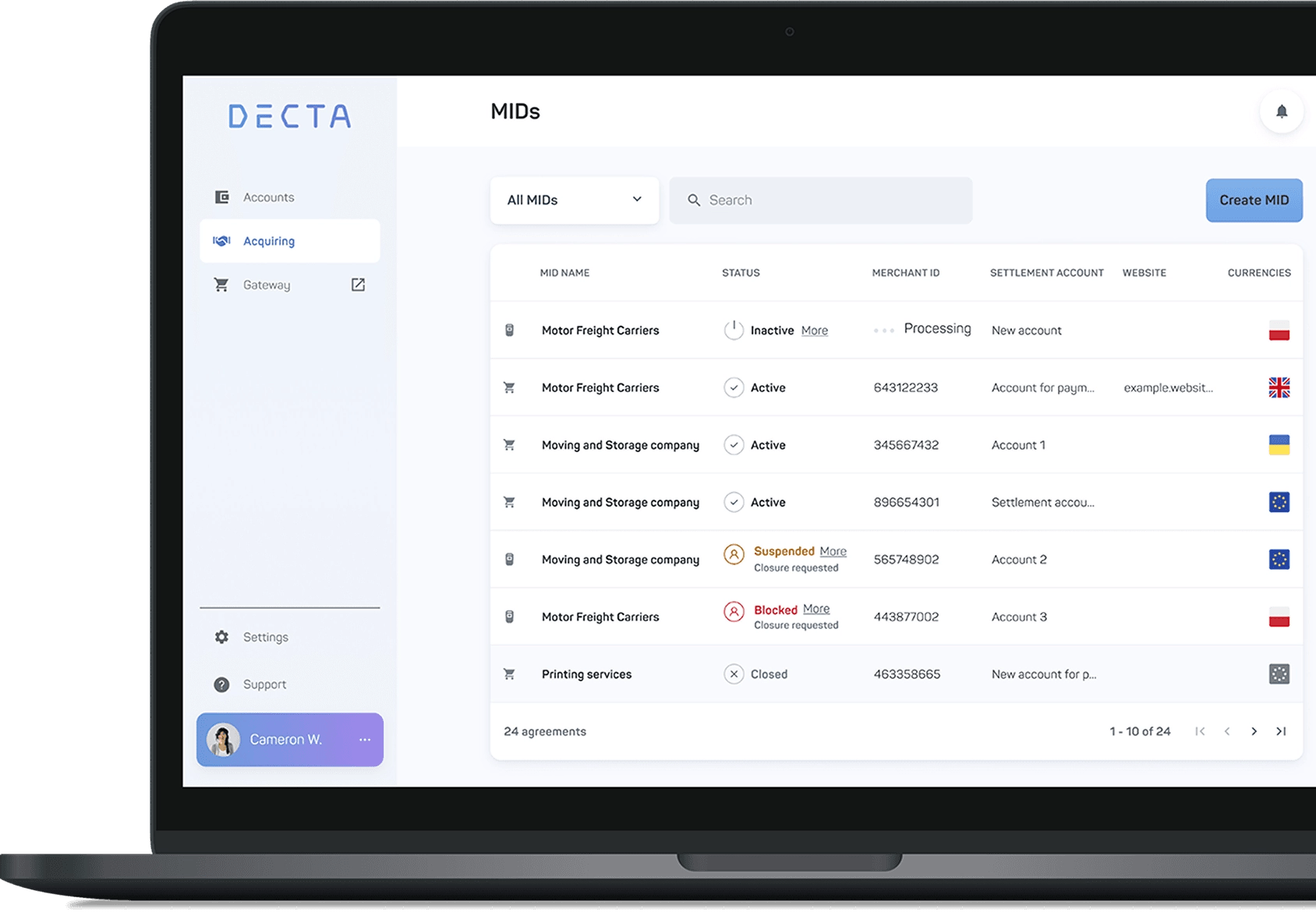
Decta needed a digital bank for UK small and medium-sized enterprises, built on a white-label core Kindgeek had already developed. The team, up to 35 people over a three-year engagement, delivered configurable onboarding and KYC that businesses could tailor into their own questionnaires and wire to their CRM, legally compliant digital contract signing with document traceability, and a custom-built general ledger chosen over an off-the-shelf option to match the client's operational model exactly. On top of that sit acquiring services for e-commerce terminals, a fee management module that assigns per-customer rate plans and processes fees posted by third-party systems, back-office ticketing with audit trails, and chat-and-ticket customer support. Mid-project, user acceptance testing surfaced requirements outside the original scope, and the team absorbed them alongside a custom payout processing flow built to fit Decta's existing business processes.
How Much Does Kindgeek Development Cost?
Kindgeek charges $50 to $99 per hour with a $50,000 minimum project size and a Clutch cost rating of 4.7 out of 5. Client budgets in reviews span $10,000 to $1 million, though the most common project size is under $49,999, which points to a lot of scoped advisory and discovery work alongside the large platform builds. The rate is the joint highest here, and it buys regulated-domain experience that would take a generalist team months to acquire.
What Do Clients Say About Working With Kindgeek?
"What stood out most about this company was their exceptional attention to detail and their unwavering commitment to delivering a tailored solution that precisely aligned with our specific needs." - Thekla Paschali, CTO, payabl.
"Their understanding of real-world business challenges and their ability to adapt to our specific goals were particularly impressive." - Volod Fedoriv, Co-founder, Remofirst
"Their understanding of real-world business use cases and their ability to adapt to our business needs were impressive." - Eduard Singer, CEO, neusinger GmbH
The recurring criticism is turnover in certain specialisms, which some clients found disruptive enough to require stronger knowledge-transfer processes. Worth raising directly in your first call: ask what the attrition rate is on the specific roles you need and what the handover protocol looks like.
Why Do Businesses Choose Kindgeek?
Fintech is the only domain the company serves, so compliance is designed into the architecture instead of retrofitted after a regulator asks
A stack of certifications that covers most of what a payments or banking client's security review will demand, including PCI DSS and ISO 27001:2023
White-label products that shorten time to market for neobank, e-wallet, and lending propositions
Advisory services including compliance assessment, architecture review, software audit, and technical due diligence, useful if you inherited a codebase you do not trust
Track record on platforms processing over €10 billion, so the scale question answers itself
EB Pearls
EB Pearls splits the difference between offshore and onshore. Founded in 2004 in Nepal, with an Australian office added in 2008, the company runs client-facing design, account management, and QA out of Sydney and engineering out of Kathmandu, all in-house. The company reports 360+ full-time specialists, 900+ software projects across 18+ industries, 1,400+ businesses served, 97% client retention, and a 98% on-time delivery rate over the past twelve years. It has held a #1 global Clutch ranking for four consecutive years, holds ISO 9001 and 27001 certification, and has collected 70+ international awards. Delivery runs on an in-house framework the company calls Built to Last, which front-loads a discovery workshop before any wireframe is drawn.
Example project by EB Pearls
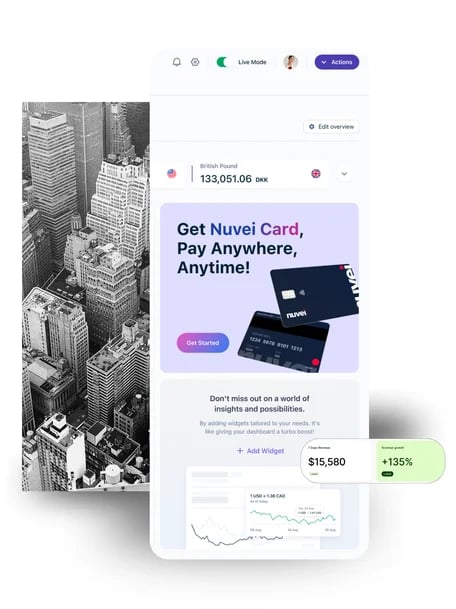
Nuvei is a global payments company operating across Asia-Pacific, Europe, and Canada. It did not want a vendor shipping against a statement of work; it wanted engineers inside its own product organization. EB Pearls embedded a team that runs the same standups, the same sprint cadence, the same Jira, and the same on-call rotation as Nuvei's internal staff, reporting to a Nuvei manager and measured against the same delivery benchmarks. The work spans backend payment processing and settlement logic, QA automation, CI/CD and observability, and merchant-facing UX. The architectural result that matters most: shared integration foundations that let 350+ partners integrate once and scale without bespoke development for each one.
How Much Does EB Pearls Development Cost?
EB Pearls publishes $25 to $49 per hour with a $5,000 minimum project size and a Clutch cost rating of 4.8 out of 5. Reviewed projects range from AUD $28,000 to AUD $300,000, with most falling under $49,999. Cost transparency comes up repeatedly in reviews, with clients contrasting EB Pearls' itemized estimates against vaguer quotes from other agencies during their selection process.
What Do Clients Say About Working With EB Pearls?
"EB Pearls didn't just deliver what we asked for; they brought insight, experience, and integrity to every discussion." - Andrew Penn, Member of the Board of Advisors, Glow Services Corp
"EB Pearls brought structure to chaos. They didn't just build features. They built trust." - Bishal Dahal, IT Support Specialist, TitanTech Support
"The Discovery phase saved us from making expensive mistakes, which we didn't even realise were there. It challenged some of our early assumptions, clarified what actually needed to be built first, and gave us a much stronger foundation before development started." - Kym Herbert, Product Lead, Optus
Some clients have flagged gaps in proactive communication, specifically around timely status updates. The counterweight is an unusually strong on-time delivery record, so the issue looks like reporting cadence more than slipping work.
Why Do Businesses Choose EB Pearls?
An English-speaking Australian front office paired with Nepal-based engineering, a pairing that removes much of the friction of a purely offshore relationship
Twenty-one years of continuous operation and a 97% return rate, the kind of longevity that is rare in this market
A discovery-first process that clients credit with killing bad scope before it reaches the build
Mobile sits at the center of the practice, with Flutter, Kotlin, and Swift work across hundreds of shipped apps
ISO 9001 and 27001 certification across both hubs, worth real time off an enterprise security review
Dreamix
Dreamix is the enterprise builder here. Founded in 2007 in Sofia, Bulgaria, the 200+ person team has spent 17+ years on strategic software for companies across North America, Europe, and the Middle East, with Icelandair among the named clients. Work spans web applications, AI and ML, cloud, and enterprise modernization across healthcare, fintech, transportation, logistics, e-commerce, and aviation. The company reports a 95% retention rate for both staff and client partnerships. Recognition has come from Forbes, the Lean Institute, the Global Sourcing Awards, and the European IT & Software Excellence Awards. Dreamix engineers frequently teach university courses, which tells you something about the seniority profile.
Example project by Dreamix
eJourney is a Saudi digital travel marketplace launched by Digital Mobility Solutions, a SAPTCO Group company. Its problem was fragmentation: pilgrims and travelers were booking flights with one provider, hotels with another, and ground transport with a third, with packages, payments, and support scattered across separate platforms. After a build-or-buy assessment concluded that no off-the-shelf platform could deliver a unified cart or a central operator console, Dreamix built the technology platform from the ground up. At its core is a single booking engine connecting flights, hotels, private and shared transfers, bus services, and curated Umrah packages within one checkout. Around it sit corporate travel management, tooling for travel agencies and Umrah operators, an integrated vendor marketplace called Souq eJourney, and customer support infrastructure covering travelers before, during, and after the trip.
How Much Does Dreamix Development Cost?
Dreamix publishes $25 to $49 per hour with a $50,000 minimum project size and a Clutch cost rating of 4.7 out of 5. What separates it from others in the same rate band is engagement size: the most common project falls between $200,000 and $999,999, the largest typical band of any company in this list. Dreamix is built for multi-year enterprise programs, not for a $30,000 MVP.
What Do Clients Say About Working With Dreamix?
"Superb problem solvers! Worked very well as a team and with other teams! No egos!" - Alexander Tsiaras, CEO, StoryMD
"Dreamix's engineering knowledge, willingness to go the extra mile, listening skills, and SDLC were impressive." - Marta Padilla Montoliu, Former CTO, Energy Company
"The consistent elite standard of every expert they have brought to the collaboration is impressive." - Thorir Olafsson, Director Digital Development, Icelandair
Dreamix's published review highlights carry no recurring criticism, which reflects a smaller sample more than a perfect record: its Clutch profile rests on 16 reviews, fewer than most companies here. The clearer constraint is the $50,000 floor and the large typical engagement size.
Why Do Businesses Choose Dreamix?
Clients report Dreamix resolving critical problems that previous vendors could not, the specific reason a lot of enterprises change partners in the first place
Enterprise modernization is a core service line, covering the legacy estate most scale-ups eventually inherit
A 95% retention rate on both sides of the relationship, meaning the engineers who learn your system tend to still be there next year
Aviation, logistics, and transportation depth, sectors where domain knowledge takes years to build and shows up immediately in architecture decisions
Engineers who teach at university level and run internal knowledge clubs, a durable signal about hiring standards
SapientPro
SapientPro is the smallest team in this list and positions itself accordingly. Registered in Luzern, Switzerland and founded in 2016, the 70+ person company has delivered 200+ projects and reports a 5 out of 5 rating on Clutch across 36 verified reviews. The pitch is senior-heavy staffing on modern problems: custom software, SaaS platforms, AI and ML, and Web3. Leadership backs that up, with a CTO holding a PhD in applied mathematics and department heads carrying 14 to 17 years each. The company's own framing is direct: it does not sell hours, it takes responsibility for finished products.
Example project by SapientPro
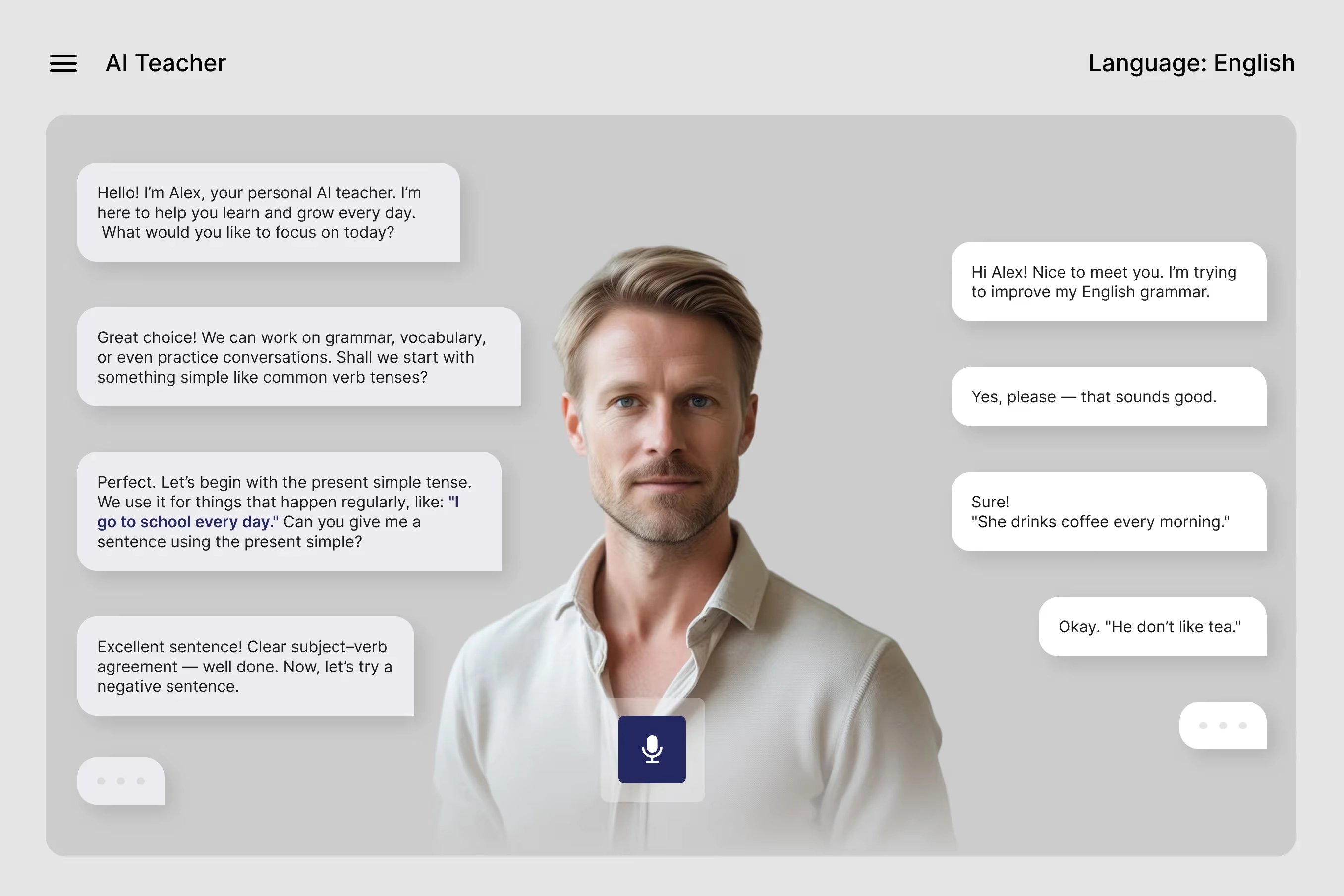
A Dutch language school wanted a voice-enabled AI teacher that could hold a real conversation. SapientPro started in December 2024 and delivered a working platform by March 2025, built around interactive avatars that respond in real time with synchronized speech and facial expression. The hard parts were latency and feedback. The team built a custom low-latency speech engine so voice input, response generation, and spoken output complete fast enough to keep a conversation natural, and layered phoneme-level pronunciation scoring that corrects learners mid-sentence without breaking immersion. Teachers got lesson templates, attendance tracking, and an interactive whiteboard with built-in pronunciation insights. The platform launched in Dutch and was architected from the start for additional languages. Total build: 300 hours, two people.
How Much Does SapientPro Development Cost?
SapientPro publishes $25 to $49 per hour with a $5,000 minimum project size and a Clutch cost rating of 4.9 out of 5. Reviewed projects run from $12,000 to over $500,000, with most under $49,999. The low floor and small team make it a realistic option for a scoped proof of concept, which is exactly what the language-learning build was.
What Do Clients Say About Working With SapientPro?
"I'm super excited about where we are with the platform's modules, which is a testament to SapientPro's skill." - Onno Halsema, CEO, Contentoo
"They delivered on time and accommodated multiple extensions as our plans and feature set evolved." - Luke Baker, Founder, Zenyte Ltd
"Their speed of issue resolution and delivery quality was impressive." - Gaurav Singh Basnyat, Digital Programme Dev Manager, Norwegian Refugee Council
Several clients have suggested SapientPro tighten its internal QA, specifically more thorough code review and technical testing before final handover. On a 70-person team that is a capacity question as much as a process one, so agree acceptance criteria and testing responsibilities in writing before kickoff.
Why Do Businesses Choose SapientPro?
Genuine AI engineering well past API wrapping, including custom speech pipelines, computer vision, and document automation
A $5,000 entry point makes a paid proof of concept viable before you commit to a platform build
Small senior teams mean the people you meet in the sales call are the people who write the code
English proficiency and responsiveness come up consistently in reviews, and that matters more than usual when the team is small and communication is direct
Web3 and smart contract work sits alongside conventional product development, so a hybrid roadmap does not need two vendors
BrightMarbles
BrightMarbles calls itself a one-stop shop, and the service split backs that up: cybersecurity, mobile, and web development each take 20% of the business, with custom software, DevOps managed services, low/no-code, application support, and UX/UI making up the rest. Founded in 2016 and headquartered in Rotterdam with additional hubs, the company fields 160+ experts averaging seven-plus years of experience each, of whom 65% are senior engineers, team leads, or software architects. It hires from the top 4% of vetted applicants and keeps 92% of them long term. Partnerships include Microsoft Gold, Adobe Solution Partner, and ISO/IEC 27001 certification. Seven unicorns sit in the client portfolio, including Swedish bio-convergence company Cellink and crypto platform LiteBit, whose app serves 600,000+ traders.
Example project by BrightMarbles
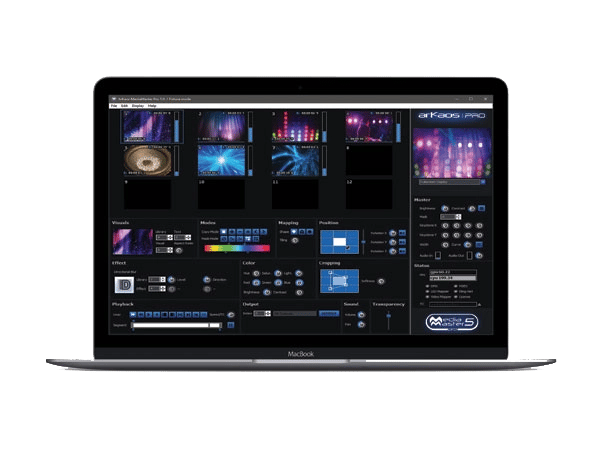
ArKaos builds real-time video and media systems for live entertainment, the software behind large-scale light and video installations. The products are demanding: multi-platform, running at high concurrency, synchronized across multi-server setups, and expected to stay stable across wildly varying hardware. BrightMarbles embedded C, C++, Qt, and wxWidgets specialists as extended members of ArKaos's own development team, taking on multithreading, high input/output counts, and the notoriously awkward business of testing graphical components. Results reported by the company: 6x more professional users, 3x faster time to market, and 130% more stable performance.
How Much Does BrightMarbles Development Cost?
BrightMarbles publishes $50 to $99 per hour with a $50,000 minimum project size and a Clutch cost rating of 4.9 out of 5, tied with SapientPro and SmartTek for the highest in this list. Most common project size is $50,000 to $199,999 across 37 reviews. The rate reflects the seniority mix more than the location: with 65% of the team at senior, lead, or architect level, you are buying a different staffing profile than a rate-arbitrage vendor offers.
What Do Clients Say About Working With BrightMarbles?
"We only utilized their DevOps services, but what's most impressive is that they offer a diverse range of IT services." - Filip Jovanovic, CEO, Ceres Blockchain Solutions
"We were particularly impressed with their responsiveness to our needs. Not to mention their ability to integrate seamlessly into our team as an augmentation." - Nevena Nikolic, Partner & Project Director, Vega IT
"Usually there is a period when new people need to adapt to the project, but their guys took the deadline seriously and we managed to finish some of the features in the first days of our cooperation." - Luka Ćurčić, Co-Founder & CEO, Marble IT
The recurring note in reviews is that clients would like BrightMarbles to be bigger. At 160+ people the company can hit a ceiling on concurrent volume, so check availability early if your roadmap needs several parallel workstreams.
Why Do Businesses Choose BrightMarbles?
A senior-weighted team where two-thirds of engineers are leads, architects, or seniors, a mix that shows up in code quality and in how little supervision the engagement needs
Cybersecurity as a first-class service line, backed by ISO/IEC 27001 certification instead of a checkbox on a capability slide
Seven unicorns in the client portfolio, including work as key development partner to Cellink
Microsoft Gold and Adobe partnerships, worth having if your stack is committed to either vendor
90% of new clients arrive by referral and 95% become long-term partners, the two numbers here that are hardest to manufacture
SmartTek Solutions
SmartTek Solutions occupies a niche the rest of this list mostly leaves alone: immersive technology and enterprise resource planning. Founded in 2017 and based in Lviv, Ukraine with two further locations, the 160+ person team has delivered 350+ projects and reports a 97% customer satisfaction rate. Roughly 20% of the business is AR/VR development and another 20% ERP consulting and systems integration, with custom software and web work making up the balance. The company is part of Euvic Group, a large European IT services group, and serves clients across the US, UK, Canada, Israel, Romania, and the EU. Odoo implementation is a particular strength, alongside IoT and cloud engineering.
Example project by SmartTek Solutions
An agritech client wanted a single digital environment for livestock feed operations, covering automated feed planning, warehouse inventory, IoT data from feed-mixer sensors, and analytics, usable by farm owners, consultants, and administrators with strict data separation between organizations. SmartTek took ownership of architecture, requirements, development, deployment, and ongoing delivery, and layered on Virtual CISO and CTO support on demand. The build includes ration and recipe management with historical tracking and forecasting, multi-tenant access for three distinct user roles, multilingual support with both metric and imperial units, and an offline-capable companion mobile app for staff working in fields with no connectivity. The platform now supports 750+ active farms managing 400,000+ cattle across 7+ countries on three continents.
How Much Does SmartTek Solutions Development Cost?
SmartTek publishes $25 to $49 per hour with a $10,000 minimum project size and a Clutch cost rating of 4.9 out of 5. Reviewed projects span $3,000 to $250,000, with the most common band at $10,000 to $49,999, the smallest typical engagement in this list. That makes SmartTek a practical option for a scoped ERP module or an AR/VR pilot, without needing a platform-scale commitment first.
What Do Clients Say About Working With SmartTek Solutions?
"What impressed us most was their deep knowledge of Odoo and their ability to adapt the platform to our specific business logic. They didn't just implement modules: they rethought our processes with us." - Mariya Gasyuk, Account Manager, Elogic Commerce
"Throughout our relationship, we've had a dedicated project manager who was always available to address any concerns or adapt to changing requirements." - Anna Suchard, CEO, IT Services Agency
"We were impressed by their professionalism, clear communication, and attention to detail throughout the project." - Denys Lytvynov, Research Development Team Lead, Lite+Fog GmbH
One client flagged that initial payment requirements were not communicated clearly enough upfront, which caused a delay. Settle the payment schedule and invoicing terms at the contract stage instead of assuming standard practice.
Why Do Businesses Choose SmartTek Solutions?
AR/VR is a fifth of the business, so training simulators and immersive product experiences get treated as core work
Odoo and broader ERP expertise, with clients describing process redesign alongside implementation
Virtual CISO and CTO services available on demand, a real gap-filler for companies without senior technical leadership in house
Backing from Euvic Group provides scale and continuity behind a mid-sized team
A $3,000 to $250,000 project range and a $10,000 floor, wide enough to suit a first engagement scoped as a test
What Makes a Great Offshore Software Development Company?
A great offshore partner is one whose seniority mix, domain history, and delivery discipline reduce the hours you spend explaining things. Everything else follows from that.
Five signals separate the strong from the merely available.
Seniority mix, stated as a number. Ask what percentage of the assigned team is senior. BrightMarbles publishes 65% senior engineers, leads, and architects. Newwave states 99% of developers have three or more years of experience. A vendor who cannot answer this precisely is telling you something.
Second, look for domain history in your specific context. Regulated work is the clearest case: Kindgeek builds only fintech and holds PCI DSS and ISO 27001:2023 because its clients' regulators demand it, and Monterail has shipped 75+ healthcare applications. A generalist team can learn your domain, but you pay for the learning twice, once in hours and again in the architectural mistakes made before the learning lands.
Retention on both sides of the relationship is the third. Dreamix reports 95% retention for staff and client partnerships; BrightMarbles reports 92% employee retention and 95% of clients becoming long-term partners; EB Pearls reports 97% client return. Turnover is expensive in a way that never appears on an invoice. When the engineer who understands your commission logic leaves, someone bills you to rediscover it.
Fourth is a security posture you can verify: ISO 27001 or SOC 2 Type II with a current Statement of Applicability, a data-processing summary naming sub-processors and data locations, and business-continuity evidence. Kindgeek, EB Pearls, and BrightMarbles all hold ISO 27001. If your data touches EU residents, add a data processing agreement with standard contractual clauses to that list.
A willingness to say no is the last, and the hardest to test in a sales call. EB Pearls puts it plainly in its own material: an agency that says yes to everything is a warning sign. The partner who pushes back on a feature, a timeline, or a brief is the one protecting your budget.
How Much Does Offshore Software Development Cost in 2026?
Offshore benchmark rates in 2026 run from about $24 per hour for a junior engineer in Asia to $76 per hour for a senior in Central and Eastern Europe, against $90 to $350 per hour at a comparable US agency. Rates fell year over year in every major offshore region, pushed down by competition and by AI-assisted delivery raising output per engineer.
Region / model | Junior | Senior | 2026 YoY change |
|---|---|---|---|
Asia (South and Southeast) | $24–$31 | $31–$41 | Down ~8% |
Central and Eastern Europe | $31–$39 | $64–$76 | Down 4.4% |
Latin America (nearshore) | $33–$45 | $60–$75 | Down 7.1% |
US small-class agency | n/a | $90–$160 | n/a |
US mid-market agency | n/a | $120–$250 | n/a |
US big-business agency | n/a | $250–$350 | n/a |
Offshore regional figures: Accelerance 2026 Global Software Development Rates & Trends. US agency tiers: FullStack 2026 Software Development Price Guide.
Note where the published rates in this article sit against that table. The four Europe-based companies quoting $25 to $49 per hour, Monterail, Redberry, Dreamix, and SmartTek, all sit below the regional senior band of $64 to $76. Blended team rates do that: a team of two seniors and three mid-level engineers averages well under the senior line item, and the blend is what most vendors publish on a directory profile.
Three things reliably widen the gap between the quoted rate and what you actually spend:
Industry estimates put defect correction and rework at 15% to 26% of project hours, and considerably higher where quality management is weak. This is the largest hidden cost in offshore delivery.
Vendor selection, contracting, and dedicated oversight on your side add materially to total spend, and none of that appears on the vendor's invoice.
Every engineer added or replaced mid-project needs context on the codebase and the business logic before becoming productive. On a complex system that is weeks, billed.
So the number to compare across bids is total delivered cost per shipped feature. A $25 team that reworks a third of its output costs more than a $60 team that does not.
Fixed Price, Time and Materials, Dedicated Team, or Staff Augmentation?
The engagement model decides who carries scope risk. Pick it based on how well-defined your requirements are and how much engineering management you have in house.
Model | Best fit | Cost predictability | Scope risk | Seen in this list |
|---|---|---|---|---|
Fixed price | Tightly specified, short builds where requirements will not move | High | The vendor, priced into the quote | EB Pearls' milestone-based payments with scope locked before development |
Time and materials | Discovery, R&D, and products where the roadmap is still forming | Low to moderate | You | Common across most companies here for early-phase work |
Dedicated team | Multi-year products needing stable context and ownership | Moderate, predictable monthly | Shared | Redberry's four-person team on PP Mobius for 2+ years; Kindgeek's up-to-35-person Decta engagement |
Staff augmentation | You have engineering management and need capacity or a specific skill | High per head, low on outcomes | You | Redberry's explicit staff-augmentation offering; EB Pearls embedded inside Nuvei's product org |
A few practical notes. Fixed price only works when the specification is genuinely finished, and paying for a discovery phase to get there is usually cheaper than the change requests that follow a rushed one. Dedicated teams are the default for anything you expect to still be running in three years, because the value is in the context the team accumulates. Staff augmentation is capacity, not outcomes: if you do not have a product manager and a tech lead who can direct the work, you are buying developers who will wait for instructions.
How Do You Choose the Right Offshore Development Partner?
Run a structured evaluation. Two to four weeks is the realistic timeline for doing it properly, covering an RFI to your candidates, reference calls, and a contract review with counsel.
Shortlist on domain and stack, not on rate. Three to five vendors who have shipped something structurally similar to what you need. Rate becomes a tiebreaker at the end, not a filter at the start.
Read the negative reviews first. Every company in this article has a recurring criticism in its public reviews, and most are manageable once you know about them. Turnover, communication cadence, design depth, and QA rigor are the four that show up most. A vendor with no criticism anywhere usually has a small review sample.
Ask for the seniority mix and the attrition rate on your specific roles. Not the company average. The roles you are hiring for.
Collect the compliance pack before the pitch. Certificate plus Statement of Applicability, sub-processor and data-location summary, breach notification timeline, penetration test reports, and the offboarding process for revoking a departing engineer's access.
Check the contract for IP assignment at every milestone, not at final payment. If the engagement ends early, you want to own what has been built.
Insist on a named senior lead who stays for the engagement, and get the replacement protocol in writing.
Take references off-script. Ask what went wrong and how it was handled. Vendors supply references who will say nice things; the useful information is in the recovery story.
Run a paid pilot. A scoped two-to-four-week piece of real work tells you more than any pitch. Some vendors formalize this: Newwave offers a 14-day trial period.
Which Offshore Development Partner Fits Your 2026 Roadmap?
The nine companies here span a 4x range in published hourly rate, from under $25 to $99. After rework, ramp-up, and your own management time, the range in delivered cost is a good deal tighter. That is the conclusion worth carrying into your shortlist: the rate card is the least informative number a vendor gives you.
What separates these companies is fit. If you are building a licensed financial product, Kindgeek's compliance architecture is worth its rate premium and Newwave's price advantage is irrelevant. If you need a hundred thousand hours of steady delivery on a well-understood system, that flips. If your product lives in Laravel, Redberry's Premier Tier status is a real differentiator that no rate comparison captures. And if you are building a regulated healthcare or fintech product that has to survive years of roadmap, a partner with 900+ projects, official framework partnerships, and long-running client relationships is a different proposition from a team that will ship your MVP and move on.
Pick the two or three whose domain history matches yours, run the due-diligence sequence above, and pay for a small piece of real work before you commit to the big one.
Key Takeaways
Cost is no longer the main driver of offshore development. Deloitte's survey puts cost reduction as the primary motivation for 34% of organizations, down from 70% in 2020, with talent access and agility now equally weighted.
Offshore rates fell in every major region in 2026, by 4.4% in Central and Eastern Europe and close to 8% in Asia, narrowing the arbitrage that once justified picking on price.
Rework is commonly estimated at 15% to 26% of project hours, which is why a cheap team that reworks heavily costs more than a mid-priced team that does not.
The engagement model determines who carries scope risk. Fixed price shifts it to the vendor but requires a finished specification; staff augmentation leaves it entirely with you and assumes you have engineering management in place.
Every vendor in this list has a documented weakness in its public reviews, covering turnover, communication cadence, design depth, or QA rigor. Finding it before you sign is the single highest-return hour of your evaluation.
Offshoring FAQ

Grzegorz Hajdukiewicz
Chief Delivery Officer

With over a decade of experience in the IT industry, Grzegorz has a proven track record of delivering complex projects on time and on budget. At Monterail, he leads a team of dozens of developers, designers, project managers, and business analysts, ensuring the successful delivery of software solutions for clients worldwide. Passionate about agile methodologies and continuous improvement, he constantly seeks new ways to optimize the delivery process.